
A christening or baptism dress is bought for one morning, photographed for a lifetime, and often kept in a box afterwards. That combination puts pressure on the wrong things. Buyers scrutinise the photograph on the sample and approve the order without asking the questions that actually decide whether the garment works: how it opens on a sleeping infant, what sits against the skin for the whole service, and whether a pearl or a bow can be pulled free by the child wearing it.
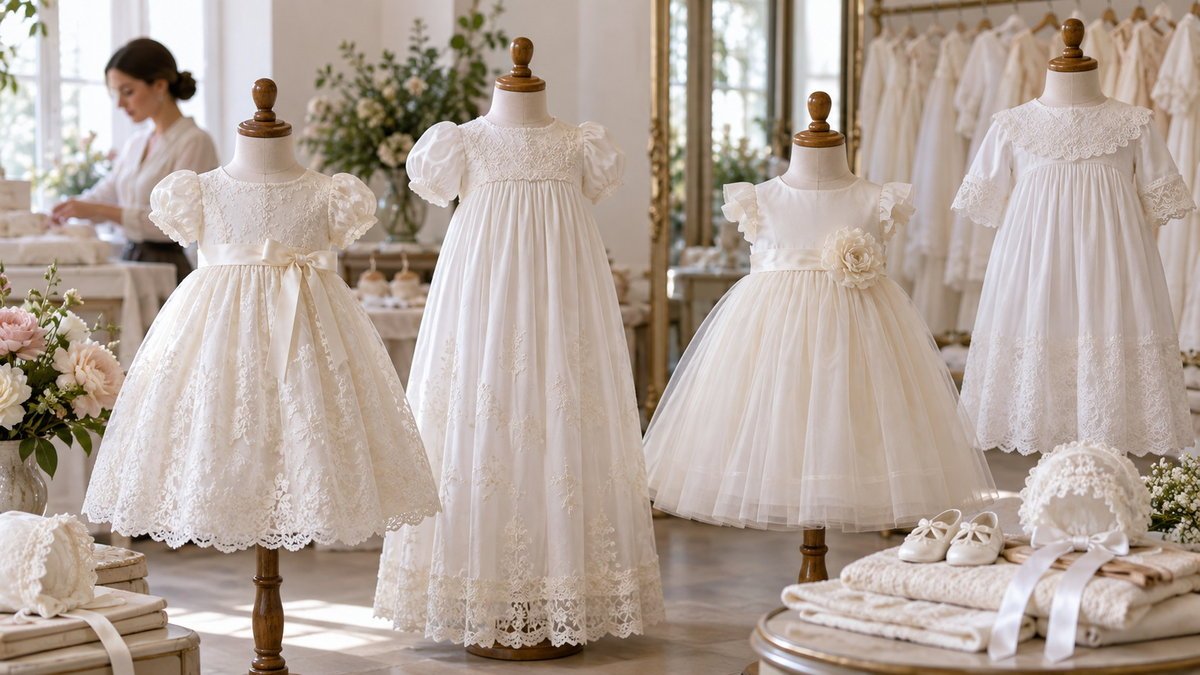
This guide treats wholesale christening dresses as a ceremony product rather than a fashion category. The ordering logic runs from the ceremony outward — what the child has to endure first, what the family will see second, and the commercial schedule third.
The ceremony comes before the design
The ceremony words vary by church, family and country, but the product distinction is concrete. Christening and baptism garments are worn by infants and toddlers who are carried, held and laid down, so dressing access, diaper changes, skin contact and small components all become buying criteria. First communion is worn by an older child who stands and walks, at a different proportion and length. Keep the two programmes separate in the size chart, the product copy and the calendar, even though white is the one thing they reliably share. A boutique that reuses a communion fit block for a baptism gown inherits proportion problems on a body that does not stand yet, and the customer discovers them in the church.
For buyers running both programmes, the older-child occasion belongs with the wholesale first communion dresses range. Nothing in this article should be merged into it.
Ceremony demand is also event-driven rather than seasonal. It clusters around the small sizes that fit the age at which ceremonies usually take place, and it rises and falls with local event timing, so depth bought on a general fashion size curve leaves the largest and smallest sizes behind. Start from the ceremony ages the store serves and from its own returns record on dressing access.
What a small component can do in a pair of small hands
Small attached and detachable components are the highest-risk part of a ceremony garment worn by an infant, which is why they belong at the front of the buying conversation rather than in a closing note. Pearls, beads, fabric flowers, bows, ribbons and removable sashes each need a defined attachment standard and a defined pull test. Any component a child can remove should be treated as a separate product decision rather than as trim, and detachable pieces need to be sold and labelled as separate items in their own right.
The distinction matters commercially as well as practically. A loose bead is not a styling problem that a reorder can fix; it is a batch-wide exposure, and by the time it appears in customer complaints the stock has usually shipped. Where a market applies children’s safety requirements, the evidence belongs in the file before the order is confirmed, not in a folder that gets assembled after a complaint.
Note that a visual check cannot prove every safety, composition, colourfastness or attachment requirement. Where the product and destination demand it, involve qualified laboratories or compliance professionals. This article summarises practice for planning purposes and is not legal advice — verify the requirements that apply to your product, construction, destination and operator role with a qualified adviser.
The attachment standard to agree before sampling
Write the standard into the specification before a sample is made, because attachment is one of the few things that cannot be corrected at receiving. The checklist below is deliberately short; each line is something a supplier can confirm in writing and an inspector can pass or fail.
- How it is fixed. State the method for each component separately — pearl, bead, fabric flower, bow, ribbon, removable sash — rather than describing “decorative trim” as one item.
- The pass or fail check. Define what the inspector does and what result ends the inspection, so the standard is a test rather than an opinion.
- Packing and pressing behaviour. Confirm how each component survives folding and pressing, since a flower that crushes flat in transit arrives looking damaged even if it is intact.
- Detachable pieces as separate products. If a sash or wrap is removable, confirm how it is packaged, labelled and priced.
- Evidence on file. Confirm which document proves the standard was met, and who holds it.
- Change control. Name the person who approves a substitution of component, thread or backing after sign-off.
Every one of these lines is cheaper to settle at sample stage than to argue about after the cartons land, and none of them requires new tooling.
White, warm white and ivory are three different purchases
White is a material-control problem, not a single colour. Warm white, optical white and ivory read differently under church light, flash photography and daylight, and the difference is magnified on a small garment photographed against a pale background. Lace, satin, tulle, thread and lining can each be called ivory and still not match one another.
| Term you will see | How it actually reads | The check that closes the decision |
|---|---|---|
| Optical white | Cool and bright, can flare under flash | Compare against the master reference in daylight, then under flash |
| Warm white | Softer on the surface, can drift yellow beside cooler pieces | View beside the other whites it will be sold with |
| Ivory | Creamier, and the most likely term to hide a mismatch | Approve on the assembled garment, substrate by substrate |
| Mixed lace, satin, tulle, thread and lining | Reads as one shade only if every substrate agrees | Inspect the complete dress, not loose swatches |
Name the shade precisely in the specification instead of relying on the word white, and approve it on the assembled garment rather than on separate swatches. When families order more than one white piece, decide whether the standard is an exact match or a deliberate tonal contrast, and write that decision down before the order is placed, because it changes what the inspector is looking for.
Dressing access, seams and what touches the skin
Style comes after access. Decide how the garment opens and how much the child must be moved while dressing: a back placket with enough snaps, a full front opening, or a design that lifts over the head with a generous neckline. A parent dressing a sleeping infant, or changing a diaper mid-service, needs the dress to open at the right place without undoing the whole garment. A gown that photographs beautifully but cannot be opened for a diaper change is a returned garment, and the return will be recorded as fit rather than design.
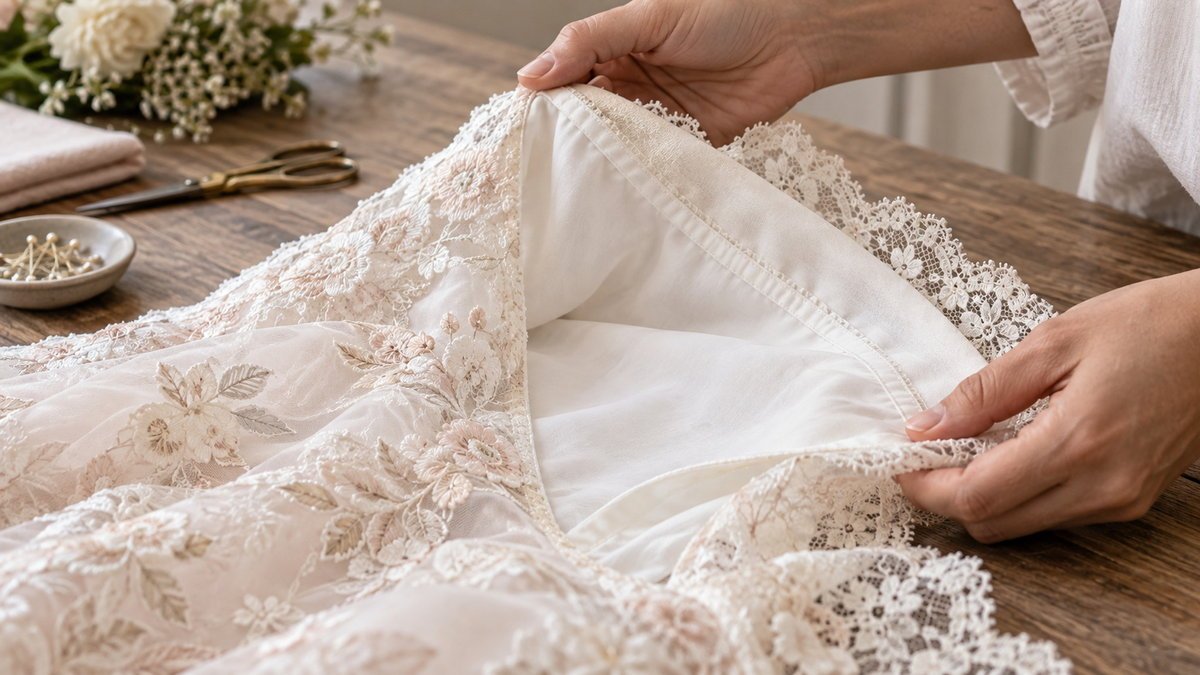
Then look at what sits against the body. Choose a smooth lining where the garment touches the neck, chest and underarm, and check that seams are finished or enclosed there rather than trimmed. Where a skirt builds volume from tulle, consider how many layers are needed and whether a lighter petticoat achieves the same silhouette with less weight and heat. Ask for the layer count and lining composition as a specification point, because the fibre choice has consequences beyond comfort — the same construction question is treated in more depth in the girls dress fabrics wholesale guide.
Bulk also has a commercial cost. A heavily layered gown is harder to hold, harder to sit in, harder to pack without crushing and heavier to ship, which shows up in freight cube and damaged stock. A practical short option beside the formal gown usually serves more families than a second signature gown, and it reuses more easily.
Gown, tea length or short: read the venue first
Length is a ceremony decision before it is a styling one. A long gown suits a formal service and an heirloom photograph, but it needs clear guidance on how the child is carried and how the hem is managed, and it can be impractical where the child is expected to move or the floor is rough. Tea or calf length and shorter styles suit receptions, warmer venues and less formal services, and they are easier to reuse.
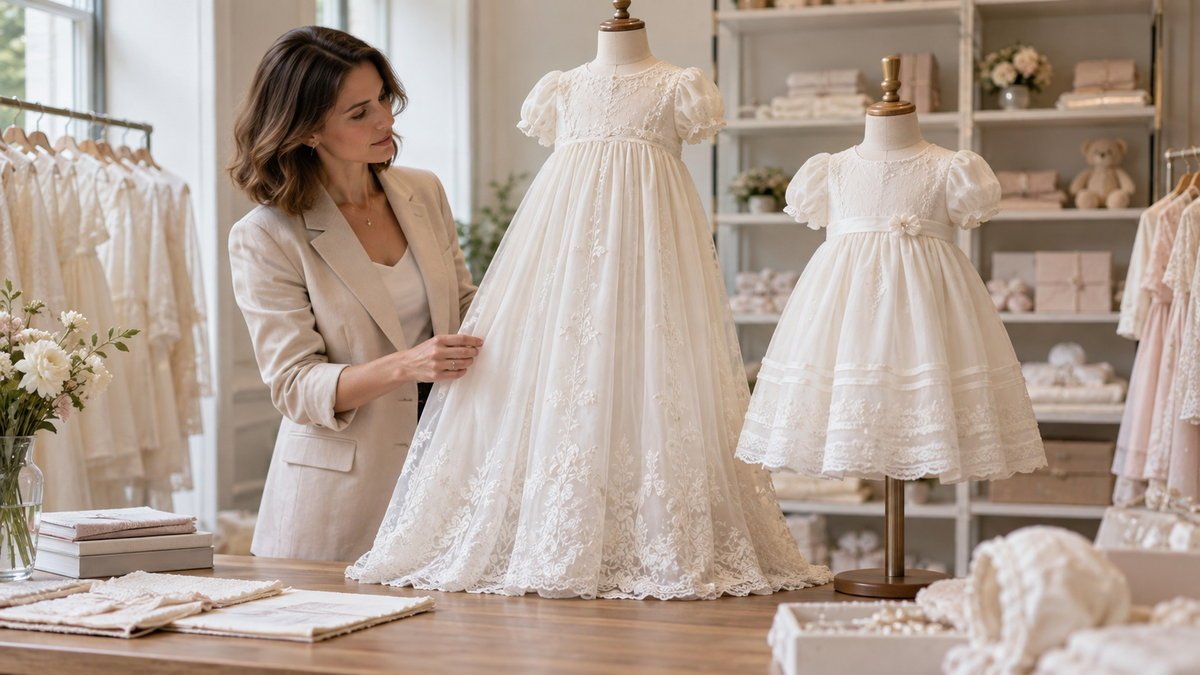
Offer length as a deliberate range rather than one signature gown. Specify the finished length and the point it is measured from, then verify it on a garment rather than on a size label, because a measurement reference that nobody wrote down cannot be checked at receiving. For families who do not know the venue in advance, a practical mid-length option beside the formal gown is the safer pair to hold. Warm-weather ceremonies push the same decision toward lighter lined fabric, which is also what keeps the dress wearable at a spring or summer service.
Where the ceremony includes older children, the adjacent programme is covered separately: styles that coordinate with a bride’s party rather than with an infant belong with the wholesale flower girl dresses collection, and mixing the two size charts is the quickest way to create a return.
Where an inspection is worth its time
Quality control begins with the approved sample, the shade reference and the agreed attachment standard. For this product, weight the inspection toward what touches the child and what breaks the ceremony: seam and lace finish against the neck and underarm, closure function and dressing access, attachment security of every decorative component, shade consistency across lace, satin, tulle, thread and lining, and the absence of soil, water or handling marks before packing.

Receiving a white ceremony garment is largely a condition check. Photograph unopened cartons where condition matters, match counts to the packing list, and open representative packages while the shipment reference is available, because soil, water marks, handling marks and transfer show against white more clearly than against any other colour. At launch, confirm that the copy, measurements, care guidance and shade descriptions match what arrived, then track the questions that stop a sale — for ceremony garments those are usually about dressing access, length and cleaning.
Review the programme before the season is half over, using paid demand, returns and exchange reasons, the lengths and shades customers asked for that were not stocked, and the condition of what remains. A dress returned for comfort or access is fit evidence, not a styling preference, and it should change the next sample rather than the product copy alone.
A garment that is given, then kept
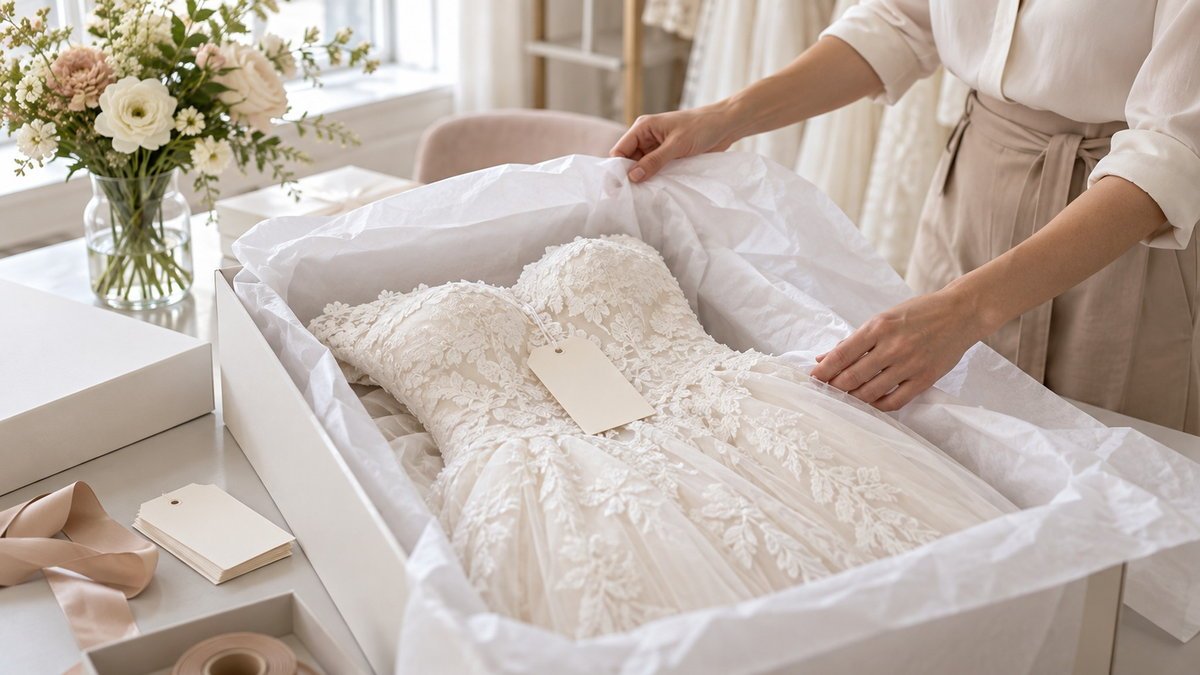
A christening dress is frequently bought as a gift by a grandparent, godparent or family friend, and it is often kept afterwards. That changes what packaging has to do. The garment must arrive without soil, creases, transfer marks or a crushed skirt, and it should be presentable when it is opened in front of the family, not only when it leaves the store.
Decide protection and presentation separately: tissue and a folded skirt support for transit, and any hanger, garment bag, box or blank label for the retail moment. Check how the packed dress recovers after being folded for shipping, and make sure the packaging tells a gift buyer what is included.
Buying route follows the same logic. Use a small ready-stock test to learn which lengths, shades and price points a store’s customers choose, and confirm the shade, size and component condition of the actual stock, because white shows handling marks a catalogue image will not reveal. Commit to a custom capsule only where the evidence is specific: an exclusive lace or shade, a private label, or a finish stock cannot provide. ODM adaptation keeps a proven ceremony base and changes a specific shade, lace or closure with fit and lining already settled; full custom work gives exact control of shade, lace, components and packaging but needs a sample round, a shade approval and calendar room to correct anything that fails inspection. Both routes run through the custom girls dresses OEM and ODM process, and both should sit in one buying plan rather than competing. Keep landed cost visible before the retail price, including protective packaging, inspection, freight, insurance, duties and destination charges, and note that layered tulle consumes more freight cube than a flat dress.
Questions first-time ceremony buyers ask
How much should a first ceremony order cover?
Enough to show a formal and a practical length, and small enough that a shade or component correction does not strand cash. Confirm the minimum order quantity per shade and per size before you size the opening buy, and reserve budget for replacing marked stock and for gift packaging.
Can a supplier photograph replace a sample?
No. A photograph cannot show how the garment opens for dressing, whether lace and seams feel smooth against an infant, whether a component is secure, or whether tulle, satin and lining read as the same shade in daylight.
When should the shade be approved?
On the assembled garment, against a physical master reference, under agreed lighting, with every substrate checked. Screen images cannot carry a decision a family will judge in church photographs.
What is worth recording after the launch?
Paid sales by length, size and shade; returns and exchange reasons; dressing and care questions; shade complaints; component failures; landed cost; and the condition of stock still held after the ceremony season.
Where does the size chart come from?
From the ceremony ages the store actually serves and from its own returns record on dressing access — not from a borrowed fashion curve and not from the communion programme.
Start with the ceremony date
The useful brief for a christening enquiry reads like a dressing and safety instruction as much as a design request. State the ceremony and expected age, how the garment opens, lining and layer composition, finished length and its measured point, the exact shade and every substrate it appears on, the attachment standard for each component, care expectations, packaging and the buying route. Replace comfortable wording with something checkable: “soft for baby” is not a specification, but the lining fibre, the finished seam treatment and the placement against the neck and underarm are.
Send the ceremony date, expected age and length requirement and we will reply with current christening-ready stock measurements and materials, or a review of a custom fabric, lace, labelling and packaging brief.
Leave a Reply