
The pair broke on a Tuesday. Both dresses had sold, both had photographed beautifully, and the boutique had done what every wholesale matching sibling dresses programme is supposed to do: bought two related styles, put them on the same rail, and written “matching” on the shelf card. Then a mother came in with a four-year-old and a seven-year-old, took the toddler dress, asked for the second one, and was told the size she needed had gone three weeks earlier. She bought one dress instead of two, and the rail kept a garment that no longer had a partner to sell alongside.
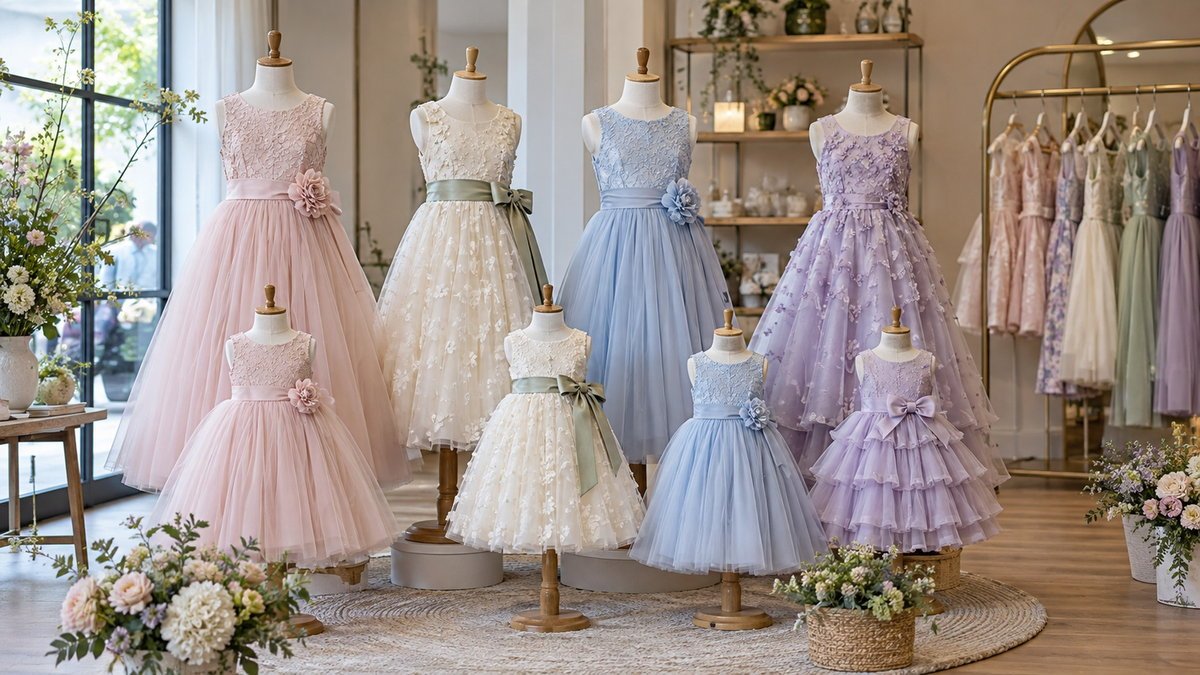
What follows is how that failure repeats, why it is a merchandising design problem rather than a stock accident, and how to build a coordinated programme that survives selling out in the middle. It is written for boutiques, retailers, online stores, private-label brands, importers and professional kidswear buyers, and it stays on the linked multi-piece decision: adjacency, overlap, shared elements and combined depth. Nothing here is a forecast, and no figure in this guide should be read as a guaranteed market result.
What the family actually asked for at the counter
The mother in that story did not come in for a toddler dress or a dress in a size. She came in for a photograph — two children standing together, in one colour, looking like they belong to the same occasion. That is the unit of demand, and it is not the unit in which dresses are bought, priced, stocked or reported.
That gap explains most of the difficulty. A sibling sale is a linked transaction: the willingness to buy one piece can depend entirely on the availability of the other. When a store plans by style, it plans for a demand pattern its customers do not have. Two styles can each show respectable movement and still fail as a pair, because the combination the customer wanted was never actually on the rail at the same time.
So before a sample is chosen, it is worth writing down which combinations the shop intends to serve. In practice they cluster into a few recognisable shapes: a toddler plus a core girl, two adjacent core sizes for children close in age, or a core girl plus an older girl. Deciding which of those you are building for is the first honest merchandising decision, and it comes before colour, before fabric and before price.
It also settles the language the shop is allowed to use. There are three different products hiding behind the word “matching”, and they carry different risks. Identical means one style cut across a size span wide enough to serve two children in the same family, which puts the whole burden on grading and on fit at both ends of the range. Coordinated means two silhouettes that share one design element but are cut differently for different ages. A capsule means two to four related dresses built around one occasion. A wholesale matching sibling dresses programme that never decides which of the three it is selling ends up promising the first, stocking the second and photographing the third.
Overlap is the only size metric worth planning
Adjacency, not width, decides whether a sibling programme works. Sibling demand sits in neighbouring sizes, so a broad theoretical size range has very little value if the shared colour stops at one end of it. The table below is the range breakdown to fill in before an order goes out: for each combination you intend to promise, name the size each child will need, and mark whether both sides are genuinely available in the same shade at the same time.
| Intended combination | Younger girl’s size | Older girl’s size | Same shade available | Action if one side is short |
|---|---|---|---|---|
| Toddler plus core girl | Toddler range | Core range | Confirm together | Offer the available style alone |
| Two adjacent core sizes | Core size | Next core size | Confirm together | Hold both or neither |
| Core girl plus older girl | Core range | Older range | Confirm together | Show the older silhouette only |
| Display-only pair | Any | Any | Not required | Keep the pair on the rail as styling |
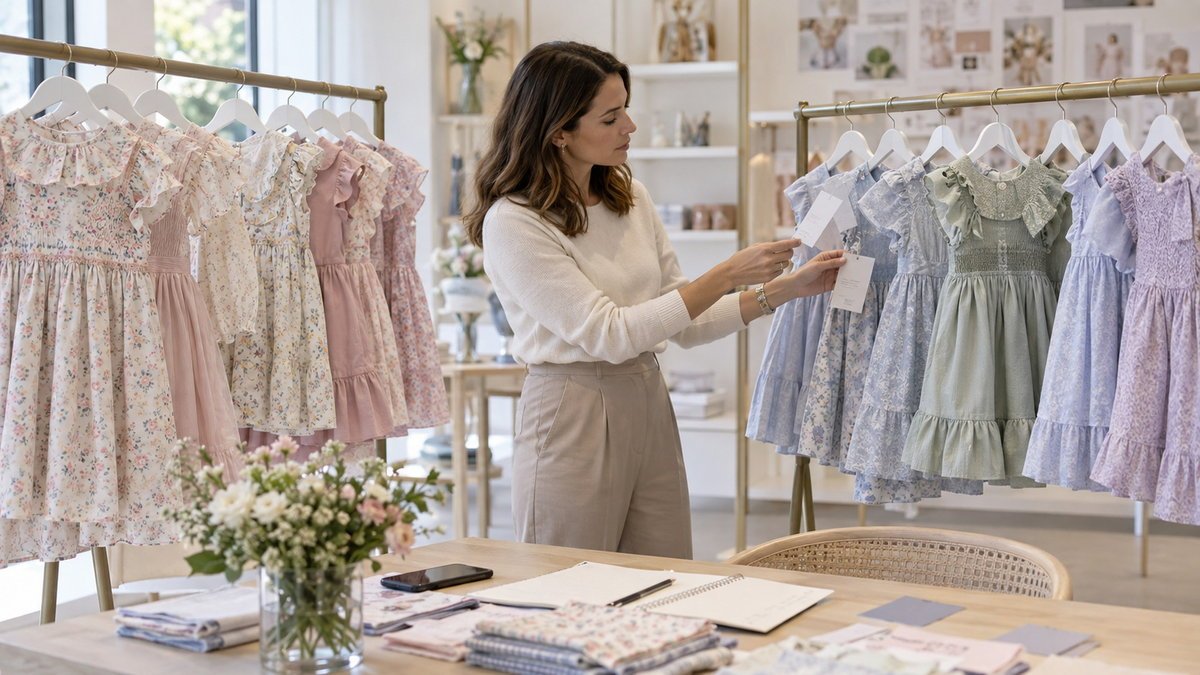
Filling that grid takes minutes and prevents the Tuesday problem, because it forces the buyer to look at the two sides of the pair as one availability question. It also separates two things a shop tends to blur: a pair offered as a genuine promise, and a pair shown purely as styling. The first needs both sides reserved together. The second only needs to look good.
Depth follows the same logic. Buy coverage where the combinations overlap and accept shallower depth in the sizes that only sell alone. A store that buys a full curve in both styles usually finds that one size in each style never moves, while the adjacent toddler-and-core combination runs short. Set the opening quantity so that at least one intended combination can be served without substitution, then hold a small reserve for exchanges. Confirm the minimum order quantity per style, per colour and in total, because a per-style minimum across a pair forces more depth than demand supports. Minimum order quantity is a supplier constraint, not a forecast.
Two specifications under one story
The link between two sibling dresses should be one element, not four. Shared fabric with different trims, a shared trim on two fabrics, or a shared shade across two fabric qualities each behave differently when you plan availability and approve a reorder. Stacking the link — same fabric, same bow, same lace — multiplies the components that have to stay identical across both styles, and every extra shared component is another thing that can drift in a second lot.
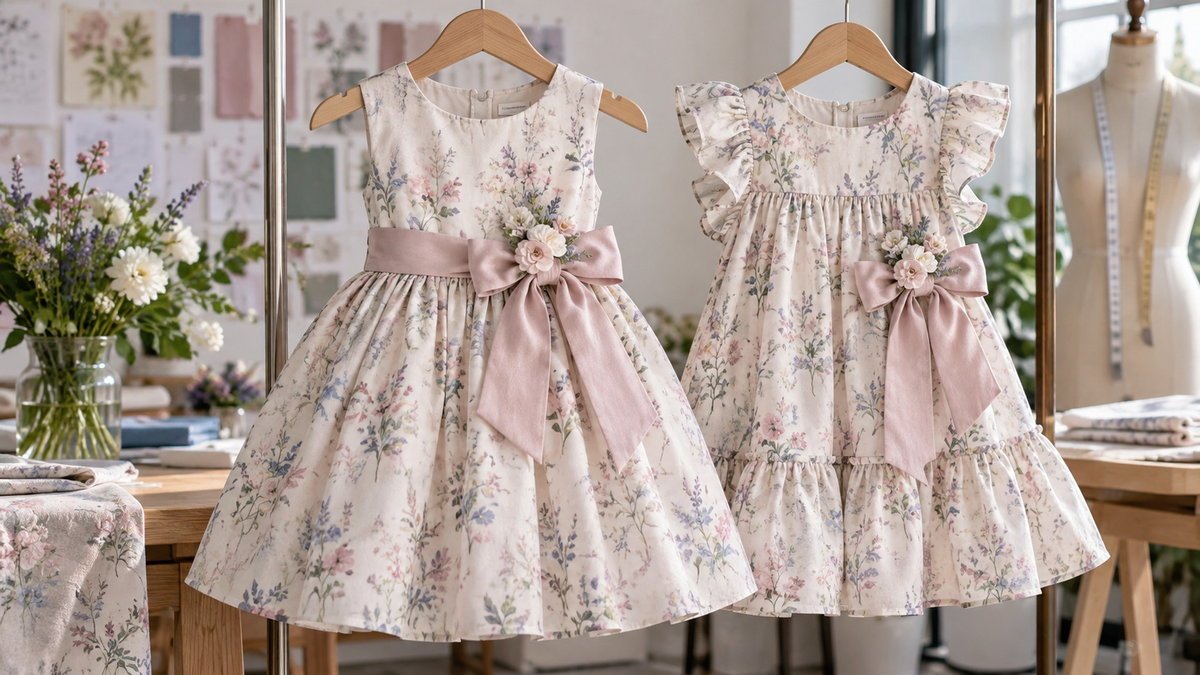
Pick the single element that carries the visual relationship, write it into the specification, and verify it on a complete sample in both sizes rather than on a flat swatch. Photograph the shared element on both garments side by side, because that is where the decision is confirmed or quietly lost.
Under that one story sit two construction specifications. Toddler and older-girl garments should not be the same pattern scaled up. Toddler styles need dressing access through a wide opening, soft seams against the skin, well-secured trim, a hem that does not trip a child learning to walk, and armholes that let a parent lift and hold. Older sizes need bodice length, shoulder breadth, a defined waist and a hem that reads as appropriate for a school-age girl. Asking a supplier for “the same dress in a toddler size” reliably produces the failure this separation prevents. The shared element stays constant; fit architecture and safety details change with age.
Keep each dress worth selling on its own
Showing two dresses together is a merchandising choice, not a product fact, and treating the display as if it were a product fact is how shops end up holding dead stock.
Each garment needs its own measurements, price, stock status and page, because many families need one dress and many stores sell the two styles on different days. Build the pair narrative in the photography, the styling suggestion and the occasion copy, then keep the commercial data separate. The test is simple: if the partner style sells out, can the remaining style still sell without looking like an incomplete set? If the answer is no, the pair is doing too much of the selling work.
Link the coordinated options clearly, and make sure the surrounding category gives a customer somewhere to go — a party-led range is the natural neighbour for occasion pairs, and wholesale party dresses for girls is where a one-dress customer usually ends up. Do not present two styles as a bundle unless they are genuinely sold as one unit. A shelf card that implies a set, a checkout that prices the two separately and a stock system that releases them independently should not all be true at once; when they are, the customer discovers the contradiction at the worst moment, which is at the counter with two children and one dress.
A shade that has to survive the second lot
Colour drifts between a first order and a reorder, and between two styles cut from different rolls. A pair that matched at launch can fail on a second lot, and the failure shows immediately in a family photograph, which is exactly the outcome the customer bought the pair to avoid.
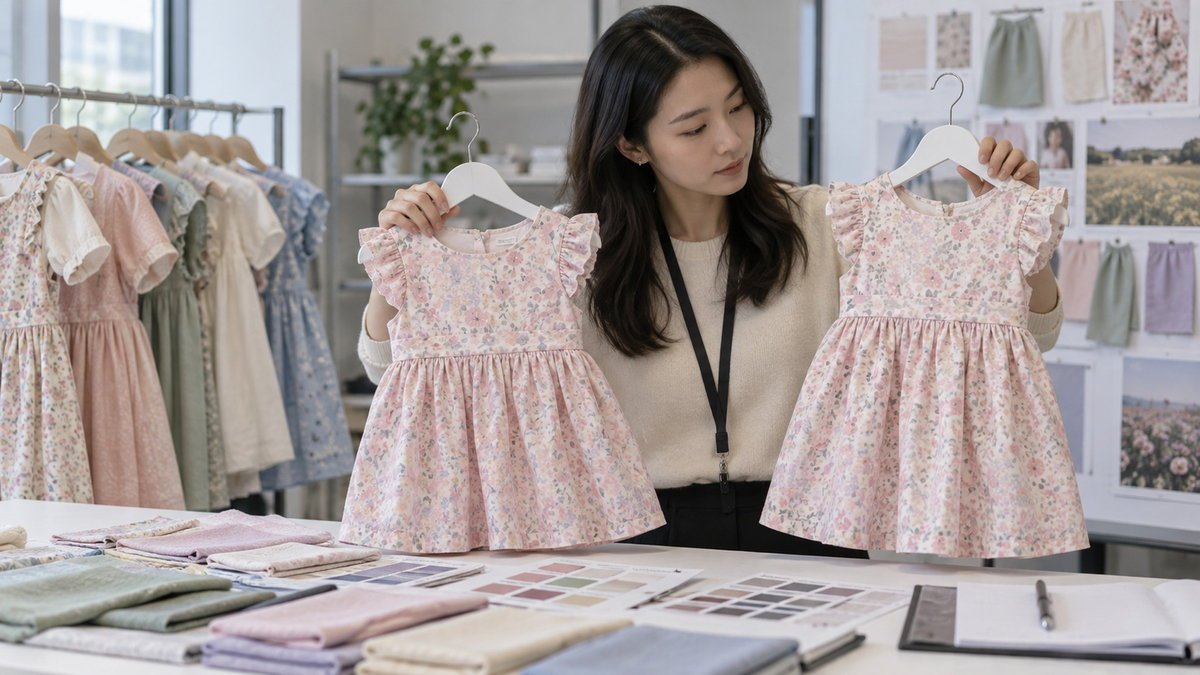
Agree one master reference, record the dye lot, and state the lighting used for comparison, because a shade that matches in a window can read differently under shop lighting. Where the pair uses more than one substrate — a tulle skirt over a woven bodice, for instance — approve the shade on each rather than on the dominant fabric alone. When a reorder arrives, compare it against the approved swatch before confirming the delivery, and decide in advance how a second-lot variation will be accepted or rejected. For custom programmes, reserve shared fabric or a defined dye lot at the point of commitment, and write the substitution rule into the order.
This is also where a pair differs from a single dress: two garments in one campaign must match each other, not merely match a standard in isolation. A slightly deep first lot is a tolerable dress and an intolerable pair.
Follow the pair to the till
Standard style-level reporting hides the pattern that matters here. A combined style result can show healthy sales while concealing that one dress carries the pair and the other drags. Track complete-pair requests, partial purchases and, most importantly, lost pairs: the occasions when a customer asked for a combination the store could not fulfil.
Log the requested combination, not only the outcome. A customer who wanted a toddler size and a core size and left without either is evidence about an assortment gap, not about demand. Review the pattern by combination at the end of each selling window and let it decide which pairs to hold deeper, which to keep shallow and which to drop. The planning discipline that an inventory review applies to a whole category has to be applied here at the level of the combination — kids dress inventory planning covers the wider mechanics if the store does not yet have a routine for it.
An uneven result calls for a corrected size breakdown rather than a larger order. Buying more of a pair that failed on one side simply buys more of the failure.
Test the pair on stock before you commit a dye lot
Treat available stock as the research phase and custom development as the commitment, and make that sequence a rule rather than a preference.
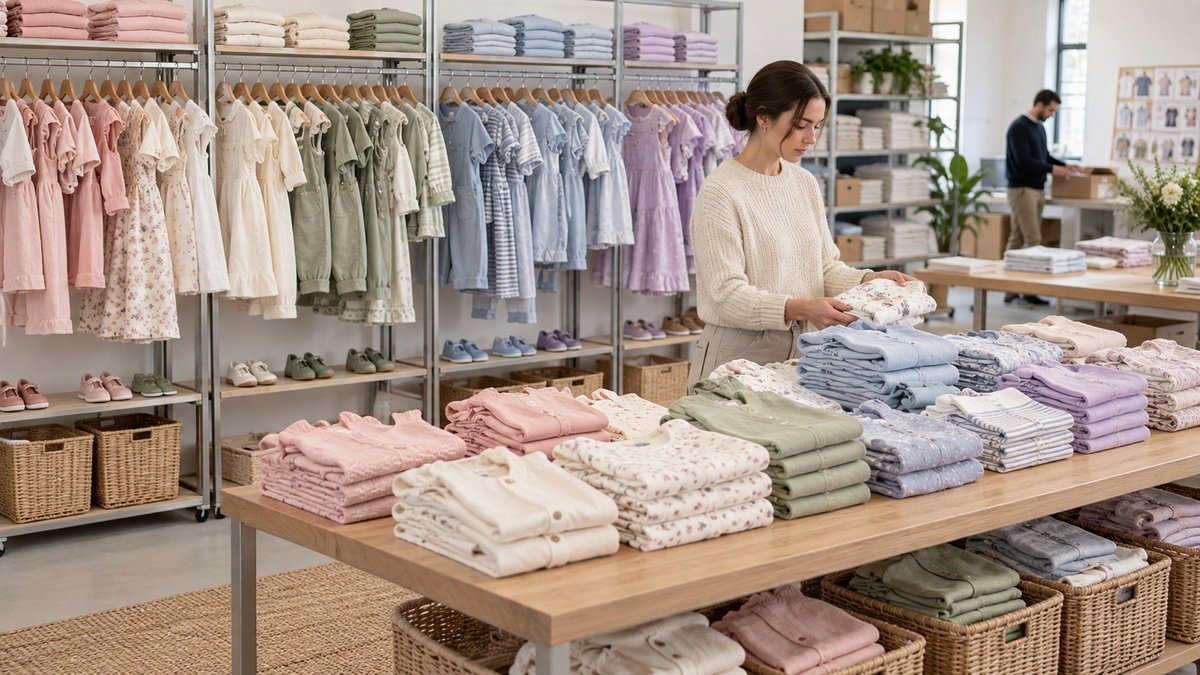
Coordinated styles that can be ordered today let a store learn which age combinations its customers actually ask for, without booking a dye lot or a production slot for a combination that may not sell. Confirm live availability and shade for both styles, check that the overlap sizes exist, and watch how the rail behaves for a full selling window. Once a combination shows repeat paid demand, move that combination — and only that combination — into custom development with reserved shared fabric.
The route is decided per combination rather than per programme. ODM adaptation suits a proven base that needs a shared element changed, such as approximating a new season shade or adjusting a hem for the older girl, using fit and grading already tested in the market. Custom OEM is justified when the pair must carry an exclusive trim, fabric or private label and the calendar allows a shade approval. Before publishing any pair as a repeatable programme, confirm that both styles can be replenished, not just the faster one: continuity on one side of the pair and not the other eventually forces a substitution or a markdown. Current availability for the stock phase is best confirmed through ready-stock girls dresses wholesale, and if the wider category is moving, boutique dress trends is the place to check direction before a capsule is built around a shade.
What the rail, the page and the copy must agree on
Build the copy from approved evidence on both garments: the age each style is cut for, the shared element that links them, the size span each covers, the shade reference and its substrate, and the combinations you can genuinely fulfil today. Nothing the sample cannot support should reach the page. A shelf card that says “matching” invites a customer to expect every size shown, in the same shade, at the same time; if the offer is coordinated rather than identical, the copy and the store conversation should say so in those words.
Plan images by the question a boutique owner asks. A collection shot shows whether the styles read as a family. A size-run photograph shows whether the overlap is real. A macro of the shared detail proves the link. A rack scene shows what is available now. Group the shop floor and the navigation so a customer compares within the pair by age, occasion or stock, and brief the store team on what to offer when a pair cannot be completed — one dress in the right shade beats an apology.
Opening the cartons to check a relationship, not a count
Receiving a coordinated programme means checking a relationship, not just a carton count. Open representative packages while the shipment reference is available, compare each size against the approved sample, and check the shared shade across both styles in the same light. Record issues by style, size, shade and carton, then give the store team a short pairing brief of what is in stock and what to offer when a pair cannot be completed.
Review the pair before the selling window is half over, using paid demand by combination, returns, size gaps customers asked for and the slower style’s remaining stock. A visual check on its own cannot prove every safety, composition, colourfastness or attachment requirement, so involve qualified laboratories or compliance professionals wherever the product and destination demand it; any labelling or import point in this guide is planning information, not legal advice.
The Tuesday problem is avoidable. It is fixed before the order, by deciding which combinations the shop will genuinely promise, reserving both sides of them together, and letting each dress stand on its own feet when the partner is gone.
Tell us which combinations you need to promise
Ask for current matching or coordinated ready-stock styles with overlapping sizes, or submit a sibling capsule brief for custom development. If you tell us the age combinations and the shade you have to hold, we can tell you which pairs are genuinely deliverable today and which need a reserved lot.
- WhatsApp: https://wa.me/8619896855980
- Email Us: mailto:luxudress@gmail.com
Leave a Reply