
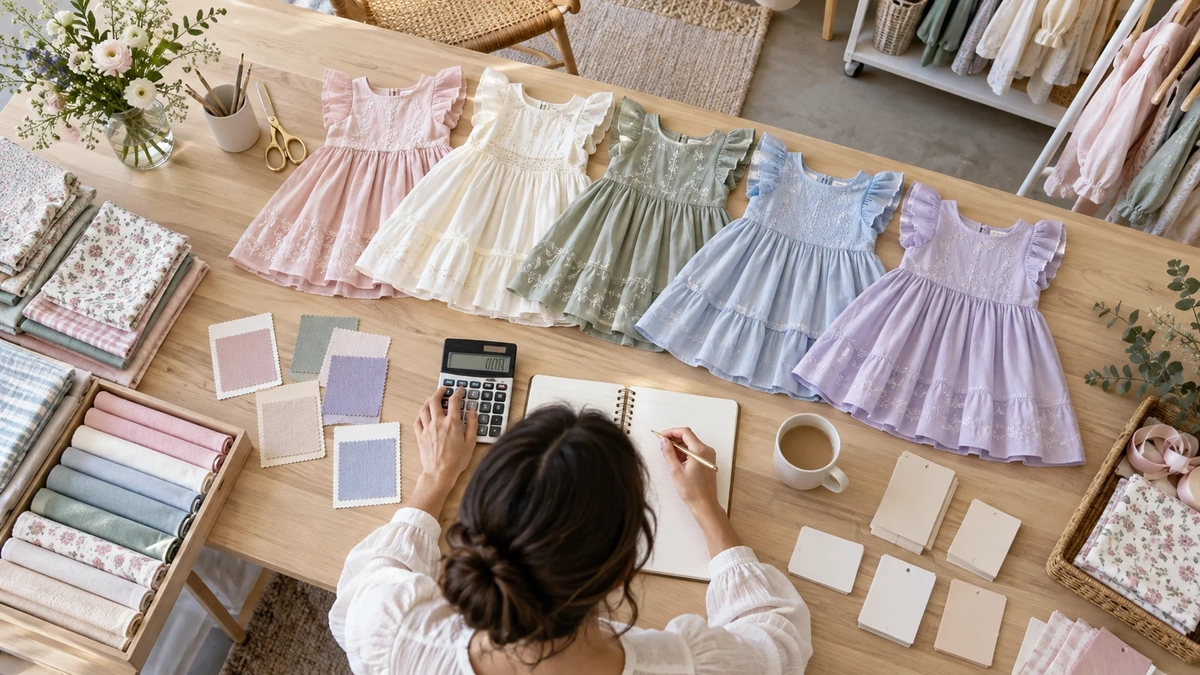
There is no universal number of dresses a boutique should order first, and any supplier who offers one is guessing about someone else’s store. The useful answer is a range, and it comes from four inputs the buyer already controls: usable inventory cash after rent, staffing and marketing; the price band the customer pays; the number of distinct customer occasions the store needs to cover; and how quickly a reorder can realistically arrive. This guide turns those inputs into a boutique girls dress opening order that can be defended later.
Quick Answer: How Many Girls Dresses Should a Boutique Order First?
Set the budget first, then work backwards. Reserve roughly a fifth to a third of ususable inventory cash for freight, duty and reorders, divide the remainder across the customer occasions you need to cover, and buy breadth before depth: more styles at small quantities rather than one or two styles deep. A first order that covers six to ten styles across a limited size run, with a defined reorder reserve, is usually more useful evidence than a deep buy of two styles.
Build the Test Order Without a Big Minimum
Selected ready-stock styles can be ordered from six pieces, which lets a boutique cover several occasions in one opening order and reorder the winners without waiting for a custom production cycle.
{{FIG1}}
The Number Comes Last, Not First
Buyers usually look for a unit count before they have defined the constraints, which is why opening orders are so often either too shallow to sell from or too deep to recover from. Reverse the sequence. Decide what the store can spend on stock, what it must keep back for freight and reorders, which customer occasions it has to cover, and how fast a repeat order can arrive. The number of dresses is the output of those four decisions, not the starting point.
Write the result as a range with a floor and a ceiling. A range is easier to defend to a partner or an accountant than a single figure, and it also gives the buyer room to respond to a supplier’s actual pack sizes and minimum order quantities.
Eight Decisions That Set a Boutique Girls Dress Opening Order
1. Start with usable inventory cash, not supplier minimums
Begin with cash that is genuinely available for stock after rent, salaries, marketing, packaging and a working buffer. Supplier minimums then become a constraint to work within rather than the number that defines the order. A store that buys to a minimum it cannot afford has converted a supplier’s convenience into its own cash problem.
2. Reserve cash for freight, duty and reorders
Freight and duty are part of the purchase, not an afterthought, and reorder cash is what makes a good first season repeatable. Set the reserve aside before selecting product and treat it as unavailable. Import duties, brokerage and inland delivery vary by destination and shipment method, so confirm them with a broker rather than assuming a percentage.
3. Choose style breadth before deepening winners
A first order is a research budget. Several styles at small quantities reveal which occasion, silhouette and price band your customers actually respond to. Depth in one style teaches one lesson; width across six styles teaches six. Reserve depth for styles that have already produced paid demand.
4. Limit colors until the store has evidence
Every additional color divides the size depth you can afford. Two or three colors across a full size run will out-sell five colors at shallow depth in almost every boutique, because the customer can find her size. Keep the palette coherent: two dependable neutrals plus one accent that can be reordered.
{{FIG2}}
5. Set a minimum viable size run
Define the smallest size coverage that still dresses a real customer – usually the two or three sizes that account for most of the store’s sales, not the full age range. A complete-looking run that leaves nothing for a second order is worse than a focused run with depth where the customers are.
6. Use launch cadence to phase receipts
Two smaller deliveries landing four to six weeks apart usually beat one large delivery. Phasing spreads cash outflow, allows the first weeks of selling to inform the second receipt, and keeps newness in front of returning customers. It also reduces the risk that a single delayed shipment leaves the store empty for a season.
7. Define a reorder trigger before buying
Decide in advance what evidence justifies a repeat: a size selling out within a set number of weeks, a style reaching a target sell-through rate, or two customer requests for a color you do not have. Without a written trigger, reorder decisions drift until the window closes – and with custom production timing, a late decision can cost the whole season.
8. Model the downside if a style sells slowly
Before confirming the order, write down what happens if the slowest style sells at half the expected rate. Can it be marked down without damaging the price ladder? Can it be moved into a bundle or a sale event? If the honest answer is no, reduce the quantity now rather than discovering the problem in month three.
Sizing the Opening Order in Practice
Take the usable cash, subtract the reserve, and divide the remainder by the number of occasions you intend to cover. That figure is your budget per occasion, not per style. Inside each occasion budget, buy two to four styles at small quantities across a focused size run, and note the price band each style occupies so the ladder is visible on the rail.
Then stress-test the plan against delivery. If a reorder cannot arrive inside your selling window, the opening order must carry more depth than a store with fast replenishment – which is a real argument for starting on ready stock rather than custom production while the size mix is still unknown.
{{FIG3}}
Frequently Asked Questions
Is there a minimum order quantity for a boutique buying girls dresses?
It depends on the route. Selected ready-stock styles can be ordered from six pieces, and some designs can start from a single piece, which suits a first test order. Custom OEM development generally starts from 200 pieces per style because of fabric, cutting and sampling setup, and it normally requires a sample before bulk production.
How much should a first order leave for reorders?
Plan on keeping roughly a fifth to a third of usable inventory cash unused during the opening buy. That reserve covers freight and duty surprises, size gaps that appear in the first weeks of selling, and the reorder that turns a successful style into a full season rather than a single delivery.
How long does a boutique reorder take to arrive?
Ready-stock repeats are fast because the styles are already produced. Custom production is longer: pattern and sample development typically takes about five to seven working days after the specification is confirmed, and bulk production commonly runs 25 to 40 days after sample approval, before shipping time is added.
Sources and Methodology
This is a planning method rather than a benchmark: it produces a quantity from your own constraints instead of quoting a universal figure. Minimum quantities, sampling fees and production timelines referenced here reflect our current published terms, and freight or duty estimates must be confirmed with a broker for the specific destination.
- U.S. International Trade Administration: determining landed cost
- U.S. CPSC: labeling requirements overview
Explore Ready-Stock Opening Order Styles
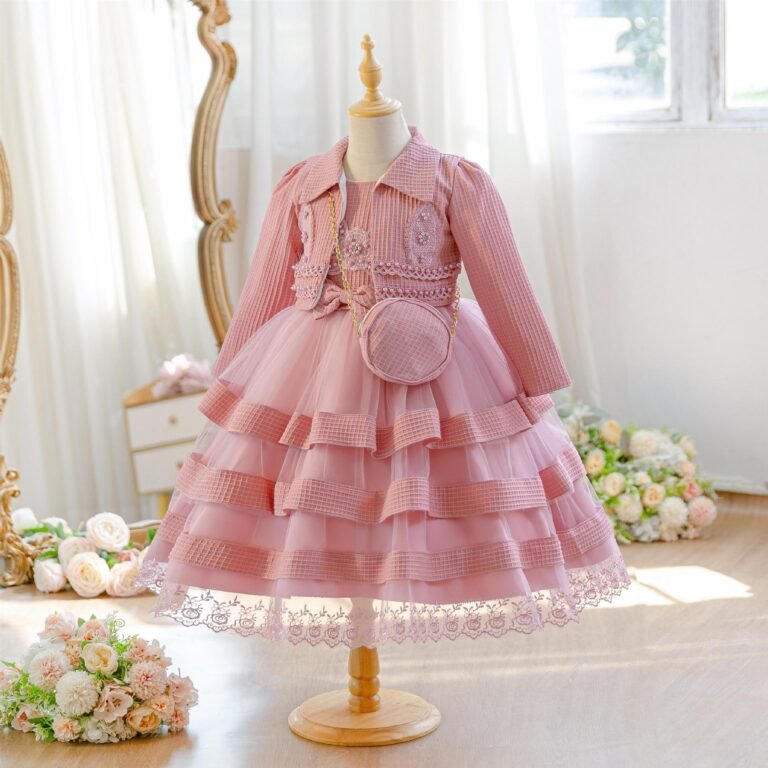
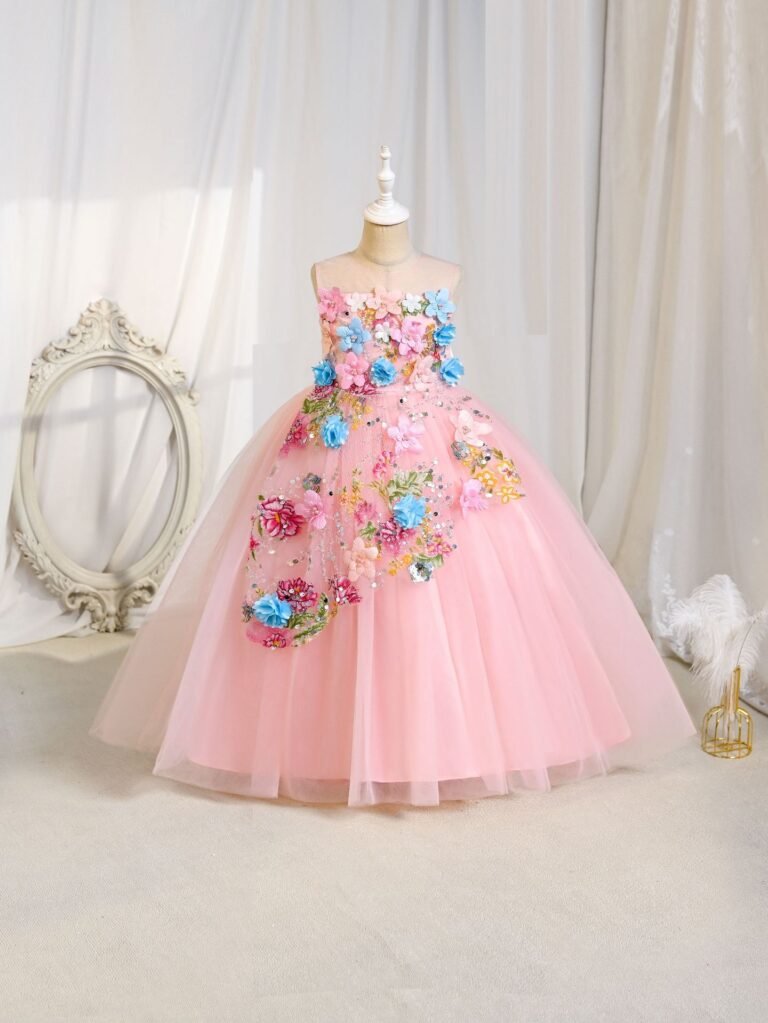
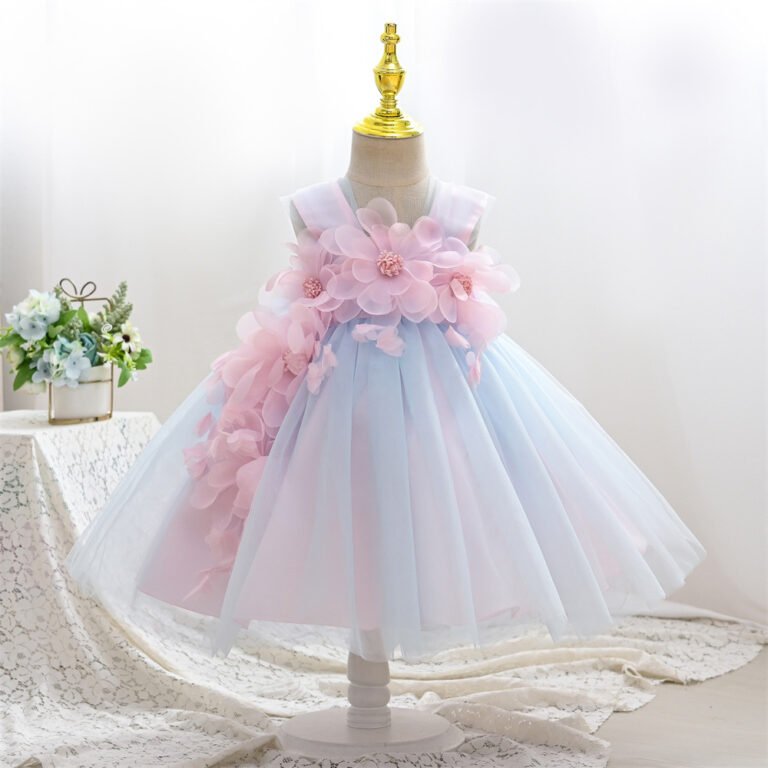
Looking for styles related to this buying guide? Start with small ready-stock quantities you can reorder, and keep the custom route for styles that have already earned depth.
Tell Us Your Budget, Get a Test Order Plan
Send your budget, target retail price, market and launch date and we will propose a ready-stock shortlist that can be ordered in controlled quantities, with the reorder path and timing set out before you commit.
Leave a Reply