
In a boutique, the display does the selling before you say a word. How you present girls’ party dresses — the colours, the height, the styling, the light — determines whether a browsing parent stops, reaches out and ultimately buys. This guide breaks down visual merchandising techniques that move dresses off the rack.
Browse Best-Selling Dress Styles
See the occasion, party and flower girl styles that boutiques reorder most, with size runs and unit pricing shown.
Visual merchandising is not decoration; it is a sales system. A well-merchandised display guides the eye, tells a story, and makes a dress look like it belongs in a child’s life. Done well, it raises both the perceived value and the sell-through rate of the same inventory. Done poorly, even beautiful dresses sit unnoticed.
This article covers the in-store display. For the online equivalent, see our guide to product photography for kids dress brands, which applies the same principles to e-commerce images.
1. Colour Grouping: The Foundation
The single most effective change you can make is to group dresses by colour rather than scattering them randomly. Colour grouping creates visual calm, makes the display read as intentional, and helps the customer scan quickly.
- Group by colour family — pastels together, bolds together, neutrals together.
- Create a colour story — a gradient from light to dark is pleasing and draws the eye along the rail.
- Use one hero colour — a single dominant colour with accents reads as curated and premium.
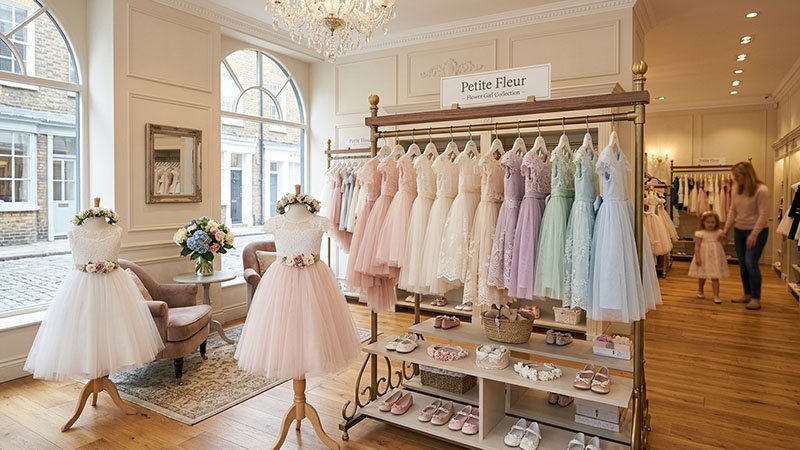
A colour-grouped display reads as intentional and premium — and guides the customer’s eye through the range.
2. Height, Layering and Focal Points
Get Wholesale Pricing
Send your store type and monthly volume and we will send the wholesale price list and recommended opening order.
How you position dresses within the display matters as much as what you display. A few principles:
- Create a focal point — one standout dress, elevated or front-and-centre, anchors the display and draws customers in.
- Vary the height — mixing hanging heights and a small amount of folded or flat-lay presentation keeps the eye moving.
- Show the skirt — party dresses sell on their volume. Fan out the tulle or crinoline so the fullness is visible, not flattened against the rail.
The goal is to make the display look three-dimensional and alive, so a parent can imagine the dress in motion — twirling at a party — rather than as a flat item on a hanger.
3. Styling and Accessories
Styling turns a dress into an outfit and raises its perceived value. A few proven tactics:
- Style complete outfits — pair a dress with a headband, shoes or a small cardigan to show the full look.
- Use age-appropriate accessories — a tiara with a princess dress, a bow with a birthday dress.
- Cross-sell naturally — placing accessories beside the dresses encourages add-on purchases.
Pair each dress with the accessories that complete the look — a headband, a pair of party shoes, or a small shawl or bolero. Placing these beside the dresses raises the basket size and turns a single dress sale into a styled outfit, lifting both the perceived value and your average order value.
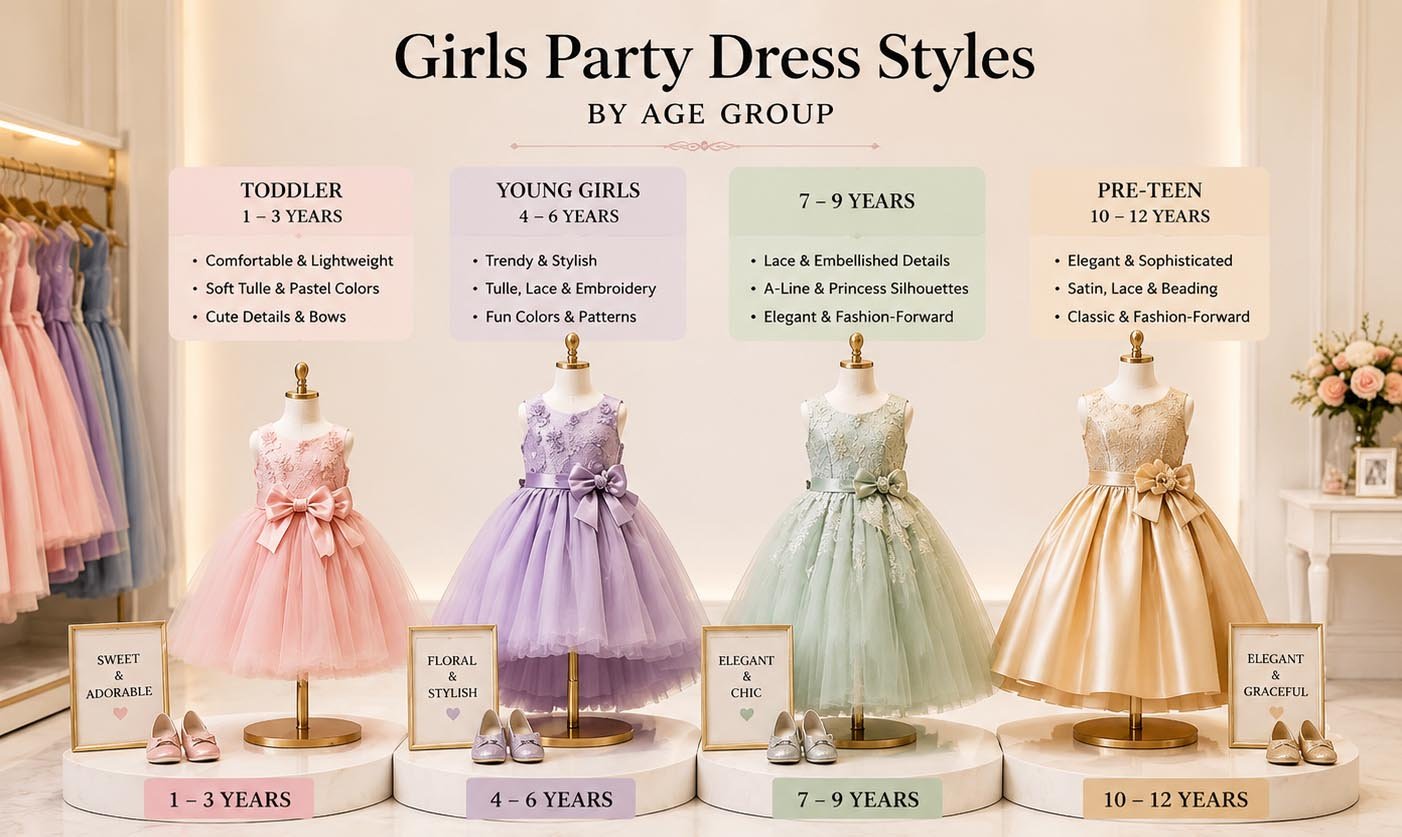
Show dresses styled as complete outfits and grouped by age, so parents instantly see what fits their child.
Styling is also where you tell the customer when and where to wear the dress — a birthday, a wedding, a family photo. A small sign or card with the occasion helps the customer self-select and moves the sale forward.
4. Lighting and Seasonality
Lighting is the difference between a dress looking flat and looking special. Party dresses, with their tulle, sequins and satin, respond dramatically to good light:
- Use warm, soft light — it flatters skin tones and makes fabrics look richer.
- Spotlight the hero dress — direct a small spotlight at your focal point to make it pop.
- Refresh seasonally — rotate the display for spring, summer, holiday and back-to-school, so the store always feels current.
Seasonal rotation is also a merchandising discipline that prevents dead stock — it forces you to bring forward the dresses that are in season and clear the ones that are not, which ties into inventory planning for seasonal kids wear.
5. Telling a Story with the Display
The strongest displays tell a story the customer wants to step into. Rather than “a rack of dresses,” think “a birthday party,” “a summer garden,” or “a princess’s wardrobe.” A few ways to build that story:
- Choose a theme — one occasion or season per display.
- Use props sparingly — balloons for a birthday, flowers for a garden party, a small chair or mirror for a dressing-up corner.
- Keep it aspirational but achievable — the customer should see their own child in the scene.
A themed display does more than sell one dress — it sells a whole occasion, which raises the basket size and gives the customer a reason to linger.
6. Putting It Together: A Simple Checklist
Run your display through this checklist before you open the doors:
- Colour-grouped — is the rail organised by colour, not random?
- One hero — is there a clear focal point?
- Skirts shown — is the volume and drape visible?
- Styled — are outfits accessorised and occasion-labelled?
- Lit — is the hero dress lit, and is the overall light warm?
- Edited — is the display curated, not overcrowded?
Visual merchandising is a skill that compounds — the more you practise it, the more instinctive it becomes, and the more your sell-through improves. For more on what to actually stock in the first place, see our roundup of dress styles trending in boutiques.
Frequently Asked Questions
Why does colour grouping improve sales?
Colour grouping creates visual calm and makes the display read as intentional, which helps customers scan quickly and perceive the range as curated and premium. A clear colour story also guides the eye along the rail.
How many dresses should I put on a display rail?
Fewer than you think. An overcrowded rail hides your best dresses. Edit the display down so each dress has room to be seen — a smaller, well-chosen selection almost always outsells an overstuffed rack.
How do I show off a tulle party dress properly?
Fan out the tulle or crinoline so the fullness is visible rather than flattened against the rail. Party dresses sell on their volume and movement, so the display should make the skirt look full and ready to twirl.
Should I style dresses with accessories?
Yes. Styling a dress with a headband, shoes or a small cardigan shows the complete outfit and raises perceived value. It also naturally cross-sells accessories placed beside the dresses. For a display-ready range, browse our girls’ dresses.
How often should I change my display?
Refresh the display at least seasonally — spring, summer, holiday and back-to-school — so the store always feels current. Seasonal rotation also helps you bring forward in-season dresses and clear slow-moving stock.
Does good lighting really make a difference?
Yes, especially for party dresses with tulle, sequins and satin. Warm, soft light flatters skin tones and makes fabrics look richer, while a small spotlight on your hero dress makes it the natural focal point.
Build a collection that sells itself
Tell us your store’s style and season, and we’ll recommend a dress assortment that merchandises beautifully and sells through.
Leave a Reply