
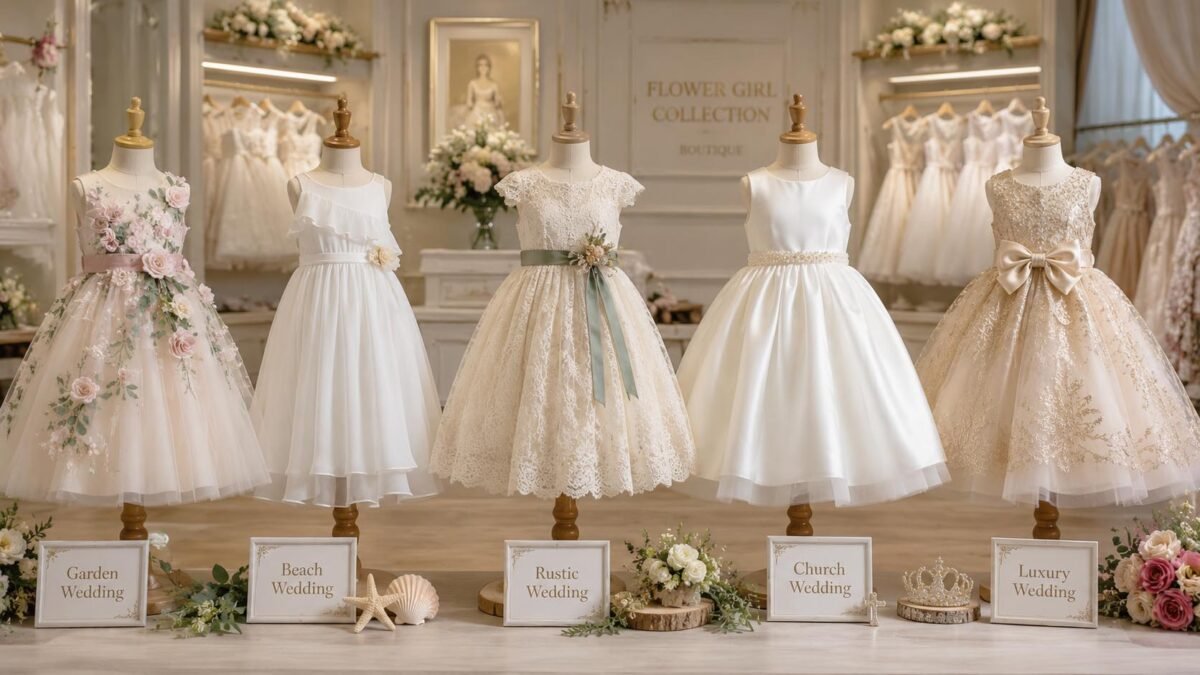
The short answer: a kids’ dress is sold on emotion, but it is trusted on detail. A single flat lay will never close the sale on its own — buyers need a sequence of shots that show the silhouette, the fabric, the fit and the finish. A useful planning benchmark is that a listing with at least five to seven distinct, well-lit images converts materially better than one with two or three, because every extra shot answers one more objection before the buyer has to ask.
Browse Best-Selling Dress Styles
See the occasion, party and flower girl styles that boutiques reorder most, with size runs and unit pricing shown.
For wholesale girls’ dresses, photography does double duty. It sells to your end customer, and it sells your brand to retail buyers who are judging whether your line looks professional enough to stock. The same tulle dress can look like a boutique find or a clearance item depending entirely on the photo. This guide walks you through the shots that matter, the specs to hit, and where to draw the line between doing it yourself and hiring a pro.
Everything below applies across our dress collection — from flower-girl and party styles to custom runs — because the visual rules are the same whether you are shooting one style or forty.
1. Why Kids’ Dress Photos Decide the Sale
Online, the photograph is the product. There is no fitting room, no touch test, no chance to hold the dress up to the light. The buyer’s entire decision rests on what they can see, which is why formalwear — tulle, satin, sequins, embroidery — is one of the most photography-sensitive categories in children’s clothing.
Three things make kids’ dresses unusually demanding to shoot:
- Volume is invisible in a single angle. A layered skirt has depth that a flat front shot flattens into a pancake. You need angles that show the layers.
- Detail carries the price. The difference between a USD 10 dress and a USD 40 dress is often in the embroidery density, the lining, the hem finish — none of which survive a low-resolution wide shot.
- Color is a trust issue. Satin and tulle shift color dramatically under different light. If the photo lies about the color, you get returns.
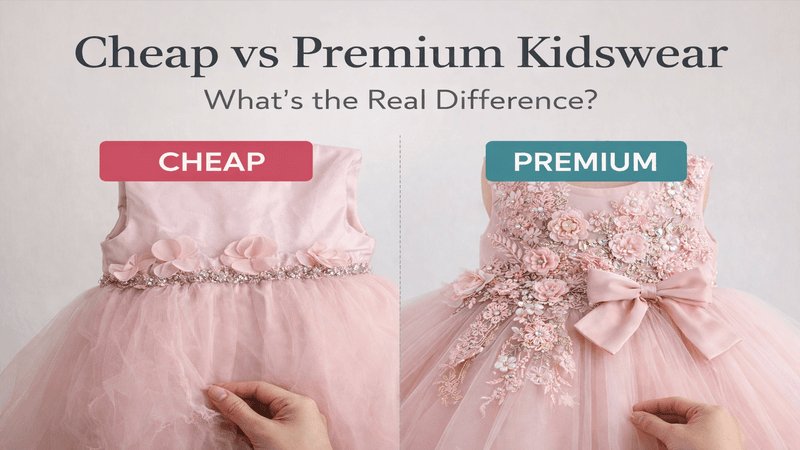
The same dress can read as discount or boutique depending on the photography — image quality sets the value expectation before a word is read.
2. The Seven Shots Every Listing Needs
You do not need an infinite gallery — you need the right shots in the right order. Here is the sequence that performs best for girls’ formalwear:
| # | Shot | What it answers |
|---|---|---|
| 1 | Flat lay (front) | Silhouette, length, skirt shape |
| 2 | Hanger or ghost mannequin | How it hangs, drape, true proportions |
| 3 | Model / on-body (front) | Fit, scale on a real child |
| 4 | Model (back & side) | Back detail, train, sleeves, buttons |
| 5 | Fabric detail close-up | Embroidery, sequins, tulle layers, finish |
| 6 | Color / scale reference | True color, size against a known object |
| 7 | Lifestyle / in-context | Emotion — the moment the dress is for |
Get Wholesale Pricing
Send your store type and monthly volume and we will send the wholesale price list and recommended opening order.
A seven-shot sequence is a useful planning target; the exact number can flex by style and platform.
The order matters: start with a clean, recognizable overview, then zoom in. Buyers scroll like they read — first impression, then detail, then feeling.
3. Flat Lay and Hanger Shots: The Foundation
The flat lay is where most listings start, and it is easy to get wrong. The goal is a clean, honest read of the silhouette — nothing hiding the shape.
Flat Lay Done Right
- Shoot from directly above, camera parallel to the floor, to avoid skewing the proportions.
- Shape the skirt. Fan the layers out evenly so the volume reads; a crumpled skirt photographs as a discount pile.
- Use a neutral surface. White, light gray, or a very soft pastel. Patterns and busy backdrops steal attention from the dress.
- Keep it tidy. Straighten straps, tuck loose threads, smooth wrinkles — a single wrinkle reads as “cheap” in a flat lay.
The hanger shot (or a ghost-mannequin shot) shows how the fabric falls. Tulle holds structure; satin drapes; chiffon flows. That difference is a selling point, but only if the buyer can see it. Use a well-lit white background and a quality hanger that does not distort the shoulder line.
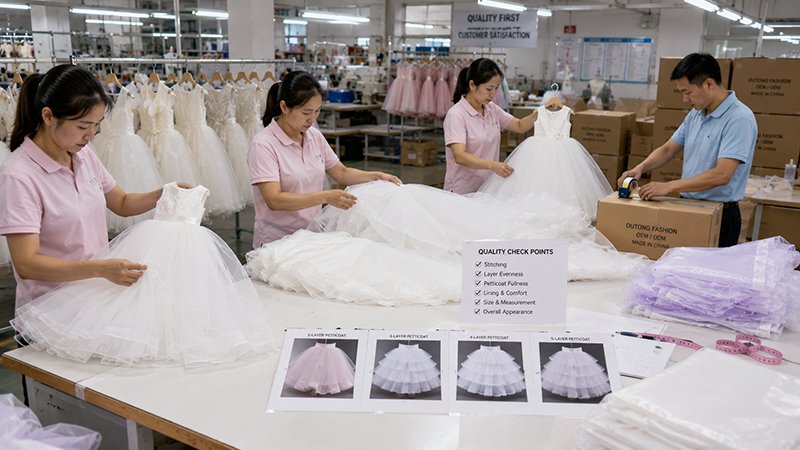
A clean, shaped flat lay makes layered construction read as intentional volume, not bulk.
4. The Model and Lifestyle Shot: Where Emotion Lives
Flat lays sell the product; model shots sell the feeling. A dress on a child — twirling at a party, walking down a wedding aisle — is what turns a browser into a buyer. This is the shot that justifies the price.
- Always show fit. A real child in the dress communicates scale instantly: how long it falls, how full the skirt, how the bodice sits.
- Match the dress to its occasion. A flower-girl dress belongs in soft garden light; a party dress can take a brighter, more playful setting.
- Show movement. Tulle and chiffon are built to move. A twirl or a step makes the fabric’s life visible.
- Keep faces incidental. Many brands crop or soft-focus the face to keep focus on the garment and respect privacy.
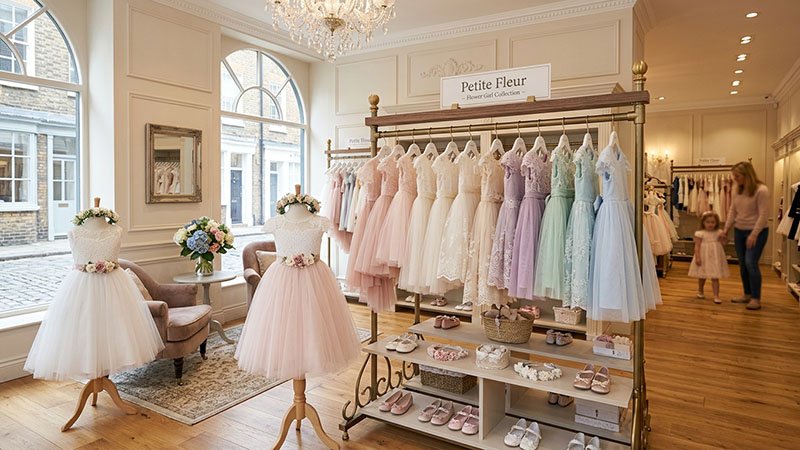
An in-context shot shows the dress doing the job it was made for — the emotional payoff of the listing.
5. Fabric and Detail Close-Ups: Selling the Quality
This is the shot that separates a professional listing from an amateur one, and it is the cheapest to produce well. A macro close-up of the embroidery, the sequin work, or the tulle layers does what no wide shot can: it proves the quality.
- Embroidery and beading. Get close enough to show stitch density and clean finishing.
- Sequin and glitter. Show the texture; a flat sparkle reads as one shiny blob without a close-up.
- Tulle layers. A side-on detail shows how many layers there are — the difference between a thin skirt and a full one.
- Lining and seams. A clean seam and a lined bodice are trust signals for parents buying for sensitive skin.
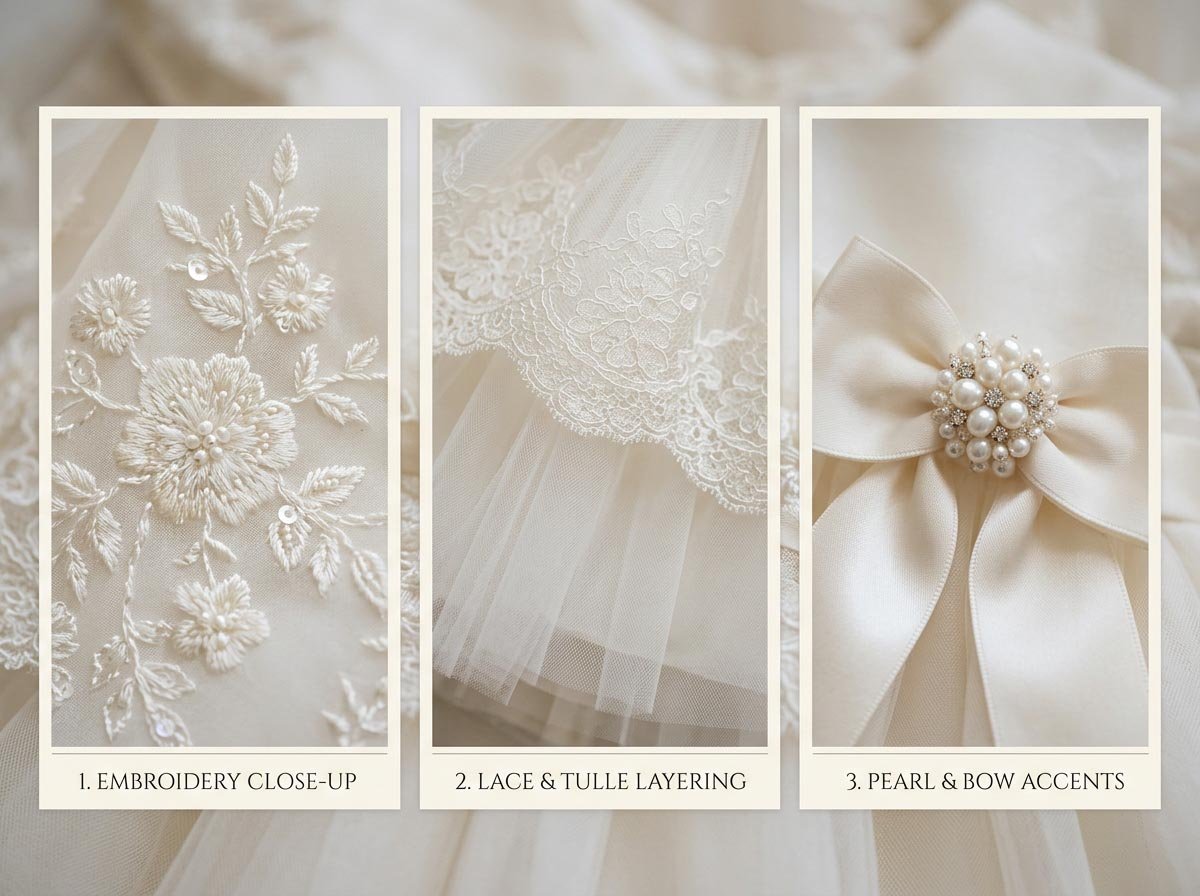
A detail close-up turns “it looks nice” into “the quality is real” — the trust shot.
If you source from a supplier with strong quality control, these detail shots also reinforce the story: consistent stitching across a batch is a selling point you can photograph.
6. Color Accuracy and Lighting: The Non-Negotiables
Color mismatch is one of the top drivers of returns in online apparel, and it is almost always a lighting problem, not a camera problem. Satin and tulle are unforgiving because their sheen shifts color as the light angle changes.
- Shoot in soft, even, daylight-balanced light. Harsh direct light blows out highlights and kills detail in white tulle.
- Set white balance manually. Auto white balance drifts between shots, so the same dress can look cream in one photo and white in the next.
- Shoot against white or light gray and keep that background consistent across your whole catalog.
- Include one true-color reference shot. A color swatch or the dress in natural window light helps the buyer calibrate.
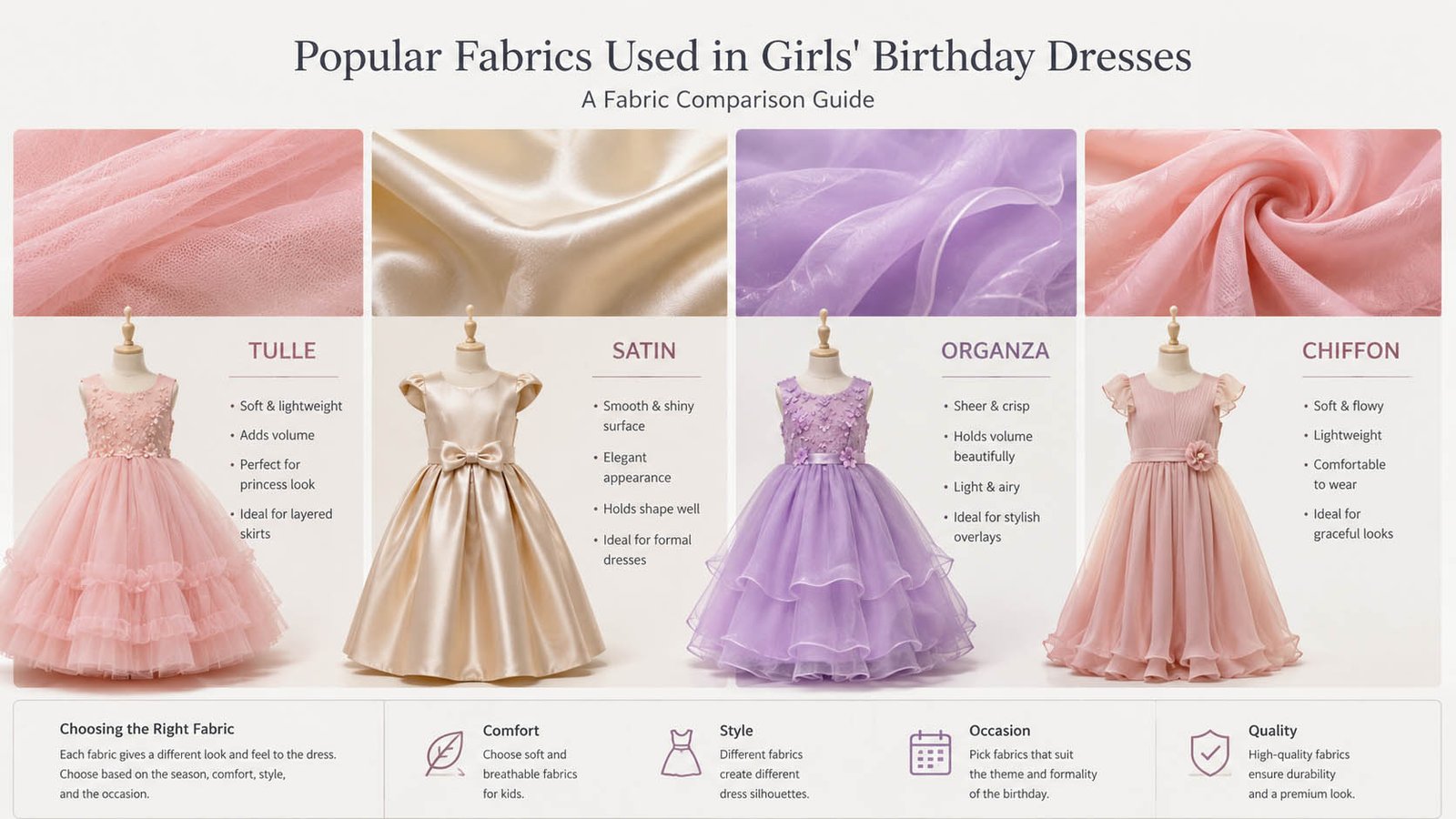
Consistent lighting and a true-color reference cut the “it looked different in person” returns.
7. DIY vs Professional: Where to Draw the Line
You do not need a studio to start. A modern phone camera and a soft light source (a window, a cheap light box) can produce flat lays and detail shots good enough to launch. Here is a practical split:
| Approach | Best for | Typical use case |
|---|---|---|
| Phone + window light | Flat lays, hanger shots, detail close-ups | Starting out, testing demand, small catalogs |
| Light box / basic strobes | Consistent catalog shots at volume | Growing catalog where consistency matters |
| Professional photographer | Model shoots, lifestyle, hero imagery | Brand launch, lookbooks, marketplace heroes |
Illustrative guidance — the right point to step up depends on volume, margin and channel.
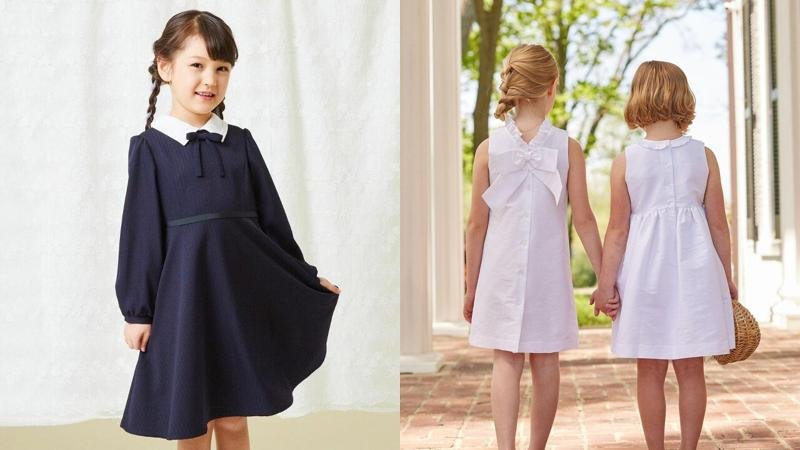
A consistent, well-lit catalog — like a supplier showroom display — is the visual standard your line should aim for.
8. Image Specs for E-commerce Platforms
Different platforms want different sizes and formats. Hitting the right specs matters more than megapixels — a technically compliant image ranks and loads better than a huge, slow one. Useful planning figures below; always check the current requirements of your specific channel.
| Platform | Main image | Background | Note |
|---|---|---|---|
| Shopify / own store | 2048px+ square | White or clean scene | Compress to keep pages fast |
| Etsy | 2000px+ recommended | Lifestyle works well | First image drives click-through |
| Amazon | 1000px+ square, pure white | White required (main) | Strict background rules |
| Wholesale marketplaces | 1000px+ clean | Consistent neutral | Buyers judge consistency across SKUs |
These are planning ranges, not platform guarantees — verify current requirements before you upload.
When you are ready to order ready-stock to photograph for your own store, starting from a small batch of ready-to-ship styles is the fastest way to build a catalog. For custom lines, shoot samples before committing to the full production run so your photography budget lands on designs you know sell.
Frequently Asked Questions
How many photos does a kids’ dress listing need?
A useful planning target is five to seven distinct images: flat lay, hanger, model front, back/side, fabric detail, color reference, and a lifestyle shot. Each extra image answers one more objection and tends to lift conversion.
Can I shoot product photos with just a phone?
Yes — a modern phone with soft window light is enough for flat lays, hanger shots and detail close-ups. Consistency of lighting and background matters more than the camera. Reserve professional budget for model and lifestyle imagery.
Why do my dress colors look wrong in photos?
It is almost always lighting, not the camera. Shoot in soft, daylight-balanced light, set white balance manually, and keep the background consistent. Satin and tulle shift color easily, so a true-color reference shot helps buyers calibrate.
Should I show the dress on a model or a hanger?
Both. A hanger or flat lay shows silhouette and drape objectively; a model shot shows fit and creates the emotional connection that drives the sale. Use them together in sequence.
What background should I use?
White or a light neutral for most catalog shots — it keeps the dress the hero and looks consistent across your line. Lifestyle shots can use contextual settings, but keep the main product images clean.
Build a catalog worth photographing
Tell us the styles you’re planning to shoot — we’ll help you choose designs that photograph well and send you ready-to-shoot samples.
Leave a Reply