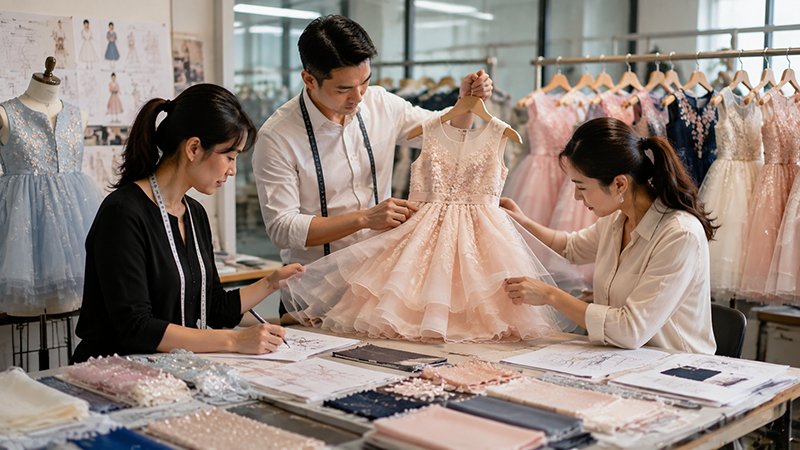
OEM and ODM sound like the same thing until you place an order — then the difference shows up in your design ownership, your development cost, your lead time and your exclusivity. In simple terms: OEM means you bring the design, ODM means the factory brings the design. But the real decision is more nuanced than that. This guide explains both models for kids’ dress buyers, compares them across the decisions that matter, and shows you the hybrid path most successful brands actually take.
See Custom Girls Dress Options
Private label and OEM development starts at 200 pieces per style, with a pre-production sample for approval before bulk cutting begins.
The letters OEM and ODM appear in every supplier catalogue, and most buyers skim past them. That is a mistake. The model you choose determines who owns the design, how much you pay to develop a style, how fast you can launch, and whether the same dress can appear in a competitor’s shop six months later. For a children’s dress brand — where margins are tight and differentiation is everything — understanding these two models is not jargon, it is strategy.
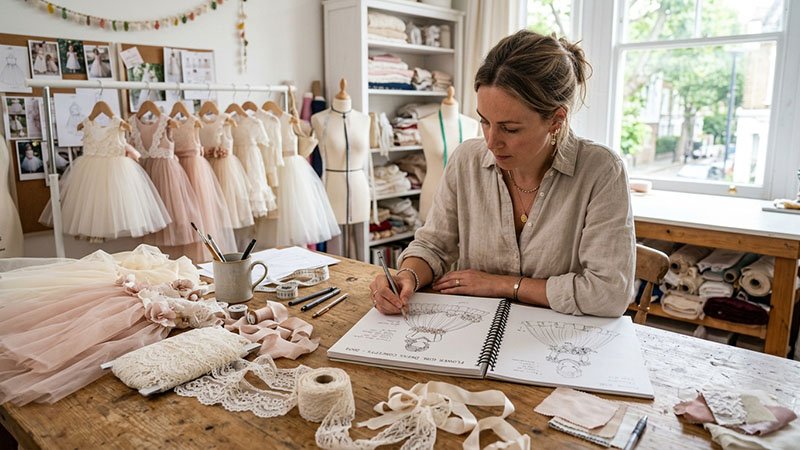
OEM = your design, ODM = factory design. The letter changes who owns the result.
OEM — Original Equipment Manufacturing
You provide the design: the tech pack, flat sketches, measurements, fabric choices and trims. The factory manufactures to your specification. You own the design; the factory owns the production capability. In the kids’ dress world, OEM means “make my dress, exactly as I specify”.
ODM — Original Design Manufacturing
The factory provides the design: a style from their own range or a development based on their design expertise, which you then brand as your own. You choose from the factory’s catalogue, select colours and sizes, and put your label on it. ODM is “sell this factory design under my brand”.
The Overlap That Confuses Everyone
In practice the line blurs. A buyer can take an ODM style and modify the fabric, change the sleeves, or adjust the sizing — that is called ODM with modifications. Or a buyer can give the factory a photo and let their design team reverse-engineer it — that is “development by reference”, closer to OEM in spirit. The important questions are always the same: who owns the design, and what did you pay for development?
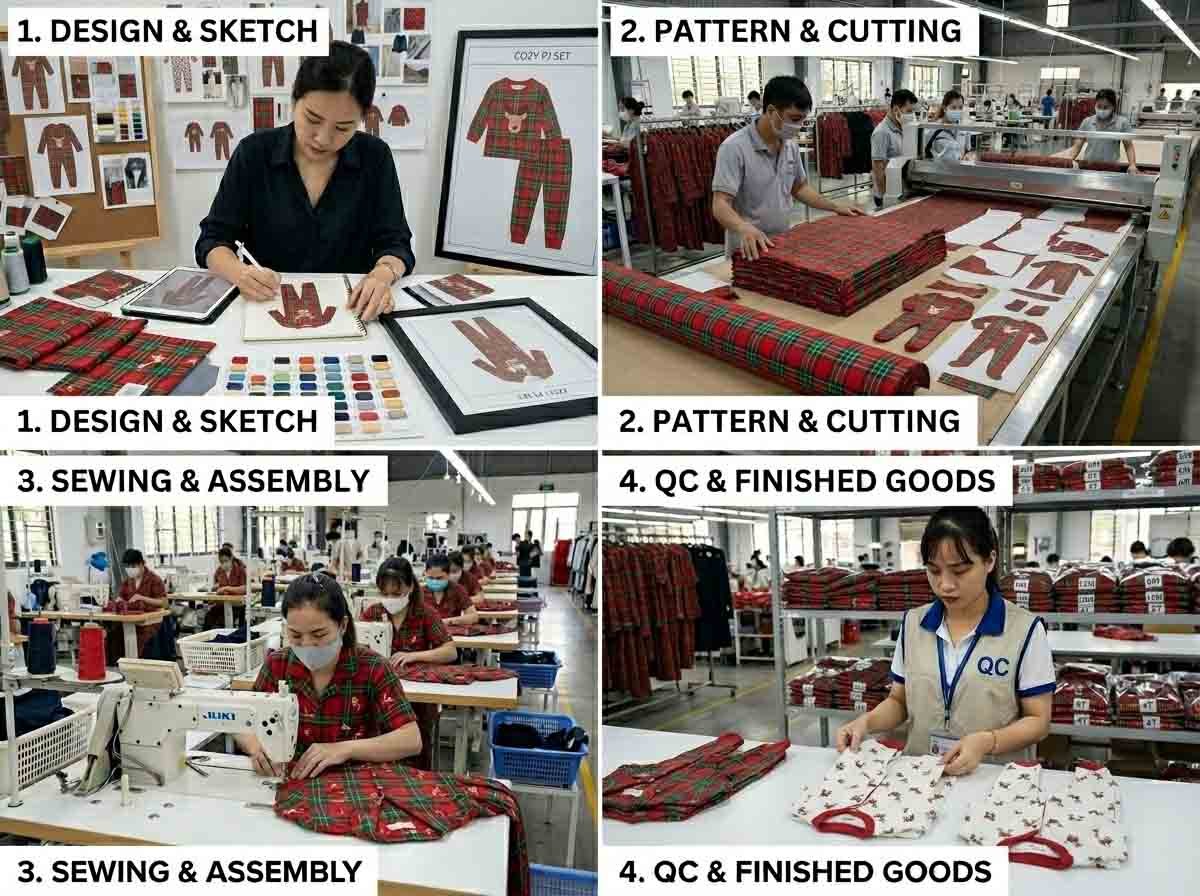
The right model depends on your stage, your budget and your brand plan.
| Factor | OEM (your design) | ODM (factory design) |
|---|---|---|
| Design ownership | Yours (with written agreement) | Factory’s (you license/brand it) |
| Development cost | Tech pack + sampling fees | Low or none on existing styles |
| Speed to launch | Slower (sampling + revisions) | Fast (pick from stock designs) |
| Minimum order | Usually higher (custom production) | Often lower (existing patterns) |
| Exclusivity | Possible, if agreed | Not exclusive unless agreed |
| Differentiation | Unique to your brand | May appear with other brands |
| Design effort | High (you create the spec) | Low (you select and brand) |
| Best for | Established brands, clear identity | New brands, speed to market |
Send Us Your Tech Pack
Share your sketches, measurements or a reference sample and we will confirm fabric options, trims, sampling time and unit cost.
Cost Differences
OEM costs more up front: you invest in development (tech pack creation, sampling, possibly pattern grading) and usually face higher minimums because production lines are set up for your specific style. ODM costs less up front: the design and patterns already exist, so you pay for production, labelling and possibly a small modification fee. The trade-off is differentiation: OEM gives you a design only you sell; ODM gives you a design anyone could sell.
Lead Time Differences
ODM is dramatically faster. Existing styles can often be produced from ready stock in days, or from existing patterns in a couple of weeks. OEM requires the full development loop — sample, revise, approve, bulk — which typically runs 30–45 days from sample approval. If you need product on the shelf this season, ODM wins; if you are building a brand identity for the long term, OEM is the investment that pays.
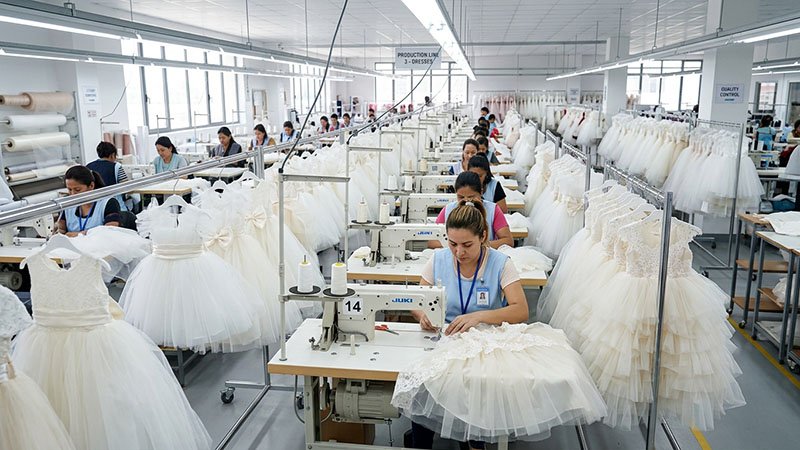
Most brands follow a hybrid path: start ODM, convert winners to OEM.
The answer depends on where your brand is today:
Choose ODM If…
- You are launching a new brand and need product quickly.
- You want to test the market before investing in custom design.
- You have no design team or tech pack capability yet.
- You need low minimums to control risk.
- Speed matters more than exclusivity this season.
Choose OEM If…
- You have a clear brand identity and design language.
- You have tech packs or detailed specifications ready.
- You need exclusivity to protect your range.
- You are established enough to absorb development cost.
- You are building a repeatable, ownable collection.
The Hybrid Path (What Most Brands Do)
Most successful kids’ dress brands do not pick one model — they sequence them:
- Start with ODM / ready stock to launch fast and test what sells.
- Track sell-through to identify which styles your market actually buys.
- Move winners to OEM — develop those proven silhouettes as your own designs, refine the fabric and details, and make them exclusive to your brand.
This path combines ODM’s speed and low risk with OEM’s long-term differentiation. You never bet the business on a custom style that might not sell; you only customise what has already proven itself.
4. Exclusivity: The Question Everyone Forgets
Exclusivity is not automatic in either model — it must be agreed and written down. In ODM, the factory’s styles are available to any buyer unless you negotiate exclusive rights for a market or period. In OEM, exclusivity is implied by the design being yours, but you should still confirm the factory will not produce your design for others (and ideally that they will not reproduce your tech pack for a competitor).
When exclusivity matters, put it in writing:
- Market scope: exclusive in which country or region?
- Time scope: exclusive for how long (a season, a year)?
- Style scope: exclusive for the whole design or only specific details?
- Cost: some factories charge a small exclusivity premium for ODM styles.
Clarity here protects your differentiation — the whole point of building a brand.
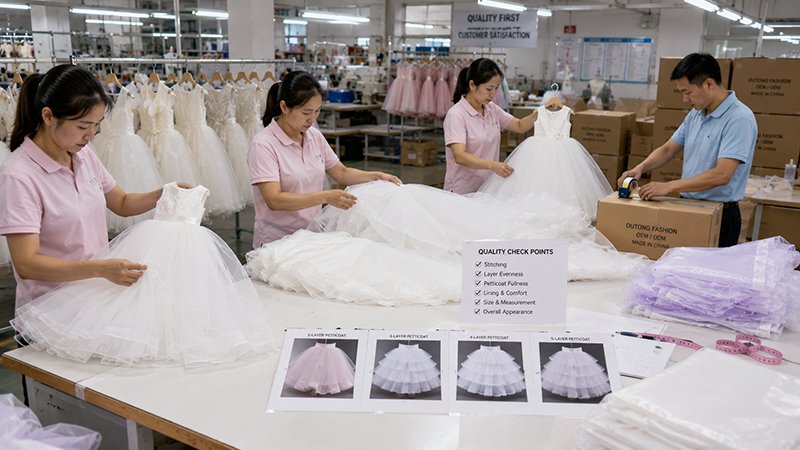
Your tech pack is your asset — control it and label it confidential.
IP in garment manufacturing is more about process than law. Few buyers register design patents for every dress; protection comes from agreements and working practices:
- Use written agreements: confirm who owns the design, patterns and tech pack, and what the factory may and may not do with them.
- Control your tech pack: your spec is your asset; share it only with factories you trust and label it confidential.
- Keep patterns with the factory but rights with you: the factory holds the physical patterns for production, but the design rights remain yours per the agreement.
- Audit exclusivity: periodically check that your exclusive styles are not appearing elsewhere with other brands.
None of this requires lawyers on every order — a clear written understanding at the start of the relationship is enough for most buyers.
6. How to Brief a Factory for OEM or ODM
For an OEM Order
Send a complete tech pack: front/back flat sketches, full measurement table with tolerances, fabric and trim spec, construction notes, embellishment placement, labelling and packaging. The more complete the spec, the fewer revision rounds and the closer the first sample.
For an ODM Order
Choose the style from the catalogue, then specify: colours (from the factory’s available colourways or a swatch match), size run, label and packaging. If you want modifications (different fabric, changed sleeve), define them clearly — modifications move the order toward the OEM end of the spectrum and may add development time.
In Both Cases
- Confirm MOQ, unit price, sample policy and lead time in writing.
- Approve a physical sample before bulk production.
- Confirm exclusivity and IP terms in writing.
- Keep one approved sample as the reference for the bulk order.
7. Frequently Asked Questions About OEM and ODM
Can I Start with ODM and Switch to OEM Later?
Yes — this is the recommended path for most new brands. Launch with ODM/ready stock to validate demand, then convert proven styles to OEM designs with your own details and exclusivity. The transition is smooth if you keep sell-through data per style — it tells you exactly which designs are worth the OEM investment.
Is ODM Quality Lower Than OEM?
No — quality depends on the factory, not the model. An ODM style from a good factory is made to the same standards as its OEM work; the difference is design ownership, not quality. Judge quality by samples and inspection, not by which letter describes the order.
Do I Need a Tech Pack for ODM?
No — that is the point of ODM. You choose from the factory’s existing designs, so the pattern and spec already exist. You only specify colour, size run, labelling and any modifications. When you move to OEM, the tech pack becomes your responsibility (or the factory’s development team can help you build one).
How Much Does OEM Development Cost?
Development costs vary by complexity. Sampling fees for a kids’ dress commonly range around USD 80–150 per style, often credited against the bulk order. Additional costs may include pattern grading, colour development and special trims. ODM existing styles typically carry no development fee — another reason it is the cheaper way to start.
Which Model Do Most Wholesale Suppliers Prefer?
Factories are happy with both. ODM is easier for them (existing patterns, no development risk); OEM is more profitable per order (custom setup, higher minimums). From your side, neither preference matters — what matters is which model fits your stage, budget and brand plan.
8. A Decision Flow for Your Next Collection
When you sit down to plan your next kids’ dress collection, run this quick decision flow instead of defaulting to habit:
- Do I need product this season? → Yes: ODM or ready stock. No: continue.
- Do I have tech packs or a design team? → Yes: OEM is viable. No: ODM first.
- Does my margin support development cost? → Yes: OEM investment is fine. No: ODM keeps you lean.
- Do I need exclusivity to protect my brand? → Yes: OEM or negotiated ODM exclusivity. No: standard ODM is fine.
- Which styles already sell? → Convert proven sellers to OEM; keep new bets in ODM/ready stock.
Work through these five questions once per collection and the OEM/ODM choice stops being a confusion — it becomes a natural output of your business stage.
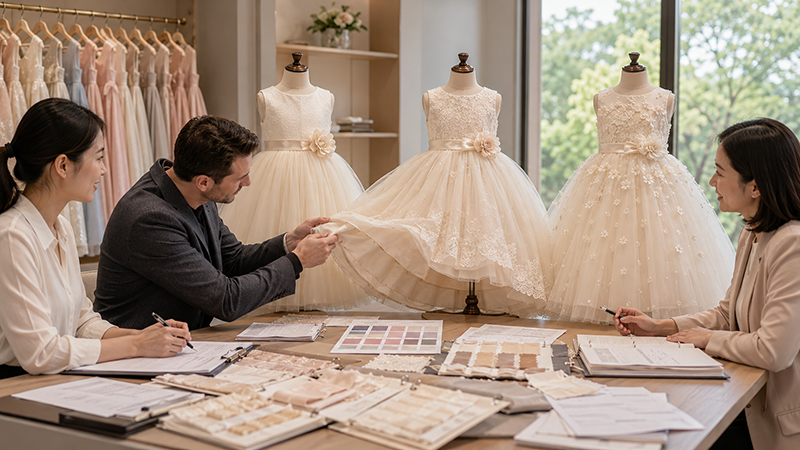
The hybrid path: validate with ODM, convert proven winners to OEM exclusivity.
To see how the hybrid path works in practice, imagine a boutique brand launching girls’ party dresses:
- Month 1–3: launches with 8 ODM/ready-stock styles across tulle and satin, three sizes each. Tests the market, learns which colours and silhouettes sell.
- Month 4–6: tracks sell-through; two tulle princess styles and one satin A-line consistently outperform. Orders reorders plus a few new ODM styles in the winning colours.
- Month 7–9: converts the three winners to OEM: refines the fabric, adds a signature bow detail and exclusive colourway, confirms exclusivity in writing with the factory. Development cost per style is modest (sampling fees around USD 80–150, credited against the first bulk order).
- Month 10–12: the exclusive OEM styles become the brand’s hero products, photographed and promoted as “ours”. ODM continues to fill out the range at lower risk.
This is not a hypothetical ideal — it is the pattern most successful boutique brands follow, because it matches risk to stage at every step.
10. Key Takeaways
- OEM = your design, your ownership, higher investment, slower, differentiated.
- ODM = factory design, faster, cheaper, lower minimums, less differentiation.
- Exclusivity is never automatic — negotiate it in writing in either model.
- The hybrid path wins: launch with ODM, validate with data, convert winners to OEM.
- Your tech pack is your asset — control it, label it confidential, and let it work across factories.
The OEM/ODM question is really a stage question. Answer where your brand is today, and the model choice follows naturally.
11. Glossary for New Buyers
Three more terms you will meet in the same conversation, so it helps to know them:
- Ready stock: finished styles already produced in standard sizes, ready to ship — the fastest, lowest-MOQ option (often from about 6 pieces, mix and match).
- Private label: putting your brand’s label, packaging and sometimes trims on a product — available in both ODM (your label on factory design) and OEM (your design, your label).
- MOQ (minimum order quantity): the smallest quantity a factory will produce per style — ready stock minimums are low, custom OEM minimums are higher (often from about 200 pieces).
Understanding these four terms together — OEM, ODM, ready stock, private label — covers most of the vocabulary you will meet when sourcing kids’ dresses from China, and lets you hold a precise conversation with any supplier from day one.
OEM or ODM — we do both
Tell us your stage and goals — we recommend the right model, confirm MOQ and sampling, and help you plan the hybrid path. WhatsApp us or email luxudress@gmail.com.
Leave a Reply