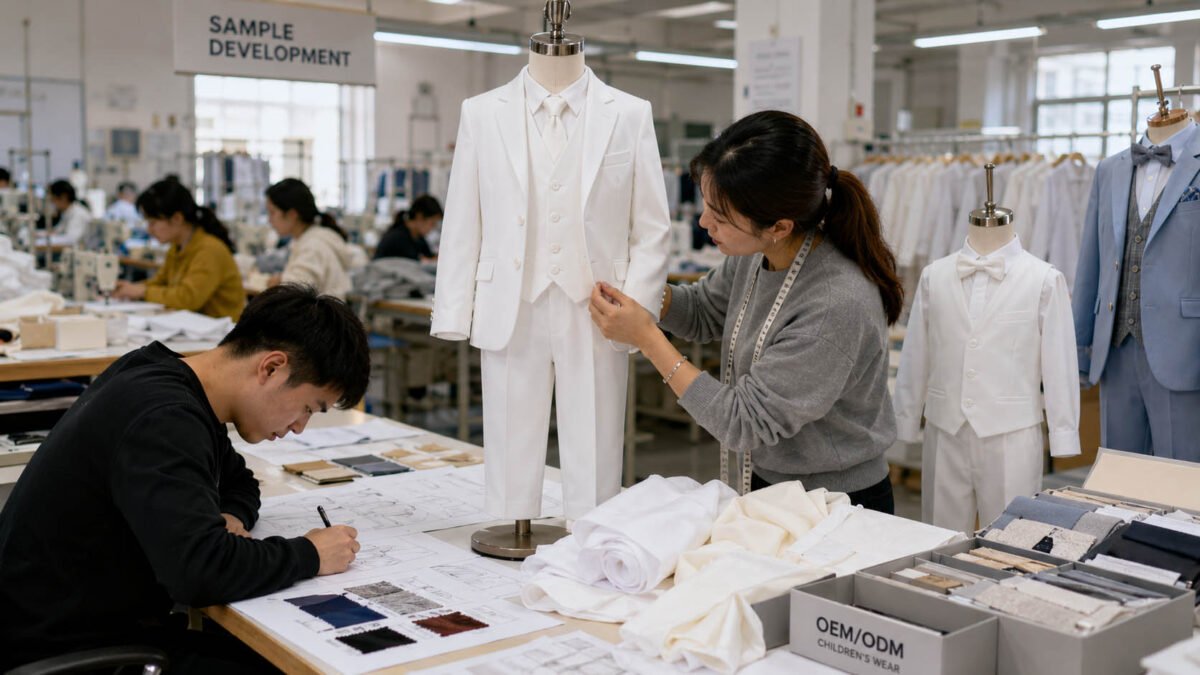
Every custom OEM/ODM kids dress passes through a series of samples before a single bulk piece is cut. Understanding this sampling process — and the difference between a proto sample and a pre-production sample — is what lets you catch problems early, when they cost hours instead of thousands of dollars. This guide walks through the whole sequence.
See Custom Girls Dress Options
Private label and OEM development starts at 200 pieces per style, with a pre-production sample for approval before bulk cutting begins.
Sampling is the bridge between a design on paper and a sellable dress. It is where fit is tested, fabric is approved and construction is locked in. Skipping or rushing it is the most common cause of the expensive surprises buyers discover only when the bulk order arrives. Done properly, sampling is cheap insurance — a handful of sample garments that prevent a container of mistakes.
Sampling sits downstream of the kids dress tech pack, which is the specification document that tells the factory what to sample in the first place. Read that guide first if you have not built a tech pack yet.
1. The Four Types of Samples, in Order
Children’s apparel development typically moves through four sample stages, each with a distinct purpose:
- Proto sample — the first physical version of a new design, made to test the concept, silhouette and general look.
- Fit sample — refined to test and correct the fit on a real body form or model.
- Size set — the same design produced across the full size range to check the grading.
- Pre-production (PP) sample — the final sample in the approved fabric and construction, which becomes the reference for bulk production.
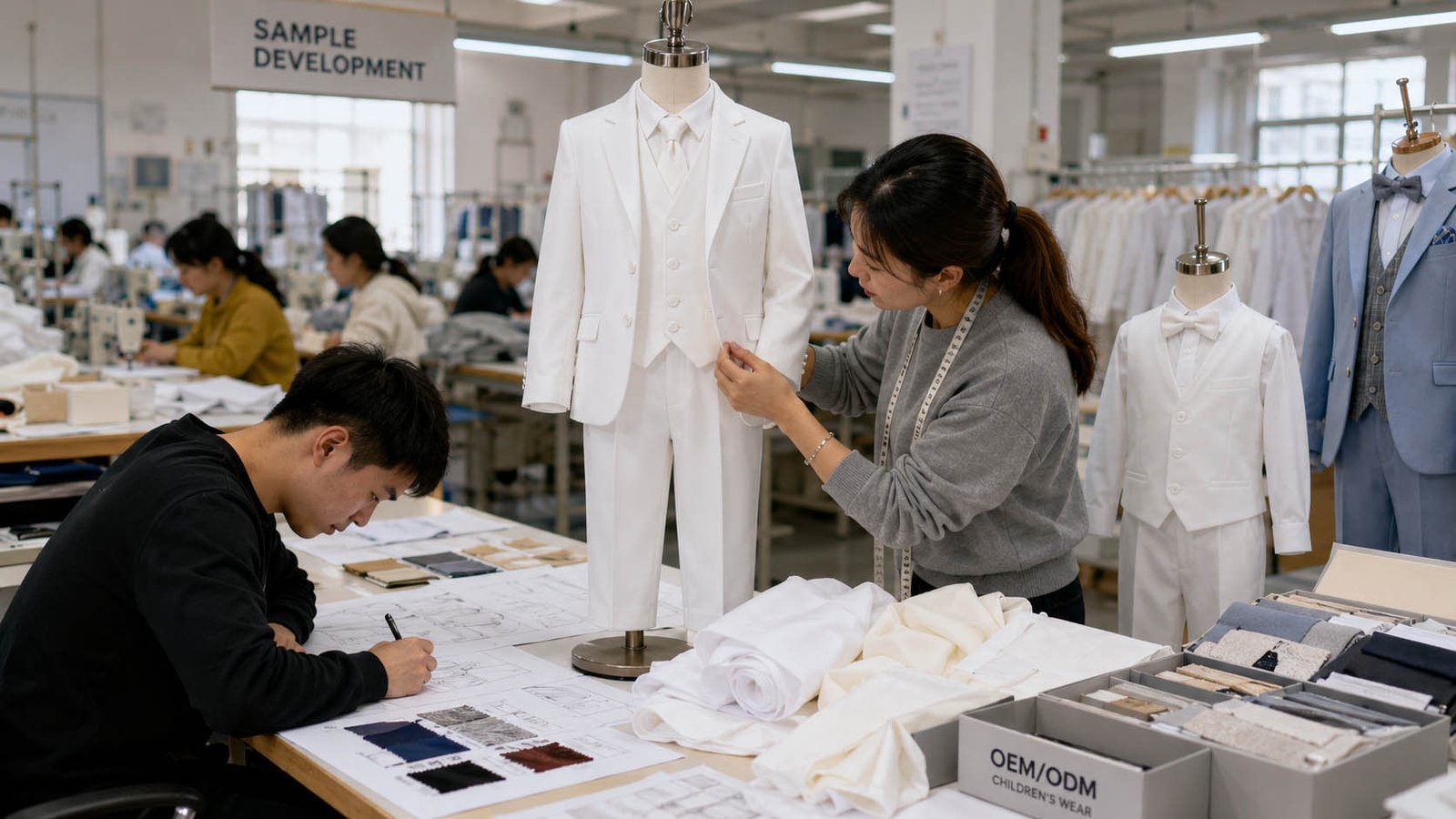
Sample development turns a design into a physical garment you can inspect before bulk production begins.
The key distinction buyers most often miss is between the proto sample and the pre-production sample. The proto is a first attempt, often made in substitute fabric, and it is expected to need changes. The PP sample is the final, approved garment in the real fabric — and it is the standard the bulk order must match.
2. Proto Sample: Testing the Concept
The proto sample is the first time your design becomes a real, wearable garment. Its job is to answer big-picture questions:
- Does the silhouette and proportion look right in three dimensions?
- Does the construction work — seams, closure, lining, embellishment?
- Is the overall look what you envisioned?
Proto samples are often made in a substitute fabric to keep cost and lead time down, which is fine — at this stage you are testing shape and construction, not final fabric. Expect changes: it is normal for a proto to come back needing two or three rounds of adjustment.
3. Fit Sample and Size Set: Getting the Fit Right
Once the concept is approved, the next priority is fit. A beautiful dress that fits badly will be returned — and in children’s wear, fit across a growing age range is especially demanding.
The fit sample is the corrected design in the target fabric, checked on a body form or model. The size set then produces the same design across the full size range (for example, 110 through 160) so you can verify that the grading — how the pattern scales between sizes — keeps the proportions correct at every size.
4. Pre-Production Sample: Locking In the Standard
The pre-production (PP) sample is the most important sample in the whole process. It is made in the approved fabric, with the approved trims, using the approved construction — exactly as bulk production will run. It is the physical reference that the factory must match.
Why the PP sample matters so much:
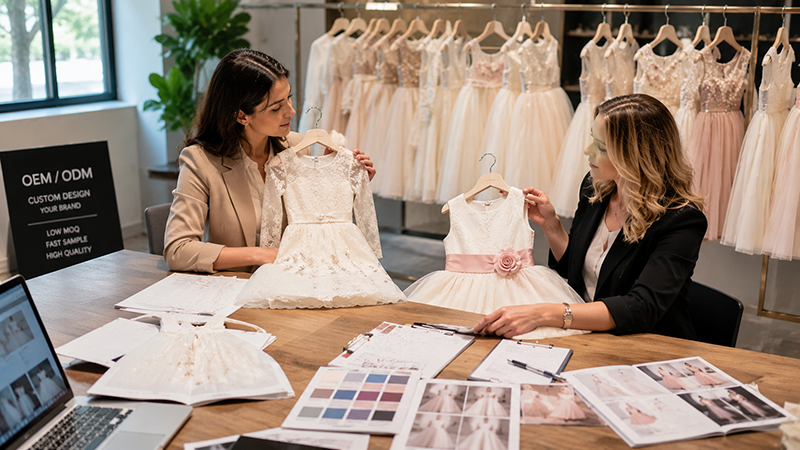
Approving the final sample in the real fabric is the step that locks in what bulk production must match.
- It locks in the fabric — the bulk order must use the same fabric you approved.
- It locks in the construction — stitching, seams, closure and finishing are all defined.
- It becomes your evidence — if bulk goods differ from the PP sample, you have a clear reference for a claim.
Never skip the PP sample on a custom run. It is the single most effective quality control you can buy, and it costs a fraction of what a defective bulk order costs.
5. What to Check at Each Sample Stage
Approving samples is not a formality — it is a review. Work through a checklist at each stage:
| Stage | What to verify |
|---|---|
| Proto | Silhouette, proportion, construction, overall look |
| Fit | Fit on body, ease of movement, comfort |
| Size set | Grading consistency across all sizes |
| Pre-production | Fabric, trims, construction, finish — everything |
Send Us Your Tech Pack
Share your sketches, measurements or a reference sample and we will confirm fabric options, trims, sampling time and unit cost.
Give feedback in writing, with reference to the sample and photos where possible. Clear, specific feedback at each stage is what keeps the factory moving in the right direction and avoids the costly back-and-forth that comes from vague comments.
6. How Sampling Fits Your Timeline and Budget
As a reference, here is a typical sampling timeline: from receiving your tech pack to shipping the fit sample takes about 5–7 days, and corrections through to the approved golden sample take another 3–5 days per round. That gives you a realistic picture of the project pace — and it is why clear, specific feedback at each stage keeps everything moving.
Sampling adds time and a sample fee to your project, but it is money well spent. A typical custom run includes:
- A sample fee — the cost of making the samples, often credited back against the bulk order.
- Several weeks of sampling time — depending on the number of rounds and the factory’s schedule.
- Courier time — shipping samples back and forth for approval.
Build this into your plan. A rushed sampling process is a false economy — the samples are exactly where you want to spend time, not save it. For a full view of how sampling fits the overall production timeline, see our guide to common tech pack errors that delay production, which shows how a weak spec upstream turns into slow, error-prone sampling downstream.
The sampling process is also where you learn how a factory actually works — their responsiveness, their attention to detail, and whether they can follow a spec. Treat it as a trial run of the reliable kids dress manufacturer you hope to partner with long-term.
Frequently Asked Questions
What is the difference between a proto sample and a pre-production sample?
A proto sample is the first physical version of a design, often made in substitute fabric to test the concept, and it is expected to need changes. A pre-production sample is the final garment in the approved fabric and construction, which becomes the reference the bulk order must match.
How many sample rounds should I expect?
Most custom designs go through at least two or three rounds — a proto, a fit sample, and a pre-production sample, plus a size set. The exact number depends on the complexity of the design and how clear your feedback is at each stage. Start your project and we’ll walk you through our sampling timeline.
Is a sample fee normal?
Yes. Factories charge a sample fee to cover the cost of making individual garments, and it is often credited back against the bulk order. It is a standard part of custom OEM/ODM development.
Can I skip the pre-production sample to save time?
It is not recommended. The PP sample is your quality reference and your evidence if bulk goods differ. Skipping it saves a little time but removes the single most effective quality control in the process.
What is a size set sample?
A size set produces the same design across the full size range so you can verify that the grading — how the pattern scales between sizes — keeps the proportions correct at every size. It catches grading errors before bulk production.
How long does the sampling process take?
It depends on the design and the number of rounds, but several weeks is common, plus courier time for approvals. Build sampling into your timeline and resist the urge to rush it — it is where problems are cheapest to fix.
See how we sample
Tell us your design and we’ll walk you through our sampling process, timeline and fees — with clear milestones at every stage.
Leave a Reply