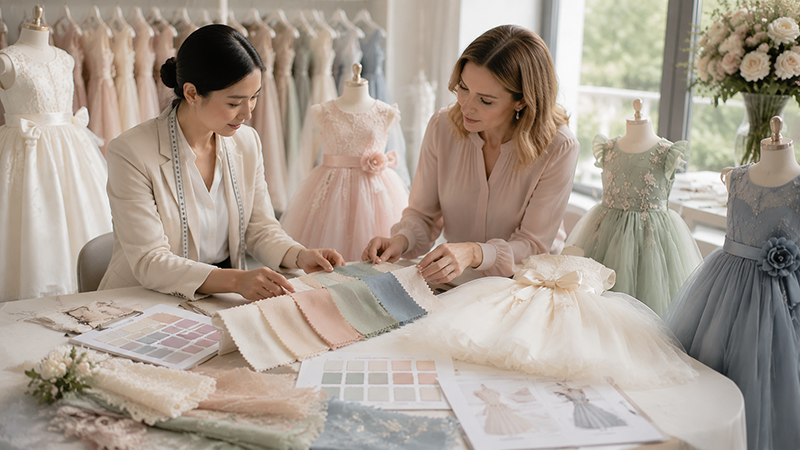
Private label is the fastest way to sell a factory’s proven dress under your own brand — you bring the label, the factory brings the production. It is not a separate product line; it is the same wholesale girls’ dresses, re-branded with your name on the neck label, care label, hangtag and packaging. This checklist covers every element so your first branded order launches without a missing piece.
See Custom Girls Dress Options
Private label and OEM development starts at 200 pieces per style, with a pre-production sample for approval before bulk cutting begins.
Most new kids’ dress brands do not start by designing from scratch. They start by putting their label on a style that already sells, then differentiate through photography, packaging and service. That is private label, and it is the lowest-risk path to a brand because the garment itself is already proven. What makes it your brand is the set of branded elements wrapped around it.
This guide walks you through each element, the order to prepare them, and the low-MOQ path from “factory dress” to “your brand”.
1. What Private Label Actually Means
Private label sits between buying unbranded stock and full custom OEM. Here is the distinction:
| Model | Design ownership | Branding | MOQ |
|---|---|---|---|
| Ready stock | Factory’s existing style | Sold as-is or lightly re-labelled | Lowest (from ~6 pcs) |
| Private label | Factory’s existing style | Your labels, tags and packaging | Low-to-mid |
| Custom OEM/ODM | Your design (tech pack) | Fully your brand | Higher (from ~200 pcs) |
Send Us Your Tech Pack
Share your sketches, measurements or a reference sample and we will confirm fabric options, trims, sampling time and unit cost.
Private label is the middle path: proven styles, your branding, moderate MOQ.
2. The Branded Elements Checklist
There are six elements that turn a factory dress into your dress. Prepare them in this order, because some have longer lead times than others:
- Main neck label — the woven label at the back neck with your brand name. Most visible brand touchpoint.
- Care label — the wash/care instructions and fibre content, which are legally required in most markets.
- Hang tag — the swing tag that carries your logo, price and story on the shop floor.
- Size label — the size marker, which can be woven into the neck label or printed separately.
- Packaging — polybag, tissue, and any branded sticker or box the customer opens.
- Brand card / insert — an optional thank-you or story card that lifts perceived value.
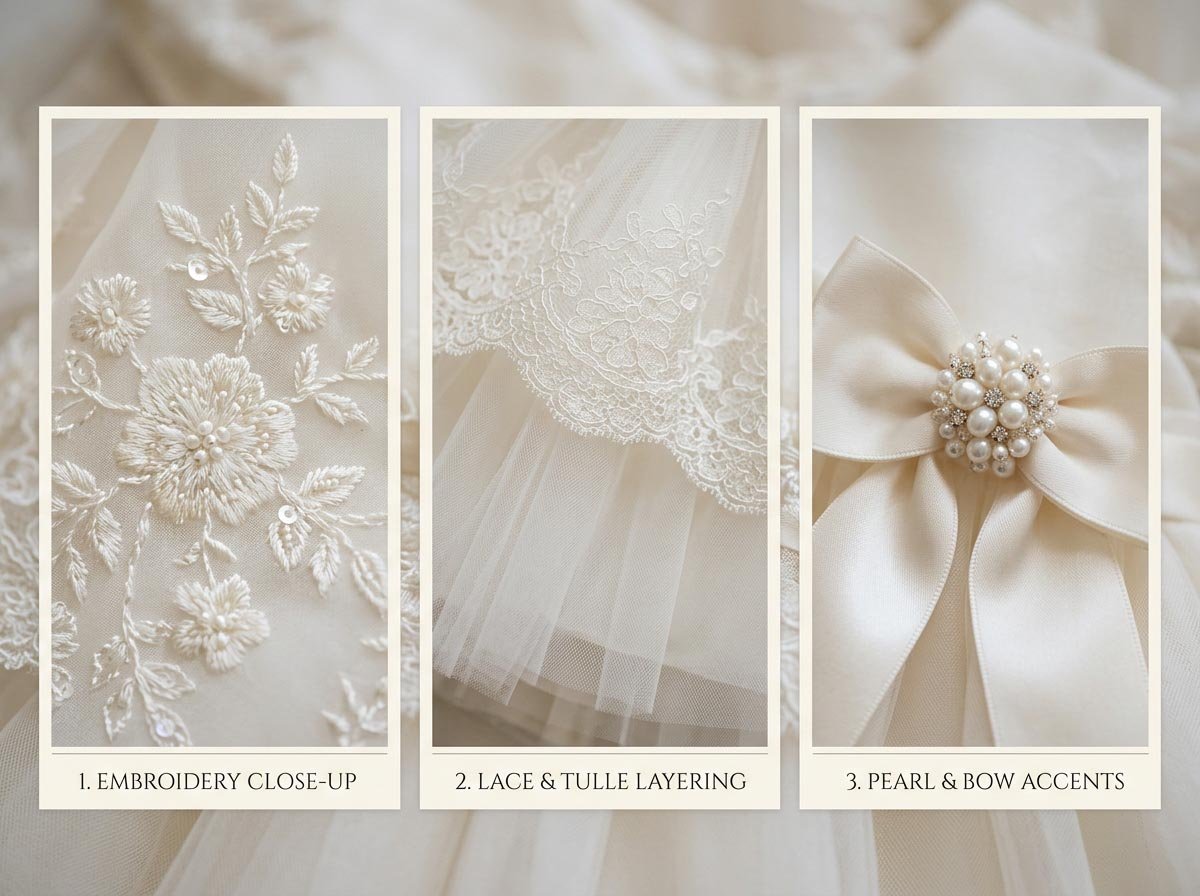
The neck label is the single highest-value branding element — it is the first thing a customer checks for authenticity.
3. Label Content and Legal Requirements
Branding is not only about your logo — two of these elements are regulated, and getting them wrong can block your goods at customs or trigger a return:
Care Label (Wash Instructions)
Most markets require a care label with washing, drying and ironing instructions. The symbols and wording must match the actual fabric — a polyester dress labelled as cotton is a compliance failure, not just an inconvenience.
Fibre Content
The fibre content (e.g. “100% polyester” or a blend ratio) must be accurate. This is regulated in the US, EU and elsewhere. Confirm the exact composition from the factory before printing labels, and keep a record in case of dispute.
4. The Low-MOQ Path to Private Label
You do not need a 1,000-piece order to launch a brand. The low-MOQ path looks like this:
- Step 1 — Prove the style. Order a small ready-stock quantity of the styles you want to brand, and test them in your market first.
- Step 2 — Add labels. Once a style sells, re-order it with your neck label, care label and hangtag.
- Step 3 — Scale to custom. When demand is proven, move the best sellers to custom OEM/ODM with your own design tweaks.
This “test, brand, scale” sequence keeps your cash tied up in what already works, instead of gambling on a full branded run before you know a style sells.
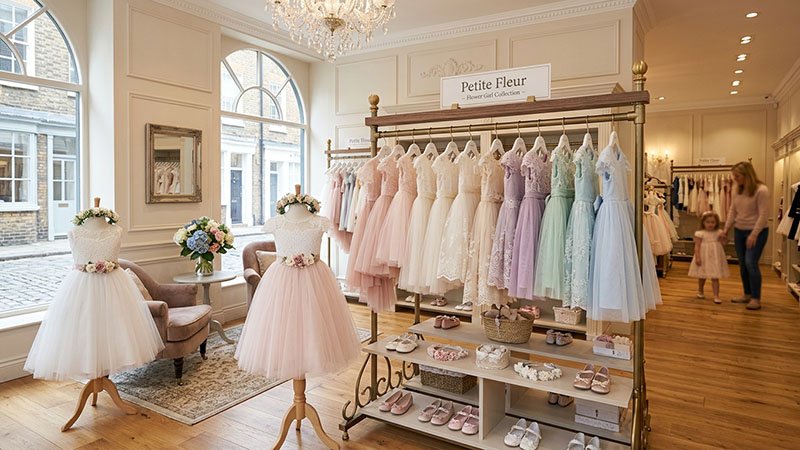
The same dress reads as a premium brand when the label, tag and presentation are consistent.
5. What to Prepare Before You Order
Before you place a private-label order, have these ready so production is not delayed:
- Brand name and logo — final, with the exact spelling and a print-ready file.
- Label artwork — neck label, care label and hangtag artwork, sized correctly.
- Fibre content — confirmed composition from the factory, for the care label.
- Size breakdown — which sizes and how many of each.
- Packaging spec — polybag, tissue, sticker, or full branded box.
Missing any of these is the most common reason a private-label order stalls. Prepare them in advance and the production runs smoothly.
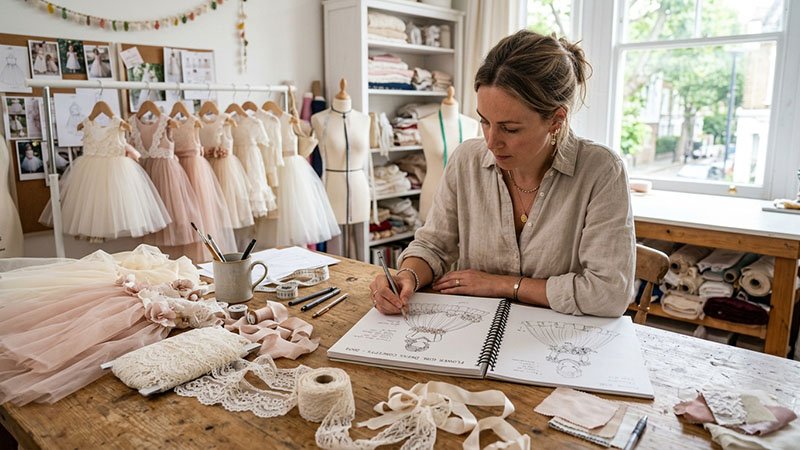
Label and trim artwork is best locked before production starts — changes mid-run are where errors happen.
6. Branding Your Packaging for Higher Perceived Value
Packaging is where private label punches above its weight. The dress inside may be identical to a competitor’s, but the unboxing is what a customer photographs and shares:
- Branded polybag — a sticker or printed logo on the polybag is the cheapest brand lift.
- Tissue wrap — a branded tissue layer makes the dress feel gift-ready.
- Thank-you card — a small story card turns a transaction into a brand moment.
- Consistent colour — one accent colour across bag, tissue and card ties the brand together.
None of these is expensive individually, and together they justify a meaningfully higher retail price for the identical garment.
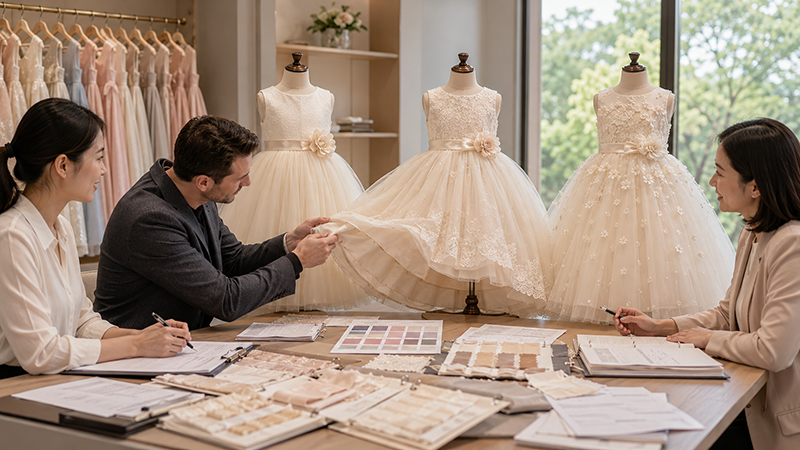
Compare samples against your label and packaging mock-up before committing to a full branded run.
7. Cost of Private Label vs Ready Stock
Private label costs a little more than ready stock, mostly in the labels and packaging, but it commands a higher retail price. A useful way to think about it:
| Item | Ready stock | Private label |
|---|---|---|
| Neck label | Factory’s label | Your woven label (small per-unit cost) |
| Care label | Factory’s | Your printed label |
| Hangtag | None or factory | Your branded tag |
| Packaging | Plain polybag | Branded polybag/tissue |
| Retail price premium | — | Often 15–40% higher |
Illustrative ranges — actual label and packaging costs vary by quantity and spec; the price premium depends on your market.
When you are ready to move from unbranded stock to your own brand, the custom OEM/ODM path is where you can also adjust fabric, colour and trim — but private label on a proven dress collection style is the fastest way to start. You can browse the ready-stock collection to pick the styles worth branding first.
Frequently Asked Questions
What is the difference between private label and OEM?
Private label puts your branding on a factory’s existing style. OEM means you bring the design and the factory produces to your spec. Private label is faster and lower-MOQ; OEM gives you design ownership.
What is the minimum order for private label kids’ dresses?
It is typically low-to-mid — you can start by branding proven ready-stock styles in small quantities, then scale. Custom OEM/ODM with your own design starts higher, from about 200 pieces per style.
What labels do I need for my kids’ dress brand?
At minimum a main neck label (your brand), a care label (wash instructions and fibre content, legally required) and a hangtag. Optionally a size label, branded packaging and a thank-you card.
Is fibre content labelling required?
Yes, in most markets including the US and EU, the care label must state accurate fibre content and washing instructions. A label that does not match the actual fabric is a compliance risk.
Does private label cost more than ready stock?
Slightly more, because of the labels and packaging. But it typically supports a 15–40% higher retail price, so the branded version is usually more profitable per unit.
Launch your own label
Tell us which styles you want to brand — we’ll confirm label specs, packaging options and MOQ for your private-label order.
Leave a Reply