
A dress sells on how it looks — but online, the customer cannot touch it, try it on, or see it move. Your product description is the stand-in for all three. A well-written description for girls’ dresses answers the buyer’s unspoken questions, builds trust, and converts a hesitant visitor into a customer. This guide shows you how to write descriptions that do exactly that.
Browse Best-Selling Dress Styles
See the occasion, party and flower girl styles that boutiques reorder most, with size runs and unit pricing shown.
Most product descriptions fail because they describe the garment instead of selling it. They list “white dress, size 110” and stop there — leaving the buyer to guess about fabric, fit, occasion and care. The descriptions that convert are the ones that answer the questions a parent is actually asking: Will it be comfortable? Will it fit? Is it right for the occasion? Will it wash well?
This article focuses on the words. For the images that go with them, see our guide to kids dress photography for e-commerce — great copy and great photos work as a pair.
1. Know the Question Your Description Must Answer
Every product description is really an answer to a small set of predictable questions. For girls’ dresses, the buyer — usually a parent or a boutique owner — is asking:
- What is it made of? Fabric and lining, and how they feel against skin.
- How does it fit? Sizing, length, and whether to size up or down.
- What occasion is it for? Birthday, party, flower girl, everyday, or formal.
- What details make it special? Embellishment, lining, closure, silhouette.
- How do I care for it? Washing, drying and storage.
Write your description to answer these directly, in plain language, and you will outperform 90% of the listings that simply repeat the product title.
2. A Structure That Converts
You do not need to be a copywriter to write well — you need a structure. A description that converts follows a repeatable pattern:
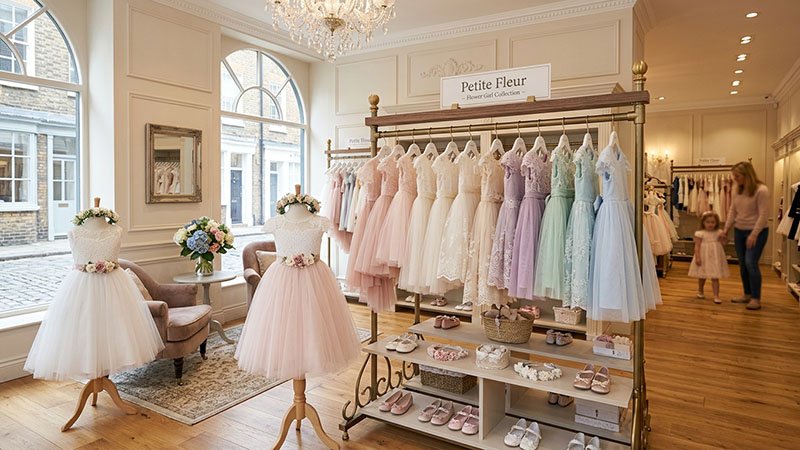
Show the dress in context — the occasion, the setting and the details all help the customer imagine it.
- Hook with the benefit. Open with the single most compelling thing about the dress — its twirl, its softness, its sparkle.
- Describe the fabric and feel. Tell them what it is made of and how it feels, so the “touch” question is answered.
- Cover fit and sizing. Give measurements, length and sizing guidance, and flag when to size up.
- Name the occasion. Make clear what the dress is for, so the buyer self-selects.
- List the details. Closure, lining, embellishment, layers — the specifics that justify the price.
- Close with care and a nudge. Tell them how to wash it, and invite the next step.
This structure works because it mirrors the order in which a buyer makes a decision: they are first drawn in, then reassured, then informed, then moved to act.
3. Write About the Buyer, Not the Garment
The most common writing mistake is leading with product specifications while ignoring the person reading. A description that says “polyester tulle with satin lining” is accurate but cold. The same facts, written for the buyer, become a story:
“Layers of soft tulle over a smooth satin lining, so it twirls beautifully and stays comfortable through a whole afternoon of dancing.”
The second version uses the same facts but connects them to what the buyer cares about — comfort, movement, and the experience their child will have. Lead with that, then support it with the specifics.
4. Specifics That Build Trust
Vague descriptions invite doubt; specific ones build trust. Compare these two approaches to the same detail:
| Vague | Specific and trustworthy |
|---|---|
| “Good quality fabric” | “Soft polyester tulle with a smooth satin lining” |
| “Fits true to size” | “Sizes 110–160; order up if your child is between sizes” |
| “Nice details” | “Back zip closure with a satin bow at the waist” |
| “Easy care” | “Gentle machine wash cold, hang to dry” |
Get Wholesale Pricing
Send your store type and monthly volume and we will send the wholesale price list and recommended opening order.
Specificity matters for two reasons. First, it answers the buyer’s real questions so they do not have to ask. Second, it signals competence — a seller who specifies the lining and the closure clearly knows their product, and that confidence transfers to the purchase.
5. Optimise for Search Without Sounding Robotic
Product descriptions are also search assets. The trick is to work relevant terms in naturally rather than stuffing them. A few practical rules:
- Use the terms buyers search for — “flower girl dress,” “tulle party dress,” “toddler dress” — in the title, the first line and the body, in a way that reads naturally.
- Write for one primary term per product, and let related terms appear naturally as you describe the dress.
- Keep it readable first. A description that reads like a keyword list ranks worse and converts worse. Write for the person, optimise for the search engine second.
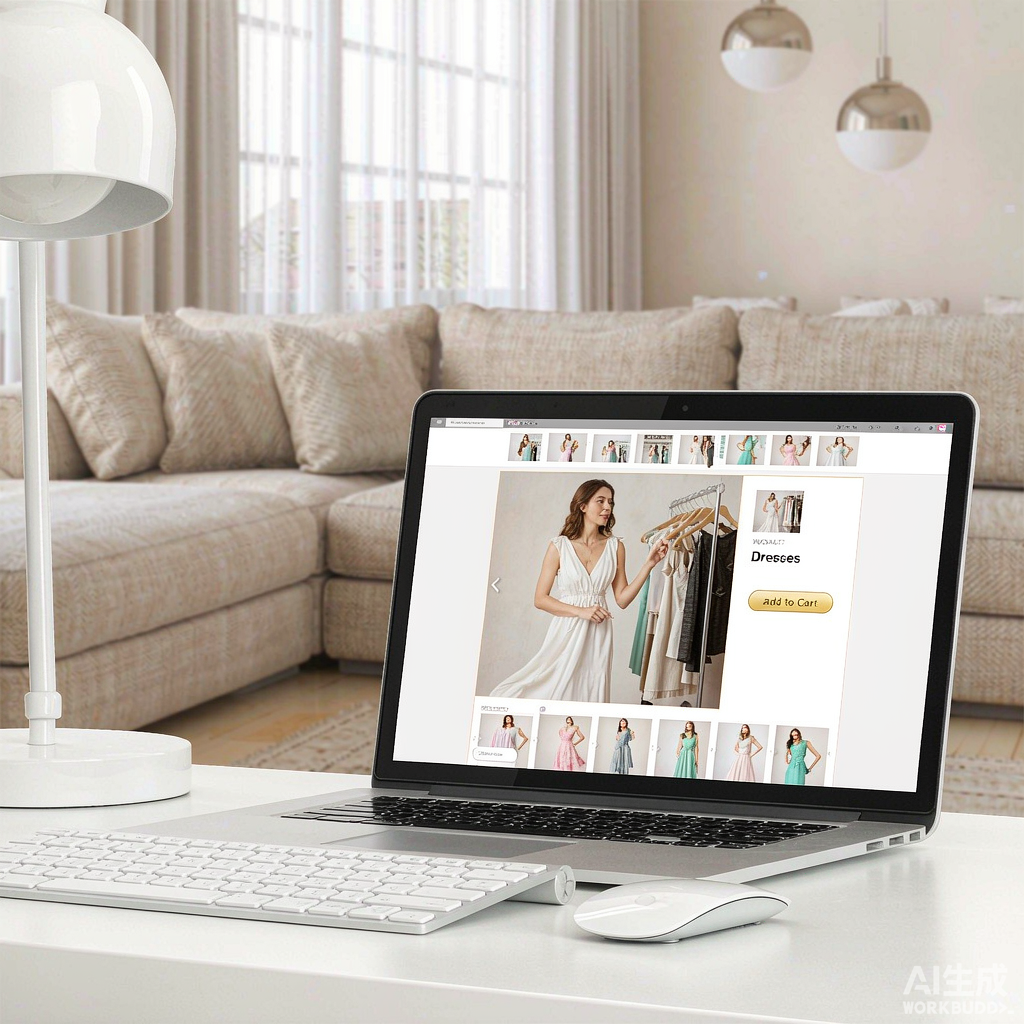
Online, the description is your sales floor — make it work as hard as a good in-store display would.
6. A Before-and-After Example
Here is how the same dress might be described badly, then well:
Before: “White flower girl dress. Polyester. Size 120. Ships from warehouse.”
After: “A dreamy white flower girl dress with layers of soft tulle over a smooth satin lining, finished with a satin bow at the back. The full skirt twirls beautifully and stays comfortable through the ceremony and the photos. Sizes 110–160; order up if your child is between sizes. Gentle machine wash cold, hang to dry.”
The second version answers the buyer’s questions, builds trust with specifics, and still contains the search terms a customer would type. It is the difference between a listing and a salesperson.
Writing product descriptions this way is a skill that compounds. Do it once, and every dress in your store gets a little easier to sell. And when you pair strong copy with strong photos — see our photography guide — you give the customer everything they need to buy with confidence, even without holding the dress in their hands.
A Copy-Paste Description Template
Use this fill-in-the-blank framework for any girls’ dress — just replace the bracketed parts and keep each line specific:
[Hook] “A dreamy [color] [style] dress that [key benefit — twirls, sparkles, keeps her comfortable].”
[Fabric] “Made from soft [outer fabric] over a smooth [lining] lining, so it [comfort benefit].”
[Fit] “Sizes [range]; [size guidance — runs true / order up if between sizes]. [Length] shoulder to hem.”
[Occasion] “Perfect for [birthday / party / flower girl / everyday].”
[Details] “[Closure], [embellishment], [layers].”
[Care] “[Wash / dry guidance].”
Fill it in, keep every line specific, and you have a description that answers every question a parent asks before they buy.
Frequently Asked Questions
How long should a girls dress product description be?
Long enough to answer the buyer’s questions — fabric, fit, occasion, details and care — without padding. Around 80–150 words of focused, specific copy usually does it. Lead with the benefit, then support it with specifics.
What should I put in the first line of a product description?
The single most compelling benefit of the dress — its twirl, softness, sparkle or fit. On marketplaces, also include the main search term in the first line. The goal is to hook the buyer immediately, then reassure and inform.
Should I mention the fabric in the description?
Yes, always. State the fabric and lining and how they feel, because the buyer cannot touch the garment online. A specific description like “soft tulle over a smooth satin lining” answers the comfort question and builds trust.
How do I write sizing guidance that reduces returns?
Give the size range and length, and flag when to size up or down. If the dress runs small or large, say so explicitly. Clear sizing guidance is one of the most effective ways to reduce returns and exchanges.
Do I need to include care instructions?
Yes. A short care line — wash and drying guidance — answers a question every parent has and prevents disappointment when the dress is cleaned. It also signals that you know your product.
How do I write descriptions that also rank in search?
Use the terms buyers search for — like “flower girl dress” or “tulle party dress” — naturally in the title, first line and body. Write for the reader first and optimise for search second; keyword-stuffed copy ranks and converts worse. For inspiration, browse our product pages — they follow this exact structure.
Need product content for your store?
We provide clear, buyer-focused product details and imagery with our wholesale dresses — ask us what’s included with your order.
Leave a Reply