Bamboo fabric has moved from a niche eco-novelty to one of the fastest-growing segments in children’s wear. Parents prize its softness and breathability, and boutique buyers prize the premium price it commands. For wholesale kids dress buyers, bamboo is worth understanding because it is where comfort, sustainability marketing and margin meet. This guide explains what bamboo fabric actually is, why it sells, and what to check before you stock it.
Browse the Collection
See how these fabrics, silhouettes and size ranges look on finished styles — filter by occasion, season and size range.
Bamboo’s rise is not a passing trend — it is a response to a real shift in how parents shop. Modern parents read labels, care about how fabric feels against sensitive skin, and are willing to pay more for garments that feel soft and are marketed as kinder to the planet. For a boutique, that combination is rare: a product that justifies a higher price point while also carrying a genuine comfort story.
For a broader look at eco-positioned materials, see our guide to sustainable fabrics for kids dresses, and browse our dedicated bamboo kids dresses category for the styles we carry.
1. What “Bamboo Fabric” Actually Is
The term “bamboo fabric” almost always means bamboo viscose (also called bamboo rayon) — a fibre made by dissolving bamboo pulp and regenerating it into cellulose filaments, then spinning those into yarn. It is not a raw bamboo fibre woven directly from the plant. Understanding this matters, because it explains both the benefits and the limitations of the material.
Bamboo viscose is prized for three properties in children’s wear:
- Exceptional softness — the fibre has a smooth, round cross-section that feels silkier than many cottons.
- Breathability and moisture-wicking — it absorbs and releases moisture well, keeping children cool and dry.
- Natural drape — the fabric hangs and moves smoothly, which suits soft, flowy dresses and loungewear.
These properties make bamboo a strong fit for toddler dresses, everyday wear, sleepwear and anything worn directly against the skin — exactly the categories where comfort drives repeat purchase.
2. Why Boutique Buyers Are Watching Bamboo
From a retailer’s perspective, bamboo earns its place on the shelf for three commercial reasons:
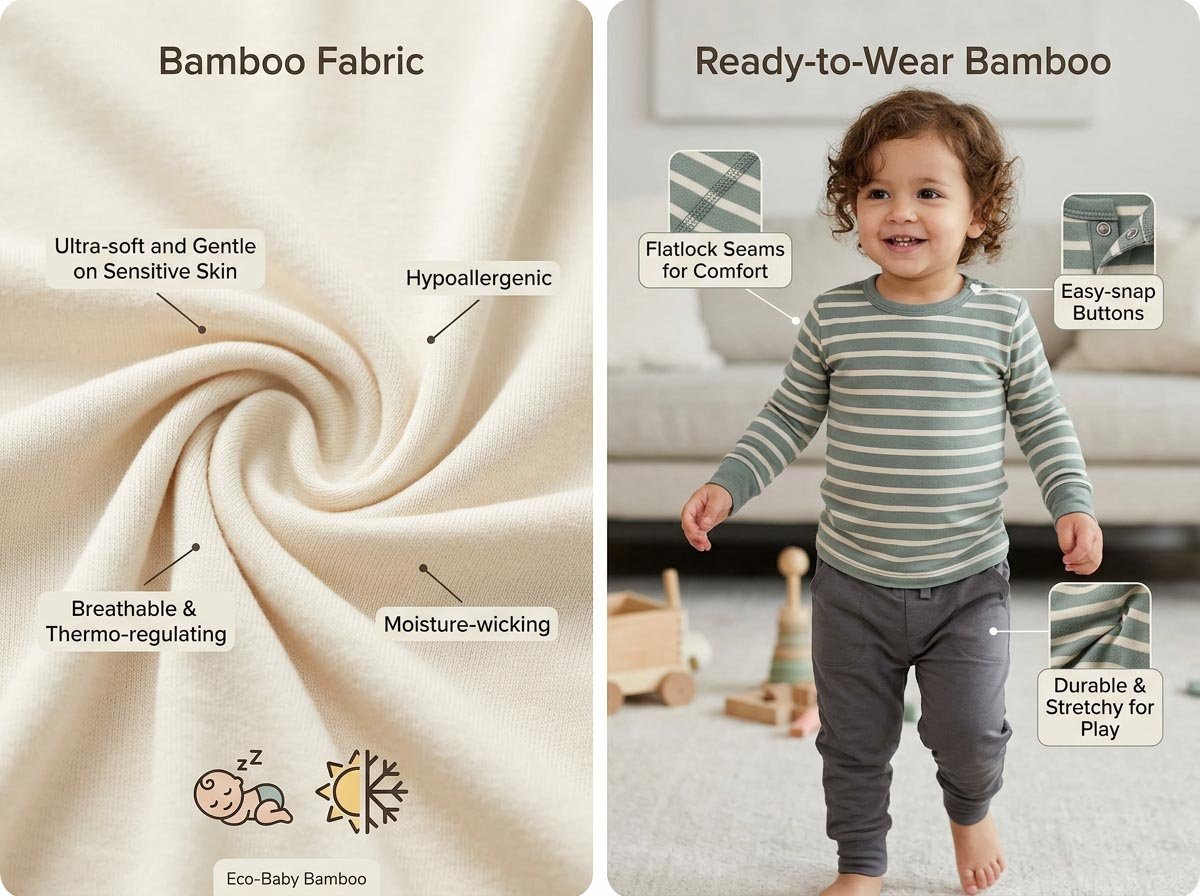
Bamboo viscose is soft, breathable and drapes well — properties that make it a natural fit for children’s everyday and formal wear.
- A premium price point. Because parents associate bamboo with softness and eco-friendliness, they are often willing to pay more. That margin flows back to the boutique.
- A clear comfort story. “Soft and breathable for sensitive skin” is an easy, honest selling point that resonates with the parent doing the buying.
- A sustainability angle. Bamboo grows quickly and requires less water than conventional cotton, giving the product a genuine environmental narrative — provided you keep that narrative honest and do not overclaim.
Two selling points are worth calling out for the boutique counter. First, bamboo viscose is hypoallergenic and gentle on sensitive skin — a parent-recognized reason to pay a premium, and a story that is honest and easy to tell. Second, bamboo children’s wear typically supports a 3x–4x retail markup, among the highest margins in the category. Position it for the comfort buyer and that margin flows straight to your bottom line.
3. Bamboo vs. Cotton and Other Fabrics
To stock bamboo well, understand where it sits relative to the alternatives you already carry. The table below compares the fabrics most relevant to children’s wear.
| Fabric | Softness | Breathability | Drape | Typical use |
|---|---|---|---|---|
| Bamboo viscose | Very high | Very high | Soft, flowy | Everyday, sleepwear, soft dresses |
| Organic cotton | High | High | Structured | Casual dresses, tops |
| Polyester tulle | Low–medium | Low | Stiff, voluminous | Party and formal gowns |
| Muslin (cotton) | Medium | Very high | Light, airy | Swaddles, summer wear |
Request Fabric Swatches
Feel the fabric before you order. Tell us which styles you are considering and we will send swatches with the weight and composition noted.
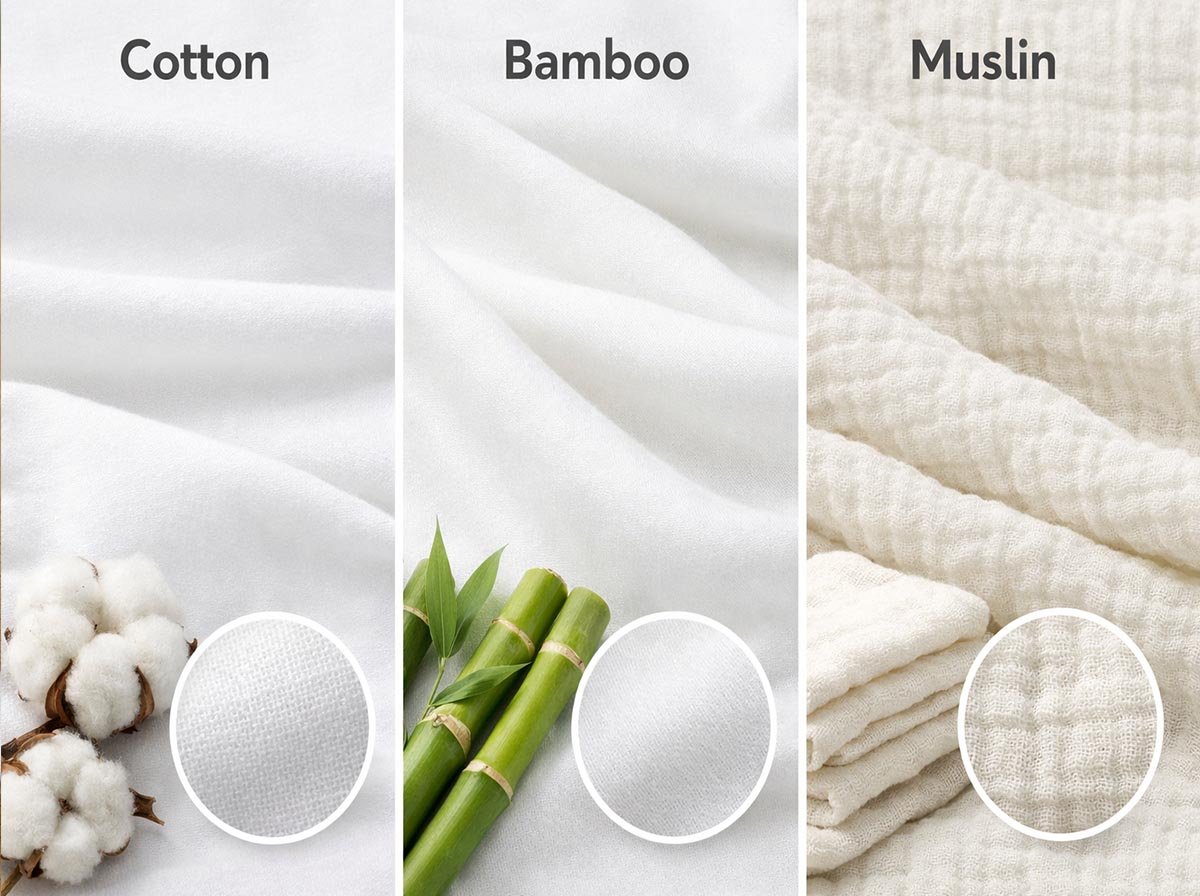
Bamboo sits between structured cotton and airy muslin — soft, breathable and flowy, ideal for comfort-led styles.
The takeaway: bamboo is not a replacement for every fabric. It does not give you the structured volume of tulle for a party gown, nor the crispness of a woven cotton. It wins in the comfort category — soft, everyday and sleepwear styles — where its feel and drape justify the premium.
4. What to Check Before You Stock Bamboo
Because “bamboo” is a marketing-friendly term, quality varies more than buyers expect. Before you commit to a bamboo line, verify:
- Fibre content. Is it 100% bamboo viscose, or a bamboo-cotton blend? Blends trade some softness for durability and lower cost — know what you are paying for.
- Fabric weight (GSM). A lighter bamboo is airier but less durable; a heavier one lasts longer. Match the weight to the garment.
- Hand feel and pilling. Request a swatch and check for softness and how the surface wears over time, since bamboo can pill if the yarn is low quality.
- Care requirements. Bamboo often prefers gentle washing and low-heat drying — communicate this to your customers through clear care labels.
- Consistency. Ask whether the supplier can repeat the exact fabric, colour and weight on reorders.
Requesting swatches is the single most important step here — see our guide on how to evaluate fabric swatches for a full checklist. A bamboo fabric that feels wonderful in a swatch but cannot be sourced consistently is a risk, not an asset.
5. How to Position Bamboo in Your Store
Stocking bamboo is only half the job — you also need to sell it. A few positioning tips that work for boutiques:
- Lead with feel, not jargon. “Buttery soft and breathable” sells better than “bamboo viscose cellulose fibre.”
- Target the right occasions. Position bamboo for everyday wear, sleepwear and comfort-led dresses, rather than fighting tulle for the formal-gown market.
- Pair it with the comfort buyer. Parents of children with sensitive skin are a natural, loyal audience for bamboo.
- Be honest about sustainability. Mention bamboo’s fast growth and lower water use, and avoid overclaiming — credibility is your long-term asset.
Bamboo’s strength is that it lets you serve a customer who cares about comfort and is willing to pay for it. Done honestly and stocked with quality fabric, it can become a reliable, higher-margin pillar of your assortment rather than a one-season experiment.
Frequently Asked Questions
Is bamboo fabric actually made from bamboo?
Yes, but it is processed. Bamboo fabric is almost always bamboo viscose (rayon), made by dissolving bamboo pulp and regenerating it into cellulose fibres, which are then spun into yarn. It is not raw bamboo woven directly from the plant.
Why is bamboo fabric good for children’s wear?
Bamboo viscose is very soft, breathable and moisture-wicking, with a smooth drape. These properties make it comfortable against sensitive skin and well suited to everyday wear, sleepwear and soft dresses.
Is bamboo more expensive than cotton for wholesale?
Generally yes. Bamboo commands a premium because of its softness and eco-positioning, and parents are often willing to pay more for it. That higher retail price can translate into better margin for the boutique. See our bamboo collection for styles that support that margin.
Does bamboo fabric pill or shrink?
It can. Lower-quality bamboo yarns may pill, and the fabric often prefers gentle washing and low-heat drying. Request a swatch, check the fabric weight, and give customers clear care instructions to extend garment life.
Is bamboo better than organic cotton?
It depends on the use. Bamboo is softer and drapes more, so it wins for comfort-led and sleepwear styles; organic cotton is more structured and durable, so it suits casual woven dresses. Many boutiques carry both for different occasions.
How do I verify bamboo fabric quality before ordering?
Request a physical swatch and check fibre content, weight (GSM), softness, and how the surface wears. Confirm the supplier can repeat the exact fabric and colour on reorders before committing to a bulk order.
Want bamboo in your assortment?
Tell us the styles and quantities you are considering, and we’ll send swatches and pricing so you can evaluate the fabric before you stock it.
Leave a Reply