
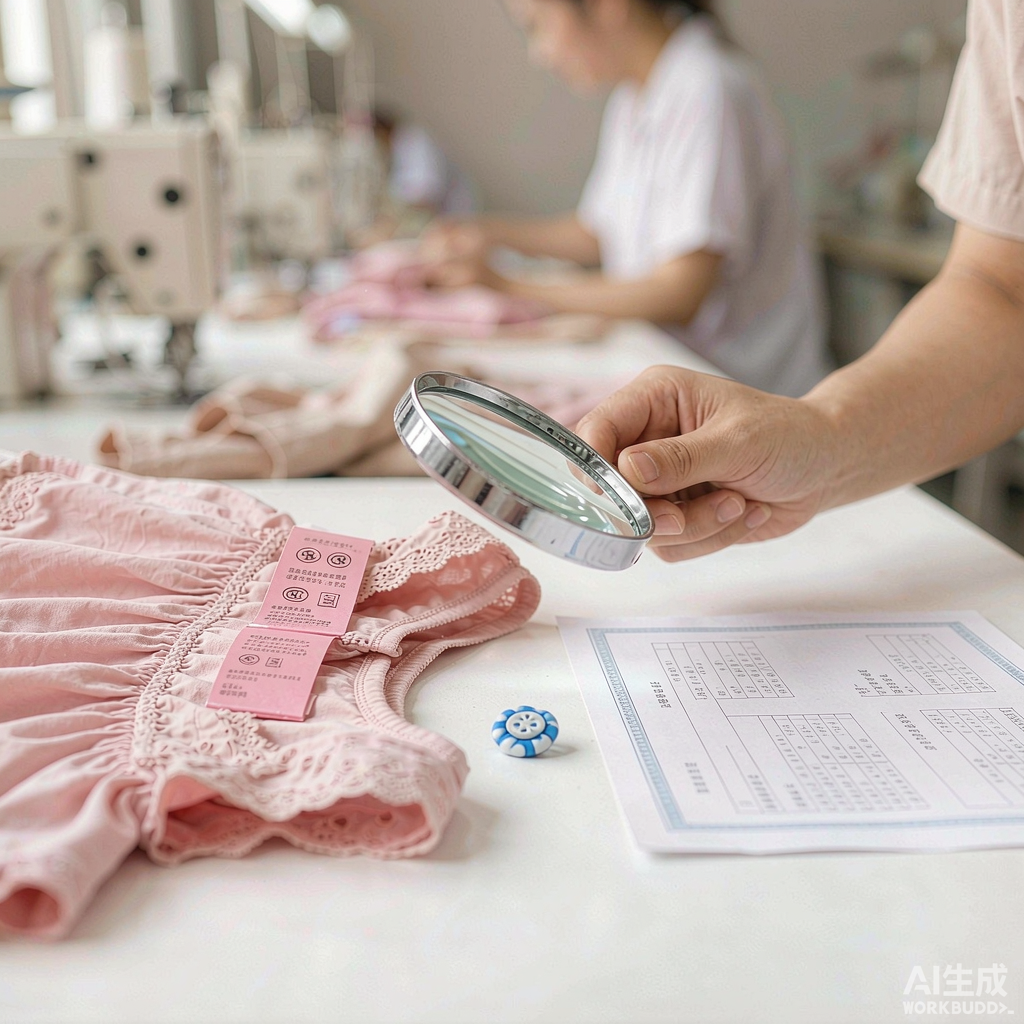
CPSIA compliance is the one subject that can stop a wholesale children’s clothing order at the port, on the shelf, or inside a marketplace account. This guide explains what the law actually requires of an importer of children’s apparel, which tests apply to girls’ dresses, what paperwork you should hold before your goods ship, and the exact questions to ask a factory before you place the order — in plain language, without the legal padding.
Quick Answer
For children’s apparel imported into the United States, CPSIA sets limits on lead (100 ppm in substrates, 90 ppm in coatings and paint) and on a list of phthalates, requires a permanent tracking label on the product and its packaging, and requires third-party testing by a CPSC-accepted laboratory as the basis for a Children’s Product Certificate. Girls’ dresses are additionally subject to the Flammable Fabrics Act, normally under 16 CFR 1610 rather than the stricter children’s sleepwear rules. The importer — not the factory — carries final responsibility, so the job is to hold the right test reports and the right paperwork before the goods ship, not after.
Ask What Documentation Comes With the Order

Chemical safety testing should reference the production fabric, not the development sample.
Before you commit to a bulk order, ask your supplier exactly which compliance documents they can supply, and which ones have to come from your own laboratory. A supplier who answers that question clearly is usually a supplier whose paperwork will hold up.
What Buyers Need to Know
The first thing to understand is who the law points at. CPSIA obligations fall on the importer of record, the domestic manufacturer, and the private labeler. When you buy from an overseas factory and put your own label in the neck, you are the one the regulation is written for. Your factory can help you with test reports, tracking labels and documentation, but it cannot take the obligation off you. This matters practically: if a shipment is stopped, the cost of the delay is yours, and the marketplace suspension lands on your seller account, not on the factory.
The second thing is that a children’s garment is not one thing to test — it is a bill of materials. A girls’ tulle party dress can contain a woven or knit body fabric, a lining, two or three layers of tulle, a satin sash, a zipper, elastic, a sequin or beaded trim, a printed neck label, a heat-transfer print and a hangtag. Each of those can be a separate material for testing purposes, and a failure in any one of them can fail the garment. Buyers who ask “is the dress compliant?” get an answer that is not worth much. Buyers who ask “which components are you testing, and per which colourway?” get an answer they can rely on.
The third thing is that compliance has three separate layers, and most problems come from doing one or two and assuming that is enough. The first layer is substance limits — lead, phthalates and, for some markets, a broader restricted substances list. The second layer is physical and flammability performance — how the fabric burns, whether trims pull off. The third layer is labelling and documentation — the permanent tracking label, the care label, fibre content, country of origin, and the certificate that ties the test results to the shipment. A product can pass every test and still be refused because the tracking label is missing.
What CPSIA Covers, and What to Ask For
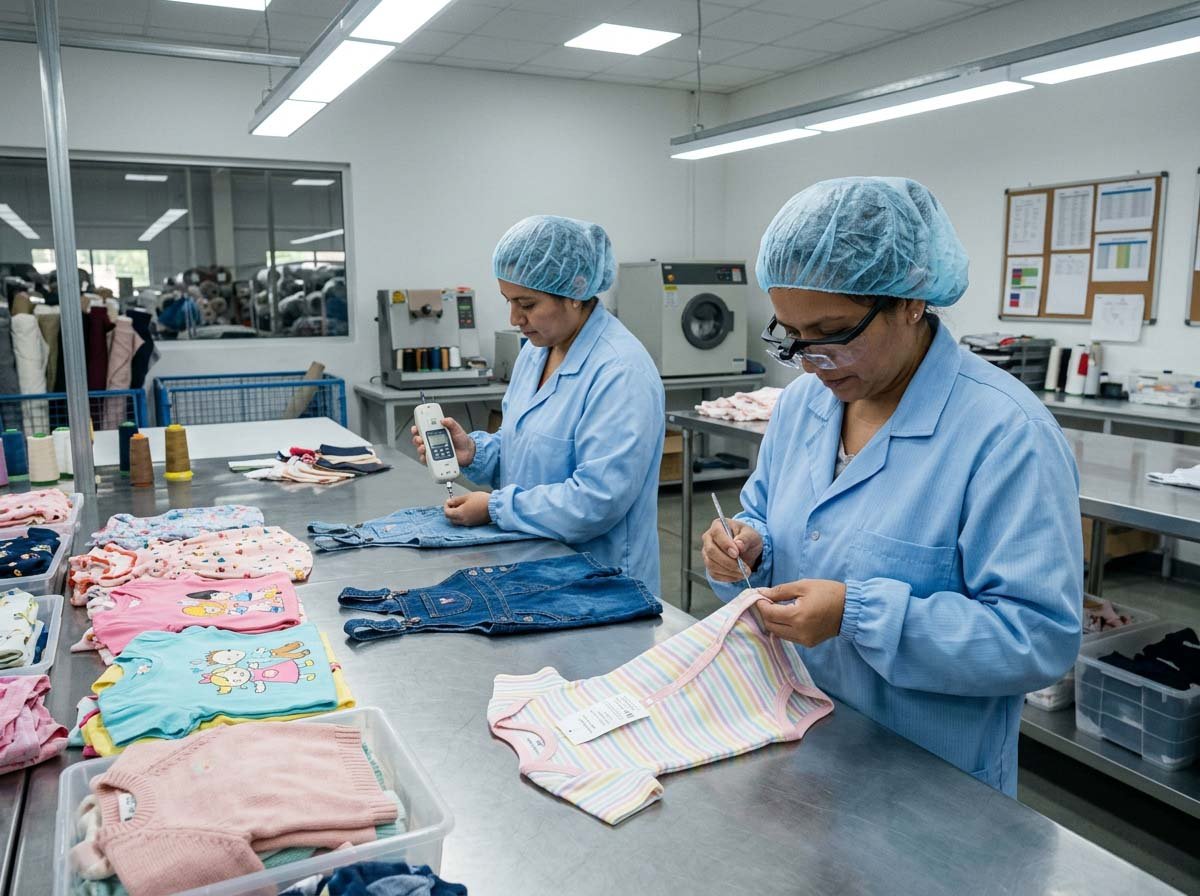
CPSIA testing covers lead, phthalates and small parts across the children’s size range.
| Requirement | Where it comes from | What to ask for |
|---|---|---|
| Lead in substrates | CPSIA Section 101; limit 100 ppm for children’s products | A test report per material and per colourway, from a CPSC-accepted laboratory |
| Lead in coatings and paint | Ban under 16 CFR 1303; limit 90 ppm | Test reports covering printed graphics, coated trims and painted hardware |
| Phthalates | CPSIA Section 108; 16 CFR 1307 lists eight restricted phthalates at 0.1% | Reports for plasticised components — prints, grips, coated fabrics, elastic |
| Permanent tracking label | CPSIA Section 103 | A mark on the product and on the packaging that identifies the maker, the location and date of production, and the batch |
| Third-party testing and certification | CPSIA Sections 102 and 106 | Test reports from a CPSC-accepted lab, and the certificate that references them |
| Flammability | Flammable Fabrics Act; 16 CFR 1610 for general wearing apparel | A flammability classification for the fabric, plus the same for any sheer overlay |
| Care and fibre labelling | FTC Care Labeling Rule (16 CFR 423); Textile Act rules (16 CFR 303) | Care instructions, fibre content, country of origin and the responsible company name on the label |
| Drawstrings | CPSC guidance referencing ASTM F1816 for children’s upper outerwear | Confirmation that waist, hood and neck drawstrings are absent or compliant for the size range |
Building a Range Rather Than One Style?
If you are importing several styles that share fabric, trims and hardware, test once per material rather than once per style and the cost per style drops sharply. Tell us which components are shared across your range and we will tell you how to group them for testing.
Where Girls’ Dresses Actually Get Caught

Lead and phthalate results are where most girls’ dress files fall short.
Experience across the trade points to the same handful of failure points, and almost none of them are the obvious ones.
Sequins, beads and applied bows. These are the components most likely to detach under a pull test. They are also the components most likely to contain a substrate that fails a lead screen. If a garment is sized for children under three, treat every applied trim as a risk item.
Heat-transfer prints and rubber-touch logos. A soft, thick print is usually plasticised, and plasticised layers are where phthalate failures turn up. This applies to a small chest motif just as much as to an all-over print.
Metallic threads and coated fabrics. Anything that shines is worth testing separately. Metallic yarns and coated fabrics have their own chemistry and are not covered by a report on the base cloth.
Sheer overlays. Tulle and organza are low-weight synthetics. Their flammability behaviour is not the same as the lining underneath, so the overlay needs its own classification rather than inheriting the base fabric’s result.
The neck label itself. A printed or coated neck label is in contact with skin and is a separate material. It is one of the most commonly omitted items in a testing plan.
How to Work It Out: A Worked Example
Take a 500-piece order of girls’ tulle party dresses in two colourways, sized 3 to 10, sold in the United States under your own label.
Step 1 — classify the product. Sizes 3 to 10 mean it is a children’s product, designed or intended primarily for children twelve and under. It is not marketed as sleepwear, so the general apparel flammability standard applies rather than the sleepwear standard. Write that classification down; everything else follows from it.
Step 2 — break the garment into components. Body fabric, lining, tulle overlay, satin sash, sequin trim, zipper, elastic, printed neck label, hangtag. Nine items, of which maybe five are distinct materials once you group the obvious ones together.
Step 3 — group by colourway. Two colourways means the dyed components are tested twice. Hardware and undyed trims may be covered once. Agree the grouping in writing with the laboratory before you send anything, because this is where budgets quietly double.
Step 4 — send to a CPSC-accepted laboratory. Ask the lab to confirm in writing that its scope covers the tests you need for your product category. Turnaround varies with the season; build the testing window into your production calendar rather than discovering it at the end.
Step 5 — build the certificate file. The certificate references the product, the tests, the laboratory and the date and place of manufacture. Keep it with the test reports, the bill of materials and a production sample.
Step 6 — apply the tracking label at the factory. The permanent mark goes on the garment and on the packaging. Doing this in the factory is far cheaper than opening cartons at destination.
Step 7 — keep the file. Keep it for as long as you sell the product and for several years after. Marketplaces and large retailers set their own retention rules, and they are usually stricter than the legal minimum.
This article is general guidance for wholesale buyers, not legal advice, and it does not replace a conversation with your own compliance adviser, your customs broker or the CPSC. Requirements change, and the classification of an individual product can change the answer.
Buyer Checklist
- Confirm in writing that the factory understands your destination market before sampling starts.
- Specify fibre content, coatings and trim composition on the tech pack — not just “as photo”.
- Ask which components the factory proposes to test, and check the list against your own bill of materials.
- Agree how components are grouped by colourway before testing begins.
- Use a CPSC-accepted laboratory and confirm its scope in writing.
- Get the flammability classification for the overlay separately from the base fabric.
- Require a pull test on every applied trim for garments sized under three.
- Apply the permanent tracking label at the factory, on both garment and packaging.
- Check that care, fibre, country of origin and responsible company name all appear on the finished label.
- Keep the certificate, the test reports, the bill of materials and a production sample together in one file.
Common Mistakes (and What They Cost)
Testing the sample instead of the production fabric
Sample rooms use what is on hand. A test report on sample fabric does not cover the bulk lot. Always test a cutting from the actual bulk fabric, and keep a retained sample with the file.
Assuming one report covers the whole range
A report on a satin dress does not cover a tulle dress, and a report on the pink colourway does not cover the blue one. Coverage follows the material and the colour, not the style name.
Leaving labels until the end
Care labels, tracking labels and country-of-origin marking are production items. Discovering a missing tracking label after the goods are packed means opening cartons, and in a peak season that costs more than the entire testing budget.
Treating compliance as a one-off
A compliant first order does not make the second order compliant. Reorders need the same specification, the same trims and ideally a fresh report if the fabric lot changed.
Asking “are you compliant?”
It is the wrong question, and every factory will answer yes. Ask what documents you will receive, when, and for exactly which components.
FAQ
Does CPSIA apply to children’s clothing imported in wholesale quantities?
Yes. Children’s apparel designed or intended primarily for children twelve and under is a children’s product. Wholesale quantity does not change the obligation; if anything, larger shipments attract more scrutiny because the commercial exposure is greater.
What is the lead limit for children’s clothing?
100 ppm for substrates and 90 ppm for coatings and paint. The limits apply per component, which is why the bill of materials matters more than the garment as a whole.
Do girls’ party dresses need phthalate testing?
The phthalate restriction is written around children’s toys and child care articles, and ordinary textile apparel is not automatically in scope. In practice, plasticised prints, coatings, grips and coated elastics on children’s garments are commonly screened anyway, because large retailers and marketplaces ask for it.
Do I need a Children’s Product Certificate for a wholesale shipment?
For most regulated children’s products, yes — and it has to be based on testing by a CPSC-accepted laboratory. Whether a particular garment falls into scope depends on how it is classified and marketed, so confirm your own position with a broker or compliance adviser rather than assuming.
Is a test report from the factory’s own laboratory enough?
It is useful information, but it is not the third-party testing the regulation refers to. Use it as an internal control, and use a CPSC-accepted laboratory for the certificate.
How often do I need to retest?
There is no single fixed interval. The sensible approach is to retest whenever a material, trim, supplier or dye lot changes, and to retest periodically on running programmes. Document the logic; if you are ever asked why you did not retest, a written rationale is worth more than a good memory.
What about the EU and the UK?
Different regimes. The EU works from REACH restrictions and its own product safety rules, and the UK has its own equivalent framework. The practical move is to agree your destination market before sampling, because a fabric chosen for one market is not automatically right for another.
Leave a Reply