
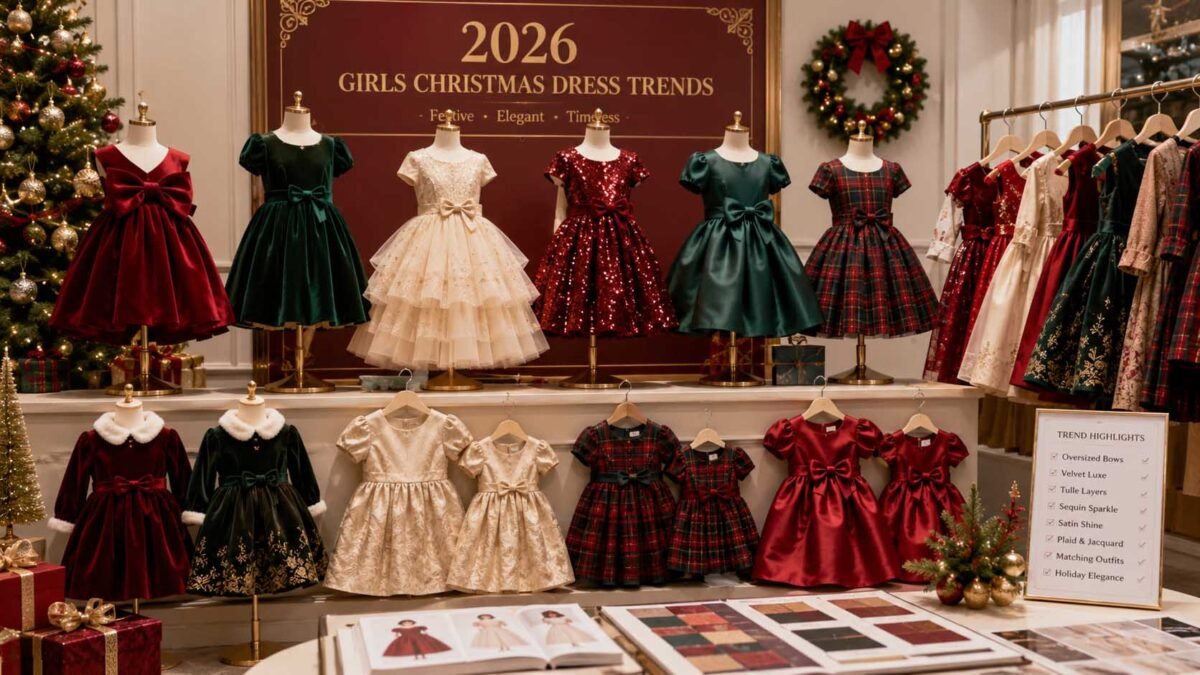
Christmas girls’ dresses wholesale buying calendar — a month-by-month ordering schedule for boutiques, importers and online retailers sourcing girls’ christmas dresses wholesale from China. Tells you when to sample, when to bulk, when to ship by sea vs air, and how to keep your girls’ christmas dresses wholesale inventory in stock before the November rush.
Christmas is the highest-revenue season in children’s formalwear — and the easiest to miss. Retailers who order Christmas girls’ dresses in November always miss the season; buyers who win it have their stockroom ready by July. This guide maps the full Christmas buying calendar for girls’ dress wholesalers: when to order, how far ahead each shipping method needs, and how to structure your holiday assortment before the first December shopper searches.
Every year, the same pattern repeats: boutiques and online retailers start searching for Christmas dresses in late October, when it is already too late for most factories to produce and ship new stock from China. The dresses that sell are the ones ordered months earlier. Understanding the real lead times — development, production, shipping, customs — turns Christmas from a gamble into a predictable revenue line.
1. Why Christmas Dresses Need a Separate Buying Plan
Christmas is not just another season — it has a hard deadline. A birthday dress ordered late arrives “just late”. A Christmas dress ordered late arrives after the holiday, when the category collapses overnight. That deadline changes everything about how you buy:
- Fixed selling window: the season effectively runs from early November to mid-December — about six weeks of real selling, with returns risk after Christmas.
- Long lead times: custom production from China typically takes 30–45 days, plus 15–35 days for shipping and customs, plus weeks of buying lead time for you. Add them up and the calendar starts in spring.
- High demand concentration: the sales are front-loaded — shoppers buy early and buy the styles they see first, so being in stock in November matters more than being perfect in December.
2. The Christmas Buying Calendar, Month by Month
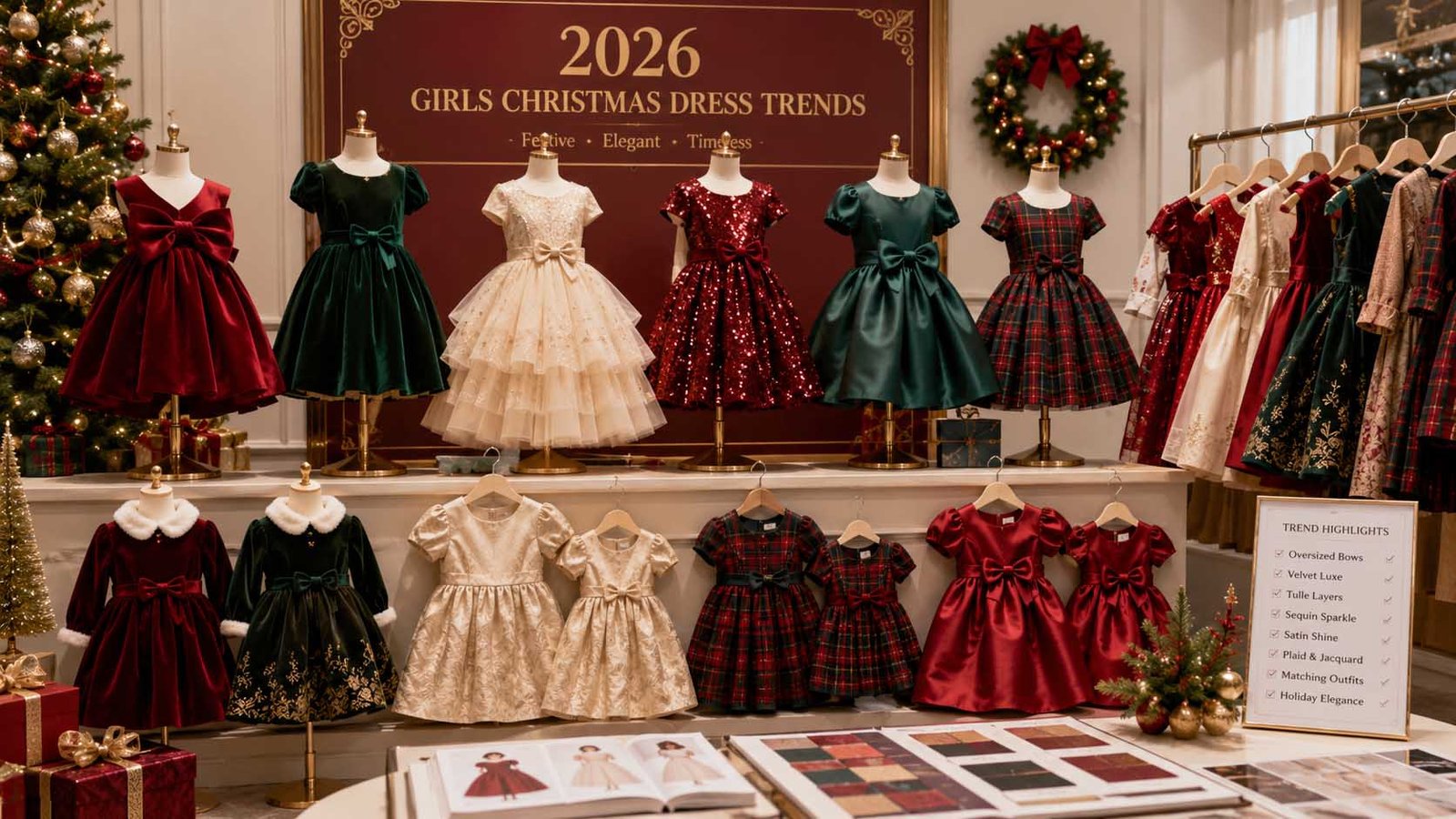
Christmas girls dress trends: bows, velvet, layered tulle and sequin party styles.
Here is the ordering timeline that gives you comfortable margins for error at every step. The exact dates shift by market and shipping method, but the sequence does not.
| Timeline | What to do | Why |
|---|---|---|
| February–April | Review last season’s sales; pick Christmas styles; request samples | Sample development and feedback cycles take 3–6 weeks |
| May–June | Approve samples; place custom orders for new styles | Production slots fill; early orders get priority and better fabric availability |
| June–July | Confirm bulk production; order fabrics and trims | Velvet, sequins and festive trims run out later in the season |
| July–August | Production completes; arrange shipping | Sea freight to North America/Europe needs 25–35 days transit |
| September | Goods arrive; quality check; warehouse stock | Leaves buffer for any rework or customs delay |
| October | Ready-stock replenishment; publish Christmas collection | Shoppers begin searching; early listings rank first |
| November | Full selling season; reorder bestsellers from ready stock | Last orders possible only from in-stock inventory |
| December | Final push; plan markdowns after the 15th | Season ends; leftover stock needs a plan |
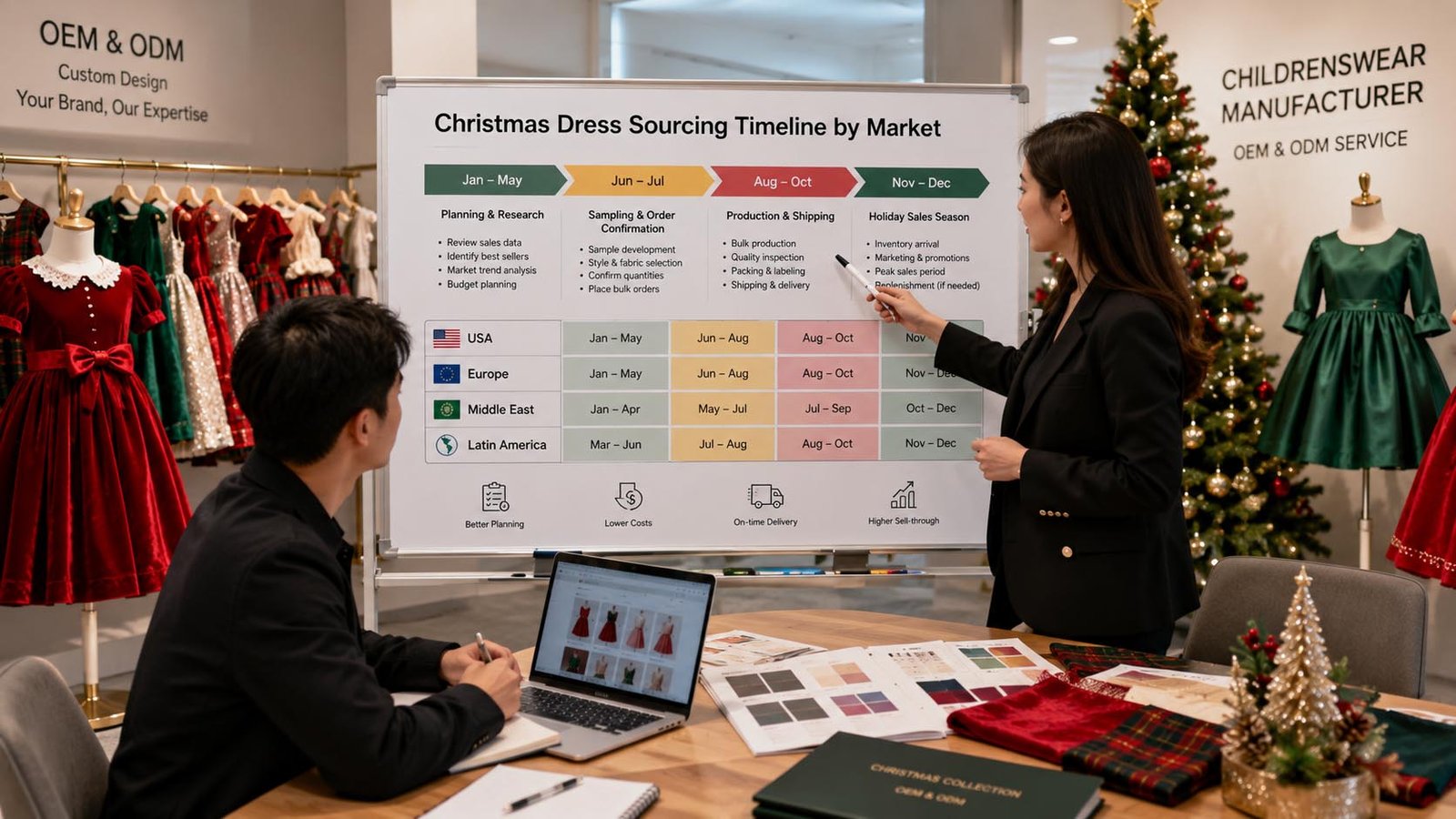
Ordering calendars differ by market — know your destination before you commit to a timeline.
3. How Shipping Method Changes Your Deadline
The shipping leg is the most variable part of the timeline. Choose your method by balancing cost against the risk of missing the season:
- Sea freight (LCL): cheapest, 25–35 days transit plus consolidation time. Only works if your order ships by August — it is the “plan ahead” option.
- Air freight: 5–10 days, roughly 3–5x sea cost per unit. The “I still have time” option, viable for orders shipped through September–October.
- Express (DHL/FedEx): 3–7 days door-to-door, premium cost. Reserved for urgent replenishment of bestsellers in November.
A practical hybrid strategy: ship the bulk of your Christmas assortment by sea in August (lowest cost), then keep a small air-freight or ready-stock buffer for November reorders of what is actually selling. This balances margin with responsiveness.
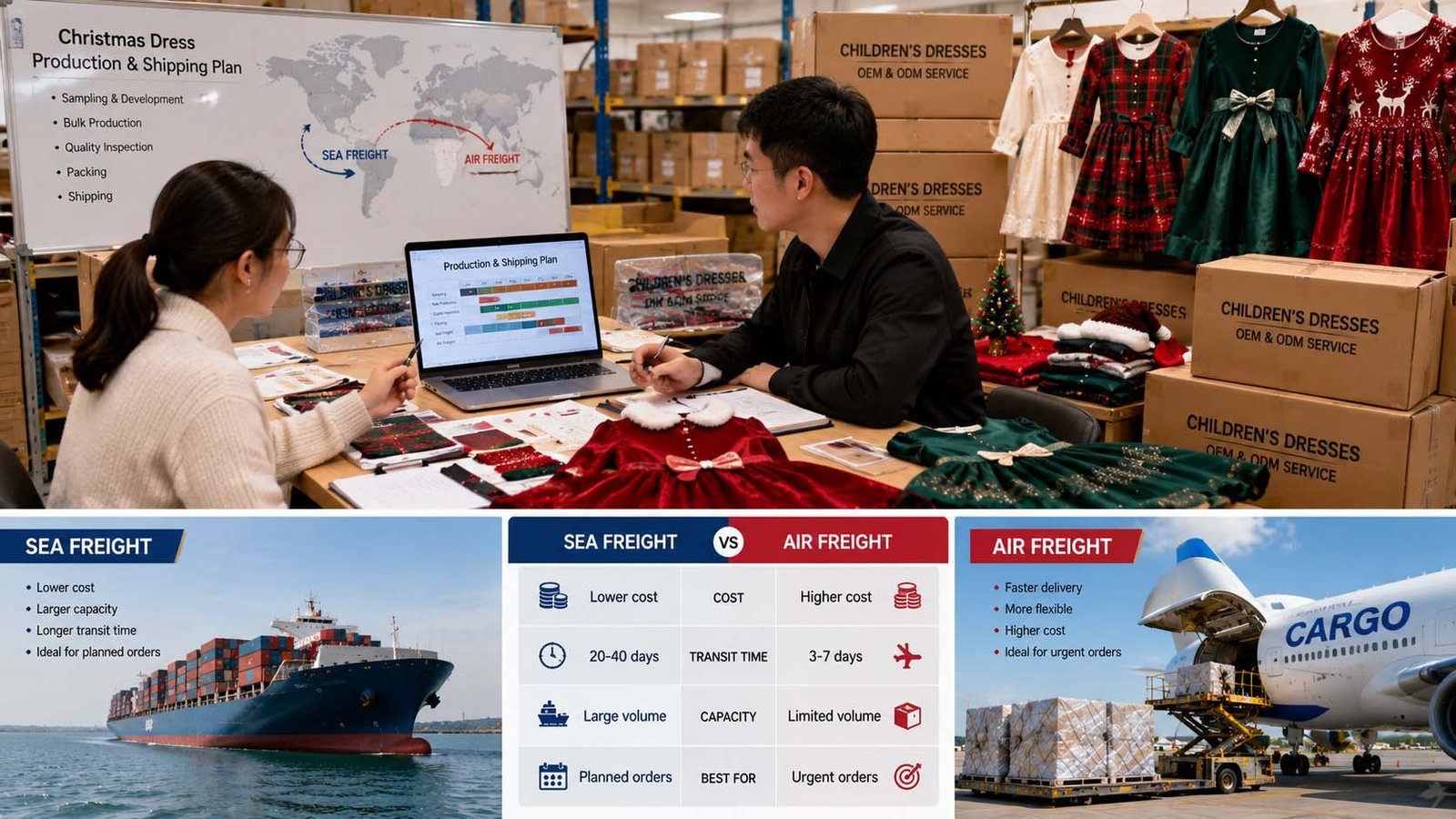
Sea freight wins on cost when you order early; air freight buys time when you order late.
4. Building the Christmas Assortment
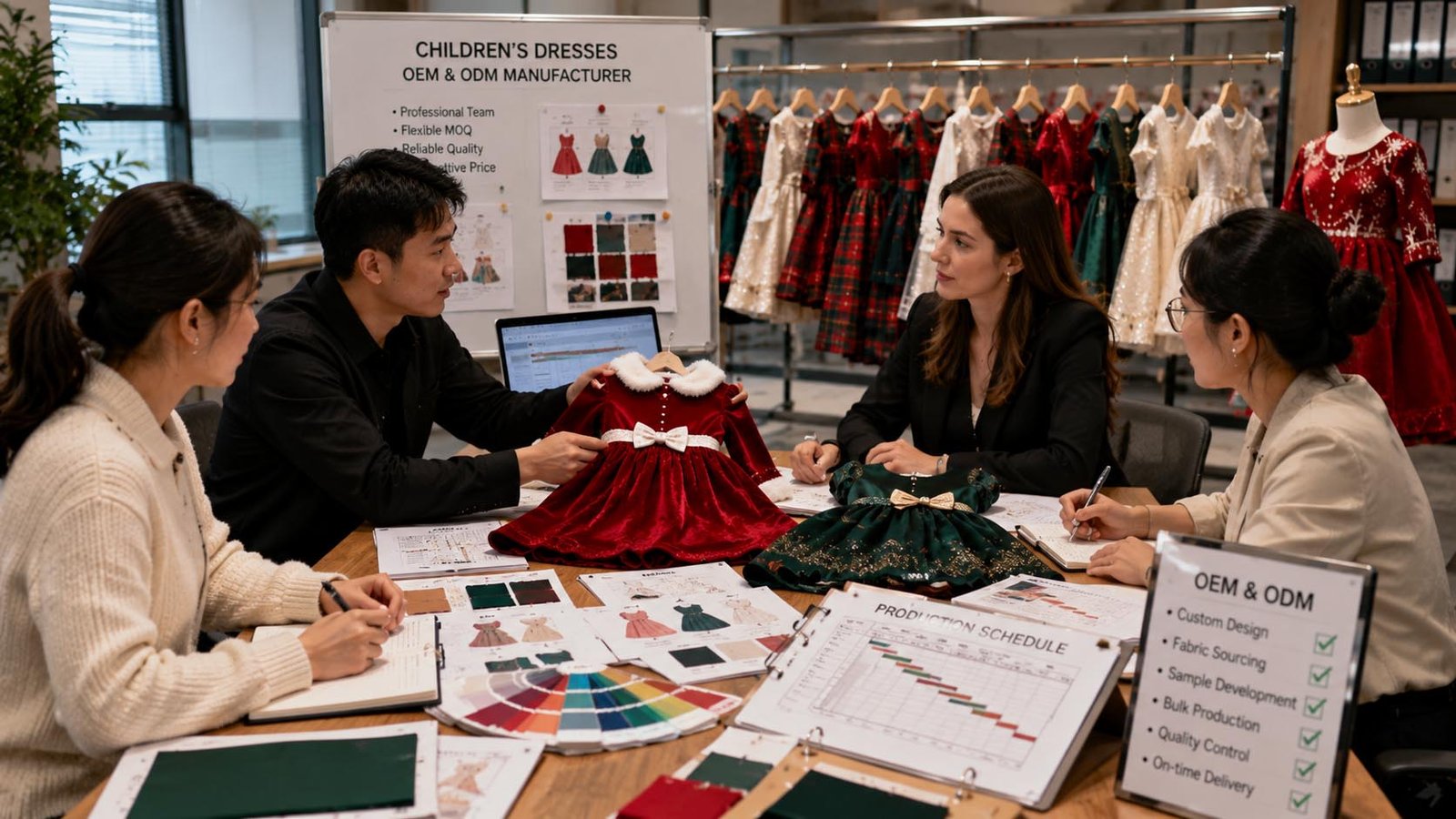
Agree production plans with your supplier early — Christmas capacity fills fast.
Not every style sells equally in the holiday window. Based on what moves in the children’s formalwear market at Christmas, structure your assortment around three groups:
Core Bestsellers (60% of stock)
Festive versions of your proven sellers: velvet or tulle dresses in red, burgundy, emerald and gold; classic princess silhouettes with Christmas-appropriate trims. These are the styles you know your customers buy — the safe volume of the season.
Statement Pieces (25%)
Sequined, embroidered and embellished dresses that catch the eye and justify premium pricing. These drive the “wow” in your Christmas marketing and gift-buying traffic. They turn slower but carry higher margin.
Value Options (15%)
Simple, affordable styles — plain satin or tulle in festive colours — for budget shoppers and families buying multiple dresses (siblings, cousins, family photos). They protect you from price-driven customers going elsewhere.
On sizing, stock deep in the middle: 110–130 cm covers the majority of Christmas dress purchases (ages 4–9), with lighter coverage at the extremes (100 cm toddlers, 140–150 cm older girls). Family-photo customers often buy matching sibling dresses, so having adjacent sizes in the same style converts multi-unit orders.
5. Managing the Risks That Sink Christmas Orders
Three risks kill more Christmas dress programmes than anything else. Plan for each before you order:
Late Fabric and Trim Availability
Velvet, sequin mesh and festive trims are seasonal materials — factories run out as the season approaches. Ordering fabrics and trims confirmed with your June production slot protects you from the most common production delay. Ask your supplier to confirm fabric availability in writing before you commit to a delivery date.
Port and Customs Delays
Peak season congestion at ports (September–November) adds days to every schedule. Build a two-week buffer into your plan: if your sea shipment is due in mid-September, treat October 1 as the real arrival date for planning purposes. For time-critical styles, use air freight even if it costs more — a delivered order beats a cheap order that arrives in January.
Post-Christmas Leftovers
Whatever you do, some stock will remain after December 25. Decide your exit plan when you order, not when the season ends: an after-Christmas markdown strategy (many retailers run 20–50% off in the first week of January), a gift-card incentive, or a planned carryover of styles that are not overtly Christmassy (ivory and blush tulle sells fine in spring). Style selection at order time is the cheapest insurance against leftover risk.
6. Working With a Supplier on Christmas Programmes
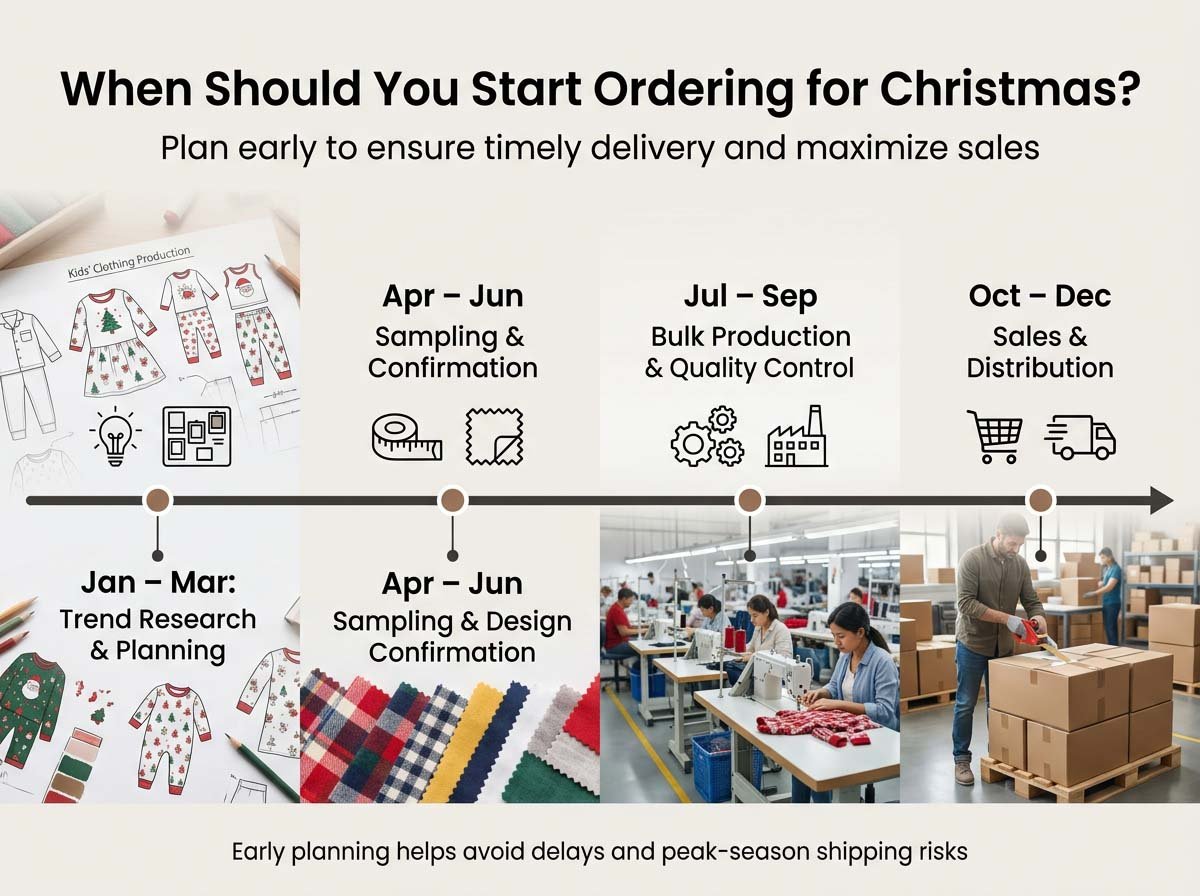
A realistic production timeline: sampling, bulk, inspection, shipping, customs.
Christmas orders work best with suppliers who understand the deadline. When you negotiate your holiday programme, confirm these points in writing:
- Latest shipment date (LSD): the final date the supplier must hand goods to the carrier — your non-negotiable anchor for the whole calendar.
- Production slot: confirm your order is booked into a specific production window, not “sometime in Q3”.
- Ready-stock option: if your supplier holds festive ready stock, you can compress your lead time to days for core styles — ideal for your November reorder buffer.
- Late-delivery clause: agree in advance what happens if the LSD is missed (rework priority, discount, or air-freight cost sharing). Written agreements protect both sides and keep priorities clear.
7. Marketing Windows That Multiply Christmas Sales
Your buying calendar sets the stock; your marketing calendar sets the sell-through. The two must line up, or you end up with the right dresses at the wrong moment:
- October 1–15 — tease: publish the Christmas collection, send lookbook emails, start organic posts. Early searchers are the most enthusiastic and least price-sensitive.
- October 16 – November 15 — core push: paid ads, gift guides, family-photo promotions. This is the peak of buying intent in most markets.
- November 16 – December 10 — urgency: shipping-cutoff messaging (“order by date X to arrive before Christmas”) drives the final wave of conversions.
- December 11–24 — last-mile: in-store and express-shipping orders only; push accessories and sibling sets to lift basket value.
For email and social, plan the creative assets (photos, copy, gift guides) in September, before the season absorbs all your attention. Christmas marketing that wins is planned in the same month as your sea freight arrives — not in December.
8. Evaluating the Season and Planning the Next Cycle
Two weeks after Christmas, when the dust settles, run a short review while the numbers are still fresh:
- Sell-through by style: which styles hit 80%+ sell-through? Those are your core to carry into next year.
- Sell-through by size: which sizes sold out first and which are sitting? This recalibrates your size depth for next season.
- Margin by channel: how did sea-freight vs air-freight stock actually perform on margin after markdowns?
- Leftover plan: carry over non-festive colours, mark down the rest, and note which styles to never reorder.
Write the findings into a one-page Christmas report before February. When the next spring ordering window opens, you will buy with data instead of guesses — and that is the whole game.
Leave a Reply