
A boutique owner writes a message that looks like dozens of others: six organza flower girl styles, roughly 400 pieces, “what certificate do I need?” It is a sensible question with no available answer. Not because the answer is a secret, but because the question arrives before the three facts that decide everything downstream: what the garment physically is, who it is made for, and where it will be sold. Treat children’s clothing compliance by market as a route rather than a document you buy at the end of an order and file away. The route opens when a style is agreed, and it changes when the product changes, when the age group changes, or when the destination changes.
The reflex is to treat compliance as a certificate hunt. Buyers ask suppliers for “the certificate”, suppliers send a PDF, everyone feels covered. That sequence produces most of the compliance failures that reach a buyer after goods have shipped, because the PDF is usually a report about a material, while the obligation is usually about a finished product entering a specific market. Between the two sits a gap wide enough to lose a container in.
What follows is a decision tree, not a regulation encyclopedia. You will not find a complete list of rules here, and that is deliberate. What you will find is the sequence of questions that tells you which rules are even in play for your order, and which of our existing guides to open once you know the answer.
Before You Ask Which Certificate You Need
The first question in compliance is not “which certificate applies”. It is “what did we actually design, and for whom”. Three answers branch the entire tree.
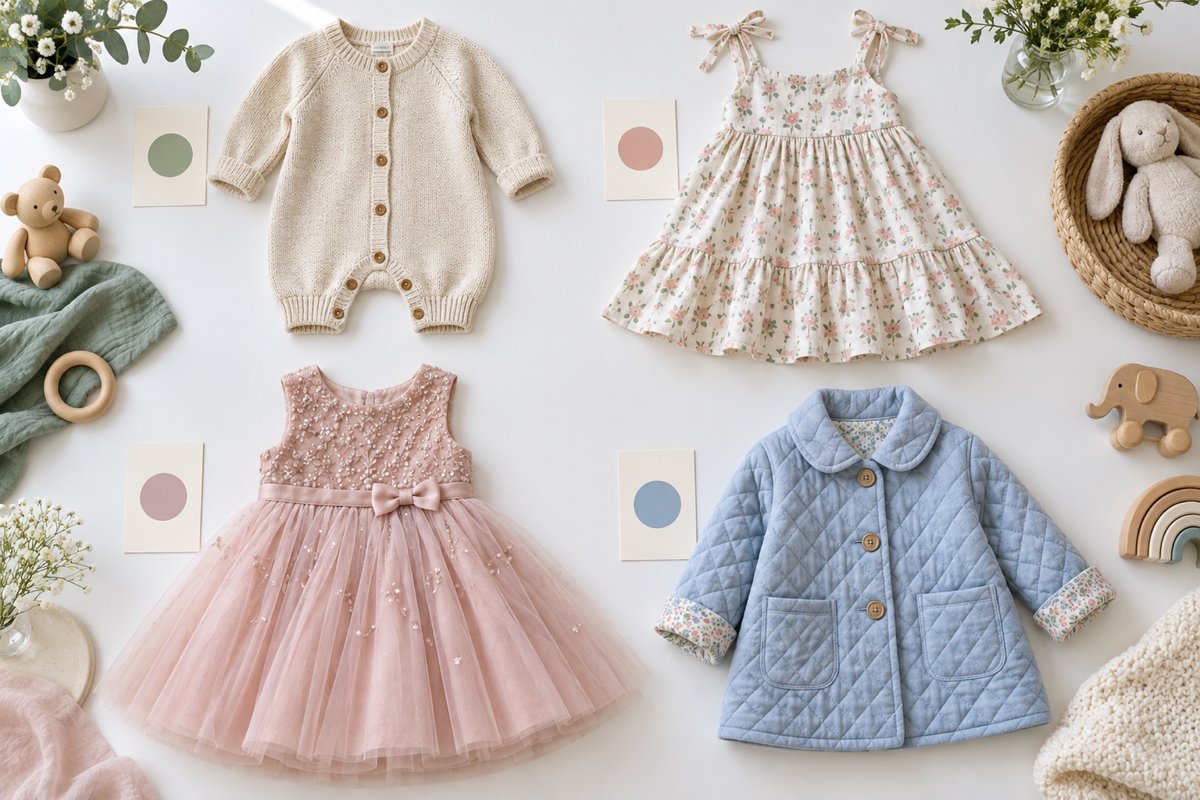
What is it, in construction terms. A single-layer cotton sundress, a lined tulle gown with a corset bodice, a knit romper and a quilted outerwear coat are four different objects from a regulatory standpoint even though they all hang on the same rack. The differences that matter are the layers, the closures, the hardware, the surface treatments and the small components attached to the shell.
Who is it for. The U.S. treats a “children’s product” as one designed or intended primarily for children twelve and under, and a garment aimed at a two-year-old sits in a stricter position than one aimed at a ten-year-old, because the hazards that get tested are not the same. In the EU the age framing also drives how the product is assessed, and the packaging and warnings around it. Age is not a marketing field. It is a compliance input.
Where is it sold, and who sells it. This single answer decides who signs documents, who files at a border, and who is legally exposed if something goes wrong. A dress sold to a U.S. retailer by a U.S. importer and the same dress sold into the EU by an online brand carry the same fabric and a completely different paper trail.
Answer those three before you write to a supplier, and the request itself changes. Instead of “what certificate do you have”, you write “this is a lined tulle dress for ages four to eight, importing into the United States, and here is what we need to confirm about the components and the testing route”. That message gets a useful reply. The first one does not.
Where This Guide Sits in the Compliance Library
We have written about parts of this subject before, and the quickest way to waste an afternoon is to read those articles looking for a general framework that none of them claim to be. Each one covers a single branch in depth. This article is the routing layer above them: it tells you which branch your order lands in, and it deliberately does not repeat the detail underneath.
Read this one first if you are unsure what applies to your product. Then move to the branch you match.
- CPSIA compliance for wholesale kids’ wear — the U.S. statute itself: what it covers, how testing obligations work in practice, what a certificate file contains.
- U.S. children’s clothing labeling requirements — what must be printed on the garment, the hangtag, and the packaging for the American market.
- EU children’s clothing regulations — the European side in operational detail, aimed at sellers shipping into member states.
- Small parts regulation for children’s clothing — the choke hazard branch: which components are assessed, how attachment is judged, what a buyer should request.
- CPSC drawstring rules for girls’ dresses — cords and drawstrings at neck and waist, and the design decisions that keep a style out of trouble.
Five articles, five deep dives, one decision tree. If your question is “what does CPSIA require of my order”, the answer is in the first link and is not restated here. If your question is “which of these five applies to my style”, keep reading.
One scope note before the branches. If a garment will be sold as sleepwear, a separate set of flammability requirements applies to it, and this guide does not cover that route.
Branch One: What Is This Garment?
Every order enters the tree through a product type. The four below cover most girls’ dress programs, and each one moves the assessment in a different direction.
Daywear and casual dresses
A cotton or cotton-blend daytime dress with no attached small components is the simplest route. The assessment concentrates on the materials, the surface decoration, and the closures. Printed panels raise the question of what the print is and how it was applied, since a print is both a decorative choice and a chemical one once the garment reaches a regulated market. Buttons, snaps and zips are examined not only as closures but as detachable objects. A lightweight knit dress adds a construction question that no certificate addresses: does the garment hold its shape after laundering at the temperatures your care instruction will recommend.
For a U.S. order, this branch usually leads to a testing conversation plus a labeling conversation. General children’s wearing apparel sold in the United States should also be assessed against the applicable requirements of 16 CFR Part 1610, the federal flammability standard for clothing textiles, which applies to ordinary daywear and sits separately from the sleepwear standards. For an EU order, this branch leads to a substance conversation plus a fibre composition conversation. Both are covered in more depth in the linked articles.
Infant and toddler garments
The moment the design targets infants and very young children, the emphasis shifts from the material to the components and the packaging. Small attached objects are assessed more strictly, because a child in this age group explores everything with the mouth. Seams and attachments that a four-year-old would never stress become load-bearing: a decorative bow, a plastic charm, a snap, a sewn-on label with a loose corner.
The practical consequence for a buyer is that the specification has to arrive at the factory earlier and in more detail. If a trim is chosen after the first sample because it looked nice against the fabric, the construction around it usually changes, and the assessment has to be repeated.
This is also the branch where internal packaging belongs in the conversation. A garment shipped with a removable pin, a loose clip or a small plastic hanger tag introduces an object that did not exist in your design but does exist in the box.
Formal and party dresses with attached decoration
Beads, pearls, rhinestones, sequins, appliqué flowers, three-dimensional bows and tulle rosettes are the reason this branch exists. A flower girl gown or a party dress can carry several dozen small decorative elements, each applied under different methods: glued, sewn, threaded on a bead strand, or a combination. Two properties get assessed. The first is whether the element could come away and become a hazard if it did. The second is how the attachment was executed, because a glued stone on a smooth satin ground behaves very differently from a hand-sewn bead on tulle.
Decoration also routes the order into a second conversation, about how the embellishment is built correctly. Our breakdown of girls dress embellishments covers the construction side. Compliance adds one question to it: for each decorative element, does it survive pull, wear, laundering and normal handling without separating from the garment.
Metal hardware belongs here too. Zipper pulls, clasps, belt buckles and decorative metal rings are examined as components in their own right, and in the EU their surface chemistry matters separately from their mechanical attachment.
Outerwear and heavier garments
Coats, quilted jackets, capes and lined formal outerwear add two things to the route. The first is a lining layer, which introduces a second material into the substance conversation and a second set of shrinkage and stability questions. The second is cord and drawstring risk, which is where many otherwise well-built children’s outerwear styles go wrong. Neck cords and waist cords are assessed against specific limits in the U.S. market, and the design choice is what keeps a style compliant: a fixed cord, a shortened cord, a cord that is stitched through so it cannot be pulled free, or no cord at all.
If your style has a hood, a tunnel waist, or a toggle, open CPSC drawstring rules for girls’ dresses before you approve the design. Adjusting a cord channel at sampling costs a pattern revision. Adjusting it after a shipment is refused costs the shipment.
Branch Two: The United States Side of the Route
A U.S. order runs through a certification framework built on one idea: a regulated finished product needs a certificate issued by a responsible party who can be identified and held to it. Everything else follows from that.
Who signs the certificate, and who does not
The Children’s Product Certificate is issued by the importer or the domestic manufacturer. It is their written statement that the product complies with the applicable rules, and it has to be based on testing performed at a laboratory accepted by the CPSC for the relevant requirement. The certificate belongs to the party putting the product into U.S. commerce. It is not a factory document, and a factory cannot issue it on a buyer’s behalf.
This matters because a great deal of supplier correspondence describes things loosely. When a supplier says the order “will come with a certificate”, that phrase usually means one of several different documents: a mill’s test sheet, a laboratory report on a fabric lot, an internal inspection record, or a third-party lab report on a sample garment. Some of those are useful inputs. None of them is the certificate. If you are the importer, you are the party who issues the certificate, and you are the party who chooses the laboratory, defines the sample, and holds the file.
Ask the question plainly at the sampling stage: which laboratory will test this, against which requirements, and on which article — a swatch, a component, or a finished production sample. The answer changes the cost and the calendar, and it is much cheaper to settle before the order than after.
The label that travels with the goods
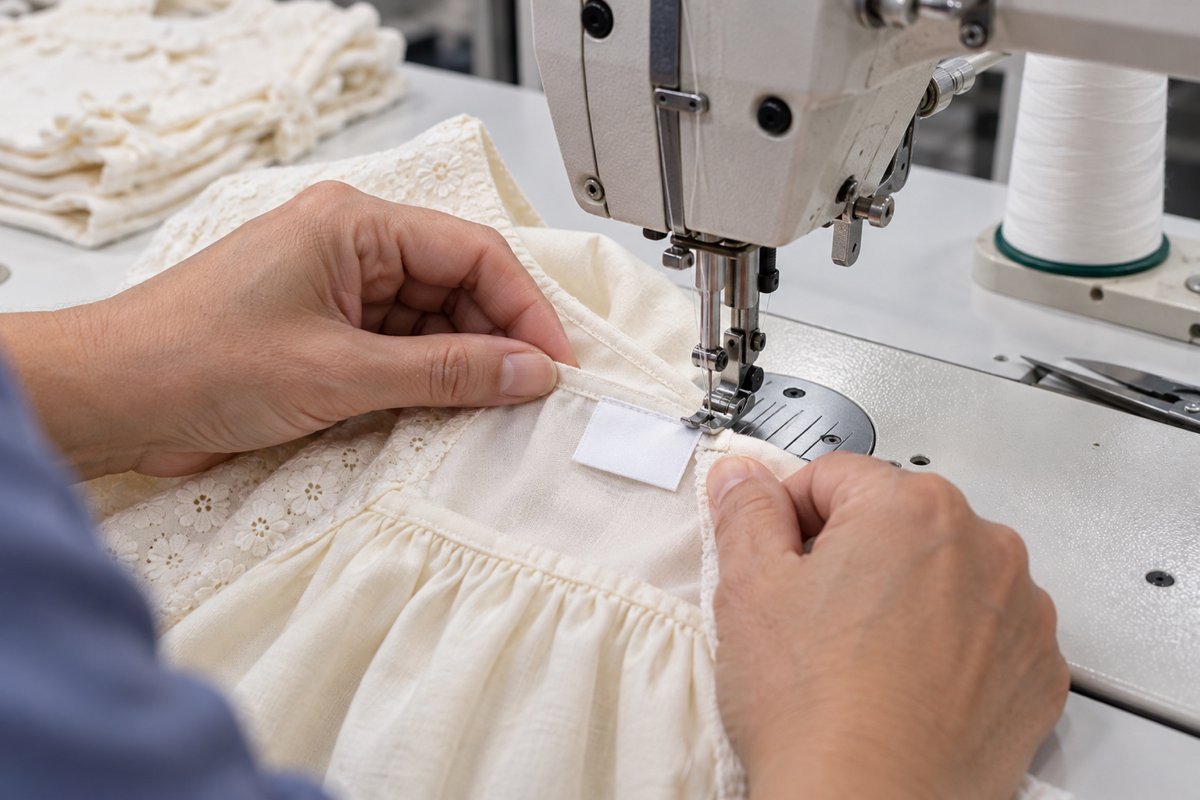
U.S. rules require a permanent tracking label on children’s products, including clothing. Its purpose is traceability: if a problem appears later, the tag lets the product be tied back to a manufacturer, a production date and a batch. In practice, U.S. children’s products generally require permanent tracking information on the product and on its packaging to the extent practicable, identifying the producer and the production run. Packaging may not need duplicate marking where the required information on the product itself stays clearly visible through the packaging.
Design the tracking label into the style, not onto the carton. A label that is planned at sampling is a small line item. A label that has to be added after the goods are packed becomes a rework operation with a labor cost and a delay, and it is one of the few compliance issues that cannot be fixed by sending a document later.
The wider labeling picture — fibre content, country of origin, care instructions, and what has to be attached versus printed — is its own subject and lives in U.S. children’s clothing labeling requirements. What belongs in this tree is the routing point: labeling is a production input, decided with the tech pack.
Small components and physical hazards
Separately from chemicals and from certificates, U.S. rules address physical hazards in children’s products. Start with what the small parts regulation actually covers, because it is routinely misread. Children’s clothing, and common apparel fasteners such as buttons, are specifically exempt from the CPSC small parts regulation in 16 CFR Part 1501. That exemption does not make loose decoration irrelevant. An insecure button, bead, trim or bow can still create a product-safety concern, particularly for the youngest age group, and it can still be a quality failure that the buyer owns. Attachment security therefore stays in the product risk assessment and in the quality-control plan, whichever regulation is cited.
Attachment is judged as a construction property, which is why the assessment cannot be done from a supply list. A bead that is stitched through a tulle layer with a secure knot and a bead that is spot-glued to a satin panel may use the same bead, and they are not the same product. When a style carries decoration, the sensible move is to agree the attachment method explicitly in the tech pack and to test the finished garment rather than a loose component. The detailed treatment of this branch, including what a buyer can reasonably verify, is in small parts regulation for children’s clothing.
The CPSIA framework as a whole — chemical limits in materials, the testing structure, and how a compliance file is assembled — is set out in CPSIA compliance for wholesale kids’ wear, so it is not repeated here.
Electronic filing at the border, and why the calendar moved
One operational change has reshaped U.S. import timelines, and it is worth stating precisely because much of the information circulating about it is out of date.
Electronic certificate filing with U.S. Customs and Border Protection applies to covered imported consumer products subject to CPSC certification requirements, and it has been in force since July 8, 2026. Two clarifications matter here. First, eFiling is an entry requirement: the certificate data is transmitted at the border, so it applies to goods entered into the United States rather than to goods manufactured and sold domestically. Domestic manufacturers instead work to the updated certificate content requirements that took effect on the same date. Second, importers bringing goods in through a foreign trade zone have until January 8, 2027, when the requirement applies to that route as well.
Two things follow from this. The first is that the obligation sits with the importer, not the factory. The importer files the certificate data electronically at entry and remains responsible for the certification and the filing. A promise that “the factory will handle it” is not accurate for this requirement. Responsibility is not the same thing as transmission. A licensed customs broker may transmit the required PGA Message Set on the importer’s behalf, and the importer can supply that broker with certificate data or certificate identifiers. The supplier’s part sits upstream of all of it: accurate manufacturing, testing and traceability information that the certificate depends on. The second is that filing is not the same as testing. The test has to exist, the certificate has to be issued, and the data has to be filed; a late test is now a border problem rather than a paperwork problem.
For a buyer planning a fall or holiday delivery, the practical implication is that the compliance file has to be complete before the shipment sails, not before it arrives. Building the file is a task that belongs on the production calendar alongside the final inspection.
Branch Three: The European Union Side of the Route
The EU side is where buyers most often lose the thread, because three separate frameworks get collapsed into one imaginary document. There is no CE certificate for a children’s dress. CE marking belongs to product categories where EU law requires it, and ordinary apparel is not one of them. If a supplier offers you “the CE certificate for the dresses”, that is a signal to slow down and ask which framework they actually mean, because the answer will always be one of three.

General Product Safety Regulation: the umbrella
The GPSR is the general safety framework for consumer products placed on the EU market, and it has applied since December 13, 2024. For children’s clothing it sets the overarching expectation: a product must be safe in normal and reasonably foreseeable use, and a producer has to be able to demonstrate that they assessed the risks rather than assumed none existed.
Three practical consequences land on a dress order. First, there has to be a responsible economic operator established in the EU for products sold into the market, which is a business arrangement rather than a factory document. Second, traceability has to be possible: the product and its packaging must allow the operator to be identified. Third, warnings and instructions where they are needed must be in the language of the market. A drawstring, a cord, a small decorative component and a flammable-looking decorative tulle are all things a hazard assessment should have considered before the style was locked.
REACH: what is inside the materials
REACH regulates chemical substances in the EU, including in articles such as clothing. It operates on substances rather than on product categories, which is why you cannot test a dress “for REACH” in the way you test it against a product standard. Relevant substances are those restricted for use in articles, and the ones that most often matter in children’s apparel are a narrow set: certain colourants used in dyeing, nickel release from metal parts that contact skin, and certain plasticisers in plastic components.
For an order, this translates into material control. Where a fabric comes from, how it was dyed, what the print ink is, what the metal hardware is plated with, and what the plastic snap is made of are all part of the picture. A written statement from a mill about its dye chemistry is a document you can hold a supplier to, and it is more useful than a general assertion that the fabric is “safe cotton”. Ask for it per material, per colourway, at the development stage. Reaching the market and then discovering that one colourway of one print was produced with a restricted substance is a problem that cannot be resolved by relabeling.
Textile Regulation 1007/2011: fibre names and composition
This regulation governs how textile products are described and labelled for their fibre composition in the EU. What it requires is a truthful statement of the fibres present in the product, using the recognised fibre names, with the composition percentages consumers can rely on. It exists partly to stop a garment being sold as “silk” when it is polyester, and partly to give consumers enough information to make a choice.
It does not do two things that buyers frequently assume it does. It is not an origin rule: it says nothing about where the garment was made. It is not a care labelling rule either: washing symbols and care instructions sit outside this regulation, alongside national practice and voluntary standards. So when someone tells you a style is “1007/2011 compliant”, translate that into a concrete question: does the composition on the label match the fibre content of the actual bulk garment, for every colourway, at the accuracy the buyer needs?
That last part is where real failures happen. A composition label is written once at development and printed for the whole program. If bulk production substitutes a lining or shifts a blend ratio, the label becomes inaccurate while everything else about the dress stays the same. Confirm the composition against the bulk materials, not against the first sample.
The EU branch in full, including how these frameworks convert into operational steps for a seller shipping into member states, is covered in EU children’s clothing regulations.
Branch Four: Materials and Components That Change the Route
Product and market decide the framework. The third branch decides which parts of the product need attention inside that framework. Five categories cover most disagreements.

Base textiles. The shell fabric and the lining carry the fibre composition question and the substance question at once. Two practical points: keep them distinct on paper, because a lining is often chosen later and often changed at the last minute; and treat the lining as a component with its own identity rather than an internal detail nobody sees.
Prints. A print is a material change. It introduces ink chemistry, a production process and, on some substrates, a surface effect that may be assessed differently from a plain dyed fabric. Ask for the print to be declared per colourway and per substrate, and make sure the print is included in whatever composition language the garment carries if it changes the fibre story.
Coatings and surface treatments. Coated or backed fabrics, laminated panels, and treatments applied for stiffness or sheen are the category buyers most often forget, because the treatment is invisible once the dress is finished. If a style depends on a coated material for structure or for a specific look, it belongs in the declaration, not only in the design conversation.
Metal hardware. Zips, snap fasteners, decorative rings, buckles and clasps. The mechanical question is attachment and function. The chemical question, in the EU, includes what the metal releases at the surface where it touches skin. Keep hardware specifications written and dated, because hardware is one of the items most often substituted at bulk with something visually similar.
Small decorative components. Beads, stones, sequins, pearls, appliqué, ribbon flowers and bows. These drive the small parts branch, and they are also the components most likely to pass a sample review and then behave differently in bulk, when the attachment is being produced at speed by a different operator. Agree the attachment method per component type, not just the component.
Who Holds Which Obligation
The recurring confusion in all four branches is a category error: buyers ask the factory to hold obligations that belong to the importer or the brand. This table is the shortest version of the division.
| Obligation | Who holds it | What the factory can contribute |
|---|---|---|
| Issuing the U.S. Children’s Product Certificate | The importer or domestic manufacturer | Production consistency, component declarations, samples and lot records that support testing |
| Arranging third-party testing at an accepted laboratory | The party issuing the certificate | Shipping representative production samples; retaining bulk component records |
| Electronic certificate filing at U.S. entry | The importer | Nothing directly — this is not a factory action |
| Tracking label content and attachment | The party certifying the product | Producing and applying the label when the content is supplied at development |
| EU responsible economic operator | The seller or brand placing goods on the EU market | Manufacturing traceability and accurate material records |
| Substance control in materials | Shared in practice; legal responsibility stays with the seller or importer | Written declarations per material, colourway and component, and identification of any substitution |
| Fibre composition labelling | The seller or brand | Confirming actual bulk composition against the declared label |
Read the middle column twice. It is almost always where an order breaks, because a buyer assumed a supplier owned a duty that legally sits with the buyer.
What a Factory Document Does and Does Not Prove
Factories produce plenty of paperwork, and some of it is genuinely useful. The trap is treating any of it as proof of product compliance. This is the second and last table in this guide, and it exists to keep one distinction straight.
| Document | What it can support | What it cannot prove |
|---|---|---|
| A mill or fabric supplier test sheet | The properties of a fabric lot, as stated by the mill | That the finished garment meets the requirements for your market |
| A third-party laboratory report on a sample | Test results for the specific article tested | That bulk production matches that sample or that lab |
| A quality management certificate | That a factory operates a documented quality system | That any particular order or component complies |
| A social compliance audit summary | Working conditions at the site audited | Product safety or conformity of the goods you receive |
| A PDF labelled “certificate” | Nothing on its own | Anything, until you identify who issued it, for what product, against what requirement, and when |
The last row is the one that costs money. A document whose issuer and scope cannot be identified is not evidence and cannot be relied on at a border or in a dispute.
Four questions will sort almost any document in under a minute. Who issued it — a mill, a factory, or an accredited laboratory? What exactly was tested — a raw material, a component, a sample garment, or a bulk lot? Against which requirement, for which market, and at what date? And does the article described in the document match the article you are buying, including the colourway, the lining and the trim? A report that answers all four is an input you can use. A report that answers one or two is a filing problem waiting to happen, and the time to discover that is while there is still a sampling round available to close the gap.
Two habits keep this manageable across a season. Keep the file organised by style, not by supplier, because a single dress can draw on a mill, a hardware vendor and two trims suppliers, and the compliance question is about the garment they produced together. And date every document at the moment you receive it, so that when a style is reordered a year later you can see immediately whether the evidence behind it still reflects the current build.
Two Routes Walked Through the Tree
Abstract trees become useful only when something is pushed through them. Two examples, both anonymised buyer situations we see repeatedly.
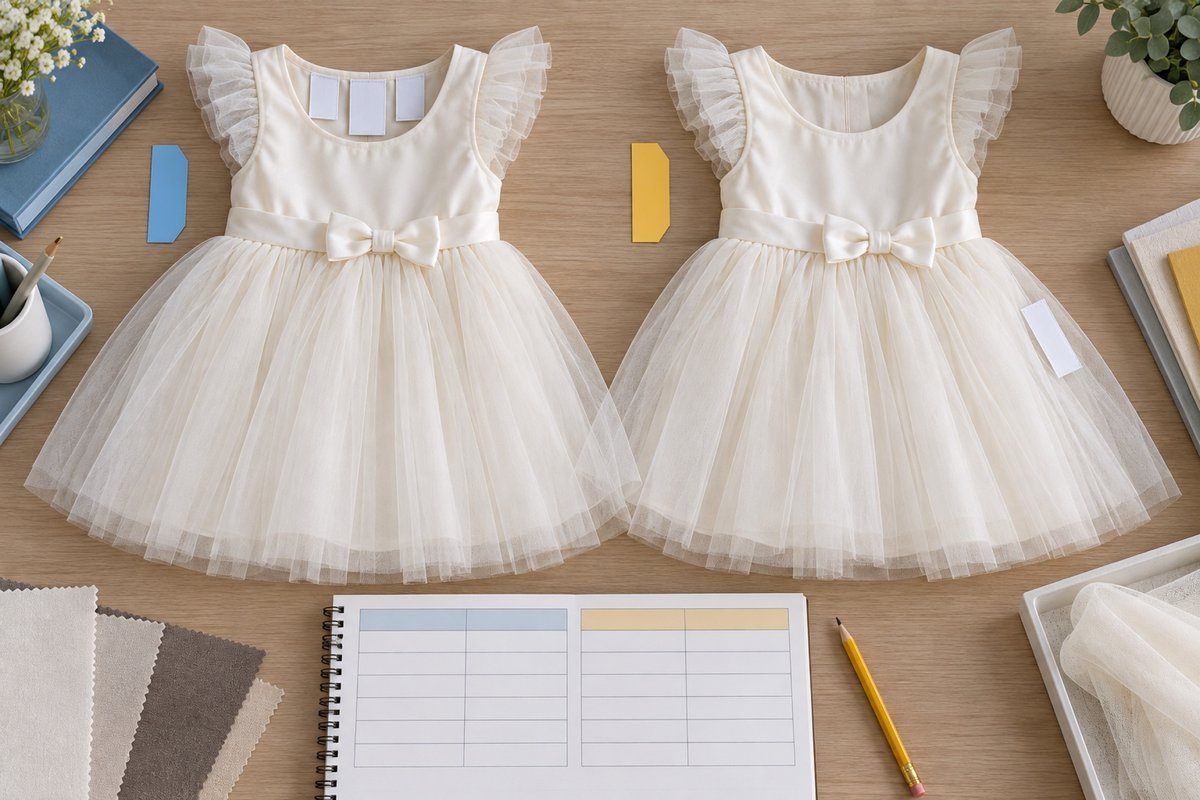
Route one: a beaded flower girl dress, sold into the United States. The product branch puts this in formal daywear with attached decoration, which makes small components the first concern. The attachment method for each decorative type — glued stones, hand-sewn beads, appliqué petals — is agreed in the tech pack rather than left to the sample room. The market branch makes the buyer the party issuing the certificate and arranging testing at an accepted laboratory on the finished article, and it puts the tracking label into the first sample rather than into a later revision. The material branch adds hardware and the decorative components to the declaration request, and flags that if the same style is later sold into the EU, nickel release at the surface of the metal becomes relevant. Filing at entry sits on the importer’s calendar before the ship sails. What the buyer does not do, in this route, is wait for the factory to hand over a certificate, because that is not how the U.S. route works.
Route two: a knitted cotton infant sundress, sold into the European Union. The product branch moves the emphasis from decoration to components and packaging, because the age group makes small detachable objects and internal packing the leading concerns. The market branch creates three separate items: a responsible economic operator in the EU, a hazard assessment that records what was considered, and a fibre composition label stating the actual blend. REACH adds a material task on top: declarations for the dyed fabric, the print if there is one, and any plastic closure, per colourway. The material branch confirms that the composition claim on the label matches bulk, and that no substitution happened at the lining or the trim. There is no CE certificate in this route, and no U.S. style certificate either.
Now the part that makes the tree worth learning. Take one garment and change a single variable — the destination. The dress stays identical: same pattern, same fabric, same beads. The route changes completely. One market asks who issues a certificate and who files at a border; the other asks who represents the product inside the union and what the label says about fibre. A second single-variable change, the age group, moves the emphasis from the material declaration to the detachable components and the packaging. A third, adding a hood cord or a coated panel, adds a branch that did not exist before.
This is why the useful compliance habit is not memorising rules. It is running the three questions — product, market, materials and components — before every new style, and knowing which specialist guide to open when a branch turns out to be live.
Regulatory information reviewed as of September 2026. Requirements may change by market, product type, age group, construction and distribution model. Buyers should confirm current requirements with the relevant authority or qualified compliance professional before placing goods on the market.
Ready to move forward?
Send us three things and the compliance conversation gets concrete quickly: the product type, the age range it is aimed at, and the markets you are shipping into. Add the fabric and component list as far as it is settled, and we will tell you which parts of the specification have to be locked before sampling — a drawstring, a bead attachment, a print, a flammability question — and which documentation has to be created early rather than after the goods are packed. Quality and compliance is where that process starts. Typical figures as of September 2026, for planning only: ready stock on selected styles from 6 pieces, custom orders from 200 pcs per style, sampling 5–7 days per round, bulk production 25–40 days after sample approval, and pattern or sample development USD 80–150 where no pattern exists. Exact MOQ, development cost and lead time depend on style, fabric, quantity and season.