FOB, CIF and DDP are three little letters that determine who pays for what — and who bears the risk — between a wholesale girls’ dress factory and your warehouse. Choose the wrong one and a quote that looked cheap turns expensive once freight, insurance and duty land. This guide explains the three Incoterms most buyers actually use, and how to pick.
Browse Ready Stock With Clear Pricing
Unit pricing, size ranges and pack-out details are listed per style, so you can model your margin before you ask for a quote.
Incoterms (International Commercial Terms) are a standard set of rules that assign responsibility for shipping, insurance and duty between a buyer and a seller. They do not replace your contract — they define the cost and risk handover point. For a boutique or importer buying kids’ dresses from China, three terms cover almost every situation: FOB, CIF and DDP, with EXW and a few others appearing less often.
This article focuses on the three you will actually negotiate. For the broader picture of moving the goods once the term is set, see our guide on air freight vs sea freight, and the full end-to-end process in how to import kids dresses from China.
1. The Three Terms at a Glance
Each term moves the cost-and-risk handover to a different point in the journey:
| Term | Full name | Seller (factory) is responsible for | Buyer is responsible for |
|---|---|---|---|
| EXW | Ex Works | Making the goods available at the factory | Everything — pickup, export, freight, insurance, import, duty |
| FOB | Free On Board | Goods loaded onto the vessel at the origin port | Ocean freight, insurance, import clearance, duty |
| CIF | Cost, Insurance & Freight | Freight to destination port + insurance | Unloading, import clearance, duty, inland delivery |
| DDP | Delivered Duty Paid | Everything, delivered to your door, duties paid | Just receive the goods |
Get a Landed Cost Quote
Tell us your destination, quantity and service preference and we will price the whole route — goods, freight and handling — in one figure.
EXW gives the buyer maximum control and maximum work; DDP gives the buyer minimum work and minimum control.
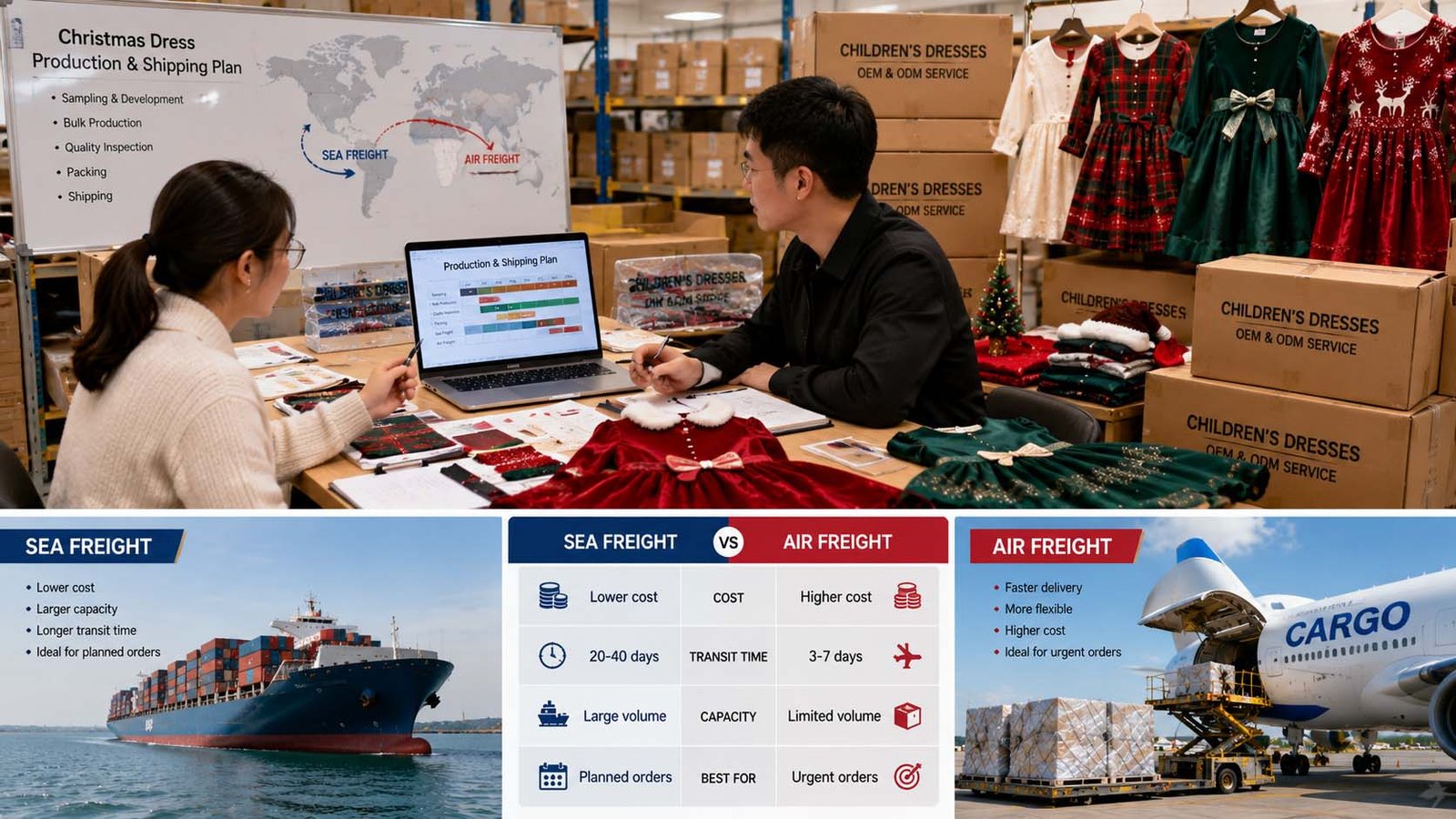
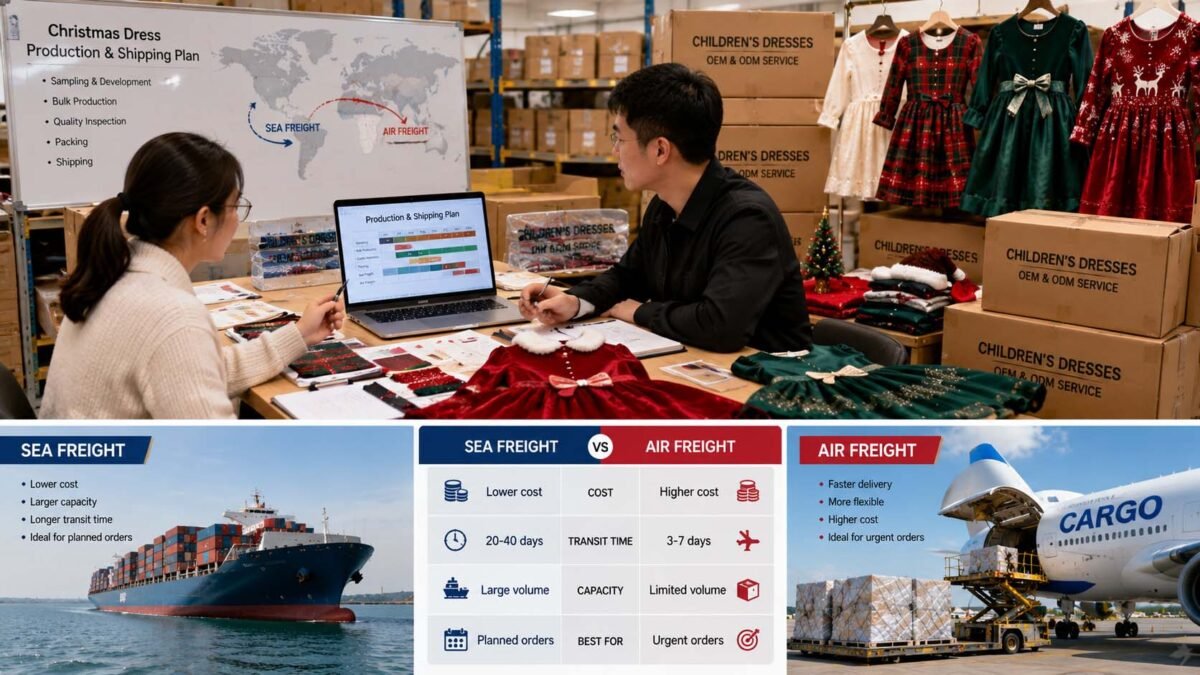
The Incoterm defines who pays for the journey — the transport mode is a separate decision.
2. FOB: Control for Experienced Buyers
Under FOB (Free On Board), the factory is responsible for getting the goods to the origin port and loaded onto the vessel. From that point, the buyer takes over: you arrange and pay for ocean freight and insurance, and you handle import clearance and duty in your own country.
Why Buyers Choose FOB
- Freight cost control — you choose your forwarder and negotiate the freight rate yourself, rather than paying the factory’s marked-up rate.
- Transparency — you see every cost line separately: goods, freight, insurance, duty.
- Better for larger or repeated orders — once you have a forwarder you trust, FOB lets you optimize freight across all your suppliers.
The Trade-off
FOB is more work. You need a freight forwarder, you handle customs documentation, and you absorb the learning curve of international shipping. For a first-time importer, that complexity is real. But for a buyer who imports regularly, FOB is usually the most cost-efficient term because you keep the freight margin for yourself.
3. CIF: Simpler, at a Price
Under CIF (Cost, Insurance and Freight), the factory quotes a single price that includes the goods, ocean freight to your destination port, and marine insurance. The buyer still handles import clearance and duty after the goods arrive at the port.
Why Buyers Choose CIF
- Simpler quoting — one price covers goods plus freight plus insurance, so you know the number up front.
- Good for first-time importers — the factory handles the part of the journey you know least (origin-side logistics).
- Convenient for small to mid orders — when the freight savings of FOB are small, CIF’s simplicity wins.
The Trade-off
CIF is convenient but less transparent. The factory chooses the forwarder, and the freight portion of the price may carry a markup. You also have less control over the sailing schedule. And note the fine print: CIF insurance is often the minimum coverage — check the level before you rely on it.
4. DDP: Maximum Simplicity, Maximum Price
Under DDP (Delivered Duty Paid), the factory takes responsibility for everything: export, freight, insurance, import clearance, and duty — delivering the goods to your door with all costs paid. You simply receive the shipment.
Why Buyers Choose DDP
- Zero logistics burden — ideal for a new seller who wants to focus on selling, not shipping.
- Predictable total cost — the price you agree is the price you pay, with no surprise duty bill on arrival.
- Good for marketplaces — sellers shipping to Amazon FBA or a 3PL often prefer a door-to-door price.
The Trade-off
DDP is the most expensive term, because the factory prices in every risk and cost — freight, insurance, duty and a margin for handling it all. You also give up control and visibility over the shipping leg, and you are relying on the factory’s duty classification to be correct. For high-value or compliance-sensitive children’s wear, that classification matters.
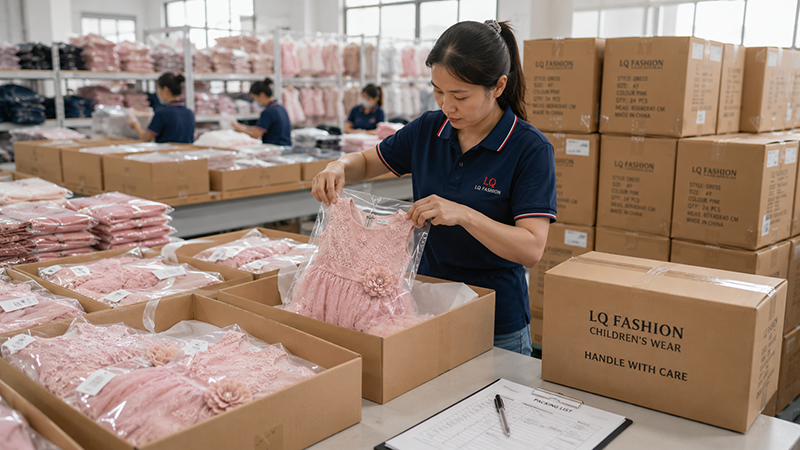
Whatever the Incoterm, proper packaging protects your margin — damaged dresses in transit are a cost you pay regardless of who books the freight.
5. How to Choose the Right Term
The right Incoterm depends on your experience, order size and how much logistics you want to own. Here is a practical decision guide:
| Your situation | Recommended term | Why |
|---|---|---|
| First-time importer, small order | DDP or CIF | Simplicity beats freight optimization while you learn |
| Regular importer, mid to large orders | FOB | You keep the freight margin and control the schedule |
| Selling into marketplaces (FBA / 3PL) | DDP | Door-to-door, predictable total cost |
| Testing a new supplier | DDP or CIF | Reduce your variables while you evaluate quality |
Match the term to your stage — simplicity early, control later.
Whichever term you choose, always confirm the handover point in writing and get the term stated explicitly on the quotation and the commercial invoice. A vague “shipping included” is not an Incoterm — it is a misunderstanding waiting to happen.
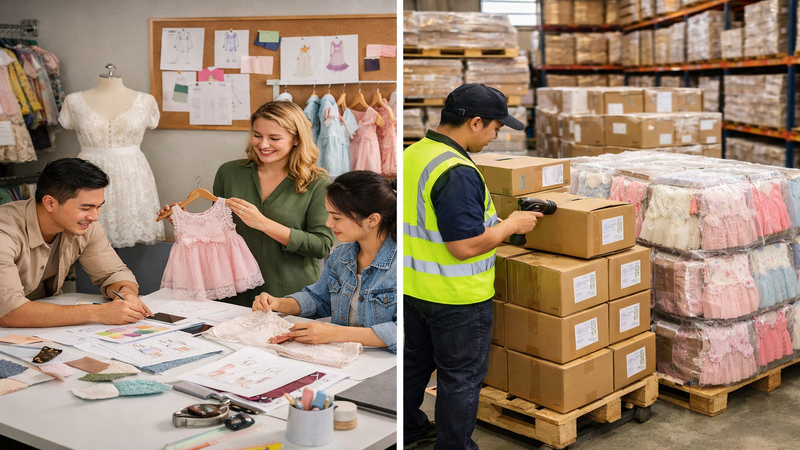
Clear Incoterms and clear packaging instructions together prevent the most common import surprises.
6. The Cost Breakdown You Should Ask For
Before you compare quotes, ask every supplier to break the price into the same components. A quote that is not itemized cannot be compared fairly. Request:
- Goods cost — price per dress, FOB or EXW.
- Freight — the shipping cost, and whether it is sea or air.
- Insurance — whether it is included, and at what coverage level.
- Duty and tax — who pays it, and an estimate of the rate.
- Incoterm — stated explicitly, not implied.
With those five lines itemized, two suppliers’ “total prices” become directly comparable, and the cheapest quote stops hiding its freight markup. It is the single most effective question a wholesale buyer can ask.
Frequently Asked Questions
What is the difference between FOB and CIF?
Under FOB, the buyer pays and arranges ocean freight and insurance from the origin port onward. Under CIF, the factory pays freight and insurance to the destination port, but risk still transfers to the buyer once goods are on the vessel. FOB offers more control; CIF offers more simplicity.
What does DDP mean for a kids dress importer?
DDP (Delivered Duty Paid) means the factory handles everything — export, freight, insurance, import clearance and duty — and delivers to your door with all costs paid. It is the simplest but usually the most expensive term.
Which Incoterm is cheapest?
For a regular importer, FOB is usually the most cost-efficient because you negotiate freight directly and keep the freight margin yourself. DDP is typically the most expensive because the factory prices in every cost and risk.
Does CIF include duty?
No. CIF covers cost, insurance and freight to the destination port, but the buyer is still responsible for import duty, taxes and customs clearance after arrival.
What should I ask for when comparing supplier quotes?
Ask for an itemized breakdown: goods cost, freight, insurance, duty/tax and the explicit Incoterm. Itemized quotes make two suppliers directly comparable and reveal hidden freight markups.
Should a first-time importer use DDP?
Usually yes — DDP or CIF is a good starting point because it reduces the logistics variables while you learn. Move to FOB once you import regularly and have a trusted freight forwarder. If you’d like a hand deciding, start with a ready-stock order and we’ll help you sort out the right term and shipping.
Get an itemized quote
Tell us your order size and destination — we’ll help you choose the right Incoterm and break down the goods, freight, insurance and duty, so you can compare fairly and budget with confidence.
Leave a Reply