
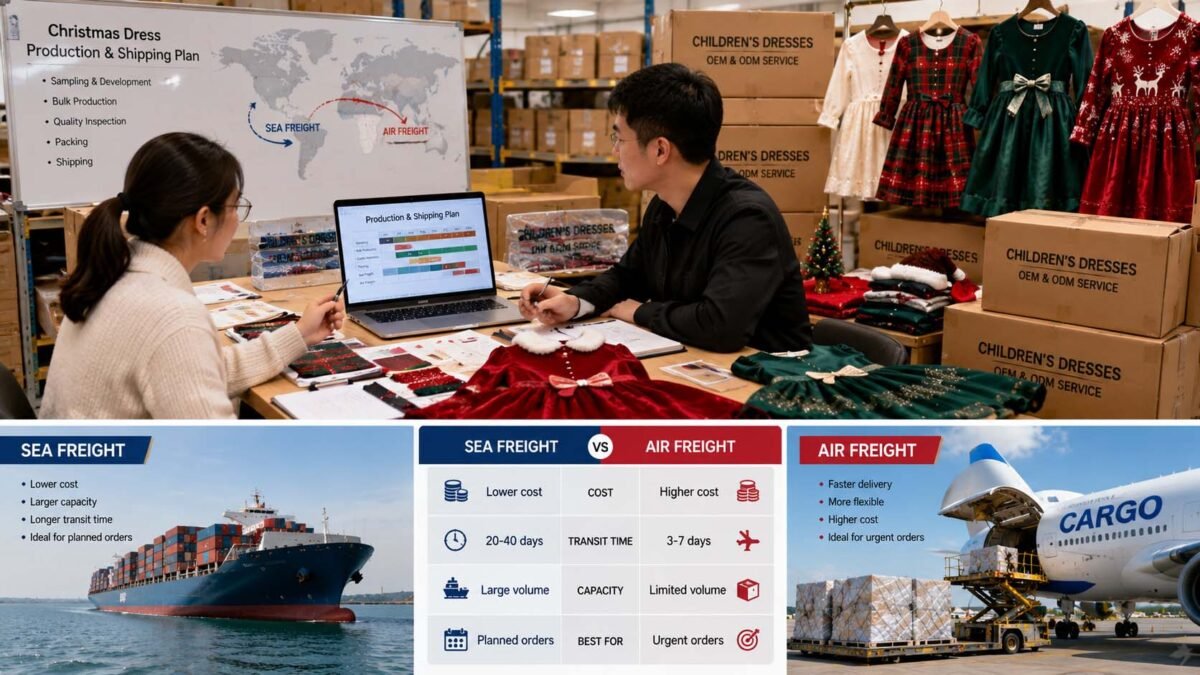
The short answer: air freight wins when speed matters, sea freight wins when cost matters. For kids’ dress imports, a useful planning benchmark is that air freight costs several times more per kilogram but arrives in about a week, while sea freight takes a month but is dramatically cheaper per unit. The decision is not “which is better” — it is “which cost do you need to optimize today: time or cash.”
Browse Ready Stock With Clear Pricing
Unit pricing, size ranges and pack-out details are listed per style, so you can model your margin before you ask for a quote.
Freight is where most new dress importers lose their margin, not because they pick the “wrong” method, but because they never calculate it at all. Tulle and layered skirts are light but bulky, which makes children’s formalwear uniquely sensitive to shipping: a dress that costs a few dollars to produce can cost more than the dress itself to express-ship. Understanding the trade-off between wholesale girls’ dresses air and sea freight is not optional — it is the difference between a profitable import and an expensive lesson.
This guide breaks down both methods in concrete terms, gives you a working cost example, and leaves you with a decision framework you can reuse on every order — across our full dress collection, from ready-stock styles to custom runs.
1. The Core Trade-Off: Time vs Money
Every shipping decision is a trade between three variables: cost, speed and reliability. You cannot optimize all three at once. Air freight buys speed and reliability at a high per-kilogram price; sea freight buys the lowest unit cost at the price of a long, less predictable transit time.
| Factor | Air freight | Sea freight |
|---|---|---|
| Transit time | 5–10 days door-to-door | 25–40 days door-to-door |
| Cost per kg | High (several USD/kg) | Low (fraction of a USD/kg) |
| Reliability / delays | Fewer, shorter delays | Port congestion, weather, holidays |
| Best for | Replenishment, test orders, peak season | Large planned bulk orders |
| Minimum viable volume | Small — even a few cartons | Best when you fill meaningful volume |
Get a Landed Cost Quote
Tell us your destination, quantity and service preference and we will price the whole route — goods, freight and handling — in one figure.
These are illustrative ranges — exact figures depend on origin, destination, carrier, fuel surcharges and the season.
2. Why Kids’ Dresses Are Unusually Freight-Sensitive
Children’s formalwear has a freight profile that surprises first-time importers. Three traits drive it:
- Light but bulky. A layered tulle dress weighs little but fills volume because of the skirt. Carriers charge on chargeable weight — the higher of actual weight and volumetric weight — so a light, fluffy dress can bill as if it were far heavier.
- High value density per kilogram is low. A pair of jeans is dense; a tulle dress is air. On a per-kilogram basis, dresses move a lot of volume for modest value, which makes air freight proportionally more painful.
- Seasonal urgency. Flower girl and party dress demand spikes hard around weddings and holidays. Missing a date means markdowns, which changes the entire freight math — sometimes paying for air is cheaper than missing the season.
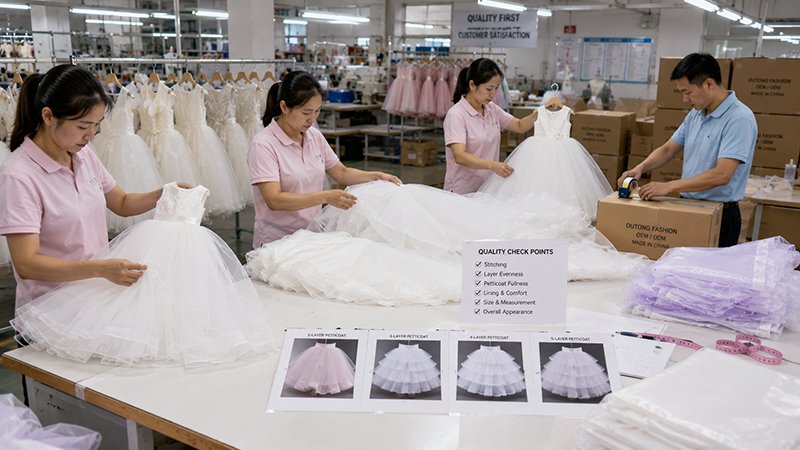
Bulky layered construction means chargeable weight, not actual weight, drives your freight bill.
3. A Worked Cost Example: 50 Dresses
Let us put numbers on it. Imagine a mixed order of 50 tulle dresses weighing roughly 15 kg (about 0.3 kg per dress). The freight per unit will look roughly like this:
| Method | Transit | Est. freight (order) | Per dress |
|---|---|---|---|
| Sea freight (LCL, port-to-port) | ~30 days | USD 60–120 | USD 1.20–2.40 |
| Air freight (consolidated) | ~7 days | USD 250–450 | USD 5–9 |
| Express courier (DHL/FedEx) | ~4 days | USD 400–700 | USD 8–14 |
Illustrative figures only — freight rates vary by route, fuel surcharge, carrier and season. Always quote your exact shipment.
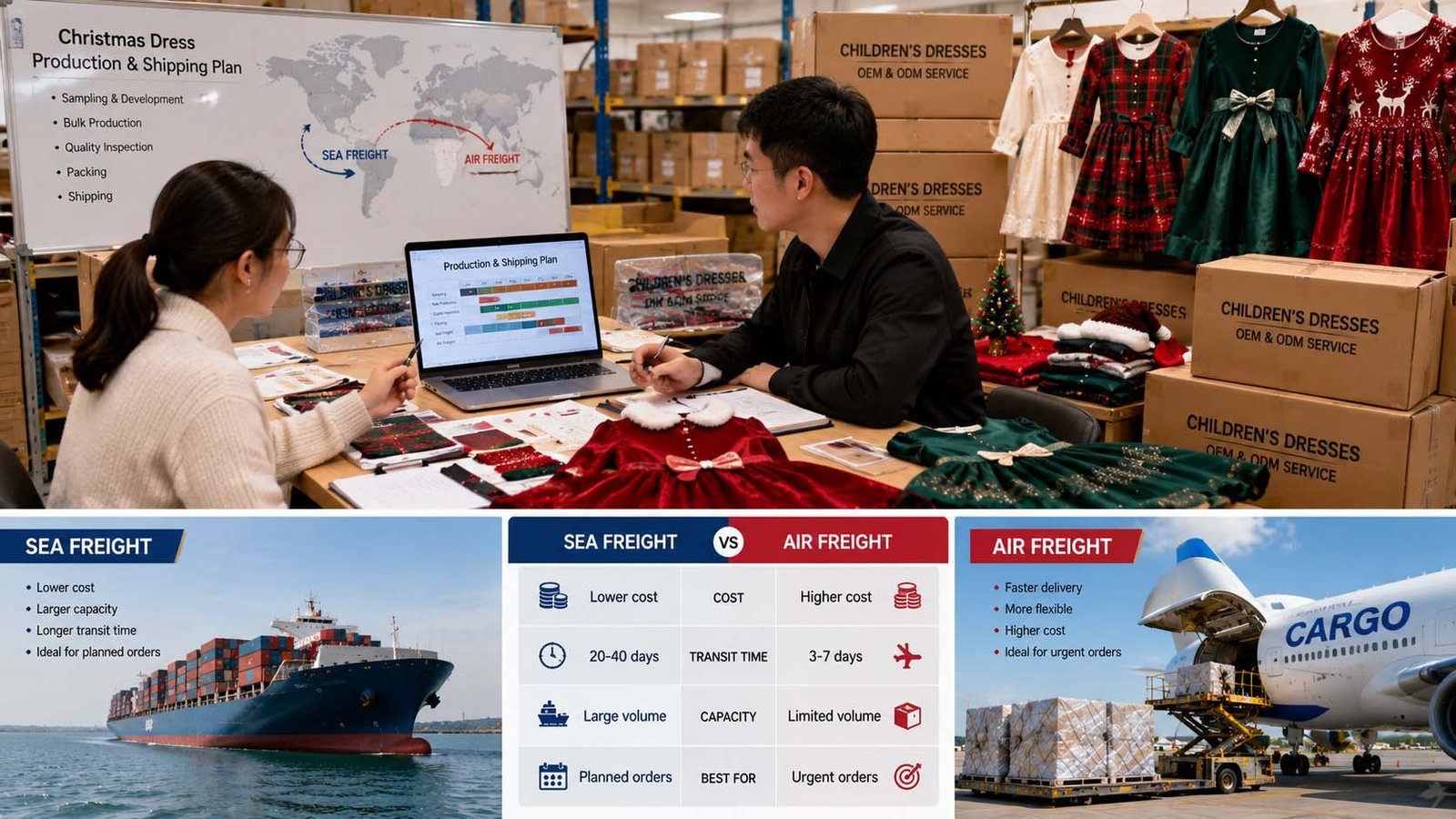
Sea freight spreads cost thin over bulk; air and express buy days instead of weeks.
4. Incoterms and DDP: Who Pays for What
Freight is not just the carrier’s bill — it is wrapped up in Incoterms, the standard terms that define who pays for shipping, insurance and duty at each stage. Getting these wrong is how importers get surprise invoices.
- EXW (Ex Works) — you pay everything from the factory gate. Cheapest quote, highest effort and risk.
- FOB (Free On Board) — supplier pays to load onto the vessel; you pay ocean freight, insurance and onward costs.
- DDP (Delivered Duty Paid) — supplier handles freight, duty and delivery to your door. Most convenient, all-in price, but the supplier’s margin is built in.
For first-time importers, DDP is often the safest starting point because the price is all-in and the logistics are handled — you trade a small premium for removing a large operational risk. As your volume grows, moving to FOB with your own forwarder usually saves money, but only once you understand the process.
5. The Hidden Freight Costs Nobody Budgets
The carrier’s rate is the visible part. The invisible part is what erodes your margin:
Fuel Surcharges and Peak-Season Surcharges
Carriers add fuel surcharges that move monthly, and peak-season surcharges in the run-up to major retail dates. A rate you quoted in March can be materially different in September. Always ask for the all-in rate, not the base rate.
Customs, Duty and Brokerage
On top of freight sits import duty (which depends on the HS code for the garment), plus a customs broker fee, plus possible inspection. Your landed cost must include these, not just the shipping quote. A pre-shipment quality-control check also protects your landed cost — defects caught before shipping are defects you never pay freight on twice.
Last-Mile and Warehouse Handling
Port-to-port sea freight still needs trucking from port to warehouse, and possibly storage if your goods arrive before you are ready. Door-to-door quotes hide these; port-to-port quotes leave them to you.
6. The Decision Framework: When to Use Which
Rather than a single rule, use a simple framework. Match the shipping method to the job:
| Scenario | Recommended method | Why |
|---|---|---|
| Planned bulk order for next season | Sea freight | Lowest unit cost; time is on your side |
| Replenishing a fast-selling style | Air freight | Stock-out costs more than air |
| Testing a new style with low MOQ | Air freight | Small volume, quick feedback loop |
| Peak-season top-up (weddings, holidays) | Air freight | Missing the season is worse than paying |
| Large, price-sensitive, non-urgent order | Sea freight | Margin lives in the freight saving |
A useful planning rule: sea for what you planned, air for what you did not.
For ready-stock orders — which start from as few as 6 pieces with mix-and-match styles — air freight is usually the practical choice because the volume is small and the point is speed. You can browse the ready-stock collection to estimate real volumes before you quote freight. For custom OEM/ODM orders, which run from 200 pieces and are planned weeks ahead, sea freight almost always wins on cost. Match the method to the order type and the freight bill stops being a surprise.
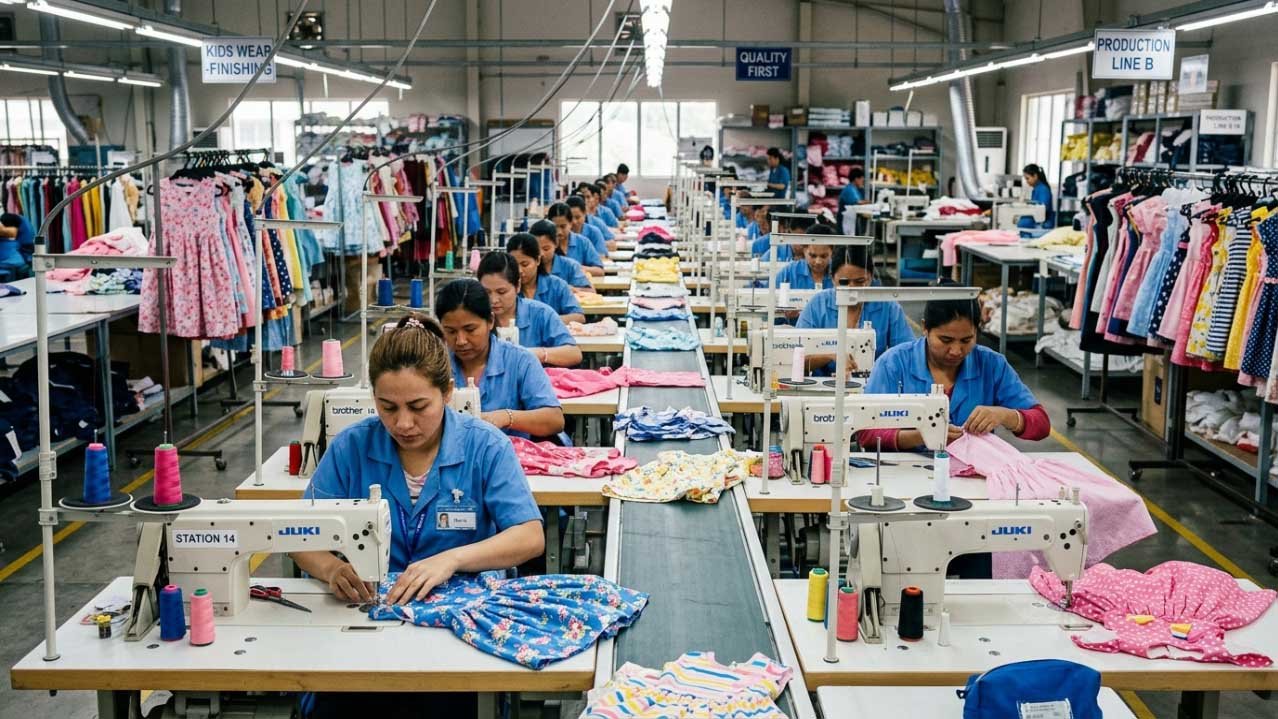
Planned bulk production should ride the sea; urgent replenishment earns the air ticket.
7. Worked Decision: A Real Either/Or
Concrete example: you need 50 dresses in time for a wedding-season rush in six weeks.
- Sea freight might land them in 30 days for USD 2 per dress — but if a port delay pushes it to 40 days, you miss the rush and mark down 20% of the order.
- Air freight lands them in 7 days for USD 7 per dress — reliably in time, so nothing is marked down.
If missing the season costs more than the USD 5-per-dress difference (and it usually does on occasionwear), air freight is the correct, profitable choice — even though it “looks” more expensive on the invoice. The lesson: freight decisions are made against the cost of being late, not just the cost of shipping.

A freight decision is really a season decision — plan lead times so you are never forced into expensive last-minute air.
Frequently Asked Questions
Is air or sea freight cheaper for kids’ dresses?
Sea freight is almost always cheaper per unit, because you spread the cost over a large volume. Air freight costs several times more per kilogram but arrives in about a week instead of a month. Choose sea when cost matters, air when speed matters.
How long does sea freight take from China?
A useful planning range is 25–40 days door-to-door, depending on origin, destination and any port congestion. Air freight is typically 5–10 days and express courier about 4 days.
What is chargeable weight?
Carriers bill on the higher of actual weight and volumetric weight. Because tulle and layered dresses are light but bulky, their volumetric weight often exceeds actual weight — which is why freight on dresses is higher than their weight suggests.
What is DDP shipping?
DDP (Delivered Duty Paid) means the supplier handles freight, duty and delivery to your door at an all-in price. It is the lowest-effort option and a good starting point for first-time importers, though it usually carries a small premium.
When should I use air freight for dresses?
Use air freight for replenishing fast sellers, testing new styles, or topping up before a peak season — any time arriving early is worth more than the extra freight cost.
Get a freight-accurate quote
Tell us your destination and order size — we’ll confirm the most cost-effective shipping method and landed cost for your order.
Leave a Reply