A factory audit is the difference between hoping your supplier can deliver and knowing it can. For a wholesale girls’ dress buyer, an audit turns a claim — “we have a 300-worker factory” — into verifiable facts about capacity, quality systems and compliance. This guide explains what to check, how to do it without flying to China, and how to read the results.
Start With a Low-Minimum Test Order
Before you commit to a bulk run, test a supplier with ready-stock styles — mixed styles and colours from 6 pieces, so you can judge fabric, stitching and sizing firsthand.
Most buyers choose a kids’ dress supplier on samples and price, then discover the real factory only when a reorder goes wrong. An audit — whether you visit in person or commission a third-party inspection — is how you close that gap before committing capital. It is the single most under-used tool in children’s apparel sourcing, and the one that most reliably separates serious factories from marketing.
If you are still at the shortlisting stage, pair this with our guide on choosing a reliable kids dress manufacturer. Once you have a shortlist, the audit process below tells you which one is real.
1. What a Factory Audit Actually Verifies
An audit answers four questions that samples and price quotes cannot:
- Does the factory exist as described? — the address, the building, the equipment, the workforce all match the claims.
- Can it produce at your volume? — enough machines, workers and line capacity to meet your order without subcontracting.
- Is the quality consistent? — documented QC steps that catch defects before they reach you.
- Is it compliant? — safety, labor and product-safety practices that protect you downstream.
A good audit gives you a report you can act on: a pass, a conditional pass with findings, or a fail. Anything less — a “we visited and it looks fine” — is not an audit, it is a tour.
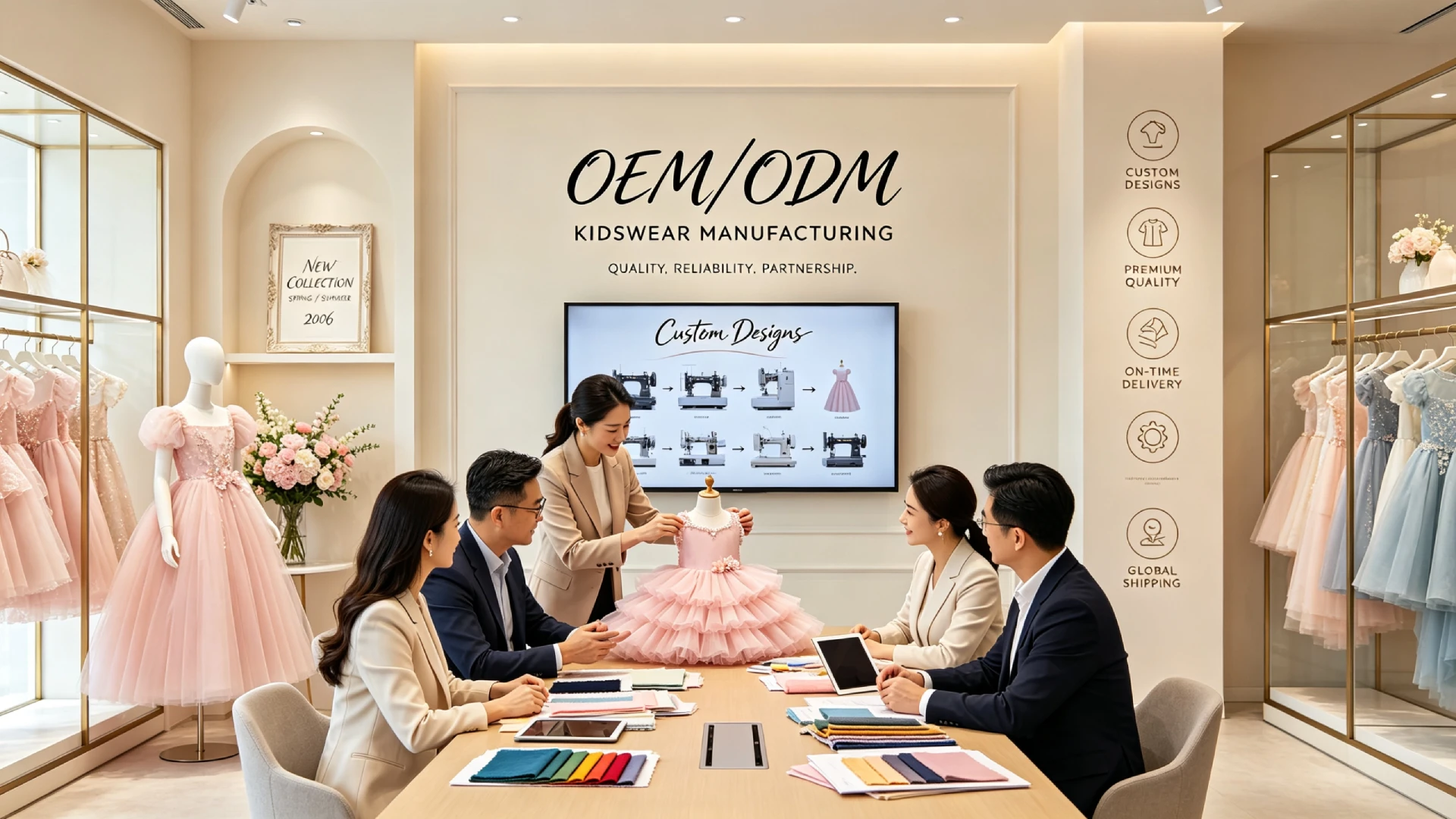
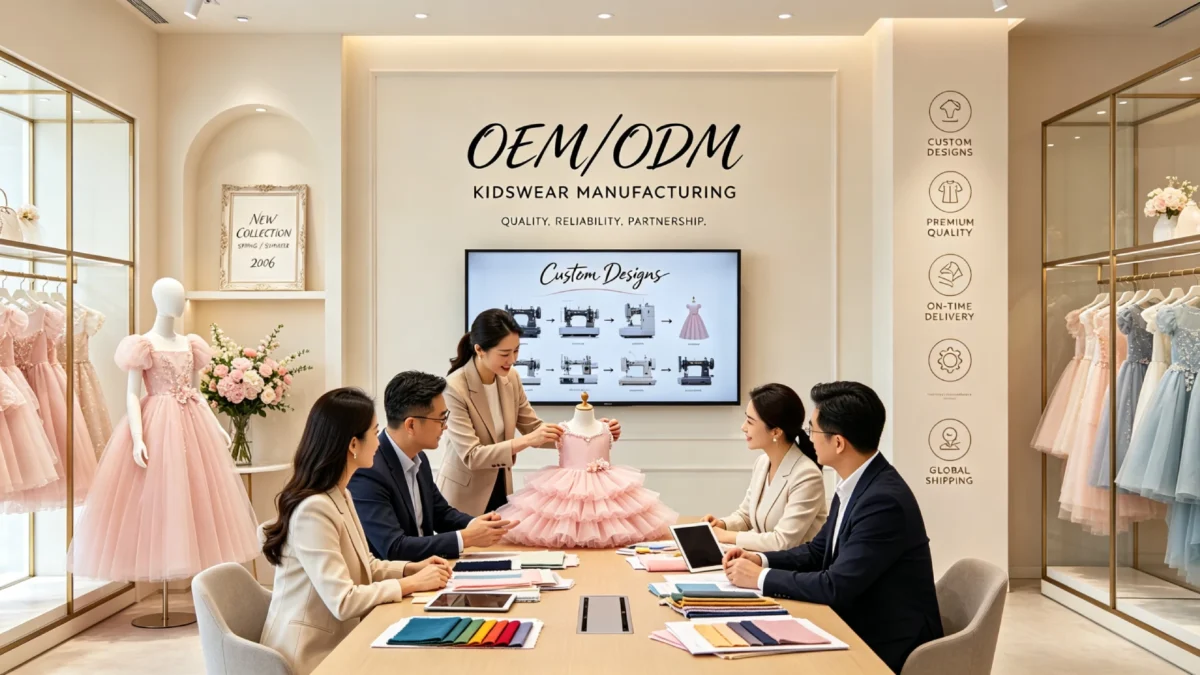
A showroom looks good on camera — the audit is about the production floor behind it.
2. The Core Audit Checklist
Whether you audit in person or through a third party, these are the areas to verify. Use them as a checklist and score each section honestly.
Production Capacity
Count what matters: the number of sewing lines, the number of workers, and the factory’s stated monthly output. Then compare that to your order size. A factory that quotes a 5,000-piece order but runs two sewing lines may be planning to subcontract your work — which means you lose control of quality and delivery. Ask directly: what percentage of production is done in-house?
Quality Control Systems
Look for a defined QC process, not just good intentions. The signs of a real system include: an in-line inspection step, a final inspection before packing, documented defect categories, and a repair station where rejected pieces are corrected. Ask to see a sample QC report from a recent order. If they cannot produce one, they do not run QC as a system.
Material and Trim Handling
Children’s dresses depend on small components — sequins, beads, zippers, buttons — that carry safety and quality risk. A well-run factory stores fabric and trims in an organized, traceable way and can tell you the source of the materials. Disorganized, unlabeled stock is a warning sign for both quality and compliance.
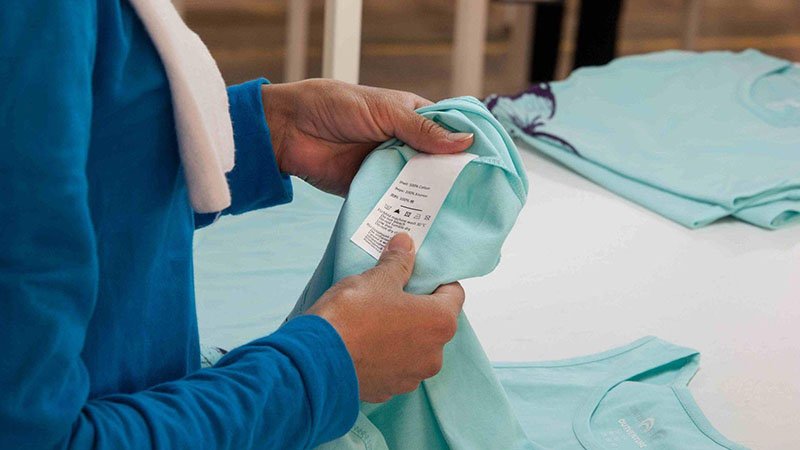
Fabric inspection and traceable material handling are signs of a factory that controls quality, not one that hopes for it.
Workforce and Specialization
Children’s formalwear is a specialized product — the finishing, embellishment and sizing are not the same as adult apparel. A factory that makes kids’ dresses every day has the right skills and equipment. A factory that “can also do” kids’ dresses as a side product may not have the specialized machines and trained finishers that occasionwear requires.
3. How to Audit Without Flying to China
You do not need a plane ticket to run a meaningful audit. There are three practical approaches, in increasing order of rigor and cost:
| Method | What it gives you | Best for |
|---|---|---|
| Video walk-through | A live view of the floor, equipment and workers in real time | First pass on a shortlist — free and fast |
| Third-party audit | An independent, structured report on capacity, QC and compliance | Serious commitment, larger orders |
| On-site visit | Your own eyes, your own questions, the full picture | Long-term partnerships, high-volume orders |
Get a Sourcing Quote
Send us your target styles, size run and quantity. We reply with MOQ, unit pricing and sample lead time — no obligation.
Escalate your rigor with your order size — a video call first, a third-party audit before a large order, a visit for a long-term relationship.
For most buyers, the practical sequence is: video call to shortlist, then a third-party audit before your first large order. A professional audit from an independent inspection company costs a few hundred dollars, which is cheap insurance against a rejected container that costs thousands.
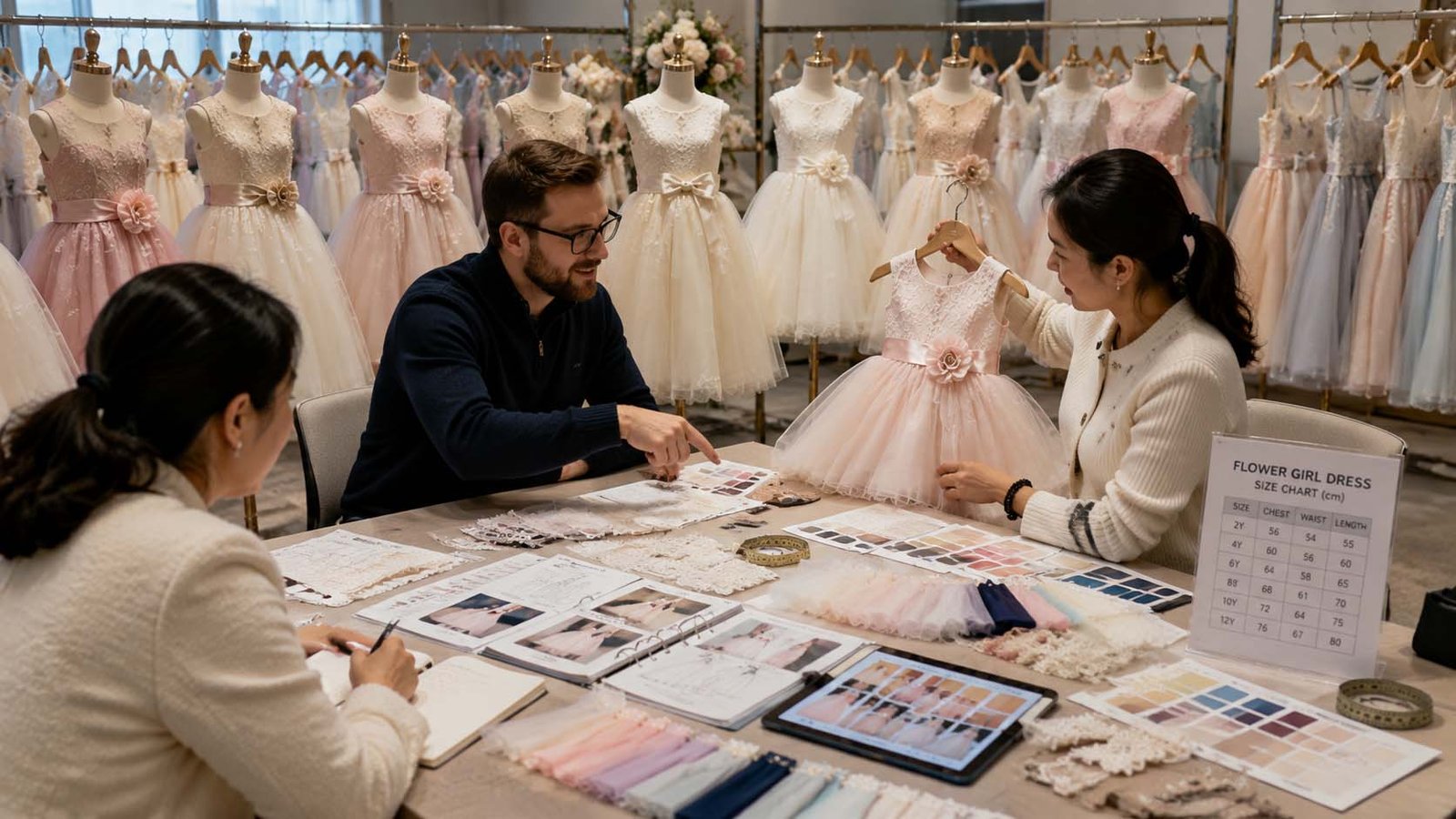
The best supplier relationships are built on verified facts, not assumptions — audit before you scale.
4. Reading the Results
An audit result is rarely a clean “perfect.” The question is not whether the factory has any findings, but whether the findings matter and whether they are fixable. Here is how to weigh them:
- Critical findings — serious safety issues, major misrepresentation of capacity, no QC at all. Walk away.
- Major findings — meaningful quality-system gaps, undocumented materials. Fixable, but require a corrective plan before you commit.
- Minor findings — housekeeping, documentation formatting, small process gaps. Normal for most factories; do not overreact.
5. After the Audit: Lock It In
An audit is a snapshot, not a guarantee. To make the results durable, build them into the ongoing relationship:
- Put QC expectations in the order — agree on the defect tolerance and inspection standard (such as AQL sampling) before production.
- Keep auditing on reorders — factories change; a factory that passed last year may have taken on too much work since.
- Use a pre-shipment inspection — verify the actual bulk goods before they ship, every time.
For a custom OEM/ODM program, the audit and the pre-production sample go together — the audit verifies the factory can make it, the sample verifies they made your dress correctly. Both are part of a quality-first workflow that protects your brand.
Our own quality and compliance approach is built around exactly these steps — documented materials, in-line QC, and pre-shipment inspection. We are happy to walk you through it, answer audit questions, or arrange a video walk-through of the production floor.
Frequently Asked Questions
Do I need to fly to China to audit a factory?
No. Start with a live video walk-through of the production floor, then commission a third-party audit before a large order. A professional audit costs far less than a rejected container and is usually sufficient for a first large order. When you’re ready, we’re happy to walk you through our own QC and sampling process.
What is the most important thing to verify in an audit?
That the factory can actually produce your volume in-house, and that it runs a documented QC system. Capacity misrepresentation and missing QC are the two findings that most often cause problems on real orders.
What is a third-party factory audit?
An independent inspection company visits the factory and produces a structured report on capacity, quality systems and compliance. It gives you an objective view you cannot get from the supplier’s own claims.
How much does a factory audit cost?
A third-party audit typically costs a few hundred US dollars, depending on location and scope. That is inexpensive insurance relative to the cost of a rejected or delayed bulk order.
What should I do if an audit finds problems?
Distinguish critical, major and minor findings. Critical findings mean walk away. Major findings need a corrective plan before you commit. Minor findings are normal and usually not a deal-breaker.
Should I audit on reorders too?
Yes. Factories change — they take on more work, change materials, or shift staff. A factory that passed last year should still get a pre-shipment inspection on every bulk order.
Audit us before you order
Request a video walk-through, our QC process or a pre-shipment inspection — we’ll show you how we keep every dress consistent. Want to run your own audit? Ask us for our free garment factory audit checklist and we’ll email it over, so you can score any supplier with the same framework.
Leave a Reply