
A fabric test report is the document that stands between a wholesale children’s clothing order and a very expensive problem. It is also one of the easiest documents to get wrong, because a report can look complete, be technically accurate, and still not cover the fabric in your shipment. This guide shows wholesale buyers how to read a test report line by line, which six checks decide whether it is worth anything, and what to do when a report does not match your order.
Quick Answer
A test report is only useful if four things line up: the laboratory is accredited and in scope for the test, the sample description matches the actual material and colourway in your order, the test method is the one your market recognises, and the result column shows a pass against the stated limit. Check the sample description first — mismatched fabric is the most common reason a valid-looking report gets rejected by a retailer or a marketplace.
Get a Swatch Card That Matches the Report

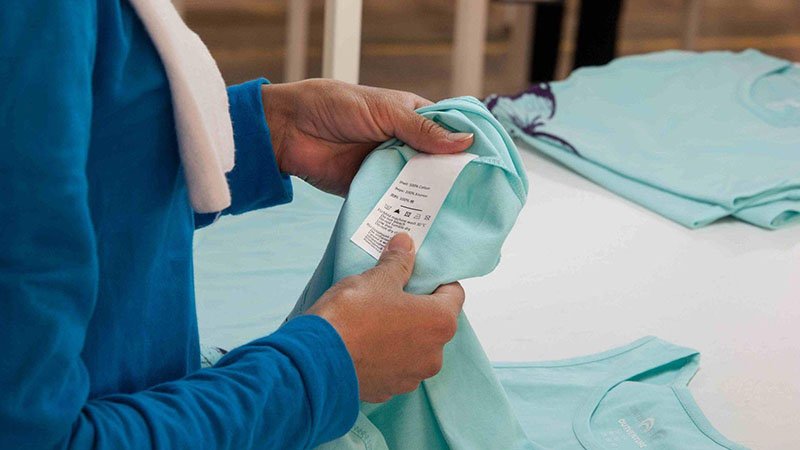
Keep a physical swatch card so the fabric named in the report can be matched to bulk.
Ask your supplier for a signed swatch card from the bulk lot alongside the test report. A report you cannot tie back to a physical fabric is paperwork; a report plus a swatch is a control.
What Buyers Need to Know
Test reports are written for laboratories and compliance officers, not for buyers, which is why so many of them get filed without being read. In practice you only need to extract a small amount of information, and almost all of it sits in the top third of the document.
Start with the sample description. This is the free-text field where the submitter describes what was sent in: fibre content, colour, construction, weight. If it says “polyester tulle, light blue” and your order is “nylon tulle, ivory”, the report does not cover your goods, however good the results are. This single field causes more rejections than failed tests do.
Next, look at the laboratory and its accreditation. For US children’s products, testing that supports a certificate has to come from a CPSC-accepted laboratory, and the acceptance covers a defined scope. For other markets, look for ISO/IEC 17025 accreditation and check that the specific test appears in the schedule. A general accreditation logo is not the same as a scope that includes the test you need.
Then read the test method, not just the test name. Two laboratories can report “lead content” using different digestion and analysis procedures, and a retailer’s compliance team will look for the method it recognises. Common references for children’s textiles include CPSC-CH-E1002 for total lead in non-metal substrates, CPSC-CH-E1003 for lead in coatings and paint, CPSC-CH-C1001 for phthalates, the AATCC and ISO series for colourfastness and shrinkage, and the relevant national standard for flammability.
The Six Checks That Decide Whether a Report Is Worth Anything

Swatches retained from development are the only reliable way to tie a report to a shipment.
| Check | What to look at | Result if it fails |
|---|---|---|
| Sample identity | Description of fibre, colour, construction and weight | The report does not cover your order — reject it and resubmit |
| Laboratory and scope | Accreditation body, certificate number, test method listed in scope | Results may not be accepted in your market |
| Test method and date | Named method and a date within your own validity window | Old reports are a common audit finding |
| Limit and unit | The stated limit and the unit used (ppm, mg/kg, percent) | Numbers cannot be compared without a matching unit |
| Result column | Actually shows a pass, or a value below the limit | “See attached” or a blank result is not a pass |
| Lot traceability | Order, lot or roll reference tying the sample to production | No way to prove the report belongs to this shipment |
Testing Several Styles at Once?
If your range shares fabric, trims and hardware, group the testing by material rather than by style and you avoid paying for the same test three times. Send us your bill of materials and we will tell you how it would group.
Which Tests Appear on a Girls’ Dress File

Comparing fabric samples against a laboratory report before placing a bulk order.
The exact list depends on your destination market, but the following come up repeatedly on children’s occasion dresses.
Lead and phthalates. Substrate and coating limits apply per component, so expect a separate line for the body fabric, the trim, the print and any coated hardware.
Flammability. Reported as a classification under the applicable standard. Sheer overlays such as tulle and organza need their own line; they do not inherit the base fabric’s classification.
Colourfastness. Usually reported against AATCC or ISO methods for washing, rubbing (crocking), perspiration and light. On a children’s dress, rubbing fastness on dark satin and light fastness on a display garment are the two that generate complaints.
Dimensional stability. Shrinkage after washing, expressed as a percentage in length and width. This is the number that determines whether a size 6 still fits after the first wash.
Formaldehyde and pH. Frequently requested for European and Japanese programmes, and often required by retailers worldwide as part of a restricted substances list.
AZO dyes and nickel release. AZO testing applies to dyed textiles; nickel release applies to metal components that sit against the skin, such as zipper pulls and snaps.
How to Work It Out: A Worked Example
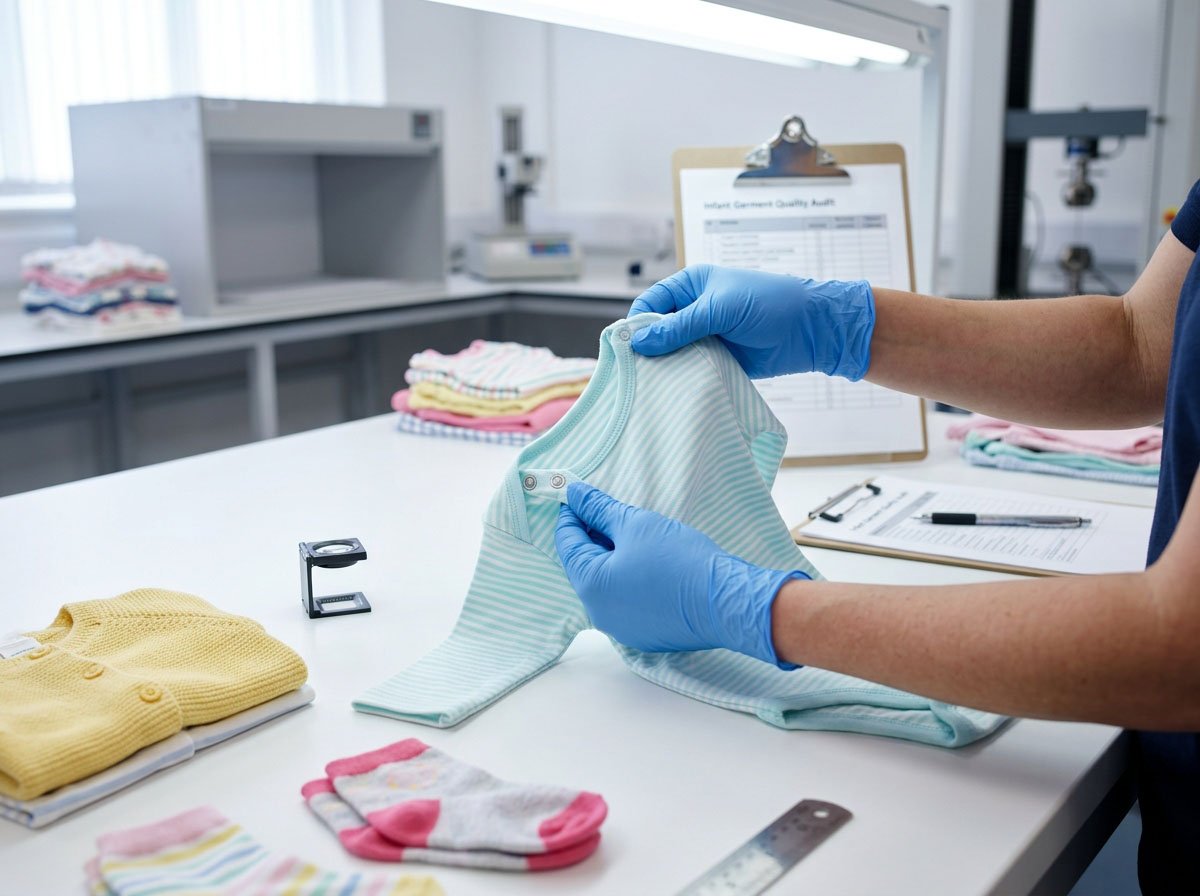
Check the fabric against the report before the bulk order is cut.
You receive a report for a 500-piece order of satin and tulle dresses in ivory and blush. Here is how to read it.
Open the sample description. It says “100% polyester satin, ivory” and “100% polyester tulle, ivory”. Your order has two colourways. The blush colourway is not covered, so you need a second submission or a written grouping justification from the laboratory.
Check the accreditation line. The laboratory is ISO/IEC 17025 accredited and the schedule includes the methods named in the report. Good.
Read the lead result. The report shows a value with the unit mg/kg and a limit expressed in the same unit. A result below the limit is a pass. If the report expressed the limit in ppm, remember that ppm and mg/kg are numerically the same scale, but a percentage is not — a percentage figure converts by a factor of ten thousand, and confusion there has caused real shipment problems.
Look at the flammability line. There is one classification for the satin and a separate one for the tulle. That is correct. If there were only one, the tulle is uncovered.
Finally, find the date and the lot reference. If the report predates your production by more than your own validity window, or there is no lot reference, ask for a fresh submission from the bulk lot.
Report formats vary by laboratory and by market. When in doubt, send the report to your customs broker or compliance adviser and ask whether it would be accepted for your product classification — that question is much cheaper before shipment than after.
Buyer Checklist
- Match the sample description to your bill of materials before reading any results.
- Confirm the laboratory’s accreditation covers the specific test method.
- Check that every colourway is covered, or get written justification for grouping.
- Confirm the unit of measure on both the result and the limit.
- Check that sheer overlays have their own flammability line.
- Confirm the report date against your own validity window.
- Get a lot or roll reference that ties the sample to production.
- Keep a physical swatch from the same lot with the report.
- Re-test whenever a fabric, trim, dye lot or supplier changes.
- Store the report, the bill of materials and a production sample together.
Common Mistakes (and What They Cost)
Filing the report without reading the sample description
This is the single most common failure. The report is real, the laboratory is good, and the fabric described is not the fabric you bought. It costs a resubmission and, if found at the port or by a marketplace, a hold on the goods.
Accepting a report from an unknown laboratory
A supplier’s internal laboratory report is useful as an internal control, but it is not third-party evidence. If the certificate requires third-party testing, the internal report does not substitute for it.
Assuming one report covers every colour
Dye chemistry differs by colour. Dark shades and bright reds behave differently from pastels, and laboratories know this — which is why colourway grouping is a commercial decision, not a technical one.
Ignoring the expiry question entirely
There is rarely a single legal expiry date. The safe approach is to set your own validity window, document it, and retest at that interval. Auditors ask why you did not retest; a written policy answers that.
FAQ
How long is a fabric test report valid?
It depends on your market, your retailer and your own policy. Rather than looking for a universal expiry, set an internal validity window, retest when any material changes, and be able to explain the rule if asked.
Do I need to test every colourway?
Usually yes for dyed components. Some laboratories will accept written grouping where the fibre, dye class and process are identical, but that decision belongs to the laboratory, not to the factory.
What is the difference between a test report and a certificate?
The test report is the laboratory’s evidence. The certificate is the document in which the importer or manufacturer states that the product meets the applicable rules, and it references the test reports. One without the other is incomplete.
Can the factory’s report be used for my certificate?
The certificate is yours to issue, and it must be supported by third-party testing from an accepted laboratory. A factory report may help you compile the file, but it is not the third-party evidence on its own.
Why does the report show a value instead of pass or fail?
Many laboratories report the measured value and leave the interpretation to the reader. Compare the value against the limit for your market, and check the units match before you conclude anything.
What do I do if a component fails?
Identify the component, replace it, and retest. Do not ship on the basis that the failing part is small — small components are exactly the ones that attract screening.
Leave a Reply