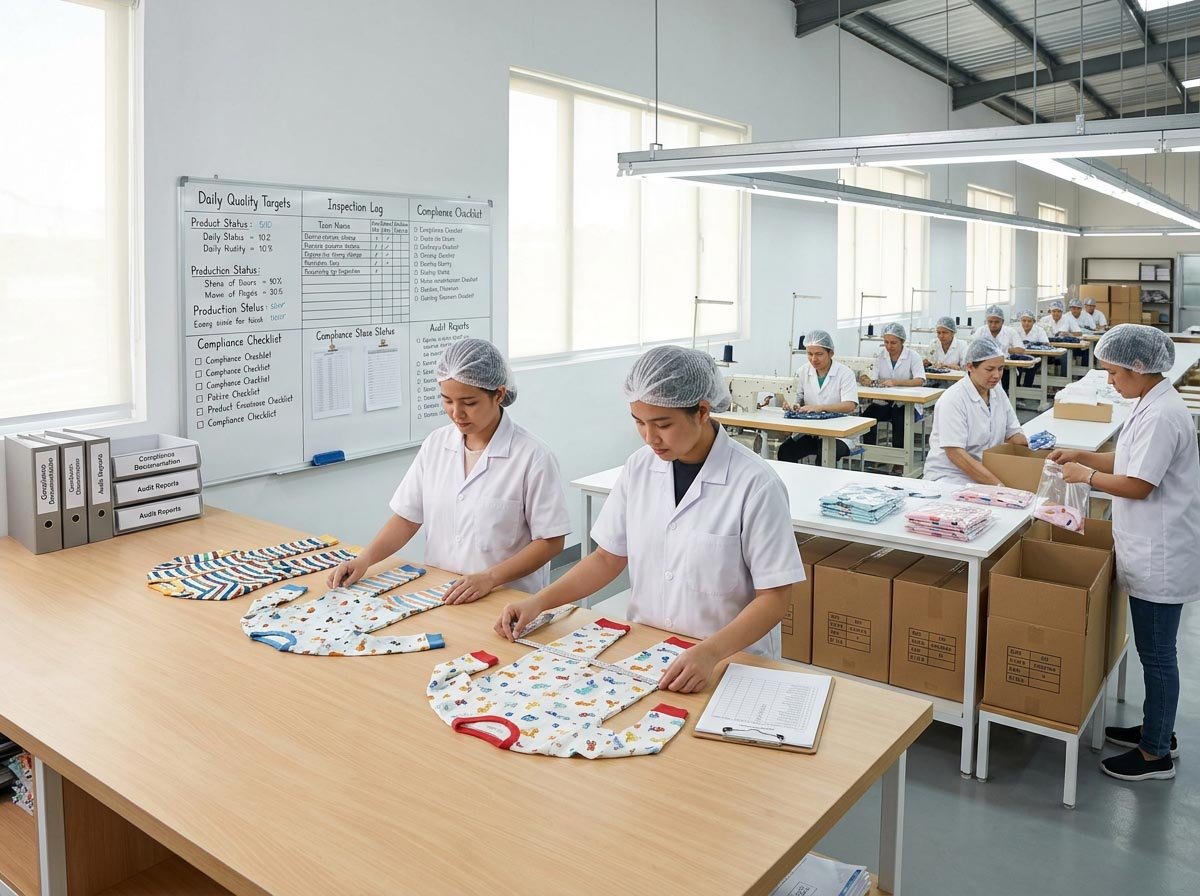
Girls’ dress quality checklist — a 12-point inspection system for buyers importing girls’ dress wholesale from China. Covers fabric hand, seam strength, sizing, embellishment, colourfastness, safety and pre-shipment AQL checks. Use this girls’ dress quality checklist on every bulk order to cut returns and protect your brand.
A beautiful product photo is not proof of quality — it is proof of a good photographer. For boutique owners and importers buying girls’ dresses in bulk, the gap between “sample approved” and “bulk delivered” is where most quality problems appear. This guide gives you a practical 12-point checklist to run on every girls’ dress order, from sample sign-off to final packing, so you catch defects before they reach your customers — not after.
The childrenswear market is unusually unforgiving. Unlike adult fashion, where a slight sizing variance is shrugged off, children’s clothing that does not fit, chafes, or falls apart triggers returns, negative reviews, and — in regulated markets — compliance problems. The good news is that most common defects in girls’ dresses are predictable, which means they are preventable. Learn where they hide and you can specify them out of your order before production even starts.
1. Why Samples and Bulk Orders Diverge
Every experienced buyer has lived this: the pre-production sample is flawless, then the first bulk carton arrives with crooked hems and mismatched seams. The divergence is rarely malicious — it is structural. A sample is sewn slowly by a senior sample maker with individual attention. Bulk production runs on assembly lines, hundreds of pieces a day, under speed and cost pressure.
Three things widen the sample-to-bulk gap:
- Fabric lot changes: the bulk fabric is often a different dye lot or slightly different quality than the sample yardage, changing colour, hand feel and shrinkage.
- Trims substitution: zippers, buttons, lace and sequins may be swapped for cheaper equivalents without telling you, to hit a price.
- Skilled labour rotation: the seamstress who made your sample may not be on the production line; skill differences show up in stitching and finishing.
Your defence is not trust — it is a written spec sheet plus a physical reference sample returned to the factory, and a checklist you actually use at every checkpoint.
2. The 12-Point Girls’ Dress Quality Checklist
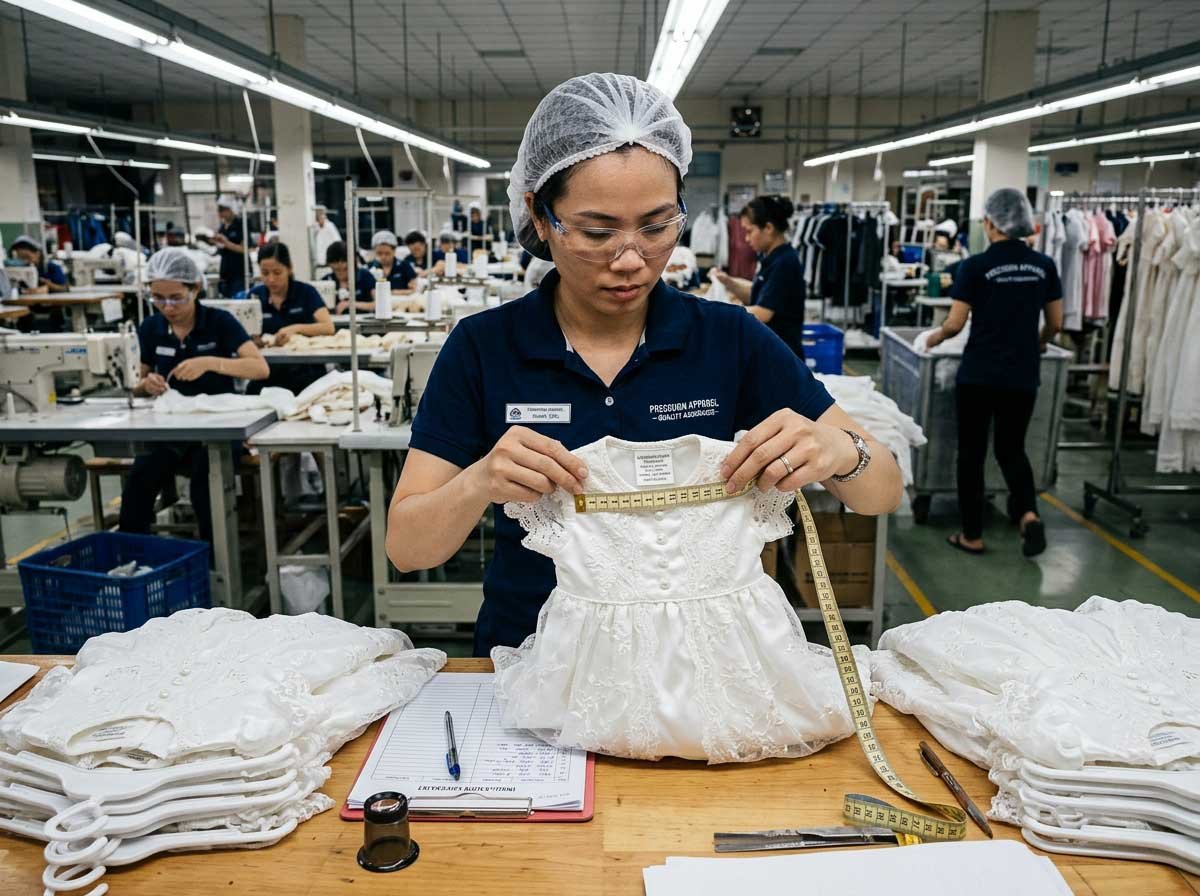
Stitching and measurement checks catch most bulk defects before shipment.
Run these twelve checks on your pre-production sample and again on random pieces from the bulk shipment. Mark each one pass or fail; a single fail in a critical area (seams, sizing, trims) is grounds to request rework before the order ships.
1. Fabric Weight and Hand Feel
Confirm the bulk fabric matches the sample’s weight (measured in grams per square meter) and hand feel. A common downgrade is using a lighter, thinner fabric to save cost — it drapes differently and reads “cheap” to customers. Rub the fabric between fingers; it should feel the same as the approved sample.
2. Colour Matching and Shade Consistency
Check the dress against the approved colour swatch under daylight, not fluorescent light. Then check multiple pieces of the same colour against each other — shade variation between pieces in one batch is a top complaint in children’s dresses, especially in pastels and brights like pink and coral.
3. Seams and Stitching
Turn the dress inside out. Stitches should be even, tight, and consistent (no loose threads, skipped stitches, or puckered seams). Stress points — underarms, waistband, side seams — need reinforced stitching or at least a second row of stitching. Children move hard; seams fail first where they are pulled most.
4. Hems and Edges
Hems should be even in width all the way around, with no twisted or wavy edges — a twisted hem is a classic sign of uneven tension in sewing. Raw edges inside should be finished (overlocked or bias-bound), not left fraying. On tulle skirts, check each layer’s hem is even and layers are aligned.
5. Sizing Accuracy
Lay the dress flat and measure chest, waist, length and sleeve against the spec sheet. Children’s sizing tolerance is small — a 1–2 cm deviation on chest can change the size the customer perceives. If your size chart says 110 fits a 105–115 cm child, the bulk dress must match that chart within tolerance. Measure at least 3 pieces per size from the bulk order.
6. Trims, Buttons and Fasteners
Check that zippers glide smoothly and are colour-matched to the dress, buttons are sewn with thread shanks (not glued), snaps and hooks close securely, and decorative trims (sequins, beads, bows) are firmly attached. Sequins glued rather than sewn will shed after one wear — a guaranteed one-star review.
7. Lining and Comfort Layers
If the dress has a lining, confirm it is the specified fabric and that it does not bunch, twist, or ride up inside the outer layer. Check that no scratchy seams, tags or trims sit against the child’s neck or underarm — comfort defects cause most returns in ages 2–6.
8. Decoration and Appliqué Quality
For embroidered or appliquéd dresses, check stitching density and that edges are clean with no fraying. Printed designs should be sharp, colour-fast, and not cracking or peeling. Wash-test one piece: embroidery should survive the wash, and prints should not fade or transfer.
9. Care Label and Content Accuracy
Verify the care label matches the actual fabric (a polyester dress labelled “100% cotton” is a compliance failure), includes washing instructions in the correct language for your market, and lists fibre content accurately. In the US, fibre content and care labelling are regulated; in the EU, similar rules apply. An inaccurate label is a legal risk, not just a quality one.
10. Safety Checks (Drawstrings, Small Parts)
For children’s clothing, safety comes first. Check for drawstrings in hoods and necks (restricted in the US by CPSC guidance for children’s upper outerwear), small parts that could detach and become choking hazards, and any cords longer than regulated limits. Compliance failures can force a recall — the most expensive possible outcome of a bulk order.
11. Packaging and Folding
Check how the dress arrives: polybag quality, fold creases, tissue paper protection, and whether the dress is packed flat or hanging. Crushed tulle and organza need steaming before retail — factor that labour into your cost. Confirm the carton markings, size ratios and colour ratios match the packing list exactly.
12. Final Appearance Check
Hold the finished dress at arm’s length and look at it the way a customer would: Does it have the same “wow” as the sample? Any loose threads, dust, stains, or odour? A strong chemical smell can come from poor finishing or packaging materials — flag it, because customers will smell it through the polybag.
| Checkpoint | Where to check | Common failure |
|---|---|---|
| Fabric weight & hand feel | Pre-production sample + bulk | Lighter fabric substituted to cut cost |
| Colour & shade | Against swatch, daylight | Shade variation between pieces |
| Seams & stitching | Inside-out inspection | Skipped stitches, puckering at stress points |
| Hems & edges | Flat lay | Twisted or wavy hems, raw fraying edges |
| Sizing | Measure 3+ pieces per size | 1–2 cm deviation changes perceived size |
| Trims & fasteners | Functional test each | Glued sequins, weak snaps |
| Lining | Inside check | Bunched or twisted lining |
| Decoration | Visual + wash test | Embroidery fray, print cracking |
| Care label | Verify content | Wrong fibre content, missing care info |
| Safety | Compliance checklist | Neck drawstrings, detachable small parts |
| Packaging | Carton level | Crushed tulle, wrong size ratios |
| Final appearance | Arm’s length view | Loose threads, odour, stains |
3. How to Use the Checklist with Your Supplier
A checklist only works if the factory knows you are using it. Send the checklist to your supplier before production starts, so they can run their own internal QC against the same points. This alignment does three things:
- Raises the baseline: factories produce to the standard they are measured on; when they know you check seams and shade, those areas improve.
- Cuts round-trips: catching issues at the pre-production sample stage is ten times cheaper than fixing them after 500 pieces are sewn.
- Protects the relationship: a clear, written standard turns disputes into objective pass/fail decisions instead of subjective arguments.
4. When to Inspect: The Three Checkpoints
Pre-Production Sample
This is your only chance to change specifications at zero cost. Approve fabric, colour, trims and fit against the checklist. Keep one signed sample as the reference for all future comparison — it is your strongest tool if a dispute arises later.
Mid-Production (Inline Inspection)
For orders above a few hundred pieces, ask for a mid-production check or photos of the line: stitching quality, shade consistency across batches being cut, and trims in stock. Catching a problem here saves rework of the entire order.
Pre-Shipment (Final Random Inspection)
Before the cartons close, a random sampling (typically 5–10% of pieces) should be checked against the full checklist. Verify size/colour ratios against the packing list, and test a random piece in the wash if possible. Ship only after the pre-shipment inspection passes.
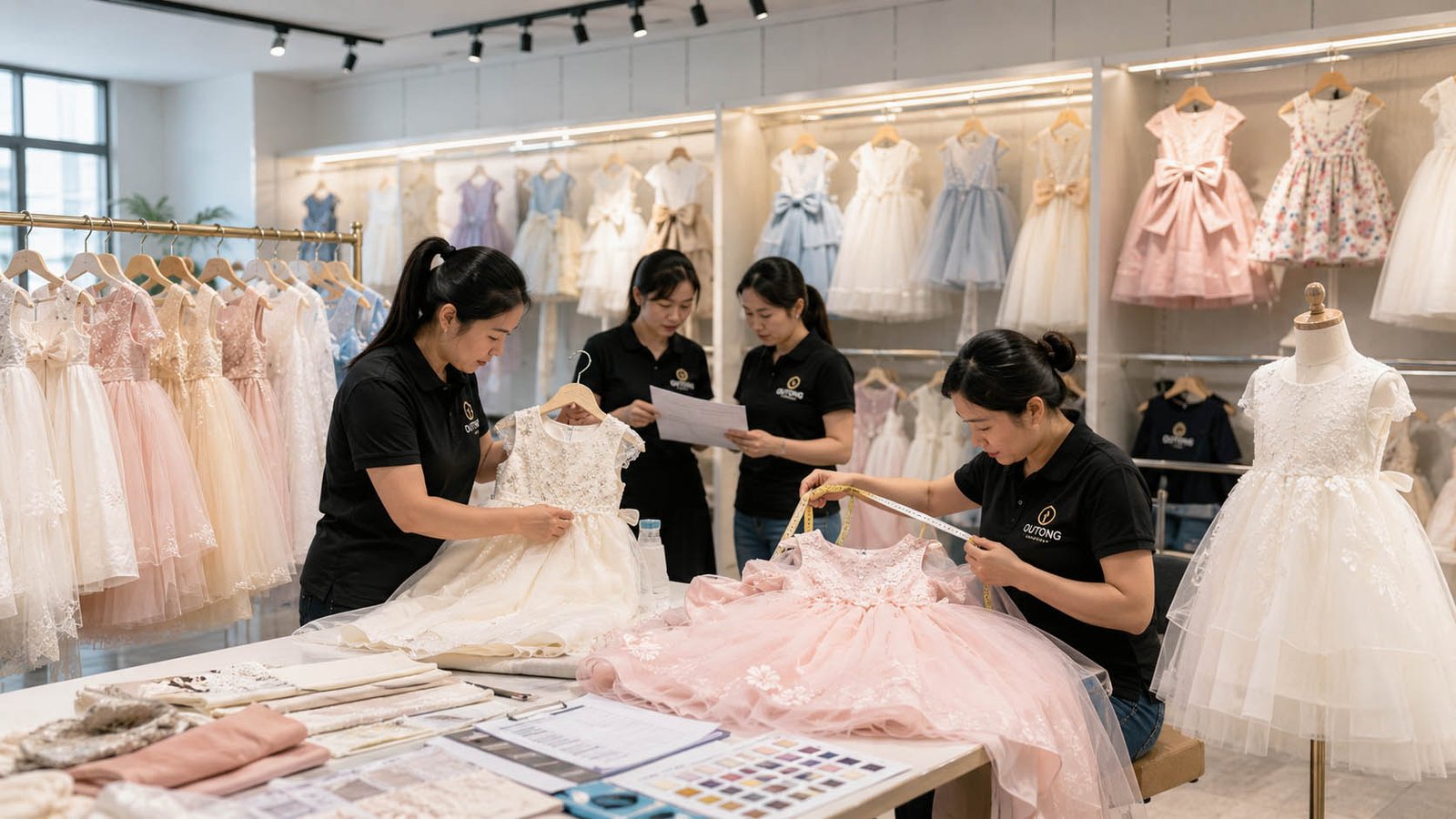
Pre-shipment inspection is the final gate before your cartons leave the factory.
5. What to Do When You Find Defects
Defects will happen — the question is how you handle them. Agree before production on the acceptable quality level (the industry standard for apparel is usually 2.5% major defects, meaning the order passes if fewer than 2.5% of inspected pieces have major issues). If your inspection finds more than that:
- Document everything: photos of each defect, quantities, and the exact checklist item failed.
- Request a decision within 24 hours: options are rework at factory cost, replacement pieces, or a discount for accepted-as-is.
- Never ship a failing order: the cost of fixing it now is always lower than the cost of returns and bad reviews later.
Suppliers who know you inspect honestly will price their quality in; suppliers who do not inspect deliver to the lowest common denominator. Your checklist is not just a QC tool — it is how you select and train your long-term factory partners.
Leave a Reply