
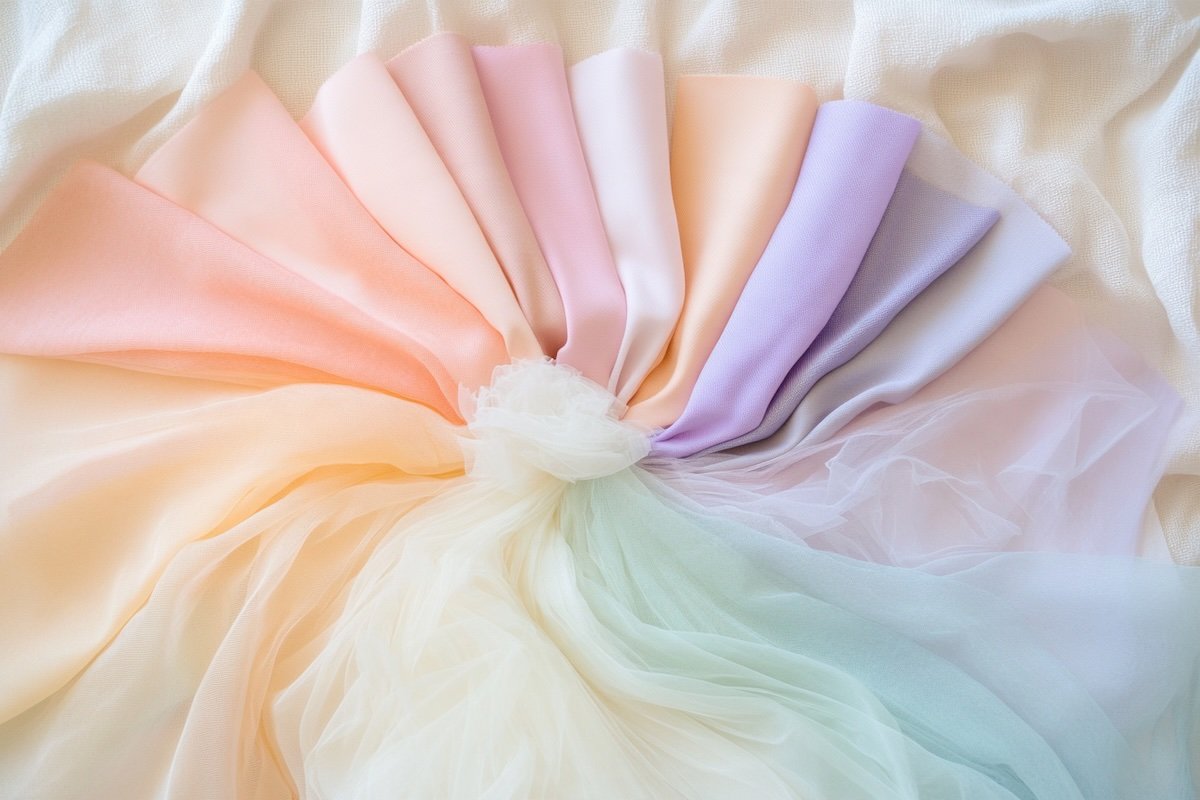
Pantone color matching is how private-label brands keep a custom kids dress the same shade from the first sample to the thousandth bulk piece — and across reorders placed months apart. This guide explains how fabric dyeing actually works, where shade variation creeps in, and the exact steps to brief and verify color so your bulk matches your mockup.
Quick Answer
To hit a consistent color in bulk, specify one Pantone reference per fabric, dye by the roll in a single lot whenever possible, and approve a physical lab-dip before bulk cutting. Most visible shade differences come from mixing dyelots or matching color from a screen instead of a swatch — both are avoidable with a written color standard and a signed lab-dip at the tech pack stage.
Send Us Your Color Standard
Share your Pantone references and we will return dyeable fabric options plus a lab-dip for sign-off before any bulk is cut.
What Buyers Need to Know
Color is decided twice: once on paper (your Pantone reference) and once in the dye bath (the actual cloth). Those two moments only line up if you treat color as a specification, not a description. A buyer who writes “blush pink” and hopes the factory agrees will get a different blush in every shipment, because “blush” is a feeling, not a number. A buyer who writes “Pantone 12-1107 TPX” gives the dyer a target the lab can measure and the QC inspector can check with a spectro or a trained eye against a swatch. The reference also travels: your pattern maker, your dyer, and your inspector all read the same number, so the conversation stops being about opinions and starts being about a tolerance.
The second point is that fabric and color interact. The same Pantone number looks different on matte cotton, shiny satin, and layered tulle, because each surface reflects light differently. So a color standard has to name the fabric too — “Pantone X on the satin body, Pantone Y on the tulle overlay” — or the dress will read “off” even when every dye lot is technically in tolerance. Private-label buyers who skip this step are the ones who receive a “wrong color” that was actually a correct dye on the wrong base cloth. It is the single most common cause of a “this isn’t the photo” complaint, and it is entirely preventable at the tech pack stage.
The third point is that color is a process, not a one-time choice. The reference sets the target, the lab-dip proves the factory can hit it on your fabric, and the inspection confirms the bulk stayed on target. Skip any one of those three and you are hoping rather than controlling. This is why a complete tech pack lists color per fabric with the Pantone reference, and why the pre-production sample is the moment to sign the shade, not the moment to notice it is wrong. For a private-label launch, a signed color standard also protects you if a later reorder drifts, because you can point to the approved swatch ID rather than argue from memory.
The fourth point is tolerance. “Match the Pantone” is not enough by itself, because every dye has a commercially acceptable range, often expressed as a Delta-E value. Agree the tolerance up front — a tight tolerance on a hero color, a wider one on a trim — so the factory and the inspector measure the same thing. A buyer who leaves tolerance undefined will receive a shade that is “correct” by the factory’s default and still wrong for the brand. Tight tolerances cost a little more in sorting and redye, but they cost far less than a recalled batch or a disappointed customer holding your dress next to your competitor’s.
Where Shade Variation Comes From
The table shows the usual sources of a color miss and how much each one typically moves the shade, so you know which controls are worth the effort.
| Source of variation | Shade impact | Controllable by | Best for |
|---|---|---|---|
| Matching from a screen, not a swatch | High | Buyer | Every order |
| Multiple dye lots for one color | Medium–High | Factory + buyer | Large runs |
| Different base fabric, same Pantone | Medium | Buyer (spec) | Mixed-fabric dresses |
| No signed lab-dip before bulk | Medium | Buyer (process) | Every order |
| Reorder months later, new lot | Low–Medium | Factory (record) | Repeating styles |
The two buyer-controlled rows — screen-vs-swatch and base-fabric spec — cause most complaints. Fix those and bulk color becomes predictable.
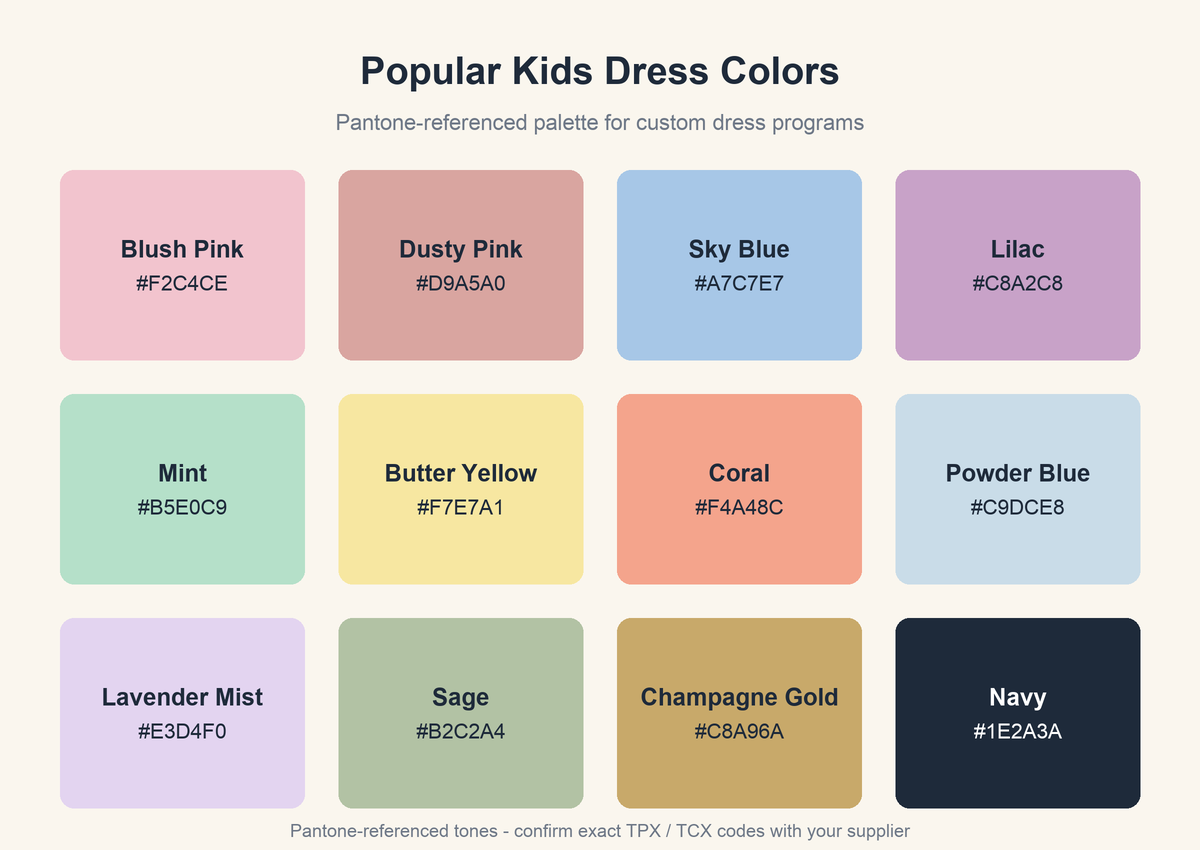
Pantone-referenced palette for custom kids dress programs — confirm exact TPX / TCX codes with your supplier.
Approve a Physical Lab-Dip
We cut a small dyed swatch to your Pantone and ship it for sign-off before bulk. One signature now prevents a container of “almost right” later.
How to Work It Out: A Worked Example
A brand specifies “dusty rose” for a tulle overlay and a satin bodice, approves from a phone photo, and receives bulk where the two fabrics clearly disagree and neither matches the inspiration image. Rebriefed properly, the same dress names Pantone 13-1404 (Dusty Rose) on the satin and Pantone 13-1404 on the tulle, the factory dyes both from one lot, and a lab-dip swatch of each is approved against a physical Pantone chip under daylight. The bulk then matches the approved swatches because the target was a number on the right fabric, not a name on a screen.
Example: One Pantone per fabric + one dye lot + a signed lab-dip = bulk that matches the mockup. Skipping any one of those three is the usual reason a “wrong color” ships.
Buyer Checklist
- Give one Pantone reference per fabric, not one color name for the whole dress.
- Approve color from a physical chip or a shipped lab-dip, never from a screen.
- Ask for a single dye lot when the run is large enough to need more than one roll.
- State the base fabric next to each Pantone so the dyer targets the right surface.
- Keep the approved lab-dip on file and reference its ID on every reorder.
- Confirm the inspection step checks shade against the signed swatch, not against memory.
Common Mistakes (and What They Cost)
Approving color from a monitor
Every screen renders the same hex differently, and fabric adds its own shift on top. A buyer who signs off on a phone photo can receive a shade that was never the intended one. The fix is a physical Pantone chip or a shipped lab-dip viewed in daylight — a few dollars that protects a whole order.
Mixing dye lots to fill a large run
When a run needs more cloth than one lot provides and the factory dyes a second lot separately, the two rolls can sit at opposite ends of tolerance and the dress looks inconsistent across sizes. Consolidating into one lot, or at least approving both lots against the same swatch, removes the risk.
Treating tulle and satin as the same “color”
The same Pantone on a matte versus a shiny cloth reads as two colors on the finished dress. Buyers who give one number for a mixed-fabric style get a garment that looks unbalanced even when every dye is “correct.” Specifying per fabric is the difference between coordinated and clashing.
Skipping the lab-dip to save a week
The lab-dip is the one checkpoint that catches a wrong shade before the factory cuts a thousand pieces, and it costs days, not weeks. Buyers who waive it to move faster trade a short delay for a long rejection: a bulk that misses the standard ships, gets returned or cleared at a loss, and still has to be redyed. The week saved is borrowed from the week you will spend fixing the miss. Keep the lab-dip in the tech pack stage for every new color, every new fabric, and every reorder after a long gap.
FAQ
Can a factory match any Pantone on any fabric?
Most mills can hit the vast majority of the book on standard bases; a few very bright or very dark shades are harder on certain cloths. Naming the fabric up front lets the factory confirm feasibility before you commit the color.
What is a lab-dip and when do I see it?
A lab-dip is a small dyed swatch of your exact fabric in your Pantone, produced before bulk. You should approve it at the tech pack or pre-production stage, not after bulk is cut — that is the whole point.
Will my reorder match the first batch?
It will if the factory keeps the approved lab-dip on file and re-dyes to the same reference and base. Give the reorder the original swatch ID so the new lot is measured against the old one, not against a fresh guess.
Is Pantone matching more expensive?
Specifying a Pantone costs little; the cost only appears if you demand a tiny tolerance on a hard-to-dye shade. For most girls dress colors, a clear standard actually saves money by preventing rejected bulk.
Do I need a different Pantone for lining?
If the lining shows (e.g., a sheer overlay), yes — specify it so the inside reads intentionally. If it is hidden, match it to the body or use a stock lining and note it in the tech pack.
How is shade checked at inspection?
Against the signed lab-dip swatch under consistent light, either by spectrophotometer or by a trained eye. The check only works because the swatch exists — which is why approving one before bulk matters.
Leave a Reply