
Flower girl dress length is not a style preference — it is a safety, comfort and formality decision that changes with the child’s age and height. The right length keeps a toddler stable on her feet, lets a six-year-old run down the aisle, and gives a ten-year-old the elegant floor-length look she wants. This guide maps dress length to age and height, explains how to read a size chart, and shows wholesale buyers how to stock a length range that actually converts.
Browse the Collection
See how these fabrics, silhouettes and size ranges look on finished styles — filter by occasion, season and size range.
Ask any bridal boutique owner and they will tell you: the most common flower girl sizing problem is not width — it is length. A dress that fits the chest perfectly but drags on the floor is a tripping hazard and a complaint waiting to happen; one that is too short reads as “not special enough” for the occasion. Because flower girls range from two-year-old toddlers to ten-year-old pre-teens, a single length does not fit the whole market. Understanding the length-by-age logic is the difference between a collection that fits real children and one that only fits a size chart.
1. The Three Standard Lengths
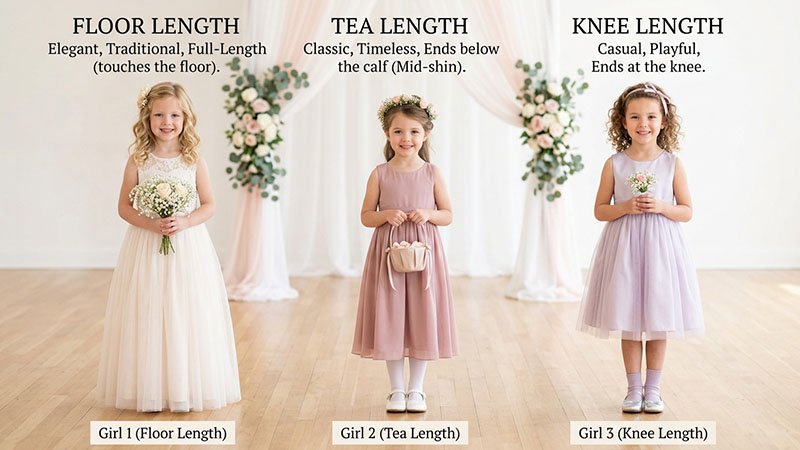
Flower girl dresses come in three practical lengths. Each has a job:
Knee Length
Hem falls at or just above the knee. It is the safest, most practical length for the youngest flower girls — easy to walk, run and play in, with the lowest tripping risk. Knee length also reads “cute and casual”, which suits garden weddings, daytime ceremonies and very young attendants.
Tea Length (Mid-Calf)
Hem falls between the knee and ankle, usually mid-calf. This is the versatile middle ground: formal enough for a ceremony, practical enough for a child to move in. Tea length works across the widest age range and is the safest default for most flower girls aged 4–8.
Floor Length
Hem falls to the floor, sometimes with a slight train. This is the classic formal flower girl look — elegant, traditional and beautiful in photos. It is best suited to older flower girls (6+) who can manage the length, and to formal church or evening ceremonies where the long silhouette belongs.
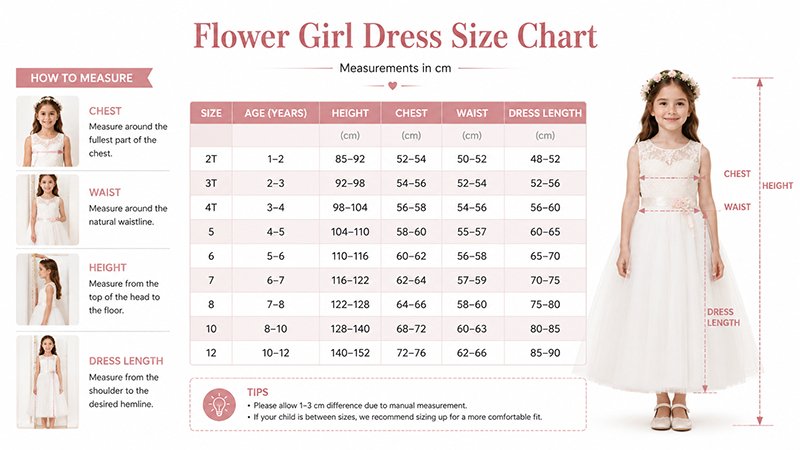
A height-based size chart is more accurate than age labels for fit.
Age is the easiest mental model, but height is the accurate one. Use age as the starting point and height (or the size chart’s fit height) to confirm. Here is the map most wholesale buyers use:
| Age | Typical height | Recommended length | Why |
|---|---|---|---|
| 2–3 years | 85–100 cm | Knee | Stability and tripping safety first; floor-length drags badly at this age |
| 3–4 years | 95–110 cm | Knee or tea | Short tea length works with careful hemming; knee is safest |
| 4–6 years | 105–120 cm | Tea | Versatile, formal enough, easy to move in |
| 6–8 years | 115–130 cm | Tea or floor | Formal ceremonies favour floor; garden events suit tea |
| 8–10 years | 125–145 cm | Floor (or tea) | Elegant floor-length is the expected look; tea for casual venues |
| 10+ years | 140+ cm | Floor | Full formal look; sometimes styled like junior bridesmaid |
Request Fabric Swatches
Feel the fabric before you order. Tell us which styles you are considering and we will send swatches with the weight and composition noted.
Why Height Beats Age
Children of the same age vary widely in height — a tall four-year-old can wear what a small six-year-old wears. Chinese children’s sizing is height-based (100, 110, 120, 130, 140, 150, 160 cm), and each size states a “fits height” range. When a customer asks “what age is this dress?”, the honest answer is: “it fits heights 105–115 cm, which is roughly age 4–5 — check the height, not the age label.” Guiding customers to height eliminates most sizing returns.
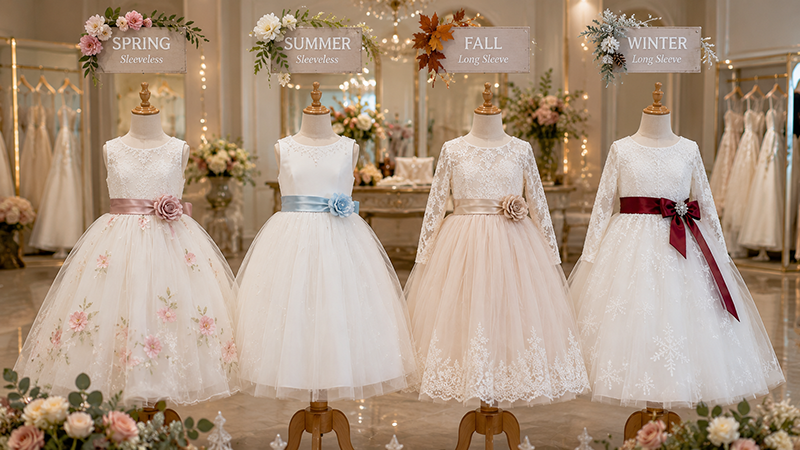
Venue sets the length expectation as much as age does.
The ceremony style shapes the length expectation as much as the child’s age:
- Church / traditional wedding: floor length is the expected, elegant look; tea length is acceptable for younger attendants.
- Garden wedding: tea or knee length suits the outdoor setting — long hems drag on grass and collect dirt.
- Beach wedding: knee or tea length; light fabrics; avoid long trains on sand.
- Evening / formal wedding: floor length, often in satin or with elegant details to match the bridal party.
- Family photo / events: tea length is the versatile all-rounder for non-wedding flower girl moments.
Stocking the same style in two lengths (for example tea and floor) lets bridal boutiques cover both venue types with one design — a practical merchandising move that reduces SKU proliferation.
4. How to Read a Flower Girl Size Chart
A good size chart tells you three things: the size code, the fit height range, and the key measurements (chest, waist, and the dress length itself). Here is how to read one:
| Size (cm) | Fits height | Approx. age | Chest | Waist | Dress length* |
|---|---|---|---|---|---|
| 100 | 95–105 cm | 2–3 yrs | [spec] | [spec] | [spec] |
| 110 | 105–115 cm | 3–5 yrs | [spec] | [spec] | [spec] |
| 120 | 115–125 cm | 4–6 yrs | [spec] | [spec] | [spec] |
| 130 | 125–135 cm | 6–8 yrs | [spec] | [spec] | [spec] |
| 140 | 135–145 cm | 8–10 yrs | [spec] | [spec] | [spec] |
| 150 | 145–155 cm | 10–12 yrs | [spec] | [spec] | [spec] |
*Dress length varies by style (knee/tea/floor) — always check the style’s own length spec.
The “fits height” column is the column to trust. If a chart shows only age, treat it as approximate and ask the supplier for the height range and chest/waist/length measurements before you commit stock.
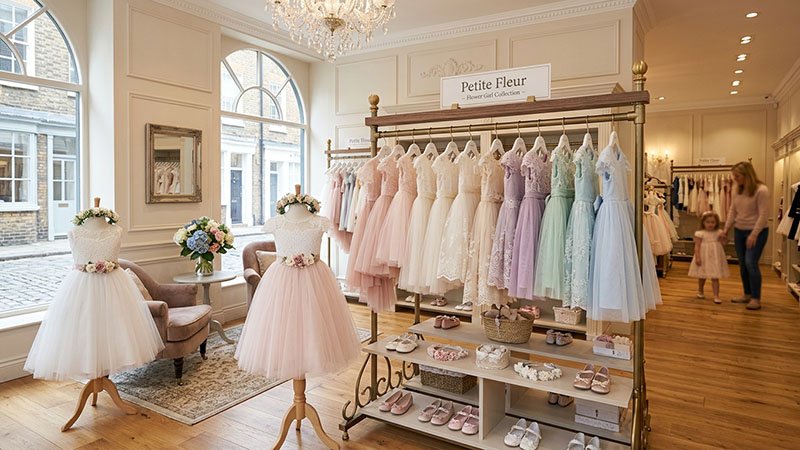
A length-graded range converts more enquiries than a single-length range.
For a flower girl range that converts, the length strategy is as important as the styles:
- Carry tea length as the core — it fits the widest age band and the most venues.
- Add knee length for the youngest sizes (100–110 cm) — safety first for toddlers.
- Add floor length for the oldest sizes (130–150 cm) — the formal look older flower girls and formal weddings expect.
- Stock adjacent sizes — siblings in the same style are a common order type; having 110 and 120 in one style converts a multi-unit enquiry.
If you must choose one length to start with, tea length across the size run is the lowest-risk entry point for most markets.
6. Common Length Mistakes (and How to Avoid Them)
| Mistake | Result | Fix |
|---|---|---|
| Floor length on a 2–3 year old | Tripping, discomfort, hem damage | Knee length for the youngest sizes |
| Sizing by age label only | Wrong fit for tall/short children | Guide customers to fit-height |
| One length across all sizes | Wrong look for young vs older girls | Grade length by size (knee→tea→floor) |
| No hem allowance | No room to adjust for a specific child | Confirm hem allowance with supplier |
| Ignoring venue | Long dress on garden grass / beach sand | Offer two lengths per style |
7. Frequently Asked Questions About Flower Girl Dress Length
Should a Flower Girl Dress Drag on the Floor?
No. A slight sweep is fine for older flower girls in formal ceremonies, but a dress that drags significantly is a tripping hazard and will be damaged quickly. If the style is floor length, the hem should just touch the floor at the front or be a little short of it — the “sweep” effect comes from the back, not from a dragging front hem.
Can a Floor-Length Dress Be Hemmed for a Younger Child?
Yes — up to a point. A generous hem allowance (a few centimetres) lets a boutique alter a floor-length dress for a shorter child. But shortening by a large amount changes the proportion of the bodice and skirt, so it is better to buy the correct length grade for the age. Confirm the hem allowance with the supplier when you order.
How Do I Choose Between Tea and Floor Length for a 6-Year-Old?
Match the venue and the child’s comfort. For a formal church wedding where the bridal party is in long dresses, floor length looks right. For garden or daytime weddings, tea length is safer and equally charming. When unsure, tea length is the safer, more versatile default.
What If the Customer’s Child Is Between Sizes?
Size up and plan for a hem adjustment. A dress slightly long can be shortened; a dress too short cannot be lengthened. If the child is between fit-height ranges, recommend the larger size with a hem alteration — and make sure the style has enough hem allowance to do it.
Do You Offer Different Lengths in the Same Style?
Many wholesale ranges offer a style in both tea and floor length, or grade the length across sizes so toddlers get knee, mid-ages get tea and older girls get floor. Ask your supplier which length options exist per style before you plan the range — it keeps your SKU count low while covering the full market.
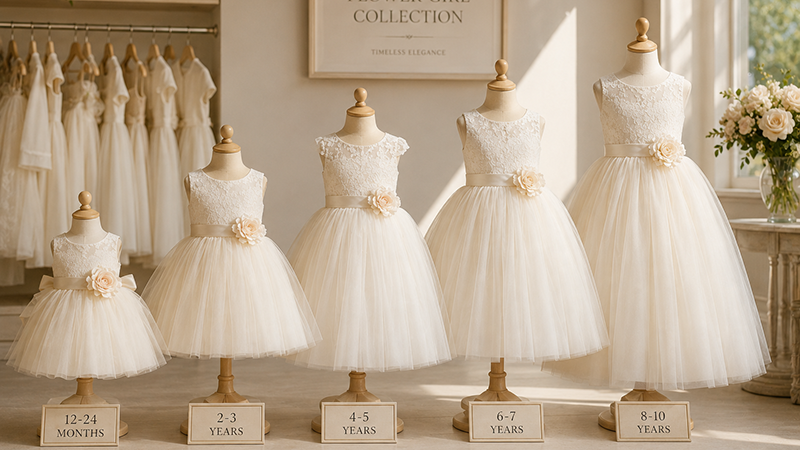
Length interacts with fabric and silhouette — they should be chosen together.
Length does not work in isolation — it interacts with fabric and silhouette to produce the final look. The same “floor length” reads completely differently in tulle, satin and chiffon:
- Floor-length tulle: a full, fairy-tale princess sweep — the classic flower girl photo look, but the volume adds weight and bulk; on a young child, a floor-length tulle skirt can be heavy to carry.
- Floor-length satin: sleek and elegant, reads formal; heavier to wear and wrinkles in transit — care instructions matter.
- Tea-length chiffon: light, airy, perfect for outdoor venues; moves with the child and photographs with a soft romantic feel.
- Knee-length tulle: cute and practical for toddlers; the volume still delivers the “dress” moment without the tripping risk.
When you choose a length, also choose the fabric that carries it well for that age group: young children need lighter, softer constructions regardless of length; older flower girls can carry the weight of satin and fuller skirts.
Adjustability: The Detail That Saves Sales
A flower girl dress is bought weeks or months before the wedding, and children grow — or the dress is bought for a child whose exact size is uncertain. Styles with adjustable features sell better and return less:
- Adjustable straps or elastic backs — forgive size uncertainty in the bodice.
- Generous hem allowance — lets a boutique alter length for the exact child.
- Removable sash or belt — adjusts the visual fit and repositions the waist for different proportions.
These details cost the factory little but change the customer experience significantly — worth asking for when you place your flower girl order.
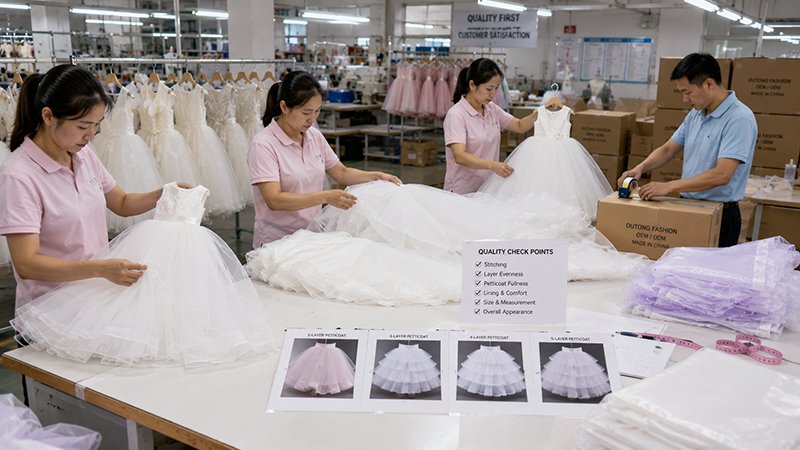
Adjustability turns a near-fit into a real fit for wedding customers.
When you plan your flower girl assortment, use length as one of the planning axes. A practical structure for a first range:
- Core: tea-length styles across 110–140 cm — the volume engine, fits most ages and venues.
- Toddler: knee-length styles at 100–110 cm — captures the 2–4 year band safely.
- Formal: floor-length styles at 130–150 cm — for church and evening weddings, older flower girls.
- Per style, two lengths where possible — one design, two hemlines, doubles venue coverage.
Order the core first, test sell-through, then extend with the formal and toddler segments. Length-graded ranges convert more enquiries because they fit real children — and fit is what flower girl customers ultimately buy.
10. A Quick-Reference Card for Your Customers
Give your retail customers (and your own staff) a simple decision card that answers the length question in seconds. A version like this works well:
| If the flower girl is… | Choose | Check |
|---|---|---|
| 2–3 years old / under 100 cm | Knee length | Light fabric, easy to walk in |
| 3–5 years old / 95–115 cm | Knee or tea | Comfortable neckline, adjustable back |
| 5–7 years old / 110–125 cm | Tea length | Matches venue style |
| 7–10 years old / 125–145 cm | Tea or floor | Formal ceremonies → floor |
| 10+ years old / 140+ cm | Floor length | Elegant, ceremony-appropriate |
One printed card at the counter converts hesitant shoppers, reduces returns and builds trust — and it costs nothing to produce.
11. Sizing FAQs Wholesale Buyers Ask Us
Do Flower Girl Sizes Run the Same as Regular Girls’ Dresses?
Usually yes — both use the same height-based sizing system (100–160 cm) — but flower girl styles may run fuller in the skirt by design. The chest and waist measurements are what you should compare, not the silhouette. If you buy flower girl styles alongside regular party styles, keep one fit standard per brand so customers are not surprised.
Should I Order the Full Size Run or Selective Sizes?
For a first test, the demand core is 110–140 cm, with 100 cm for toddlers and 150 cm for older girls as extensions. Selective sizing on the first order (three to five sizes) lets you test without deep stock; expand the run once sell-through confirms which sizes your market actually buys.
Can You Grade Length Within the Same Style?
Yes — many of our styles grade the hemline across sizes (knee for the smallest, tea for mid, floor for the largest) or offer the same design in two lengths. Tell your supplier your preferred grading when you order, and confirm it on the spec sheet so bulk production matches.
Spec your flower girl lengths
Request size and length charts for our flower girl range — we reply within 6 hours with MOQ and sample lead times. WhatsApp us or email luxudress@gmail.com.
Leave a Reply