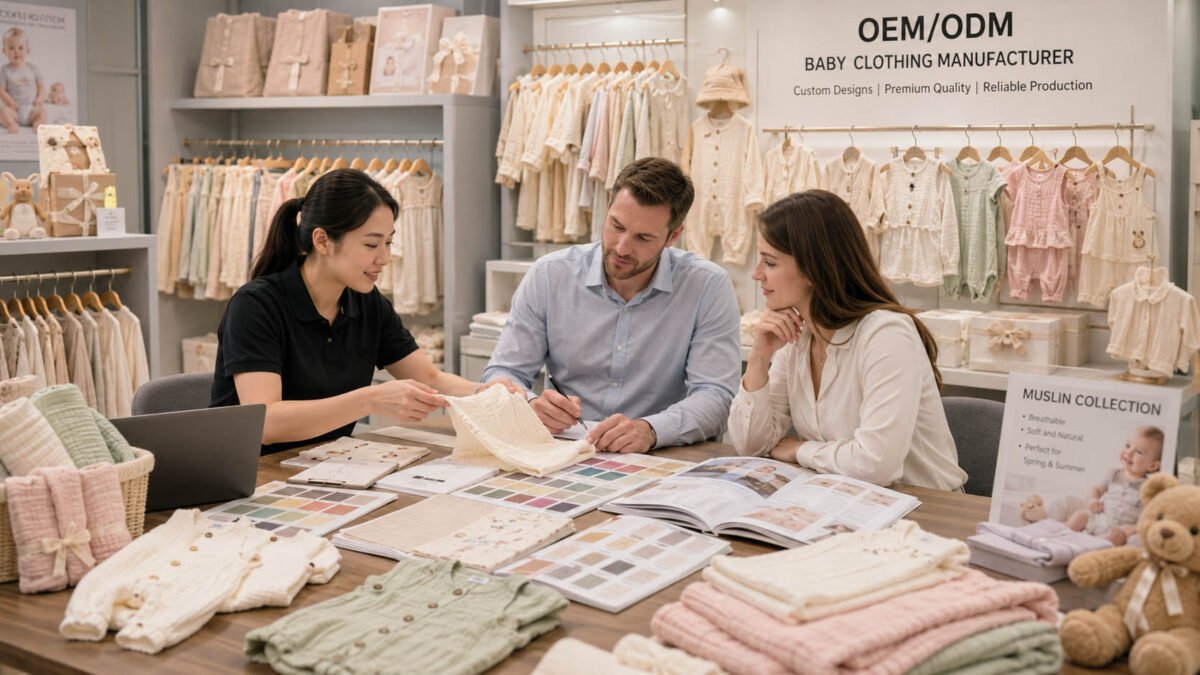
Choosing a kids’ dress manufacturer in China comes down to three things: category fit, communication and consistency — in that order. The best factory for your brand is not the one with the lowest price, the biggest showroom or the fastest reply. It is the one that makes your kind of dress well, communicates clearly enough to survive production, and repeats the same quality order after order. This guide breaks down exactly how to vet, test and select a girls’ dress manufacturer you can build a long-term supply chain on.
Start With a Low-Minimum Test Order
Before you commit to a bulk run, test a supplier with ready-stock styles — mixed styles and colours from 6 pieces, so you can judge fabric, stitching and sizing firsthand.
Every buyer knows the drill: a hundred suppliers in your inbox, each with a polished pitch, a glossy catalogue and a promise of “best quality, best price”. Most of them are fine companies — but fine is not enough. Children’s dresses have specific demands: accurate height-based sizing, safe trims, durable construction, comfortable linings and consistent grading across a full size run. A manufacturer who “mostly makes adult dresses” or “takes any order that comes in” is a poor fit no matter how competitive the price looks.
1. The Three Tests Every Candidate Must Pass
Before you compare prices, compare candidates against three non-negotiable tests:
Test 1: Category Fit — Do They Make Kids’ Dresses, Really?
Ask what percentage of their production is children’s dresses, and which categories: flower girl, party, communion, everyday? A specialist girls’ dress factory understands fabric behaviour on children, sizing grading, safety requirements and the seasonal calendar. A generalist produces your order “between other jobs” — and your order is the one that slips when a bigger customer rushes.
Test 2: Communication — Can They Survive Production With You?
Production is a months-long conversation: fabric approvals, sample revisions, QC photos, shipping documents. A supplier who replies slowly or vaguely before you pay will not magically become responsive when issues arise mid-production. Test communication during the free phase: send a detailed question and time the response. Clear, prompt, specific answers are the strongest predictor of a smooth order.
Test 3: Consistency — Can They Repeat the Same Quality?
Your first order proves they can make the dress once. Your second, third and tenth orders prove they can make it the same way every time. Ask for reorder examples: repeat customers, the same style across multiple seasons, and any records of quality consistency. A factory that treats every order as a fresh project will drift; one with documented repeat production holds the line.
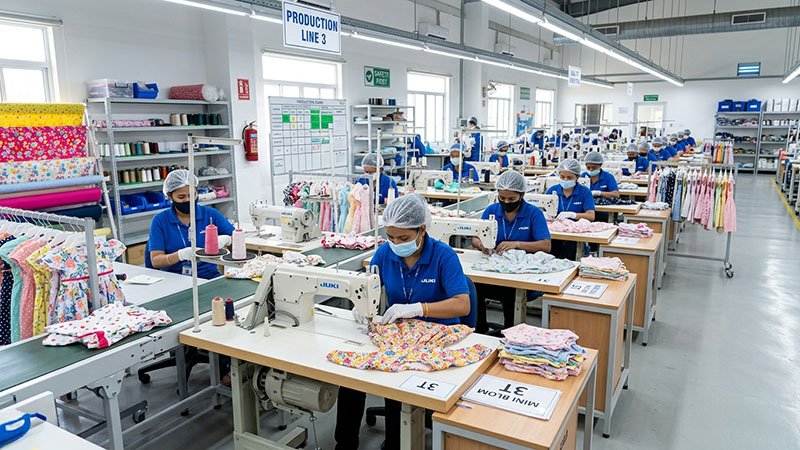
Factory photos and a working sewing line are non-negotiable signals.
Once a candidate passes the three tests, run these verification checks:
| Check | What to look for | Why it matters |
|---|---|---|
| Business registration | Licensed, verifiable company details | Confirms a real entity, not a shell |
| Factory photos / video | Production floor, sewing lines, QC area | Confirms actual manufacturing capability |
| Certifications | ISO 9001 (quality management), Sedex (ethical audit), SGS inspection reports | Indicates management systems and audit history |
| References | Two buyers in markets similar to yours | Independent confirmation of behaviour |
| Sample history | Photos or physical samples of recent kids’ dress work | Shows current capability, not past glory |
| Export experience | Destination markets they ship to regularly | Familiarity with your market’s documentation |
Get a Sourcing Quote
Send us your target styles, size run and quantity. We reply with MOQ, unit pricing and sample lead time — no obligation.
Certifications: Read Them as Signals, Not Proof
Certifications like ISO 9001 and Sedex tell you the company has management systems and audit history — useful signals, not guarantees. A factory with none may still be excellent; a factory with a wall of certificates can still ship poorly. Use certifications to shortlist, and use sampling and inspection to verify. In children’s wear, also ask about safety documentation for the markets you sell to.
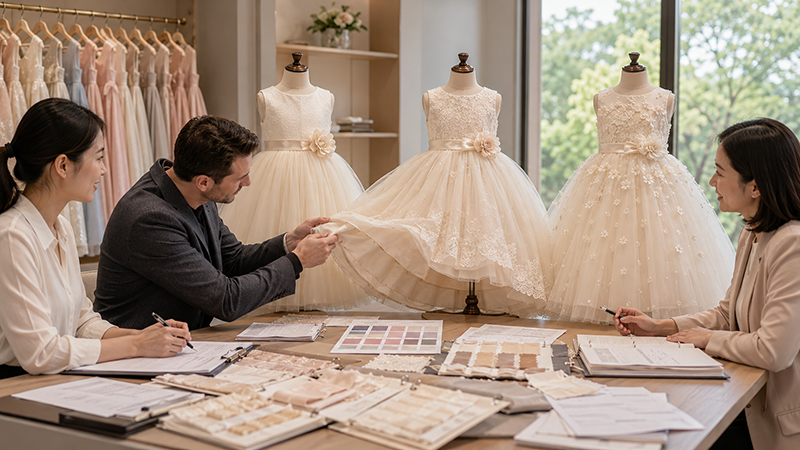
The sample interview tells you more than any catalogue — judge the details.
The sample is where theory meets reality. A well-run sampling process tells you more than any catalogue:
- Request a relevant sample: ask for a sample of a style close to your target — not just their best-seller — so you can judge whether they can execute your kind of dress.
- Time the sampling: stock samples usually dispatch within about 3 days; custom development samples typically 5–10 days plus shipping. A factory that misses its own sample date will miss production dates.
- Judge the details: seams straight, hems even, trims secure, lining comfortable, sizing per spec. The details are the interview.
- Test the communication loop: request one change (a size tweak or colour adjustment) and see how accurately it comes back. This simulates your entire future working relationship.
Keep the approved sample as the physical reference for bulk — and note that the sample you approve is the standard the bulk order must match.
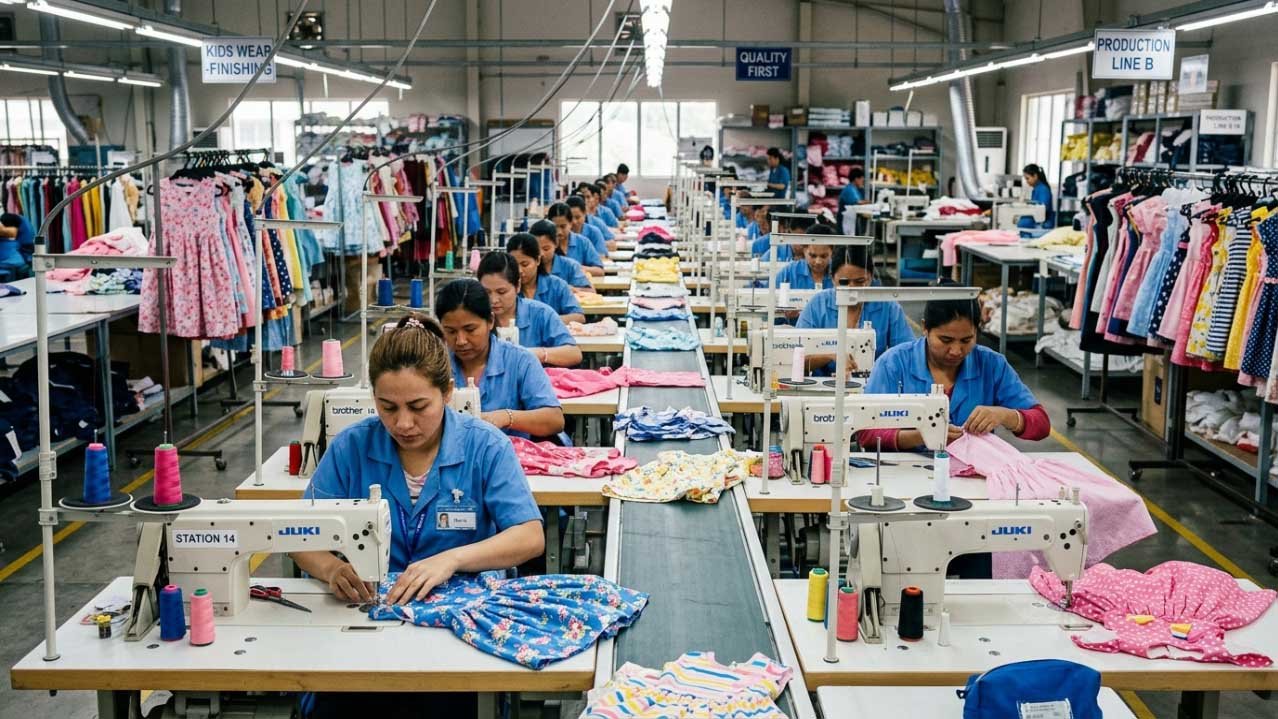
Match MOQ structure to your buying stage, not to the supplier wish list.
Different buying stages need different MOQ profiles. Match the manufacturer to where your business is today, not where it might be in three years:
| Your stage | What you need | Ideal MOQ profile |
|---|---|---|
| New boutique / testing | Small mixed orders, low risk | Ready stock from about 6 pieces, mix and match styles and colours |
| Growing brand | Proven styles in bulk, reorders | Moderate minimums with repeat-order pricing |
| Scaling / custom lines | Custom OEM/ODM development | Custom minimums (often from about 200 pieces per style) with sample support |
A supplier who only takes large bulk orders is a poor partner for a testing phase; a ready-stock supplier may not support deep custom work. The right match is a supplier whose MOQ structure fits your current buying behaviour — with room to grow.
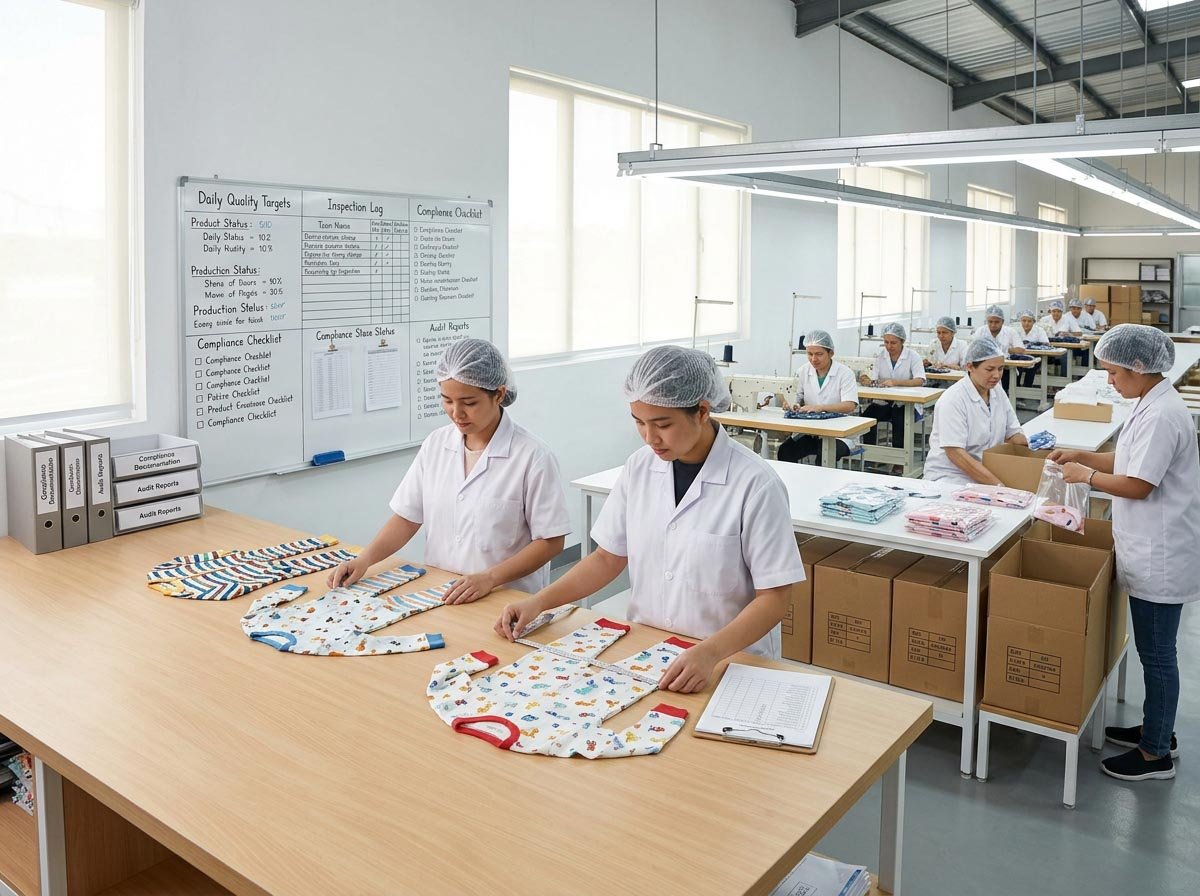
A red flag is not a one-off; it is a pattern that costs you when volume scales.
Some signals should end the conversation regardless of price:
- Vague answers on fabric composition — a dress maker who cannot clearly state what the fabric is will not reliably deliver what you expect.
- No sample step before bulk — “trust us, it’s exactly like the photo” is not a production plan.
- Unwilling to share references or factory details — transparency is the baseline of a working relationship.
- Price that seems too good — in children’s wear, an extreme low price usually means lighter fabric, weaker trims or skipped QC, all of which surface as returns.
- Guarantees without documentation — verbal promises about quality mean nothing; written specs and inspection reports mean something.
- No written approval protocol — if they resist putting approvals in writing, disputes become your problem later.
6. Building the Relationship After the First Order
Choosing the right manufacturer is the start, not the finish. The value compounds through repeat orders:
- Keep a spec sheet per style — fabric, measurements, trims, packaging. Reorders become identical and fast.
- Share forecasts — a factory that sees your forward plan can reserve production slots and fabric.
- Pay reliably — prompt payment earns priority slots and better terms over time.
- Approve in writing — written approvals per sample and per bulk keep both sides aligned.
- Give feedback — factories improve what is measured; tell them what worked and what did not.
Consistency across reorders matters more than the lowest price on a single order. The supplier relationship is an asset you build — and it starts with choosing the right partner at the start.
7. A One-Page Evaluation Template
Use this short template to compare candidates on one page:
- Category fit: share of production in girls’ dresses / target categories
- Location and size: city, production capacity, number of lines
- Sampling: stock sample lead time, custom sample lead time
- MOQ: ready stock minimum, custom minimum, mix-and-match policy
- Quality system: certifications, inspection reports, QC process
- Communication: response time, clarity, willingness to document
- References: two buyers in similar markets
- Fit score: 1–10 for your specific needs
Fill this out for every candidate, compare the fit scores — and remember the winner is the best fit, not the lowest price.
8. Frequently Asked Questions About Choosing a Manufacturer
Should I Visit the Factory Before My First Order?
For a small first order, a visit is optional — a video call, factory photos and a solid sampling process usually suffice. For larger or repeat orders, a visit or a third-party inspection before shipment is worth the cost. Many suppliers can arrange a live video walkthrough of the production line and pre-shipment photos, which is the next best thing to being there.
How Do I Know a Low Price Is “Too Low”?
Compare the quote against the fabric and construction spec, not against other quotes. If a competitor’s price is 20–30% lower for the same stated spec, ask what is different: lighter fabric, thinner lining, fewer tulle layers, cheaper trims, or looser QC. In children’s wear, the savings usually appear exactly where your customers will feel them — comfort, durability and finish.
What If My Order Is Too Small for a Factory’s Minimum?
Start with a ready-stock range instead. Ready stock in girls’ dresses typically starts from about 6 pieces with mix-and-match styles and colours, letting you test the market and the supplier relationship without committing to custom minimums. Once you have proven styles, move to custom production where the higher minimum is justified by the volume.
How Many Suppliers Should I Have?
One strong primary supplier plus one backup is a healthy structure for most buyers. The backup keeps you out of crisis mode if the primary hits capacity or quality issues; a single supplier with no alternative leaves you exposed. Develop the backup before you need it, not during a crisis.
What Makes a Supplier “Good” for Long-Term Work?
Long-term suppliers share three habits: they keep your spec sheets and patterns on file for fast reorders, they tell you about problems early (fabric shortages, production conflicts) instead of after, and they improve with feedback. These habits are visible in the first two or three orders — so evaluate the relationship as much as the product.
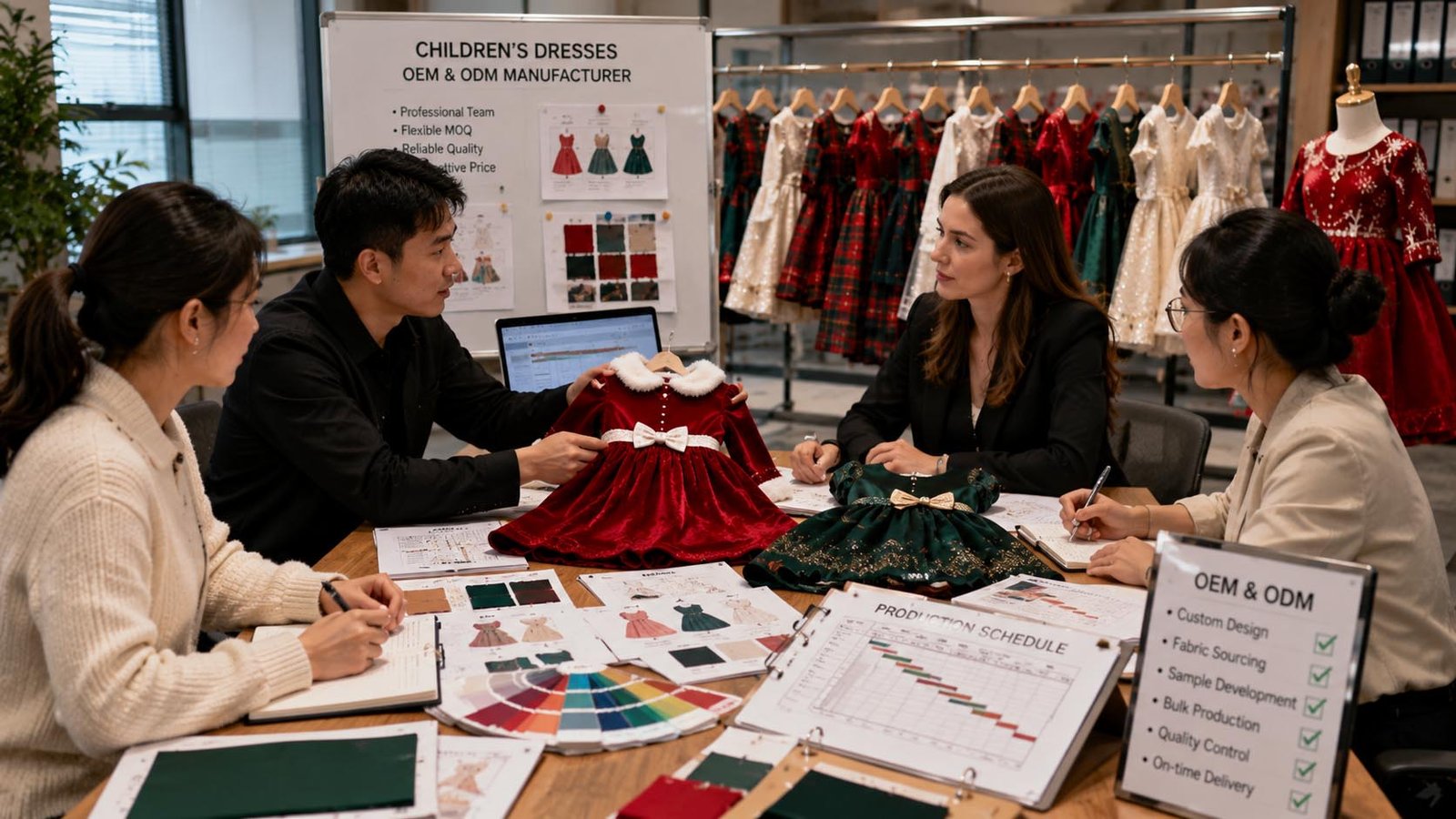
Factory or trading company? Match the type to your stage and your margin.
Buyers often wonder whether to work with the factory directly or through a trading company. Both have legitimate roles:
| Factor | Direct factory | Trading company |
|---|---|---|
| Control | Direct control of production and QC | Indirect; depends on the factory they use |
| Flexibility | Better for custom development and deep changes | Better for small mixed orders across factories |
| Minimums | Often higher, per production line | Often lower, consolidating multiple orders |
| Communication | Direct, technical, closer to production | One interface; may translate/simplify |
| Best for | Established brands scaling custom lines | New buyers testing small mixed ranges |
There is no universal winner — match the type to your stage. Many buyers start with a trading company or ready-stock supplier, then move to a direct factory relationship as volume and custom work grow.
10. The First-Order Scorecard: Did You Pick Right?
After your first order lands, score the supplier honestly before reordering. A useful scorecard covers:
- Sample accuracy (1–10): did the bulk match the approved sample on fabric, fit, trims?
- Communication (1–10): response times, clarity, proactive updates?
- Timing (1–10): did they hit the promised production and shipment dates?
- Quality (1–10): how many pieces needed rework or replacement after inspection?
- Documentation (1–10): were specs, reports and shipping documents complete and accurate?
Average the scores. Anything above 8 is a partner to grow with; 6–8 deserves one more trial order with specific feedback; below 6 should be replaced. A first order is a data point, not a marriage — score it, learn from it, and let the score drive the next decision.
11. When to Switch Manufacturers (and When Not To)
Switching suppliers is expensive — new sampling, new relationships, new risk — so it should be a decision, not a reaction. Change manufacturers when:
- Quality drifts persistently after clear feedback — the factory is not fixing root causes.
- Communication collapses under pressure — when problems happen, they vanish instead of solving.
- Capacity no longer fits — you outgrew their line size or they outgrew their own reliability.
- Cost structure no longer works — your price point changed and they cannot follow.
And do not switch just because another supplier quoted lower. Price differences of 10–15% are normal across factories and usually reflect real spec differences; the cost of switching (samples, re-approval, new risk) easily exceeds that on a single order. Switch for structural reasons — quality, communication, capacity — not for a tempting quote.
Talk to a girls’ dress specialist
We focus on girls’ dresses — ready stock from about 6 pieces, custom OEM/ODM from about 200 pieces, with sample support and photo QC reports. WhatsApp us or email luxudress@gmail.com.
Leave a Reply