
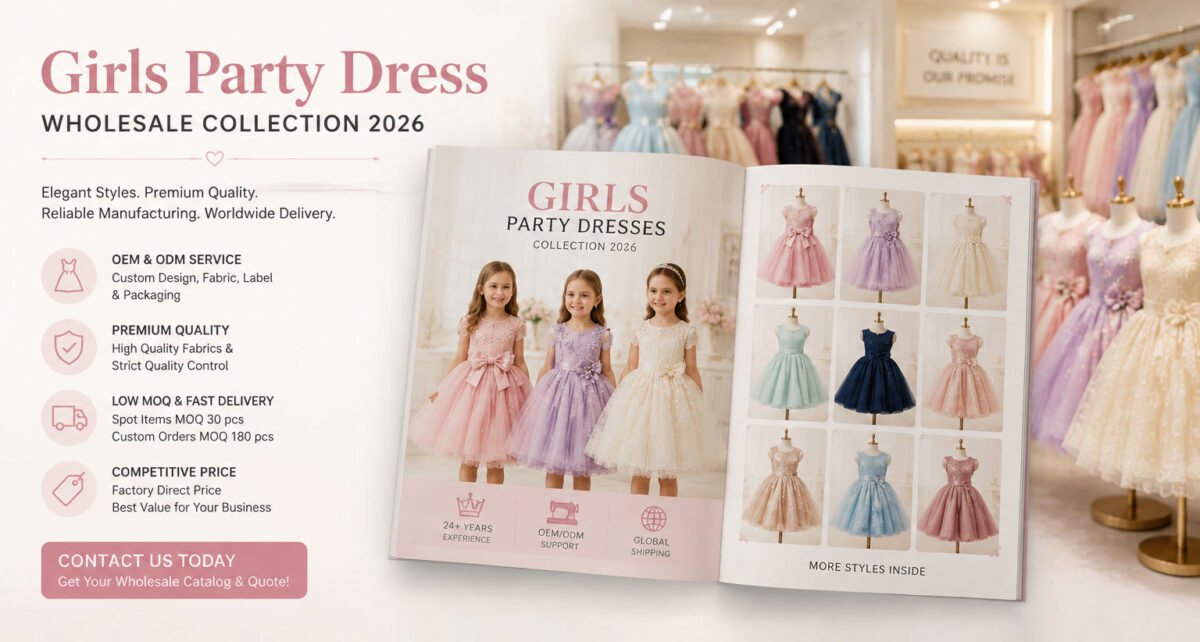
Where you sell determines what you buy. A brick-and-mortar boutique, a Shopify store, an Etsy shop and an Amazon listing all demand different product depth, pricing and photography — and a buyer who ignores that ends up with stock that suits no channel. The answer is rarely “everywhere”; it is usually “one channel done well first, then expand.” This guide maps the channels so you can choose deliberately.
Browse Best-Selling Dress Styles
See the occasion, party and flower girl styles that boutiques reorder most, with size runs and unit pricing shown.
The temptation for a new kids’ dress brand is to be everywhere at once. That usually means being nowhere with enough focus to win. Each channel has its own customer, its own fee structure and its own inventory rhythm, and they pull your buying strategy in different directions. Understanding the differences is what lets you sell wholesale girls’ dresses profitably on the right platform instead of spreading thin across the wrong ones.
This guide breaks down the five main channels, their economics, and a practical sequence for choosing.
1. The Five Main Channels at a Glance
| Channel | Customer | What sells | Your role |
|---|---|---|---|
| Brick-and-mortar boutique | Local, higher-touch, occasion shoppers | Curated, premium, gift-ready | Wholesale supplier or owner |
| Shopify store | Your own audience, branded | Full collection, your story | Brand owner + marketer |
| Etsy | Handmade/original-seeking buyers | Special, often custom or occasion | Maker/curator persona |
| Amazon | Price-sensitive, search-driven | Best-sellers, fast-ship basics | Competitive operator |
| Faire (wholesale marketplace) | Other boutiques restocking | Proven styles, case sizes | Wholesale brand |
Get Wholesale Pricing
Send your store type and monthly volume and we will send the wholesale price list and recommended opening order.
Each channel rewards a different buying strategy — do not stock them all from the same plan.
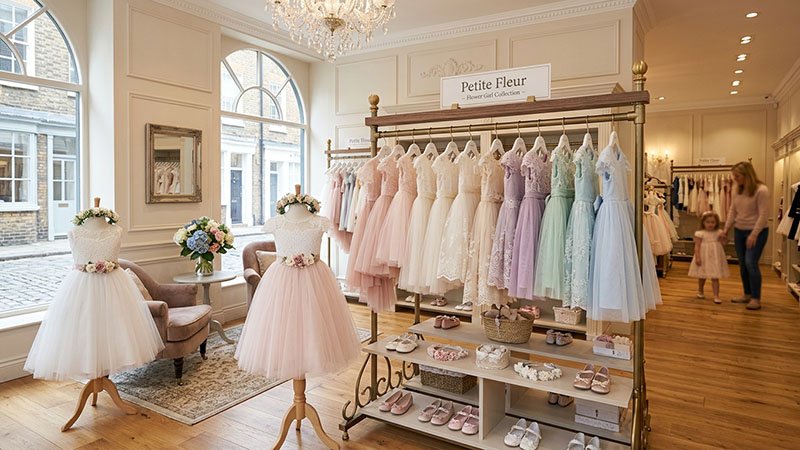
A boutique rewards curation and presentation; a marketplace rewards volume and consistency.
2. Brick-and-Mortar Boutique
The classic channel, and still the highest-margin for occasionwear, because the customer buys the moment and the experience, not just the garment.
- Strengths: high perceived value, personal service, gift-worthy presentation, lower return pressure if fit is checked in-store.
- Weaknesses: limited reach, rent and staffing overhead, small per-store volume.
- Buying strategy: curate a tight, premium range with strong presentation — labels, hangtags and packaging matter as much as the dress.
If you are the boutique owner, you want a supplier who can deliver small mixed orders so you are never over-stocked on one style. If you are the wholesaler, boutiques are your highest-margin B2B customers.
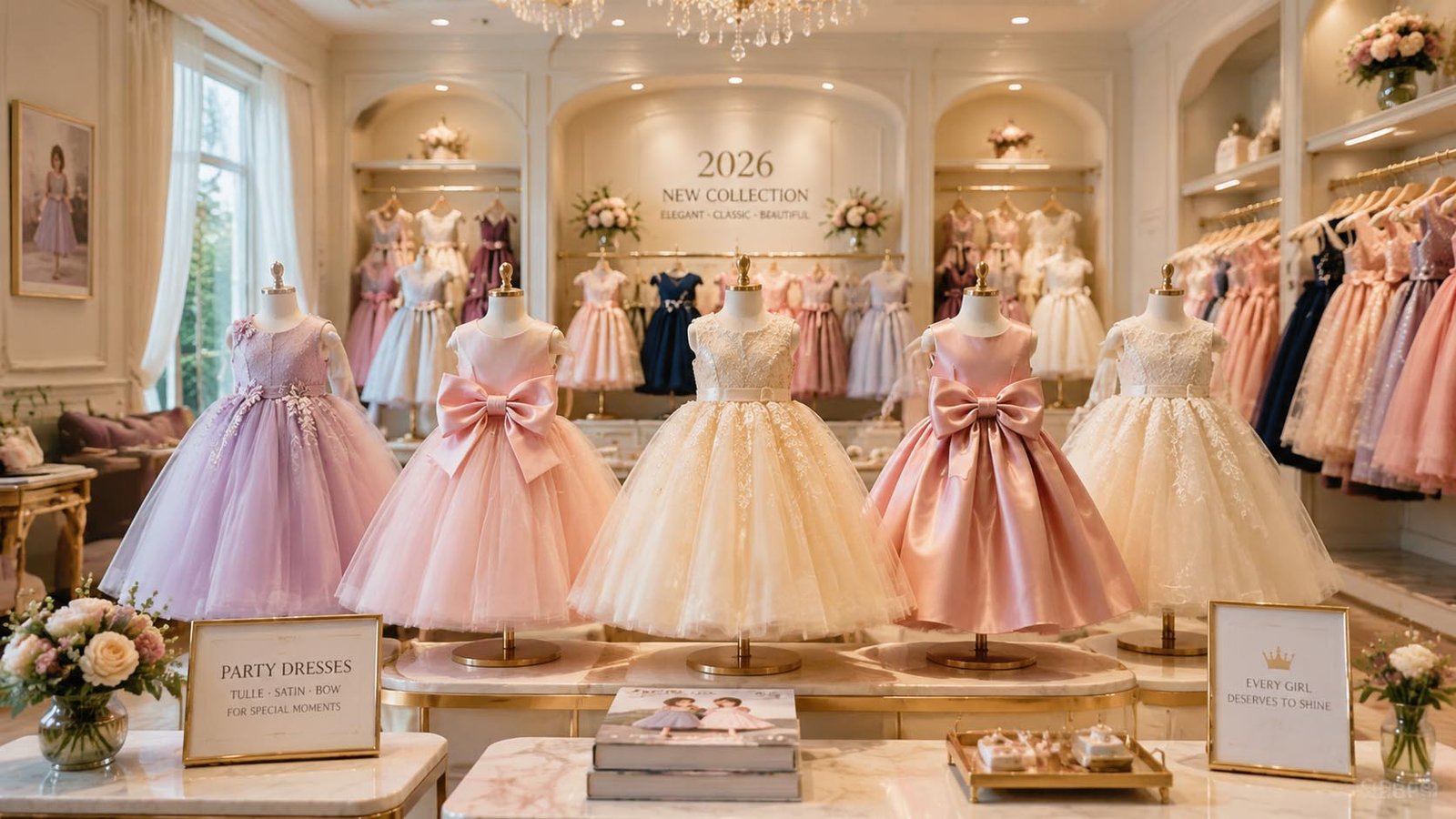
Showrooms and boutiques sell on touch and presentation — invest in both for this channel.
3. Shopify and Your Own Store
A Shopify store gives you full control over brand, pricing and margin, and it is where you build a direct relationship with your customer — but you have to bring your own traffic.
- Strengths: full margin, full brand control, customer data, no marketplace commission beyond payment processing.
- Weaknesses: you pay to acquire every visitor; no built-in audience.
- Buying strategy: a complete collection with a clear story, strong photography, and enough depth to make browsing worthwhile.
Shopify is the natural home for a brand that wants to control its margins and grow an email list, and it pairs well with a wholesale channel as a second revenue stream.
4. Etsy
Etsy rewards products that feel special, original or occasion-specific — which suits flower girl and special-occasion dresses well. Buyers come looking, so you benefit from built-in demand.
- Strengths: built-in audience of occasion shoppers, lower barrier to start, strong for custom and made-to-order.
- Weaknesses: fees, competition, and an aesthetic that leans handmade — which can clash with a mass-produced feel.
- Buying strategy: focus on distinctive occasion pieces with strong photography and a personal story.
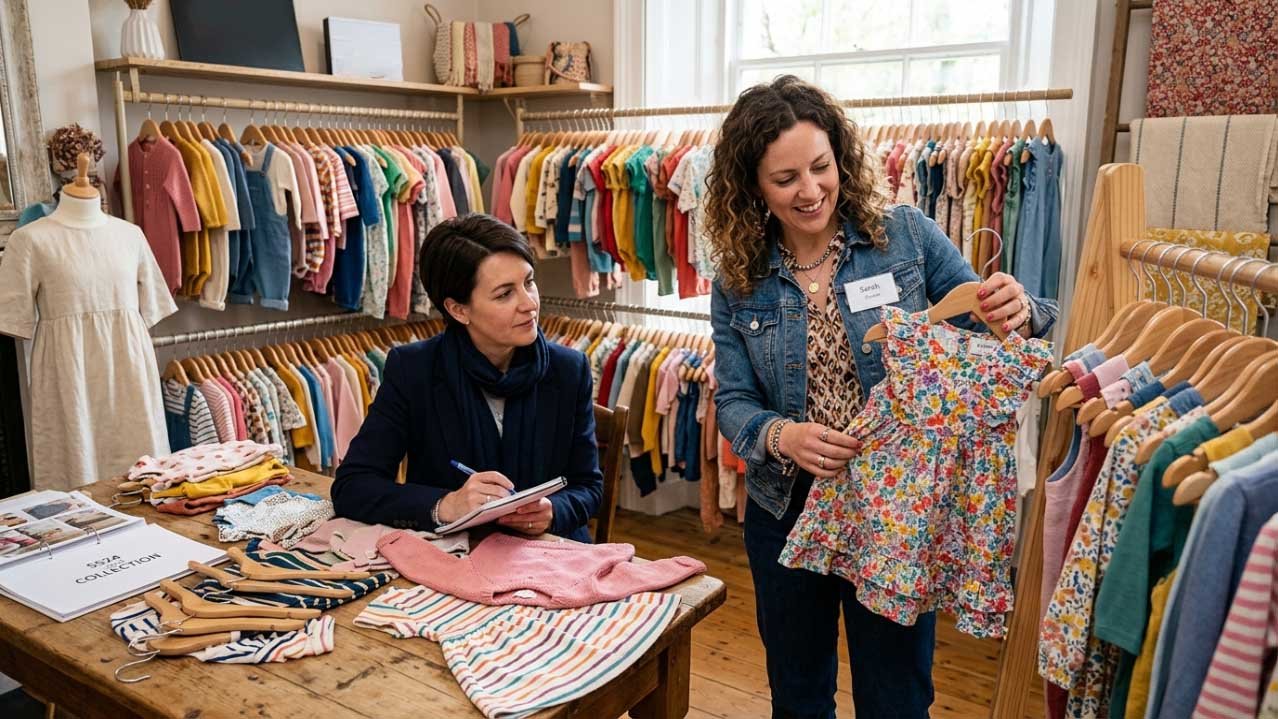
On Etsy, the product’s distinctiveness and photography do the selling — invest in both.
5. Amazon and Wholesale Marketplaces (Faire)
Amazon is a volume, search-driven channel where price and fast shipping dominate; Faire is a wholesale marketplace that connects brands with boutiques restocking.
Amazon
- Strengths: enormous reach, search traffic, Prime logistics.
- Weaknesses: high fees (referral + fulfillment can add up fast), price competition, demanding operations.
- Buying strategy: best-seller basics with reliable availability and competitive pricing — not deep occasion range.
Faire
- Strengths: reaches boutiques actively restocking, B2B terms built in.
- Weaknesses: commission, and you compete on wholesale terms.
- Buying strategy: proven styles in case-ready quantities with clean wholesale pricing.
6. Choosing Your Sequence
You do not need to launch everywhere. A sensible sequence for most new kids’ dress brands is:
- Start on one channel you can execute well — usually Shopify (control) or Etsy (built-in demand).
- Prove the styles with low-MOQ orders so you learn what sells before scaling.
- Add a second channel only once the first is profitable and systematised.
- Keep wholesale separate — boutiques and Faire are a different pricing game from direct retail.
For the buying side, this means starting with a small, flexible order — our ready-stock program starts from as few as 6 pieces with mix-and-match styles, so you can test a channel without committing to volume. As a style proves itself, you can scale it with a custom OEM/ODM run.
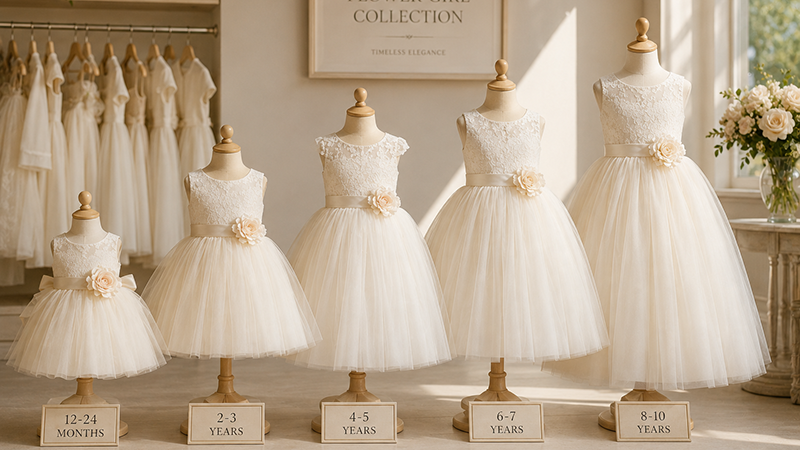
Match your size and style depth to the channel — a marketplace needs breadth, a boutique needs curation.
7. Pricing Across Channels
One of the biggest mistakes is using one price everywhere. Each channel has different costs and tolerates a different price, and pricing them all the same undercuts your wholesale buyers or loses you money to fees.
| Channel | Typical pricing approach | Why |
|---|---|---|
| Boutique (wholesale) | Lower wholesale price | Leaves room for the boutique’s own margin |
| Shopify | Full retail price | You keep the full margin |
| Etsy | Retail + fee coverage | Cover listing and transaction fees |
| Amazon | Competitive retail | Price-competitive, fee-heavy |
| Faire | Wholesale + commission | B2B terms with platform commission |
Price per channel, or accept that one channel will cannibalise the others.
Before you commit to a channel, spend time on the dress collection to understand your range, and browse the ready-stock collection to see what is available to test quickly. A quality and compliance check also matters more on marketplaces, where returns and reviews are public.
Frequently Asked Questions
What is the best channel to start selling kids’ dresses?
Start on one channel you can execute well — usually Shopify for brand control or Etsy for built-in occasion demand — then expand once it is profitable. Launching everywhere at once usually means doing none well.
Should I sell wholesale and retail on the same channel?
Keep them separate. Wholesale pricing must leave room for your buyer’s margin, while retail pricing is yours alone. Mixing them on one channel undercuts your wholesale customers.
Which channel has the lowest fees?
Your own Shopify store has the lowest platform cost (just payment processing), but you pay to acquire traffic yourself. Marketplaces charge higher fees but bring built-in demand — the trade-off is fees versus traffic.
Do marketplace fees vary?
Yes. Commissions, seller-plan costs, fulfillment fees and advertising spend vary by platform, market and plan. Always use the platform’s current fee schedule when calculating your margin.
How much stock should I buy to test a channel?
Test with a small, flexible order. Ready-stock programs that start from about 6 pieces with mix-and-match styles let you test a channel with minimal cash before scaling.
Stock the right range for your channel
Tell us which channel you sell on — we’ll recommend the styles, depth and pricing that fit it best.
Leave a Reply