
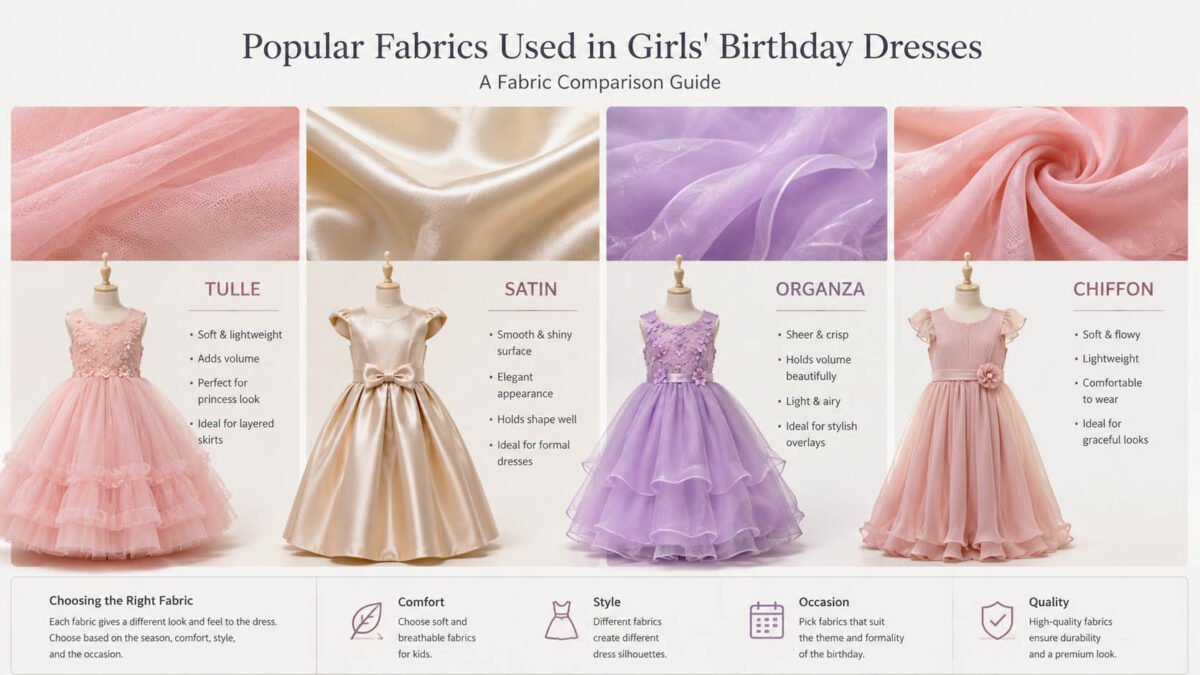
Satin and tulle are the two fabrics buyers ask about most when sourcing flower girl and girls’ party dresses — and they could not be more different to stock. Satin brings smoothness, sheen and formality; tulle brings volume, airiness and that princess silhouette. Neither is “better”: each earns its place in a well-balanced range. This guide compares them across the decisions that matter to a wholesale buyer — look, comfort, care, freight and price — and shows you exactly when to choose each one.
Browse the Collection
See how these fabrics, silhouettes and size ranges look on finished styles — filter by occasion, season and size range.
If you have ever ordered a “tulle dress” and received something flat, or a “satin dress” that wrinkles the moment it leaves the bag, you already know that fabric names mean little until you understand how the fabric behaves. For flower girl dresses and party dresses — the two occasions where these fabrics dominate — choosing correctly decides not just whether the dress sells, but whether it comes back in returns.
1. What Satin and Tulle Actually Are
What Is Satin?
Satin is a weave, not a fibre — a smooth, lustrous surface weave that can be made from polyester, silk or blends. In children’s wholesale, “satin” almost always means polyester satin: glossy on one side, matte on the other, with a heavy, smooth drape. It reads as formal and elegant, photographs cleanly with even light reflection, and is the fabric of communion dresses, pageant looks and polished party wear.
What Is Tulle?
Tulle is a light, open-net mesh, typically nylon or polyester. It has no stretch and a crisp, dry texture. On its own a single layer is nearly transparent — the magic happens in layers. Four to eight gathered layers of tulle create the full, airy princess skirt that dominates weddings and birthdays. Tulle ranges from soft baby tulle (gentle against skin) to hard bridal tulle (used for structure).
Why They Get Confused
The two fabrics are often combined in one dress — a satin bodice with a tulle skirt is one of the best-selling combinations in girls’ formalwear. Buyers who see that hybrid everywhere sometimes blur the line between them. Understand each fabric’s job and the combination makes sense: satin shapes the bodice, tulle builds the skirt.
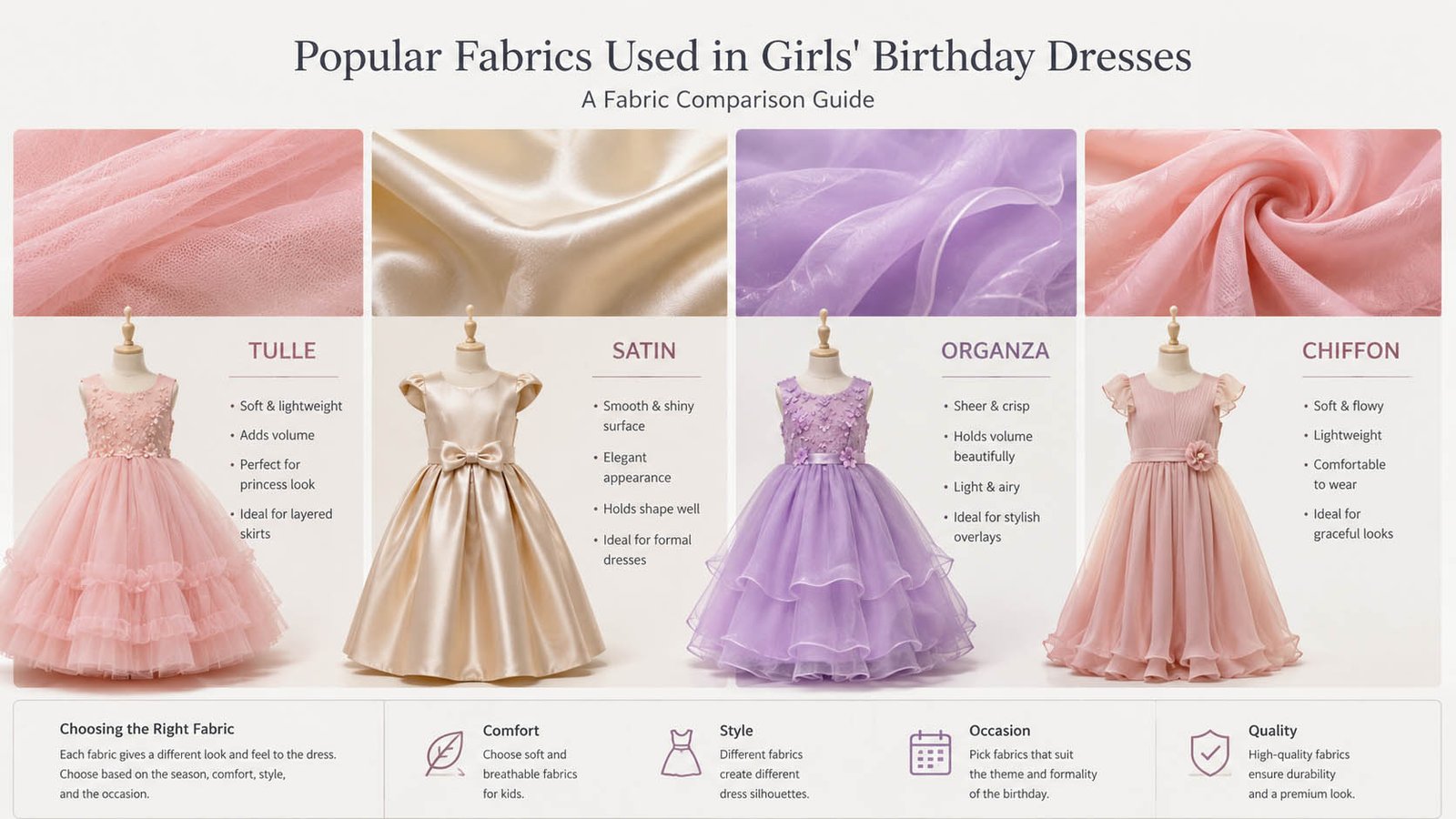
Four fabrics at a glance: tulle, satin, organza and chiffon — each behaves differently.
| Attribute | Satin | Tulle |
|---|---|---|
| Surface | Smooth, glossy, formal | Open netting, matte, airy |
| Silhouette | Flowing, elegant, follows the body | Voluminous, full, stands away from body |
| Drape | Heavy, straight, clean lines | Stiff; volume comes from layering |
| Comfort | Smooth and soft, can feel warm | Soft tulle fine; hard tulle can scratch |
| Care | Wrinkles easily; gentle cycle recommended | Easy wash, quick dry; can snag |
| Photography | Clean, even sheen; premium look | Depth and volume; dreamy princess feel |
| Freight volume | Packs flat; compact | Bulky; costs more per cubic meter |
| Typical use | Communion, formal, pageant, older girls | Flower girl, birthday, toddler princess looks |
Request Fabric Swatches
Feel the fabric before you order. Tell us which styles you are considering and we will send swatches with the weight and composition noted.
Which Looks More Formal?
Satin. Its even sheen and smooth surface read “ceremony” and “occasion” instantly. For communion dresses, christening gowns and formal party wear, satin is the safe, premium choice. Tulle, by contrast, reads “celebratory and playful” — perfect for weddings and birthdays, but rarely used for the most formal ceremonies on its own.
Which Builds More Volume?
Tulle, without question. The princess silhouette that sells flower girl dresses is a tulle effect, created by layering. A satin skirt falls straight; it will never puff. If the selling point of a style is a full, fairy-tale skirt, the volume must come from tulle (or an organza underlay — but that is a different story).
Which Is More Comfortable for Children?
It depends on the tulle grade. Soft tulle against a lined bodice is comfortable and breathable. Hard tulle and unlined tulle edges can irritate sensitive skin, especially at the neck and armholes. Satin is smooth everywhere but traps heat — in warm weather, a heavy satin dress can feel hot. For toddlers, prioritise lined soft tulle or a satin-tulle combination with a breathable lining.
Which Is Easier to Care For?
Tulle wins on washing: it is easy to launder, dries quickly and does not crease. Its weakness is snagging — the netting catches on zippers, jewellery and rough surfaces. Satin is the opposite: it survives wear well but wrinkles at the slightest provocation and needs gentle washing or steaming. Parents who plan multiple wears or family photos often prefer tulle for practicality.
3. Satin vs Tulle by Occasion
Flower Girl and Wedding
Tulle dominates the flower girl aisle because the wedding aesthetic is about softness and volume. Layered tulle in ivory, blush, dusty blue and sage matches wedding palettes and photographs beautifully against wedding gowns. Satin enters for formal evening weddings where the bridal party is in satin or silk — a satin flower girl dress reads as part of a coordinated formal set.
Birthday and Party
Both sell well, to different age groups. Toddlers (1–4) look adorable in soft tulle tutu dresses — the volume does the work and the dress photographs like a celebration. Older girls (7–14) increasingly prefer satin A-lines, which feel “grown up” and photograph cleanly on social media. A strong birthday range carries both.
Communion and Ceremony
Satin is the clear winner for communion and formal ceremonies. Its sheen and smooth drape carry the formality of the occasion, and it pairs naturally with lace, pearls and embroidery. Tulle is used sparingly — often as a petticoat underlay to give the satin skirt gentle volume without stealing the formal look.
Holiday and Christmas
Festive collections blend both: velvet or satin bodices with tulle skirts in red, burgundy, emerald and gold. Satin gives the rich, celebratory shine; tulle adds the party volume. Matching sibling sets also work well in both fabrics, which drives multi-unit sales.
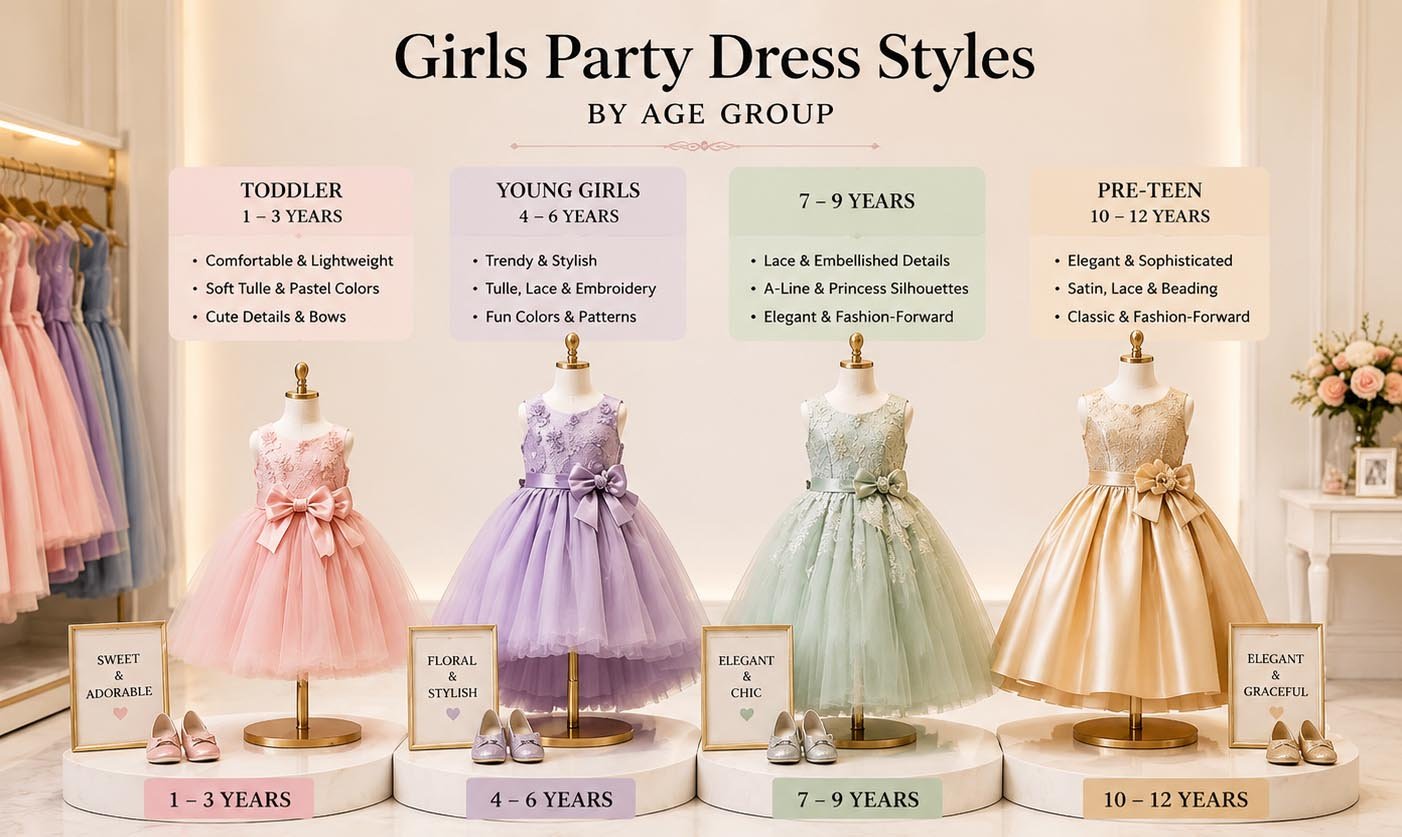
Tulle skews younger; satin skews older — the crossover ages are where most sales live.
| Age | Recommended fabric | Why |
|---|---|---|
| 1–2 years | Soft tulle (lined) | Gentle, breathable, no scratchy edges |
| 3–4 years | Lined tulle or satin-tulle combo | Volume without discomfort; easy dressing |
| 5–6 years | Both — depends on style | Princess tulle sells; satin for smarter looks |
| 7–10 years | Satin-led with tulle accents | Older girls prefer a more sophisticated silhouette |
| 11–14 years | Satin, chiffon, structured styles | Tutu volume reads “babyish” to pre-teens |
The takeaway: tulle skews younger, satin skews older — and the crossover ages (5–7) are where your range should offer both so every customer finds her silhouette.
5. Stocking and Freight: The Costs Nobody Quotes
Two costs hide behind fabric choice, and both hit wholesale buyers harder than retail:
Freight by Volume
Tulle dresses are bulky. A full tutu dress can take two to three times the box space of a flat-packed satin dress, and sea freight is charged by cubic meter. On a large order, that volume difference can erase the fabric price advantage. If freight dominates your margin, consider styles that mix satin bodices with moderate tulle skirts, or flat-pack options.
Returns and Care
Returns are the quieter cost. Satin dresses that wrinkle in transit generate “received wrinkled” complaints; tulle dresses that snag generate “damaged” claims. Neither is a defect — both are fabric behaviour. Mitigate with good packing (tissue, polybags, flat packing for satin), clear care instructions on labels, and photography that sets the right expectation about the fabric’s appearance.
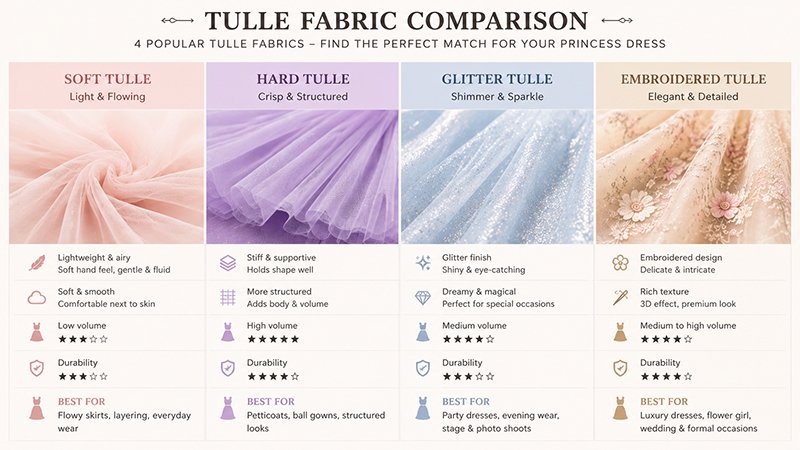
Sample approval is where the tulle grade matters: soft baby tulle vs hard bridal tulle.
Sampling is where fabric differences surface most clearly, so approve your satin and tulle samples differently:
- Satin samples: check the sheen under store lighting and daylight, confirm the weight (heavier satin drapes better), and test how it creases after folding. Verify the colour across panels — satin shows dye-lot variation more than most fabrics, especially in pastels.
- Tulle samples: count the skirt layers, check the netting is smooth with no snags, and confirm the skirt recovers its shape after being compressed (fold it, then shake it out). Test the lining against your child’s skin for scratchiness.
- Combination styles: inspect the waist seam where bodice meets skirt, and confirm the transition lies flat when worn, not bulging or twisting.
Keep one approved sample per fabric per style. When the bulk order arrives, compare against the sample rather than the photo — the sample is the truth.
How to Brief Your Supplier on Fabric Choice
Suppliers work best with clear, written fabric specifications. When you confirm an order, state: fabric name and composition, weight (grams per square meter if available), lining requirements, and layer count for tulle skirts. A one-line “tulle dress” order leaves room for interpretation; a detailed spec leaves none.
6. How to Choose: A Buyer’s Decision Framework
When a new style arrives and you must decide which fabric to order, run this sequence:
- What occasion does it serve? Formal ceremony → satin. Wedding/birthday princess → tulle. Both → consider a combination.
- What age is the target customer? Under 6 → tulle-friendly. 7+ → satin-led.
- What is the freight profile? Sea freight on bulky tulle hurts; prefer flat-packable styles at volume.
- What will the customer care about? Machine washability → tulle. Premium formality → satin.
- What photographs best? Social-first shoppers respond to volume (tulle); formal buyers respond to sheen (satin).
Most balanced ranges carry both fabrics deliberately — tulle for the younger, volume-driven segment; satin for the older, occasion-driven segment — and often combine them in single best-selling styles.
One more consideration: season. Lightweight satin and soft tulle both work year-round, but heavy satin suits cooler months, while light tulle and chiffon-led styles carry the summer catalogue. If you buy a full year in one order, split the fabric mix across seasons so your range does not feel dated by December.
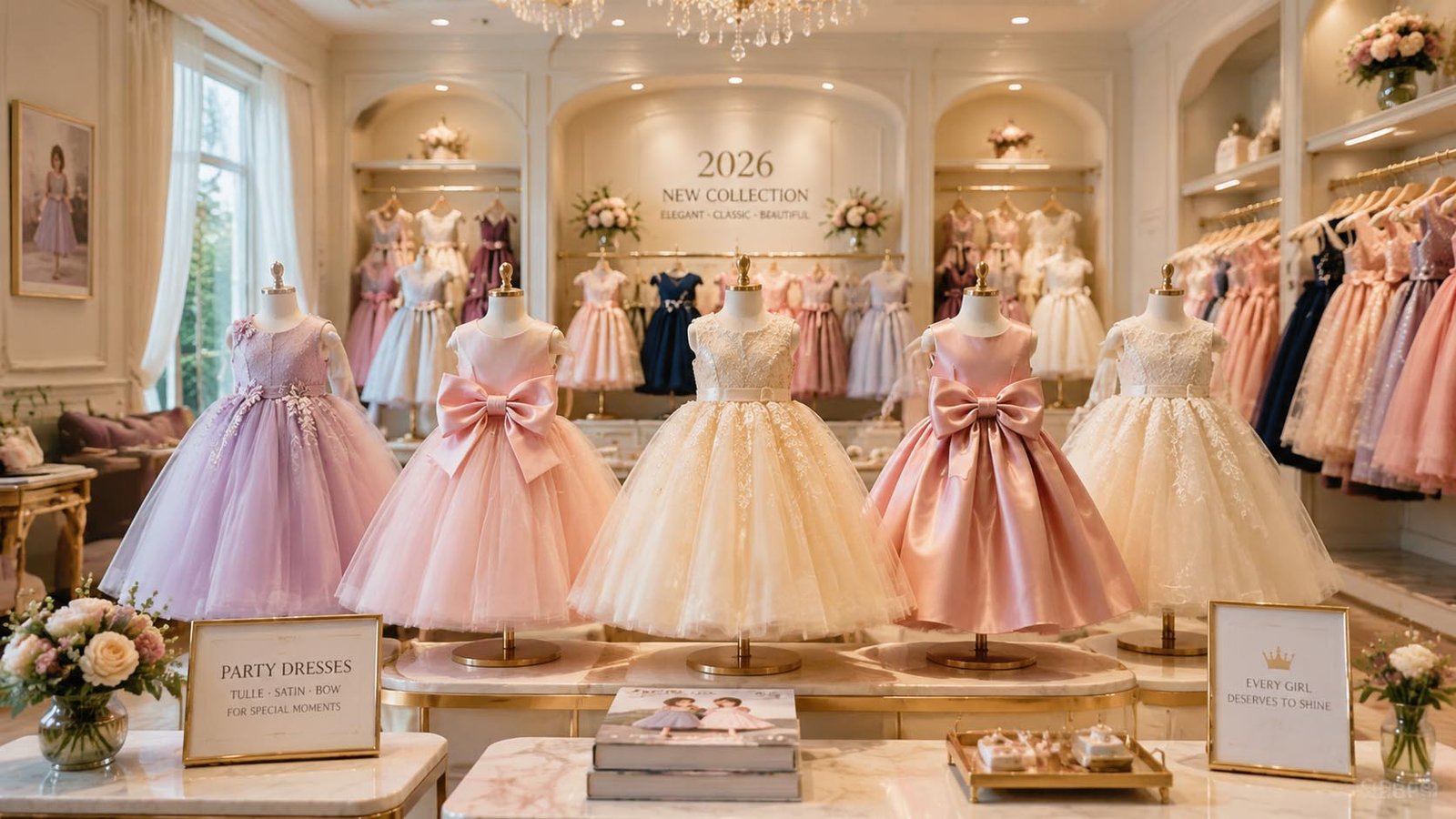
A balanced collection mixes fabrics so every customer finds her silhouette.
Can One Dress Use Both Fabrics?
Absolutely — and it is one of the strongest sellers in girls’ formalwear. A satin bodice with a tulle skirt combines the formal elegance of satin with the princess volume of tulle, and it photographs beautifully from both angles. When sampling, check the transition point (waist seam) is clean and the lining is comfortable.
How Many Layers of Tulle Make a Good Skirt?
Typically four to eight, depending on the tulle weight and the target fullness. Fewer layers = a lighter, flatter skirt; more layers = a fuller, more expensive, bulkier dress. Ask your supplier for the layer count on the spec sheet so you can compare styles accurately — “tulle skirt” alone tells you very little.
Is Polyester Satin “Cheap”?
Not necessarily. Polyester satin is standard in children’s wholesale because it is durable, colour-fast and affordable. Quality differences come from the weave, weight and finish — a heavier, well-finished polyester satin drapes and photographs far better than a flimsy one. Judge the fabric, not the fibre name.
Do Tulle Dresses Need a Lining?
Almost always. Tulle is transparent and can feel scratchy, so a comfortable dress has a soft lining (often cotton or a soft knit) under the bodice and sometimes under the skirt layers. Lining also protects children’s skin from the netting edges — a detail your customers will feel immediately.
Which Fabric Is More Expensive to Produce?
At the same quality level, tulle is usually cheaper per meter, but a full tulle dress needs many layers, so the finished garment cost can be comparable to satin. Satin’s cost sits in the fabric itself and the finishing care it demands in sewing. When comparing quotes, ask for the same style in both fabrics — the price difference tells you which one fits your margin better for that specific design.
Can I Get One Style in Both Fabrics?
Yes, and it is a smart merchandising move. Offering the same silhouette in satin and tulle versions gives customers a choice at two price points — satin as the sleeker, often lower-volume option and tulle as the fuller premium look. It also lets you test which fabric sells in your market with a single style development instead of two separate designs.
How Should I Describe the Fabric on My Product Page?
Be specific but shopper-friendly. Instead of “tulle dress”, write “layered tulle skirt with satin bodice, soft lining” — that sets the volume, the combination and the comfort expectation in one line. Accurate descriptions reduce returns and increase conversion, because the customer gets exactly what she pictured.
Compare the fabrics on real samples
Request a swatch pack and sample dresses in both fabrics with MOQ and pricing — we reply within 6 hours. WhatsApp us or email luxudress@gmail.com.
Leave a Reply