
Birthday dresses are a boutique’s steady, year-round seller — unlike seasonal spikes, a child’s birthday happens every single day of the year. For a wholesale girls’ dress buyer, this category is one of the most reliable ways to keep cash flowing. This guide covers what to look for when you buy wholesale birthday party dresses, from styles and fabrics to sizing and stock planning.
Browse the Collection
See how these fabrics, silhouettes and size ranges look on finished styles — filter by occasion, season and size range.
Birthday dresses sit in a sweet spot: they are special enough to justify a premium price, but purchased far more often than wedding or formal gowns. A parent buys a birthday dress at least once a year per child, which creates repeat demand that a boutique can plan around. The category rewards buyers who understand its rhythms — the styles, fabrics and sizing that actually sell.
1. Why Birthday Dresses Are a Core Category
Three characteristics make birthday dresses a foundation item for boutiques:
- Constant demand — birthdays are not seasonal, so the category sells all year.
- Emotional purchase — parents want their child to feel special on the day, so they are willing to spend.
- Repeat buyers — the same customer returns each year as the child grows, and often buys for siblings and party guests too.
This combination — steady volume, premium pricing and loyalty — is rare in children’s wear, which is why many successful boutiques treat birthday dresses as a pillar rather than an add-on.
2. The Styles That Sell
Birthday dresses span a wide range, but a few styles consistently outperform. The table below summarises the core categories and what each is good for.
| Style | Fabric / detail | Appeal |
|---|---|---|
| Tulle party dress | Layered tulle, satin lining | Classic, twirly, photo-ready |
| Bow-back dress | Satin or cotton, statement bow | Charming, versatile |
| Sequin dress | Sparkle embellishment | High-impact, celebration feel |
| Smocked dress | Hand-smocked bodice | Traditional, premium feel |
| Princess / puffy sleeve | Volume sleeves, full skirt | Fairytale appeal |
Request Fabric Swatches
Feel the fabric before you order. Tell us which styles you are considering and we will send swatches with the weight and composition noted.
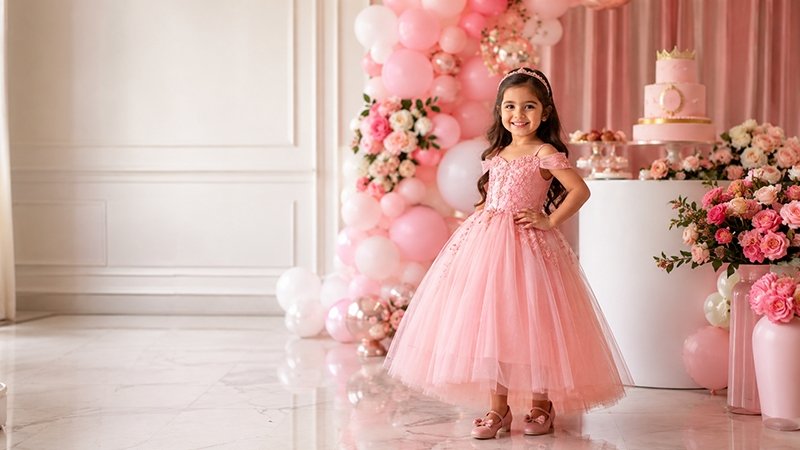
Tulle, bow-back and sequin styles are the workhorses of the birthday category — stock a mix to cover different tastes.
The winning strategy is to stock a mix across these styles, so a customer coming in for a birthday always finds something that fits the child’s personality and the party’s theme. No single style captures the whole market.
Three detail trends are driving the category right now: sequin embellishment for sparkle, multi-layer tulle for a full, twirly skirt, and 3D floral appliqué for a premium, handcrafted feel. These are the “wow” elements that make a birthday dress feel special enough to pay for — stock them and link them prominently to your party dress collection.
3. Fabric and Comfort Matter More Than You Think
A birthday dress is worn for hours — through the party, the cake, the games and the photos. A dress that looks beautiful but is scratchy or stiff will generate complaints even if it photographs well. Two rules keep returns low:
- Always check the lining. The outer tulle may be showy, but it is the lining that touches the child’s skin. A smooth cotton or satin lining is non-negotiable for comfort.
- Prioritise breathability. A child running around a party needs a fabric that does not overheat. Lightweight, breathable materials win here.
For more on choosing fabrics deliberately, our guide to fabric GSM explains how weight affects comfort and durability, and our fabric swatch guide shows you how to verify quality in your own hands.
4. Sizing That Reduces Returns
Sizing is the biggest source of returns in the birthday category, because parents often buy without the child trying the dress on. Reduce the risk by:
- Stocking a full size range — from toddler through pre-teen, so no customer is turned away.
- Providing clear size guidance — length and age references, plus a note when a style runs small or large.
- Offering a simple exchange path — so a wrong size becomes a swap, not a lost customer.
Size range and guidance are part of the broader kids dress size guide we have published for buyers.
5. Colour and Trend Planning
Birthday dress colours shift with taste and the season, but a few principles hold:
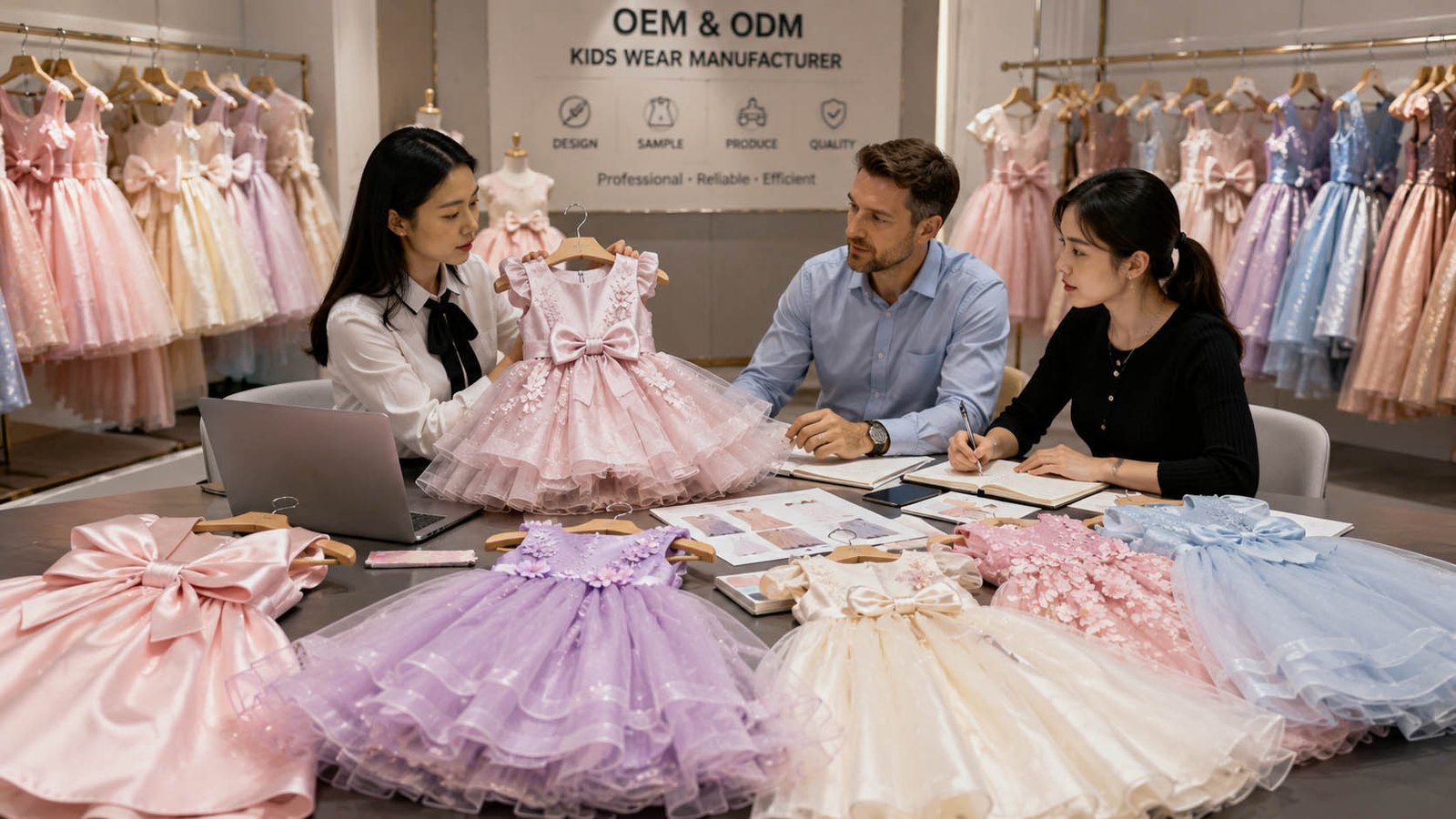
Trends vary by region and season — plan a palette that covers the tastes of your market.
- Pastels and blush tones are perennial favourites for birthdays.
- Bold and sparkle sell well for themed and milestone parties.
- Stock seasonally — lighter tones in spring/summer, richer tones in autumn/winter.
For a wider view of what is trending, see our roundup of dress styles trending in boutiques. Trend awareness helps you buy the right mix without over-committing to a single look.
6. Buying and Stocking Strategy
Finally, a few buying principles specific to birthday dresses:
- Buy a broad mix, not deep on one style — variety is what makes the category work.
- Keep the MOQ sensible — many buyers start with ready stock to test styles before committing to custom volume. See our MOQ strategy guide.
- Replenish best-sellers fast — birthday demand is steady, so a sold-out winner should be reordered promptly.
- Plan inventory by size — the size ratios that sell are part of inventory planning for kids dress retailers.
Birthday dresses reward a buyer who treats the category as a system: a broad, comfortable, well-sized range, replenished against actual sales. Get that right and the category becomes a dependable, high-margin pillar of your store.
Frequently Asked Questions
Why are birthday dresses a good category for boutiques?
Birthdays happen year-round, so demand is steady rather than seasonal. It is an emotional purchase, so parents are willing to spend, and the same customers return each year as children grow — creating repeat demand and loyalty.
What styles of birthday dresses sell best?
Tulle party dresses, bow-back dresses, sequin styles, smocked dresses and princess styles with puffy sleeves all perform well. The key is to stock a mix, so every customer finds something that fits the child’s personality and the party theme. These styles are all in our party dress collection.
Why is the lining important in a birthday dress?
The lining is what touches the child’s skin, so a scratchy or stiff lining will cause complaints even if the dress looks great. A smooth cotton or satin lining keeps the dress comfortable through hours of wear.
How do I reduce size-related returns on birthday dresses?
Stock a full size range, provide clear size guidance with length and age references, flag styles that run small or large, and offer a simple exchange path so a wrong size becomes a swap rather than a lost customer.
Should I start with ready stock or custom birthday dresses?
Most buyers start with ready stock to test which styles and sizes sell, then move to custom or bulk production once a style proves itself. This limits inventory risk while you learn your market.
How should I plan birthday dress inventory?
Buy a broad mix rather than going deep on one style, keep MOQs sensible, replenish best-sellers promptly, and plan size ratios against actual sales data so you are not stuck with slow-moving sizes.
Build your birthday range
Tell us the styles and quantities you need, and we’ll put together a birthday dress assortment that fits your market and budget.
Leave a Reply