
A dress can be the right pastel, the right fabric and the right price and still lose the season. Easter does not wait for a late container. The date moves every year, the local selling window is only a few weekends wide, and the last useful shopper is not browsing — she needs a dress in the right size before Sunday morning. That is why the first planning document for wholesale easter dresses for girls is a calendar, not a look book.
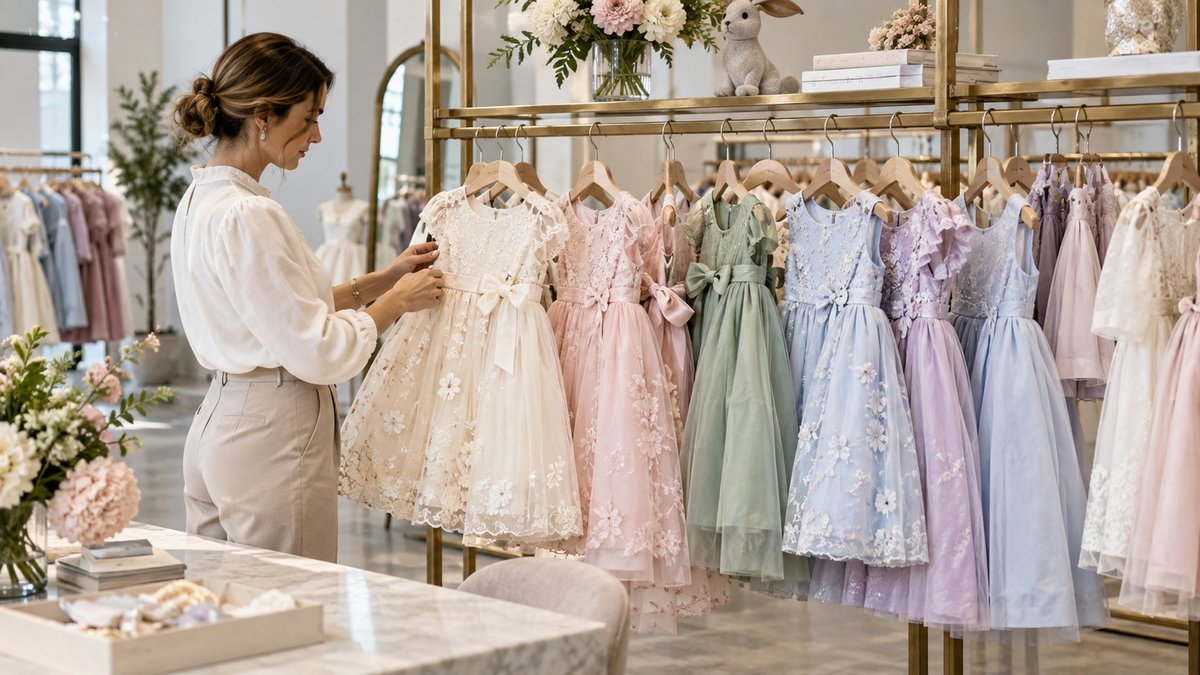
This page deals only with the Easter buying programme: the receipt window, the assortment split, the colour and fabric calls that have to be frozen on a date, and the reorder and markdown triggers. Season-level planning across the whole spring sits with the Spring/Summer 2027 girls dress buying guide, so nothing here repeats it. What follows is a backward schedule: you fix the selling weekend first, and every other decision gets a date attached to it.
The window that will not move
Easter is a moving holiday, so last season’s calendar will not hold and neither will last season’s receipt dates. Two shoppers arrive in that window and they behave differently. The planned shopper buys three to five weeks ahead for a church service, a family meal or a booked photograph, and she will wait for the right colour. The reactive shopper buys in the final week and cares only about availability in the right size. A programme built for one of them loses the other.
The commercial consequence is simple. A garment that lands after the first selling weekend is competing with markdowns from other retailers while your own stock is still at full price, and the photography that should have sold it has already been shot. A programme can fail on a late photograph as easily as on a late shipment. Buyers who treat timing as a logistics detail at the end of the process usually discover the problem when the goods are already on the water and nothing can be changed.
So before any style is chosen, write down two dates: the local Easter date and the first weekend the store genuinely sells spring occasion wear. Everything else in this article is scheduled from those two.
Counting back from the first selling weekend
Work backwards from that first selling weekend and the sequence becomes visible. Each step below is a checkpoint with an owner, and each one has a date that is decided by the step after it, not by convenience.
- Last safe reorder date. Fix this first, because it is the least flexible point in the whole calendar. Publish it internally and note the action if it is missed.
- First in-store feature. The weekend the collection goes on the rail at full price, with the palette merchandised together.
- Online launch. Product pages live with fabric, lining, length and size evidence named — not “Easter” as the only argument.
- Photography day. The date the samples must be perfect, styled and complete. A late photograph delays the launch behind it.
- Inbound delivery target. Receiving day, which must leave enough room for the condition check and steam-out before anything is photographed.
- Production booking or stock reservation. The point where the colour is booked into a run or the stock is held. This is the last reversible step in most routes.
- Sample and colour confirmation. The approved sample and the physical shade reference, signed before the run is committed.
- Order placement. The date the purchase order leaves, which is simply the production or reservation date minus the supplier’s stated lead time.
Two refinements sit on top of that spine. If the store sells into markets with different Easter dates, plan separate receipt windows rather than splitting one shipment. And keep a smaller, faster option alive for the final stretch, because the reactive shopper is real demand and not a failure of planning.
The Easter assortment plan in one table
The plan below is a planning tool, not a fixed purchase ratio. A new boutique may want breadth and learning; an established specialist may buy deeper into a proven programme. What matters is that every line has a stated job and a decision date.
| Style role | Practical option | What it is for | Its date-sensitive job |
|---|---|---|---|
| Core occasion | Ivory, blush, blue or sage A-line | Broad Easter, church and family-event use | Must be on the rail for the first selling weekend |
| Spring day dress | Lightweight cotton blend or soft woven | Warm-market and lower-formality demand | Carries the sale when the weather turns mild |
| Photograph-led style | Controlled floral, bow or textured detail | Window and social content | Needs the photography day, not just the delivery |
| Older-girl option | Clean satin or refined midi shape | Pre-teen customer who rejects princess volume | Sell it beside the core, not after it |
| Test accent | One brighter or less-proven colour | Shallow exposure with a decision date | Review date set before the order is placed |

Build the assortment around the occasions the same girl can actually wear, not around one costume look. A refined church dress with sleeves or a higher neck and a defined waist, a lighter daytime dress for brunch, a restaurant or an egg hunt, and one photograph-led style where volume and detail are allowed to be the point — that trio covers most of the holiday weekend. Merchandise them as outfits, because a plain cardigan, a hair bow or flat shoes carries the same dress across Sunday and into the following week. Sibling coordination is the other reason to keep adjacent sizes in one colour rather than depth in a single size: when two girls are photographed together, the pair has to look like a pair.
Put the occasion, the age band and the decision date against every style on the line sheet, and mark which shopper each style serves. A collection that only reads as Easter with props is a costume; a spring occasion dress sells before, during and after the holiday.
Freeze the pastel on production cloth
Buy a palette, not a rainbow. Fix a small core — ivory, blush, powder blue and sage are the dependable Easter choices — and give each colour a written job: one or two shades as the volume core, a mid-tone for sibling and small-group coordination, and one brighter accent bought shallow with a review date attached.
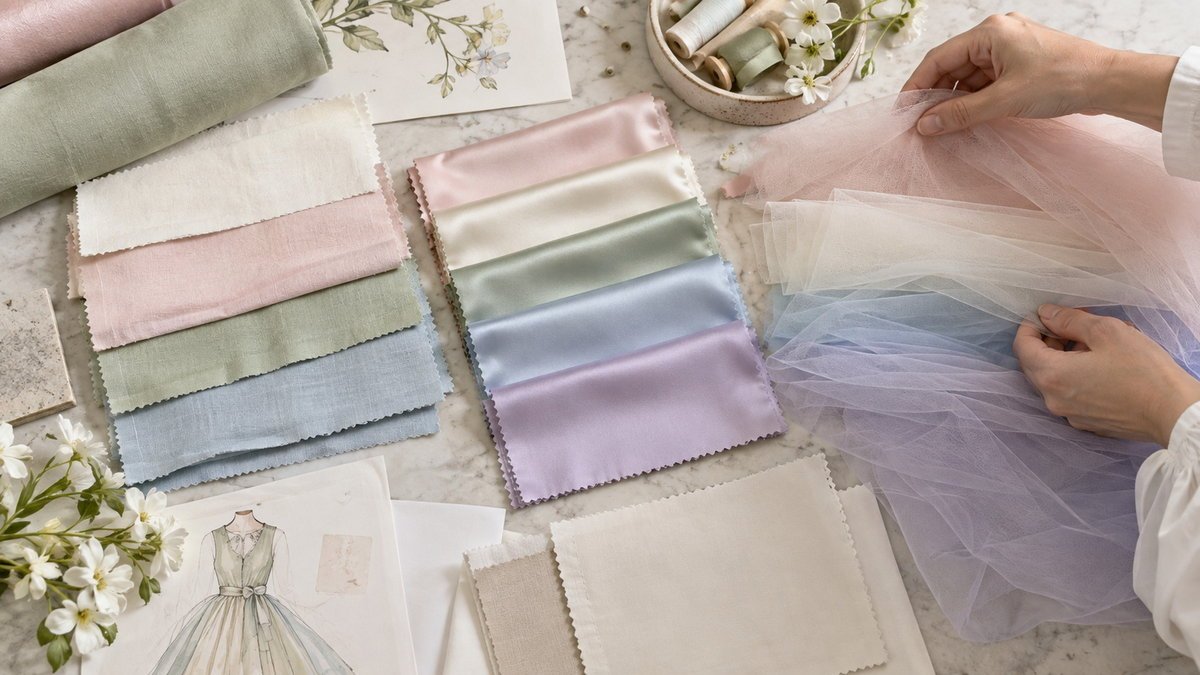
A colour name is not a specification. The same powder blue reads differently on cotton blend, satin and lining, and lavender can shift grey under shop lighting. Approve every shade on the intended production fabric, not on a screen or a loose swatch, and then view the palette together on one rail so the collection sells as a family of related colours rather than a set of unrelated samples.
Opacity is the first test on any pale shade, and it is a fabric-and-lining decision made at sample stage. Ask for the lining to cover a defined area — bodice, seat and hem — and check it in daylight rather than against a studio wall. An overlay that feels crisp on a hanger can stiffen when a toddler sits, and a soft skirt can photograph flat. Confirm both on a sample, and decide the fabric story before the run rather than after the first complaint. Where a style has to work under a cardigan in a cooler market, check the sleeve at the armhole for bunching; where it has to stay comfortable at a garden service, keep the weave light.
Sample, shade and stock confirmation before the run is booked
This checkpoint is where the order becomes expensive to change. Name one sample and one colour reference as the master, and record who holds the colour reference and the dye-lot record, because a reorder four weeks later will be judged against them. Decide in the same sitting who approves any change to lining, trim or care information after sign-off, and whether the quoted quantity is stock on hand, stock reserved after payment, or a slot booked into production.
Two construction calls belong on this date as well, and they should not be stretched across the size range. Toddler dresses are bought by height and have to survive a seated child, so specify soft elastic or a comfortable waistband, a closure a parent can manage quickly, no long trailing ties, and a fabric that tolerates washing and the occasional spill. Older girls choose the dress themselves and refuse anything that reads babyish, so keep the colour and finish consistent but change the silhouette: a defined waist instead of a full gathered skirt, a longer hem, a cleaner sleeve, and detail at the neckline or back rather than all-over trim. One shape stretched across the whole range is the most common Easter assortment mistake, and it is cheapest to correct at sample stage.
Launch, feature week and the last safe reorder
Easter compresses demand into a few weeks, which means the most useful information arrives almost immediately: which colours and sizes move on the first selling weekend and which sit still. The opening order should not consume the whole budget for exactly that reason. Hold a reserve that can be released quickly for a shallow replenishment of the proven core, and write the trigger before the season starts rather than deciding in the moment.
A workable trigger has three parts: a sell-through level by size and colour, the last date a reorder can still arrive in time, and the date a slow colour moves to markdown. If the winning style cannot be replenished inside the window, the reserve is better spent on a fast-available alternative than on a deep commitment that arrives after the holiday — this is the point where ready-stock girls dresses wholesale becomes the more useful route. Cash held to the end of the season is a decision, not a failure of nerve.
For the celebration side of the same weekend — family lunches, booked photography and the party a relative has already organised — the styling that sells is the wholesale party dresses for girls range, not extra Easter costume. Use it to extend the same colour story into a second occasion rather than introducing a new palette late in the window.
Where quality control sits on the calendar
In a season this short, inspection should be weighted toward the failures that cost the most: pale colours that turn out too sheer, pastel shades that differ between cotton, satin and lining, and trims that flatten in packing. Those three risks are the ones that generate returns and markdowns after the selling window has closed.

Receiving is part of the same schedule. Open representative cartons while the shipment reference is still available, compare pastel shades against the approved reference, and check lining coverage and hem length per colour and size. Flag a late-arriving style as late in the sales record, or its first week will be compared against a style that already had three weeks of exposure. Hold the first performance review before the peak weekend, not after it.
Trim deserves a specification rather than a hope. Baskets, floral crowns, bonnets and hair bows sell the Easter story in a window or a social image, but they should not be built into the garment as a condition of purchase. Where trim genuinely belongs to the product, write it as a performance requirement: a bow must recover its shape after packing, an appliqué edge must not lift after washing, and a bead must stay attached under normal handling by a child. Ask how the trim is attached, then check a laundered sample. Keep the inspection plan proportionate — a showroom check cannot prove every safety, composition or attachment requirement, so use qualified laboratories or compliance professionals where the market requires them.
Ready stock when the calendar is already short
Lead time decides the route more than price does. Ready stock suits a late entry into Easter, an unproven colour, or a store that needs stock within days; confirm availability, measurements and the colour against the physical reference before committing. ODM adaptation suits a boutique with a proven spring base that wants its own palette, length or cleaner trim, because the existing fit and grading carry most of the risk.

Custom OEM buys control of colour, label and packaging, but it needs an approved sample inside the calendar and a booked production slot, which is why it has to be decided at the sample checkpoint and not at the launch. If the programme is going down that route, the fit and construction work belongs with the custom girls dresses OEM and ODM process, while the Easter calendar in this article still governs every date.
Taking the markdown decision on time
Assign every seasonal style an exit route before the order is placed. A versatile pastel A-line may continue into spring weddings, birthdays and family photographs; a highly literal holiday style may need an earlier markdown date, and pretending otherwise only delays the cash. Put the expected post-Easter use into the product brief and the photography plan, then hold the team to it.
Review results by receipt and selling week, separating full-price sales before Easter, event-week sales and post-event sales. Note whether the remaining inventory is commercially reusable or only technically in stock — a dress in the warehouse is not the same as a dress the customer still wants. Record local school calendars, church events, climate and competitor promotion as market context, but treat them as context rather than as universal demand data.
The exit route that keeps the cash working
Keep a small group of versatile spring occasion dresses that can keep selling after Easter, and photograph the collection in groups that explain the choices: lightweight daytime, refined church, sibling coordination and older-girl polish. A seasonal bet without an exit route is a bet on one weekend.
The styles that continued into later spring occasions are stronger candidates for the next seasonal core than products whose demand disappeared immediately after the event. That is the handover into wholesale summer girls dresses territory, and the reserve you held should cover the gap: freight, duty, returns, markdown and one replenishment rather than a second full buy.
Send the Easter brief
An Easter brief is short but it must contain the calendar: the Easter date and first selling weekend, the age bands, the church, daytime and photograph split, the palette, lining requirements, size architecture, quantity per colour, delivery window and destination. Replace adjectives with tests, because a brief is only as useful as it is checkable. “Spring pastel” is not a colour; “powder blue on cotton blend and lining, matched to the approved swatch” is. “Soft tulle” is not a hand feel; “an overlay that stays soft when a child sits and recovers after packing” is.
Send the target palette, size range and delivery date and we will come back with either a current ready-stock Easter shortlist for fast testing or a custom OEM feasibility review against your calendar.
Leave a Reply