If you sell children’s dresses in the United States, drawstring safety is not optional — it is a legal requirement enforced by the Consumer Product Safety Commission (CPSC). Dresses with drawstrings at the neck or chest in small sizes are subject to federal guidance because of entanglement and strangulation risks, and non-compliance can mean recalls, penalties and reputational damage. This guide explains the rules in plain language and gives you a practical compliance checklist for importing and selling girls’ dresses in the US market.
See How We Handle Quality
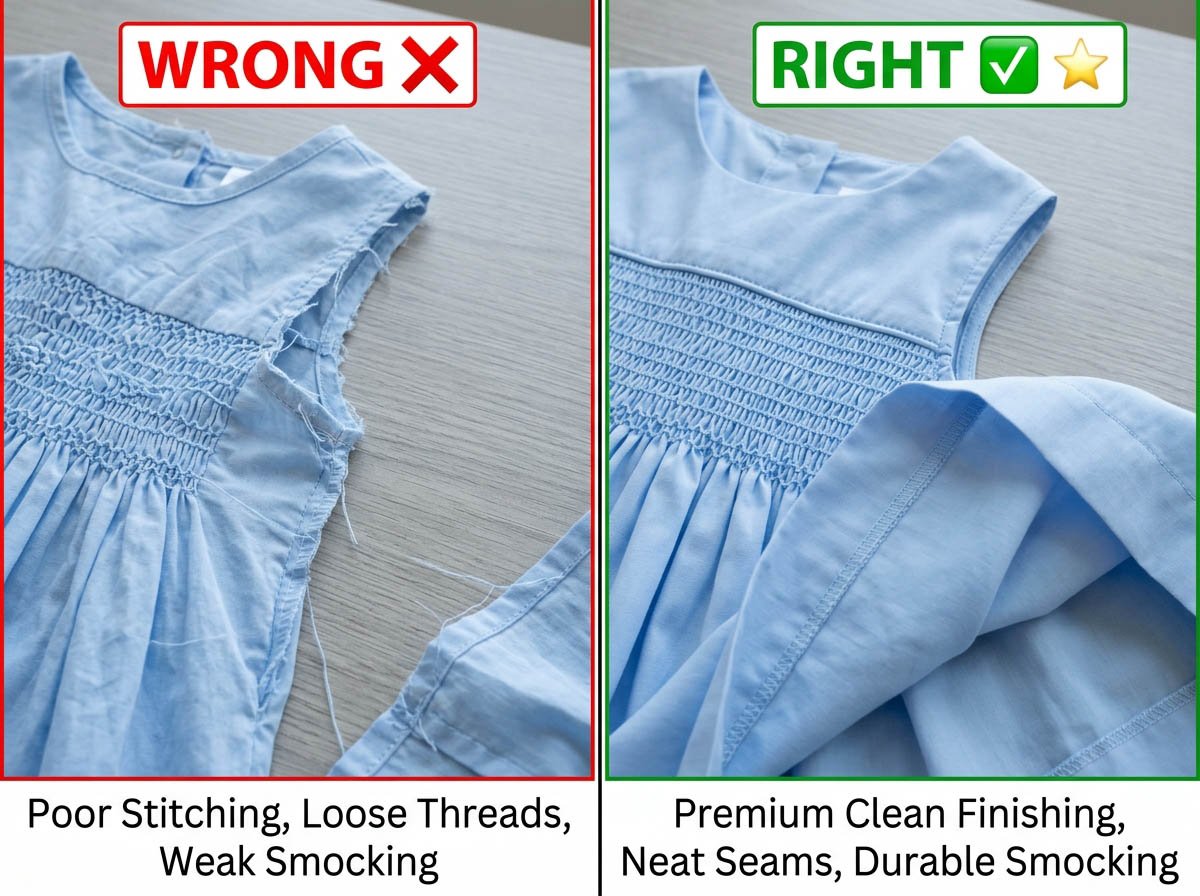
Inspection checkpoints, defect thresholds and pack-out standards are documented before production starts — so expectations are written down, not assumed.
Children’s clothing is among the most safety-regulated product categories in the United States, and drawstrings are one of the oldest known hazards. The CPSC issued guidance on drawstrings in children’s upper outerwear as early as the 1990s, after a string of accidents. While the guidance is technically a “guideline”, it is treated as a mandatory standard for children’s upper outerwear in practice, and retailers, importers and platforms all enforce it. Understanding what applies to girls’ dresses — and what does not — protects your business from the most expensive outcome in importing: a recall.
1. What the CPSC Drawstring Guidance Says
The CPSC guidance focuses on drawstrings in children’s upper outerwear — jackets, sweatshirts, and similar garments sized for children. The two key provisions:
- Neck and hood drawstrings: no drawstrings are permitted at the neck or hood area in sizes 2T through 12. These pose the highest strangulation risk because they can catch on playground equipment, cribs, car doors and other objects.
- Waist and bottom drawstrings: drawstrings at the waist or bottom must be limited in length, with no free ends beyond a short length when the garment is fully expanded, and no toggles or knots that could catch. The guidance calls for the drawstring to be flat (not elasticized) and for extra length to be eliminated.
For girls’ dresses, the practical reading is: avoid functional neck drawstrings on smaller sizes entirely, and keep any waist drawstrings short, flat, and free of protruding toggles. This is the standard most US retailers and marketplaces apply when reviewing children’s clothing listings.
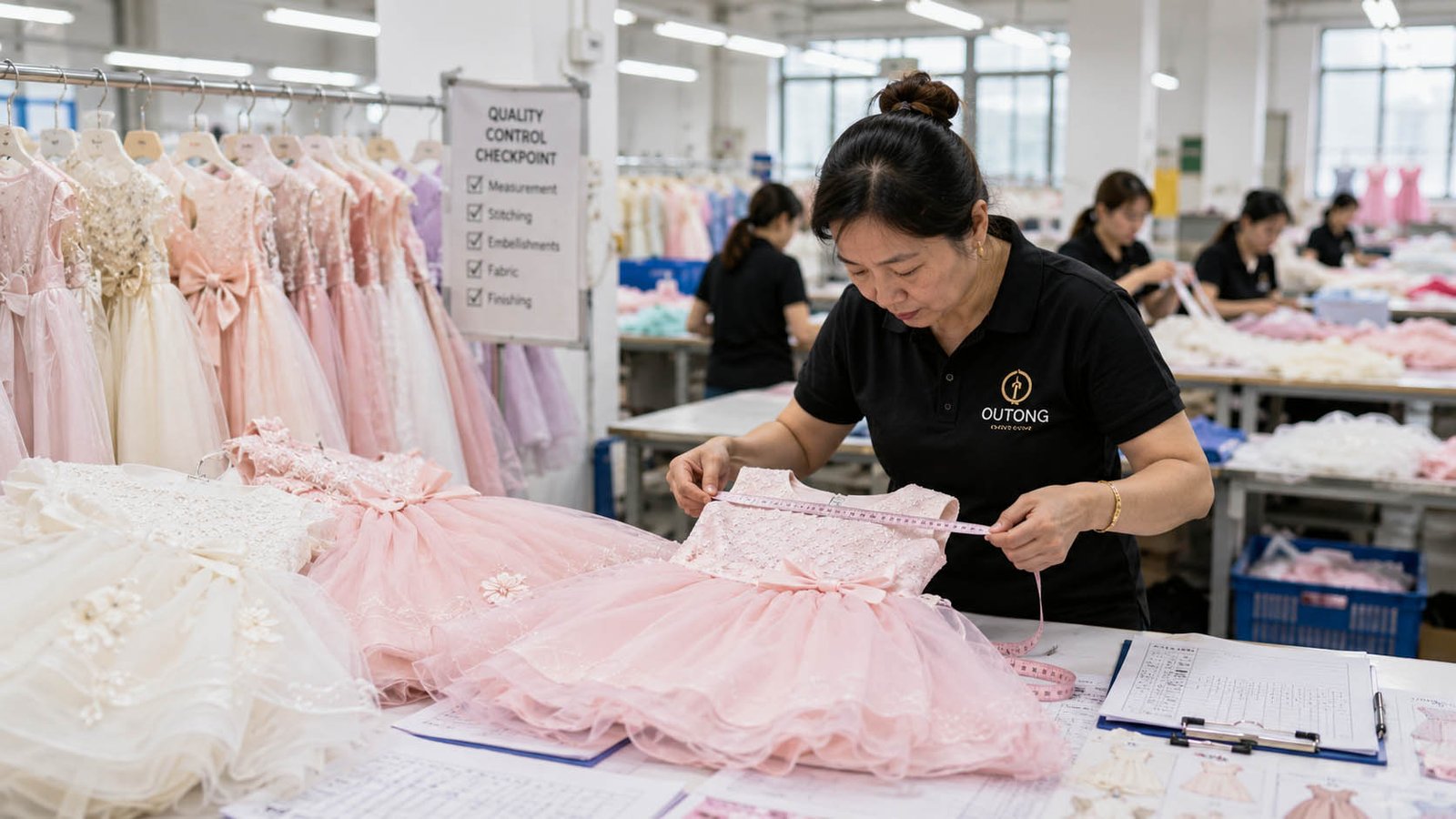
Tie-back dresses on small sizes are the most common compliance hotspot to inspect.
Dresses are a slightly special case because of their construction. Many girls’ dresses are pull-over styles with no drawstring at all — those are unaffected. Where drawstrings appear in dresses:
- Neckline drawstrings (decorative or functional): treated like neck drawstrings — not permitted in small sizes under the guidance. A “drawstring” at the neck, even if decorative, should be removed or replaced with a fixed, non-extendable trim.
- Waist sash or tie: a long waist sash is technically not a drawstring in the jacket sense, but long free-hanging ties still present entanglement risk. Best practice is short, fixed ties or an elastic waist with a short decorative tie that cannot catch.
- Back bow / shoulder straps with long tails: long ribbon tails and straps can also catch; keep them short or use breakaway closures on younger sizes.
When in doubt, apply the “snag test”: if any cord, string or tail can form a loop or hang long enough to catch on a fixed object, redesign it before production.
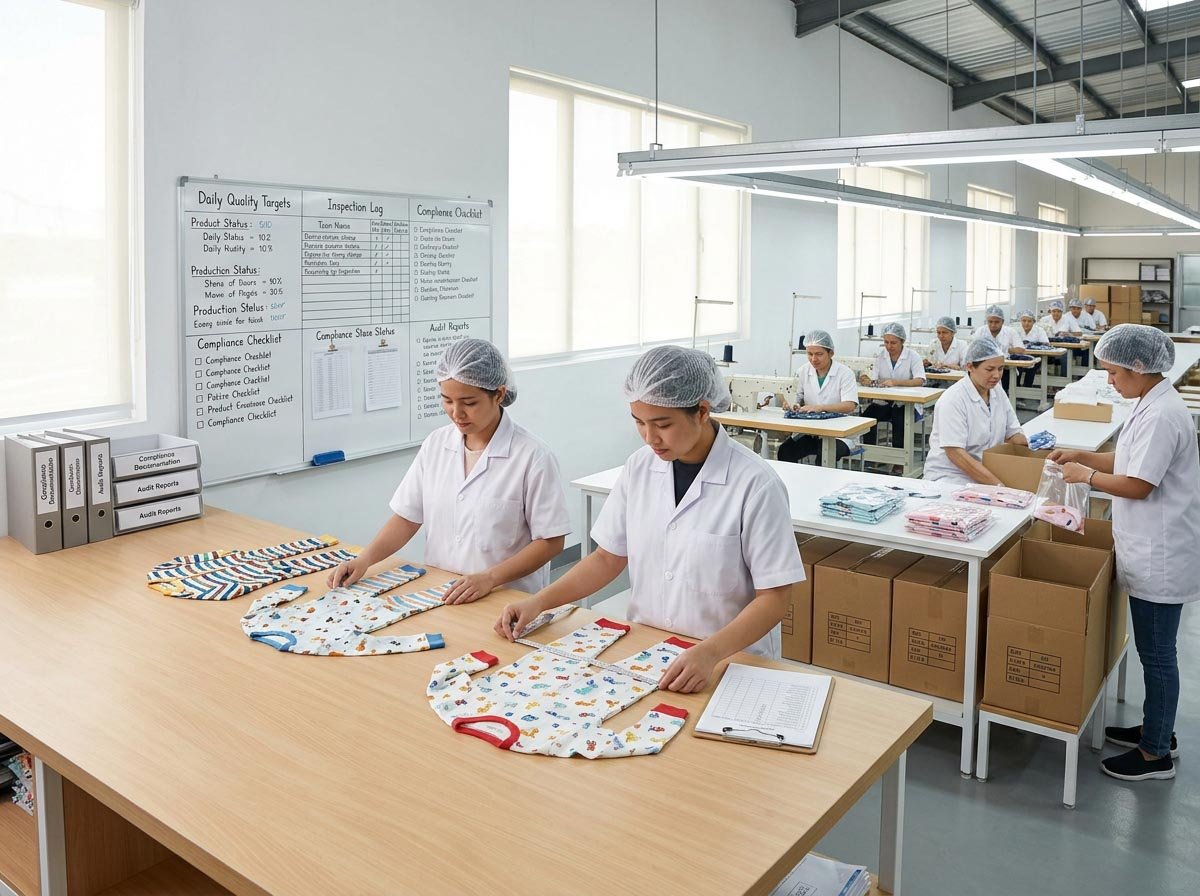
Drawstrings are one part of the children clothing compliance picture — small parts, lead and flammability sit beside them.
Drawstrings are the focus of this guide, but they are only part of the compliance landscape for children’s dresses in the US. A responsible importer builds the whole picture into the product spec:
| Requirement | What it covers | Practical action |
|---|---|---|
| Small parts | Buttons, snaps, sequins, beads, embellishments on clothing for young children must be securely attached to resist choking hazards | Reinforce trims; use sewn (not glued) attachments; avoid loose decorative items on sizes for young children |
| Lead content | Children’s products must comply with lead-content limits (surface coatings and accessible parts) | Use tested trims/finishes; ask suppliers for material compliance |
| Phthalates | Plastic components and some coatings restricted in children’s products | Confirm plastic trims, zippers and coatings are compliant |
| Flammability | Children’s sleepwear has specific flammability standards; other garments must meet general fabric flammability requirements | Confirm fabric compliance for your product type |
| Labelling | Fibre content and care labelling required at point of sale | Specify correct labels in English for the US market |
| Testing and documentation | Children’s products generally require a Children’s Product Certificate (CPC) and testing by a CPSC-accepted lab | Work with suppliers who provide test reports and support CPC issuance |
Request an Inspection Report
Ask for the inspection report and defect breakdown from a recent order of the styles you are considering.
Note: the details above describe the US framework at a general level. Requirements change, and your specific product may have additional obligations — confirm with a qualified compliance professional or your customs broker before shipping. The point of this checklist is to make you ask the right questions early, not to replace professional advice.
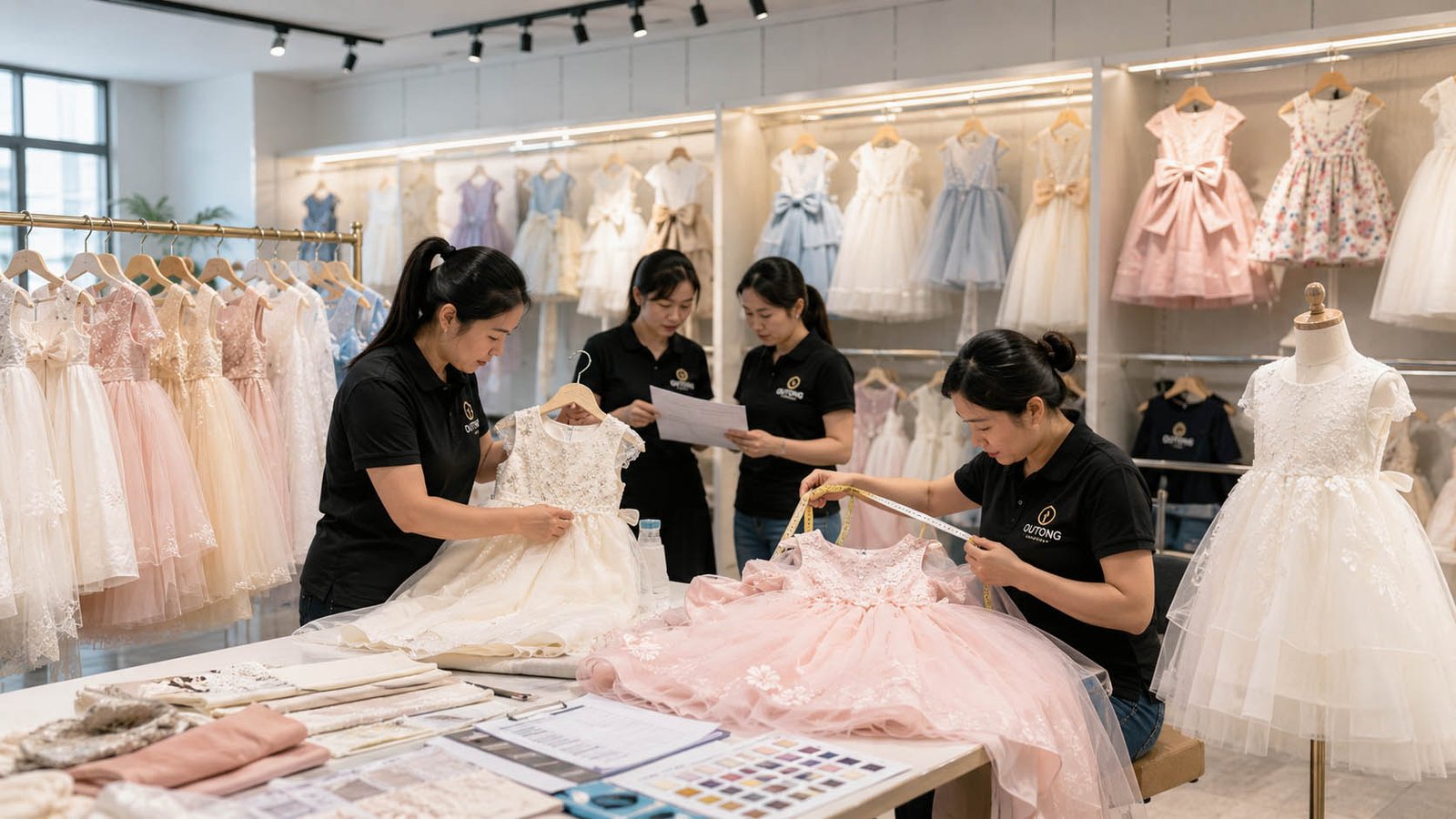
Run the compliance checklist on every style before placing the order.
Run this checklist on every girls’ dress style before you place the order:
- ✅ No neck or hood drawstrings on sizes up to 12 (children’s upper outerwear guidance)
- ✅ Waist/bottom drawstrings short, flat, no free-hanging toggles or knots
- ✅ Decorative ties, bows and sashes are short, fixed, and cannot form catch loops
- ✅ All embellishments securely attached — no easily detachable small parts on young-child sizes
- ✅ Trims, zippers and coatings chosen for lead and phthalate compliance
- ✅ Fabric meets flammability requirements for the product type
- ✅ Fibre content and care labels correct, in English, properly placed
- ✅ Test reports and Children’s Product Certificate documentation available per shipment
- ✅ Supplier confirms safety compliance in writing per style
Print this list and attach it to your purchase order. A supplier who sees you check these points takes the requirements seriously.
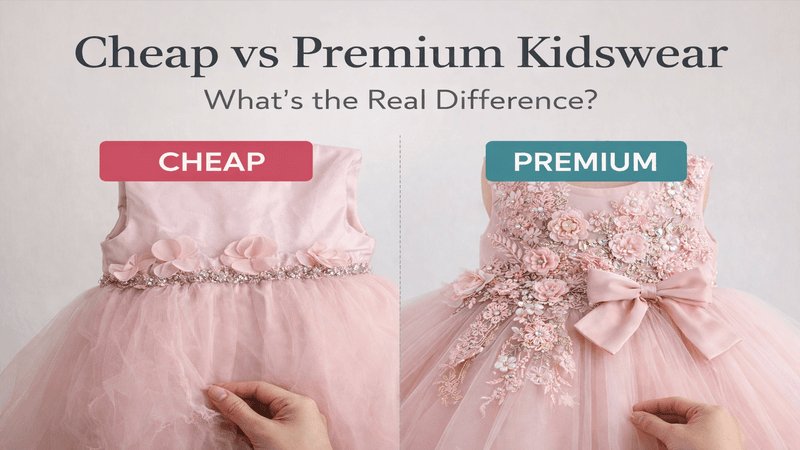
Quality and safety are not the same — but cheap construction usually means both are at risk.
Compliance starts at the design stage, not at customs. The factory cannot retrofit safety into a finished design, so brief it in the tech pack and confirm it at sampling:
- Put safety requirements in the spec: state “no neck drawstrings”, “short fixed ties only”, “reinforced trims” directly in the tech pack or order notes.
- Ask for documentation per style: request test reports and compliance documents with the sample or before bulk shipment, not after.
- Check the physical sample: inspect the sample for drawstrings, long ties, loose trims and toggles with the checklist above — this is the last free chance to fix issues.
- Confirm before shipment: require written confirmation that the bulk order matches the approved sample on all safety points, with supporting photos where relevant.
Suppliers experienced in US children’s wear will respond to these requirements as routine; those who are not will push back — which is itself a signal about their market experience.
6. What Happens If You Get It Wrong
The cost of non-compliance is not theoretical. Consequences include:
- Recalls: a finding of non-compliance can trigger a recall, requiring you to pull product from shelves and notify consumers.
- Penalties and legal exposure: civil penalties can apply to firms that fail to report or that continue selling non-compliant product.
- Customs holds: non-compliant shipments can be detained or destroyed at entry.
- Marketplace delisting: platforms increasingly enforce children’s safety standards and can remove listings or suspend sellers.
- Reputational damage: a safety incident linked to your brand is the hardest cost to quantify and the hardest to recover from.
None of these outcomes is worth the small design change that would have prevented it. Building compliance into the spec costs nothing; retrofitting it after a shipment costs everything.
7. Frequently Asked Questions About CPSC Drawstring Rules
Do the Drawstring Rules Apply to Dresses or Only Jackets?
The CPSC guidance specifically addresses children’s upper outerwear such as jackets and sweatshirts. For dresses, the safe and practical approach is to follow the same principles: no neck drawstrings on small sizes, short waist ties only, no long free-hanging cords. Retailers and marketplaces apply these principles broadly to children’s clothing, so compliance-minded buyers treat the guidance as the floor, not the ceiling.
Are Elastic Waistbands with a Short Decorative Bow Allowed?
Generally yes — an elastic waistband with a short, fixed decorative bow does not present the same risk as a free drawstring with long ends. The key is that nothing hangs long enough or forms a loop that can catch. If the “bow” has long ribbon tails, shorten them or sew them flat.
What About Embellishments Like Sequins and Pearls?
Sequins, pearls, beads and rhinestones fall under small-parts rules for young children. They must be securely attached (sewn, not glued, for the main load) and not easily detachable. For the smallest sizes, avoid small decorative parts entirely or keep them on bodice areas away from the mouth. Wash-test a sample to confirm trims survive laundering without shedding.
I Sell in the EU Too — Do the Same Rules Apply?
The EU has its own framework — general product safety and specific requirements for small parts and drawstrings on children’s clothing, enforced through market surveillance and the general product safety regime. The principles overlap (no neck cords on young children, secure small parts), but the paperwork and standards differ. Plan for each market you sell in and keep separate documentation per destination.
Who Is Responsible — Me or the Factory?
Legally, the importer of record is responsible for products entering the market. The factory may provide materials and test reports, but the final responsibility — and the risk — sits with you. That is why the checklist, the written spec, and the documentation request are part of your buying process, not an afterthought.
How Do I Ask a Factory for Compliance Documentation Without Sounding Demanding?
Frame it as a routine part of your process — because it is. A simple, professional request works: “As part of our standard importing process, we need the safety documentation for this style: test reports, small-parts compliance, and the label spec. Could you share what you have and confirm the production will match the approved sample on these points?” Suppliers who sell into the US regularly will answer immediately; if they hesitate, that is useful information before you commit.
Should I Test Every Single Style?
Practically, compliance documentation is typically based on representative testing of materials and construction, and the required approach depends on your product and market. Work with your supplier and a compliance professional to determine the right testing plan for your range, and keep records per shipment. The goal is documented, defensible compliance — not a paperwork pile that never gets read.
Can a Waist Tie Be Long If It’s Part of the Design?
Long waist sashes are risky regardless of how intentional they are. If the design calls for a long sash, make it fixed (sewn down at intervals), add a breakaway feature, or shorten it to a length that cannot catch. Safety rules do not bend for aesthetics — so design the look within the rules.
Where Do I Find the Current Rules?
The authoritative source is the CPSC itself: cpsc.gov publishes the drawstring guidance for children’s upper outerwear, small-parts regulations, and the broader children’s product safety requirements. Check the current text before each season — requirements evolve, and your compliance plan should be checked against the current official guidance, not an old blog post.
8. Compliance in the Tech Pack: A Template Clause
Make compliance part of every purchase order with a short, standard clause. Here is a practical template you can adapt:
“Production must match the approved sample. The following safety requirements apply: no drawstrings at the neck or hood on sizes up to 12; waist/bottom cords short, flat, without free-hanging toggles; all embellishments securely attached; trims, zippers and coatings compliant with applicable lead and phthalate limits; fibre content and care labels in English and accurate; applicable test reports and product documentation provided per shipment. Any deviation requires written approval before production.”
One clause on every order does more than a hundred email reminders: it turns your safety standard into the supplier’s working instruction.
9. Building a Safety-First Sourcing Relationship
Compliance is easier when it is shared. Suppliers who specialise in children’s wear treat safety requirements as normal business; they already have tested trims, documentation workflows and label templates. When you evaluate a supplier for US-bound girls’ dresses, ask three questions early:
- “Do you regularly ship children’s clothing to the US, and what documentation do you typically provide?”
- “Can you share an example of the safety documentation for a recent children’s style?”
- “How do you handle drawstrings, small parts and labelling on US-bound styles?”
The answers separate the specialists from the generalists before you spend a dollar on sampling. A supplier who answers these questions confidently is a supplier you can build a repeatable, compliant range with — which is the real goal of every importer.
Source compliant girls’ dresses
Ask about our safety documentation and compliance support per style — we reply within 6 hours. WhatsApp us or email luxudress@gmail.com.
Leave a Reply