
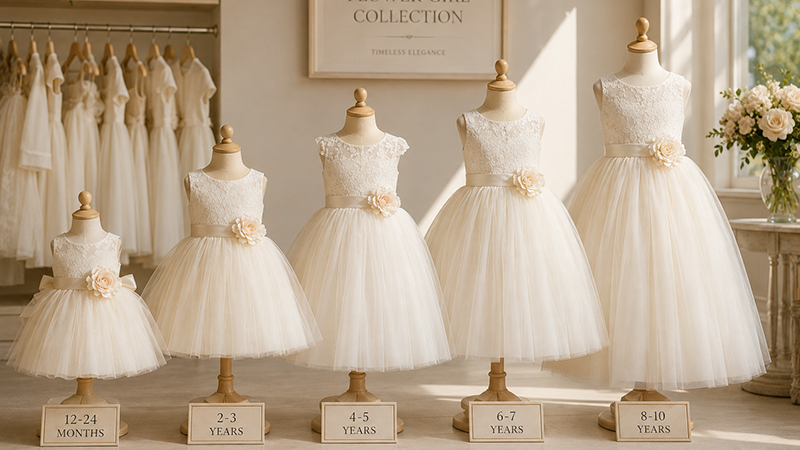
The short answer: profit in kids’ dresses is decided by your size ratio, not just your total order size. Order the wrong mix and you sell out of the middle sizes while the smallest and largest sit on the shelf — tying up cash in dead stock. A widely used planning ratio for girls’ formalwear is 1:2:2:1 across four size bands, meaning for every six dresses you buy, you order one of the smallest, two of the next two sizes, and one of the largest. It is a starting point, not a law, but it captures the core truth of children’s wear: the middle ages move fastest.
Browse Best-Selling Dress Styles
See the occasion, party and flower girl styles that boutiques reorder most, with size runs and unit pricing shown.
Inventory planning is where wholesale girls’ dresses buyers make or lose their money. You can pick great styles, negotiate a fair price, and still lose the season because you bought 20 pieces of one size and two of another. This guide explains how sizing works for kids’ dresses, how to build a ratio that matches your market, and how to reorder without creating dead stock.
Everything here applies whether you are buying ready-stock in small mixed batches or planning a custom production run across our full dress collection.
1. Why Your Size Ratio Decides Your Profit
Cash in retail is tied up in what does not sell. In children’s wear, the classic inventory failure is not “too much stock” — it is “stock in the wrong sizes.” A rack of size-2 dresses that no one buys is just as costly as a rack of nothing, because the money is locked in inventory you cannot convert.
- Middle sizes sell fastest. The bulk of dress-buying customers have children in the middle of the age range, so those sizes move first and run out first.
- Stock-outs lose the sale. When a middle size is gone, the customer usually leaves — they cannot buy a size up or down for a formal occasion.
- Dead stock compounds. Leftover extreme sizes get marked down, which erodes the margin you earned on everything else.
2. The 1:2:2:1 Size Ratio Explained
The 1:2:2:1 ratio is a simple, durable way to spread an order across four size bands so the middle is weighted correctly. For every six dresses:
| Band | Ratio | Per 6 pieces | Why |
|---|---|---|---|
| Smallest | 1 | 1 | Smaller demand, but must be available |
| Small–medium | 2 | 2 | High demand — the fast-moving middle |
| Medium–large | 2 | 2 | High demand — the other half of the middle |
| Largest | 1 | 1 | Lower volume, cover the tail |
Get Wholesale Pricing
Send your store type and monthly volume and we will send the wholesale price list and recommended opening order.
1:2:2:1 is a widely used planning ratio — adjust it to your own sales data as it accumulates.
The logic is simple: demand peaks in the middle ages and falls off at both ends. You weight the middle, keep a token of the extremes so no customer is turned away, and avoid over-buying the tails that are hardest to clear.
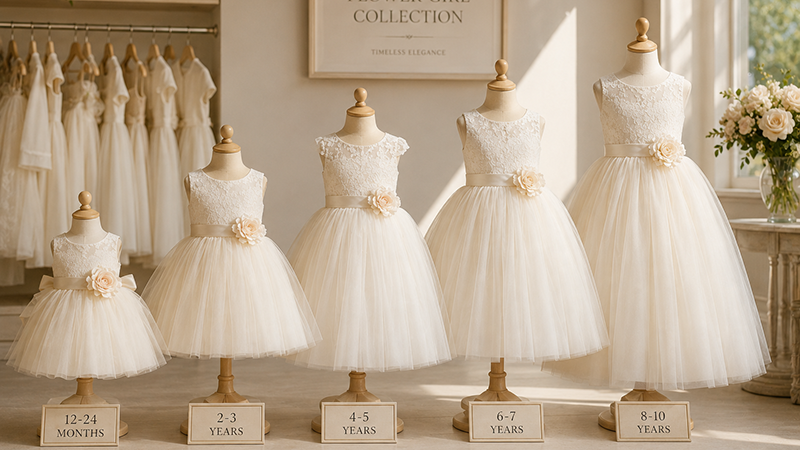
Seeing sizes side by side makes the case for weighting the middle — those are the dresses that clear first.
3. How Kids’ Dress Sizing Works
Before you can set a ratio, you need to know what the size labels actually mean. Girls’ dresses are typically sized by height in centimeters or by age label, and the two do not always line up cleanly:
| Size (height) | Approx. age | Typical customer |
|---|---|---|
| 100 cm | 3–4 yrs | Toddler / early preschool |
| 110 cm | 4–5 yrs | Preschool / kindergarten |
| 120 cm | 6–7 yrs | Early primary school |
| 130 cm | 8–9 yrs | Mid primary school |
| 140 cm | 10–11 yrs | Upper primary school |
| 150 cm | 12+ yrs | Tween / early teen |
Age-to-height mapping is approximate and varies by market — always confirm against a size chart before ordering.
For a deeper look at converting sizes across US, UK, EU and CN systems, see our kids dress size guide. The key point for inventory: the sizes that map to ages roughly 4 to 9 are usually your highest-velocity bands, which is exactly what the 2:2 middle of the ratio represents.
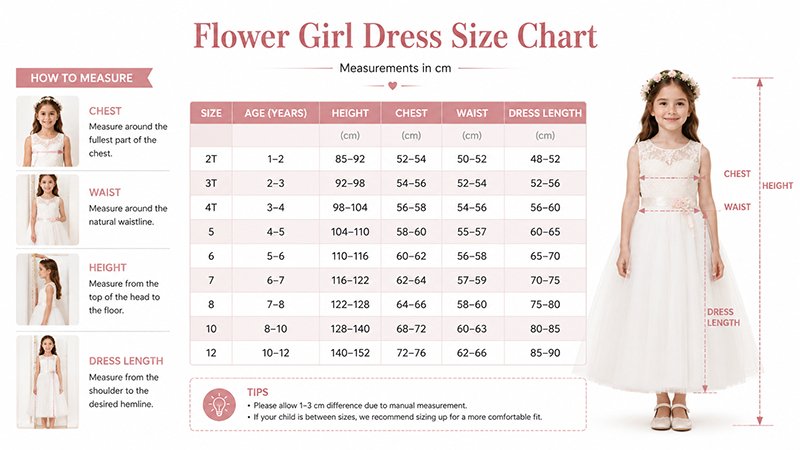
Confirm your size chart first — your ratio only works if the size labels match what your customers expect.
4. Building Your First Order
Your first order is a bet, so structure it to learn. Keep the style count small and the size spread deliberate:
- Start narrow. A few strong styles across the full size range teaches you more than many styles in one size.
- Apply 1:2:2:1 per style. Do not spread it across a whole order; each style should carry its own ratio so no single style has a gap.
- Bias toward the middle on first buy. When in doubt, over-weight the middle — those clear fastest and are the easiest to reorder.
- Track by style and size. From day one, record which size sells. That data, not the ratio, becomes your real planning tool.
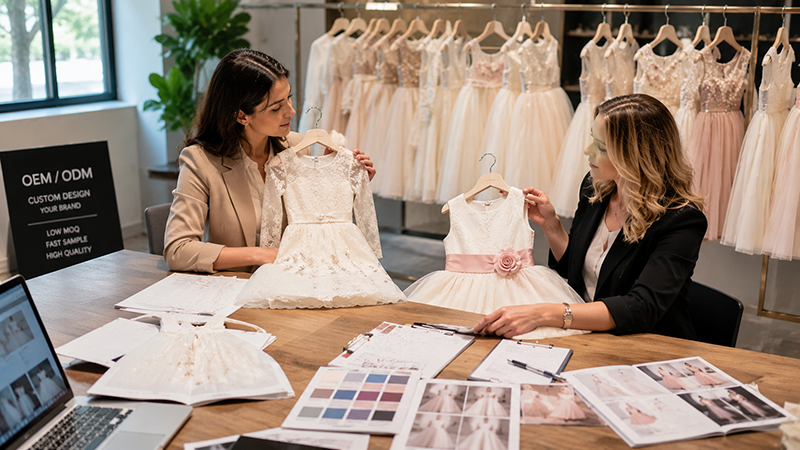
Plan the size spread at the collection level, then apply it style by style on your first order.
5. Reorder Signals: What to Watch
Once stock is moving, the goal shifts from “getting the ratio right” to “reacting to what actually sells.” Three signals tell you when and what to reorder:
- Sell-through by size. If your 120 cm dresses clear at twice the rate of your 110 cm, your next order should reflect that — not blindly repeat 1:2:2:1.
- Stock-out frequency. If you keep running out of the same size, that is demand you are paying to ignore. Raise its share on the next buy.
- Season and occasion. Flower-girl demand peaks around wedding season; party dresses spike before holidays. Reorder ahead of the curve, not behind it.
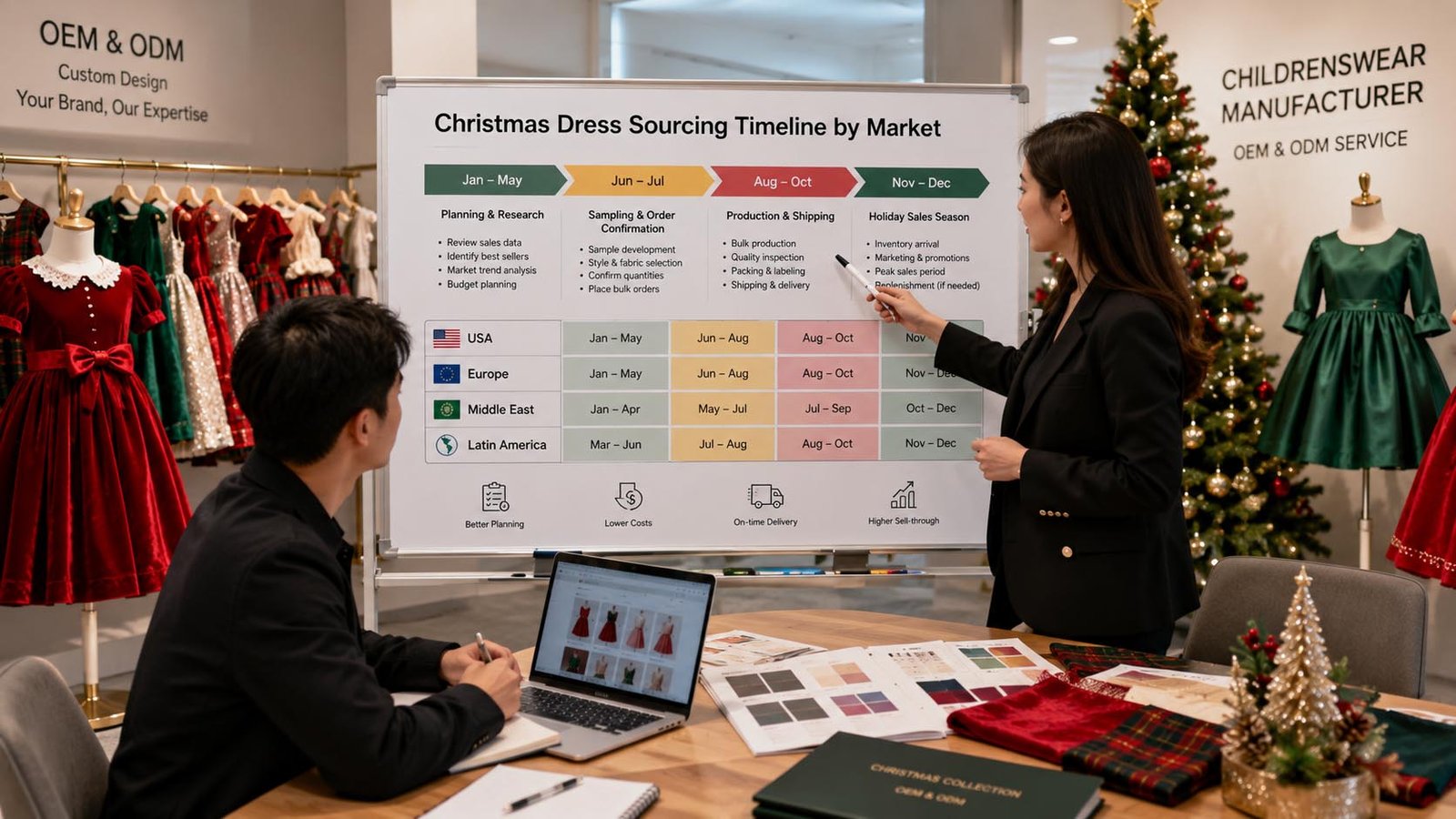
Reorder ahead of the season — by the time a size is gone, the occasion you needed it for has already passed.
6. Dead Stock: How It Happens and How to Avoid It
Dead stock is inventory that stops moving, and in kids’ dresses it is almost always the extreme sizes or the over-bought style. It happens gradually: you reorder what feels safe instead of what the data says, and the tails quietly pile up.
- Do not re-buy the whole range evenly. Reorder the sizes that sold, not a balanced restock of everything.
- Cap the tails. Keep smallest and largest sizes to the minimum needed to avoid turning customers away, and reorder them sparingly.
- Bundle slow sizes. Move leftover extremes through seasonal markdowns or mixed-size bundles rather than letting them sit.
- Buy in smaller, more frequent batches. A lighter, faster inventory is easier to correct than one big bet placed months out.
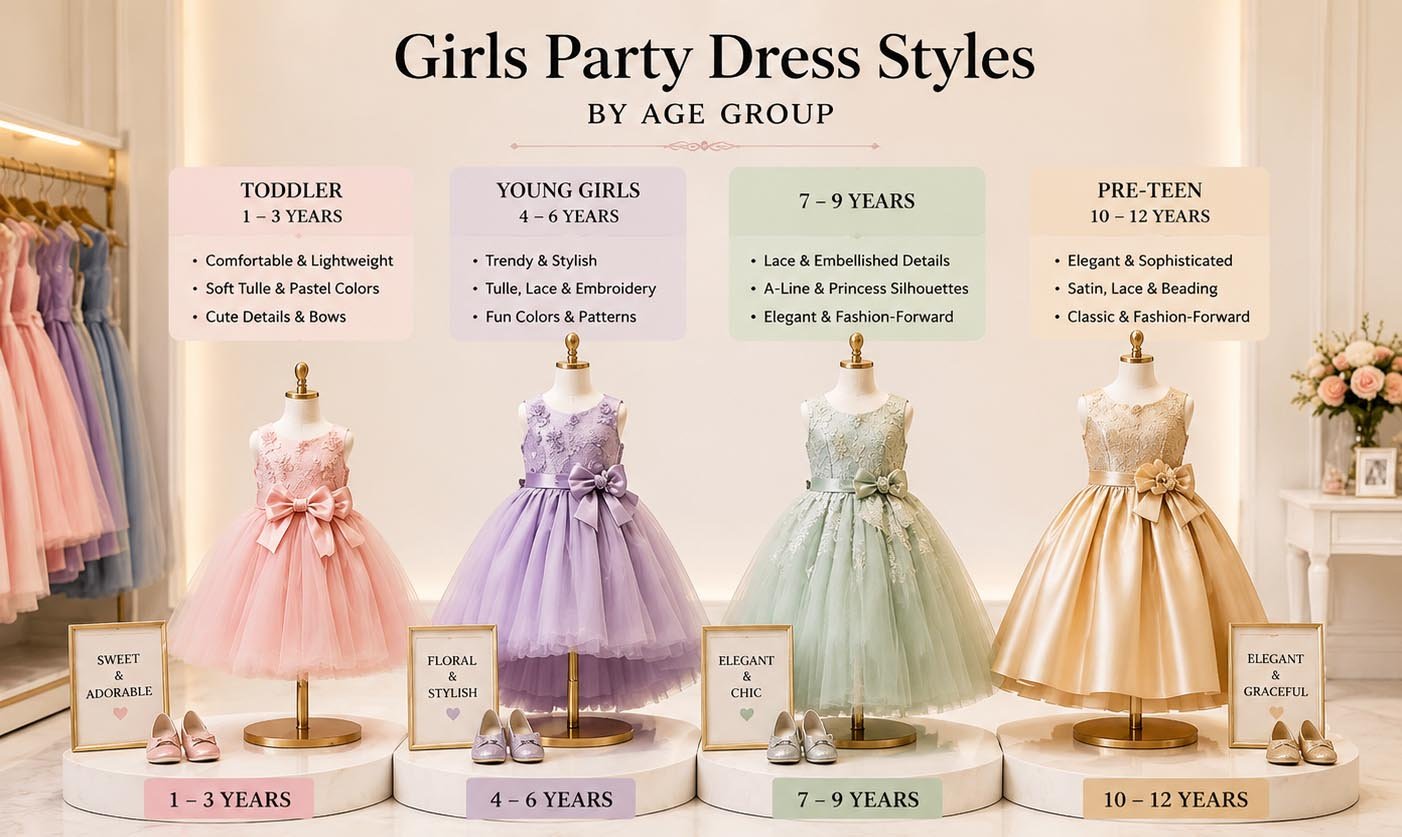
Organizing by age group — and reordering by what sells — keeps the tails from becoming dead stock.
If you need a reliable supply of ready-to-ship styles to support fast, frequent reorders, small mixed batches let you test sizes without committing to a huge run. And a supplier with strong quality control ensures that when you reorder a fast-selling size, the replacement batch matches the one that sold — so your ratio stays reliable.
Frequently Asked Questions
What is the best size ratio for kids’ dresses?
A widely used starting ratio is 1:2:2:1 across four size bands — one smallest, two small-medium, two medium-large, and one largest for every six pieces. It weights the middle sizes that sell fastest, then you adjust it to your own sales data.
Which kids’ dress sizes sell the fastest?
The middle sizes — roughly ages 4 to 9, or about 110 to 140 cm — are usually the highest-velocity bands. That is why the 1:2:2:1 ratio weights the two middle bands more heavily.
How do I avoid dead stock in kids’ dresses?
Reorder by actual sell-through, not a balanced restock; keep the extreme sizes minimal; move slow sizes through markdowns or bundles; and buy in smaller, more frequent batches so you can correct course quickly.
Should I use the same ratio for every style?
Apply the ratio per style, not across the whole order. Each style should carry its own size spread so no single style ends up with a size gap.
When should I reorder a fast-selling size?
Reorder ahead of the season or occasion, and raise the share of any size that consistently stocks out. Your reorder should correct the initial ratio based on what actually sold.
Plan an order that sells through
Tell us your market and target ages — we’ll recommend a size ratio and MOQ that keeps your inventory moving.
Leave a Reply