
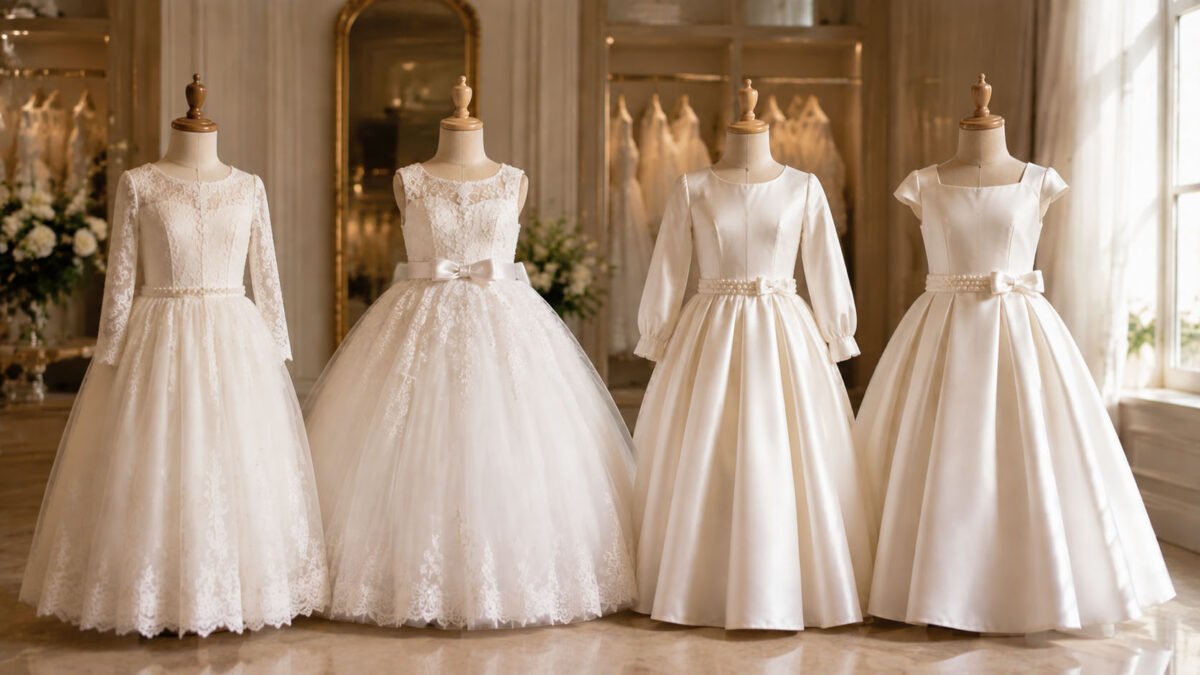
First Communion dresses are one of the most reliable seasonal categories in children’s formalwear — a steady, price-insensitive purchase that repeats year after year. For a boutique or wholesaler, the opportunity is to stock the right wholesale first communion dresses in the right styles, lengths and fabrics, and to order ahead of the spring season. This guide covers what buyers need to know.
Browse the Collection
See how these fabrics, silhouettes and size ranges look on finished styles — filter by occasion, season and size range.
Unlike birthday and party dresses, which are impulse purchases, a First Communion dress is planned months in advance and carries real emotional weight for the family. That changes the buying logic: customers are less price-sensitive and more quality-sensitive, and they expect the dress to be modest, well-finished and photograph beautifully. For a wholesale buyer, that means the category rewards careful selection over deep discounting.
This guide walks through the styles, lengths, fabrics and sizing you should know before placing an order, along with the timing that matters for a seasonal category.
1. The Core Styles That Sell
First Communion dresses cluster around a few enduring silhouettes. The classic range is fairly stable year to year, which makes it a safe category to stock — trends evolve slowly, and a well-chosen core range sells through multiple seasons.
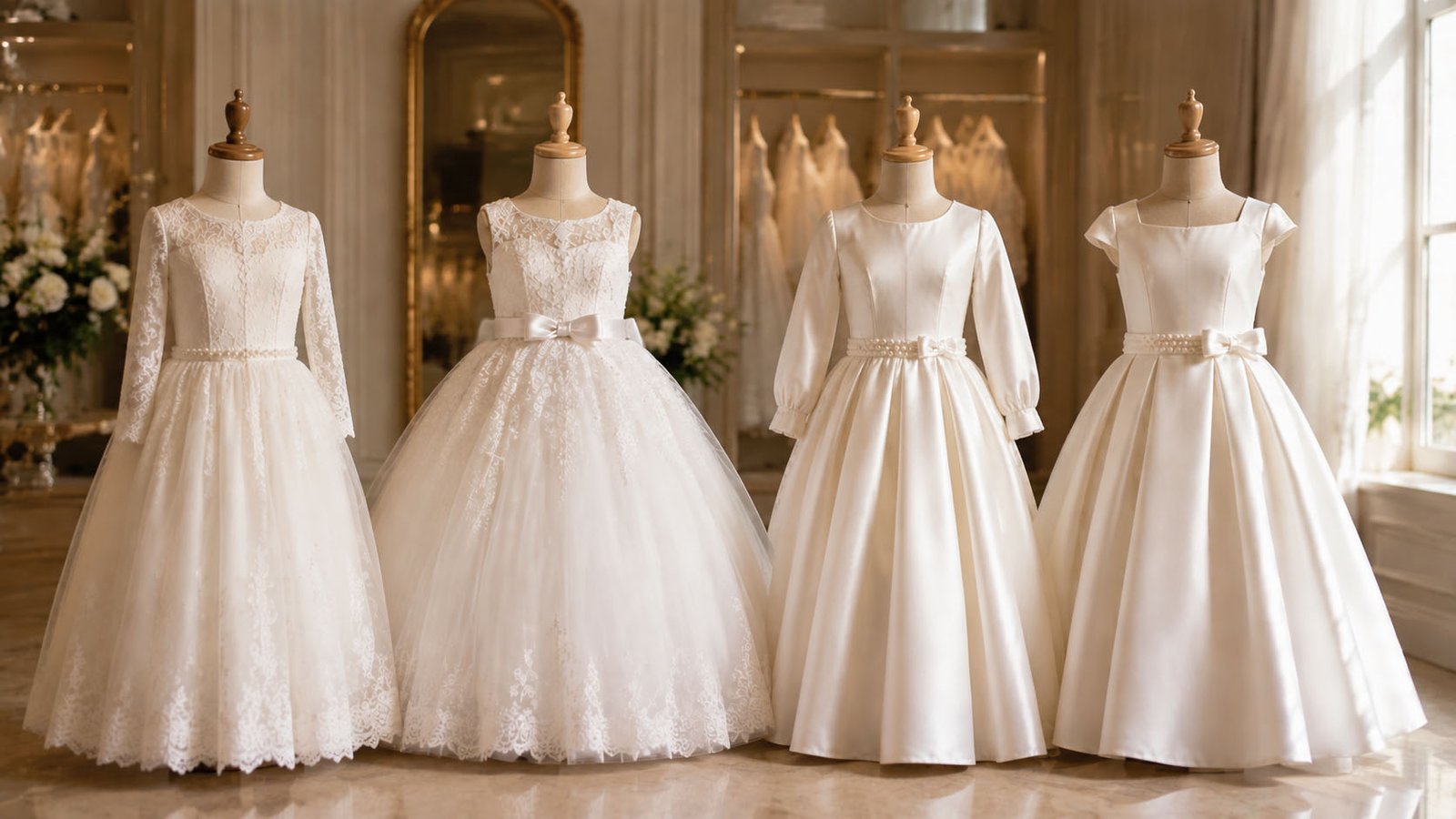
The enduring styles — A-line, ball gown, tea length — form a stable core you can reorder with confidence.
- A-line with lace bodice — the single most popular shape: fitted bodice, flowing skirt, modest and flattering. Safe core stock.
- Ball gown with tulle skirt — fuller, more princess-like, popular for the ceremony itself. Higher perceived value, higher price point.
- Tea-length satin — a shorter, more modern option that also works for photos and the reception.
- Simple column / sheath — minimalist and elegant, a smaller but steady segment.
The safest entry point is a lace-bodice A-line — it appeals to the broadest range of families and photographs consistently. From there, add a ball gown and a tea-length option to cover the main preferences.
2. Lengths: What the Occasion Calls For
First Communion dresses are most commonly knee to tea length, with floor-length reserved for the most formal ceremonies. The length also follows the child’s age — younger girls wear shorter dresses for comfort and safety, older girls wear longer ones.
| Length | Typical age | Best for |
|---|---|---|
| Knee length | ~7–9 years | Comfort, ease of movement, younger children |
| Tea length (mid-calf) | ~8–11 years | The versatile middle ground, most common |
| Floor length | ~10+ years | The most formal ceremonies |
Request Fabric Swatches
Feel the fabric before you order. Tell us which styles you are considering and we will send swatches with the weight and composition noted.
Tea length is the safe core; offer knee and floor options to cover the full age range.
Stock the middle of the range most heavily. A boutique that carries all three lengths but weights the inventory toward tea length will rarely be caught short, because tea length spans the widest age band and the widest customer preference.
3. Fabrics: What Buyers Expect
First Communion dresses are overwhelmingly white or ivory, and the fabric choice is where quality — and therefore price — is made or lost. The families buying these dresses feel the fabric before they decide, and a cheap, scratchy lining is the fastest way to lose a sale.
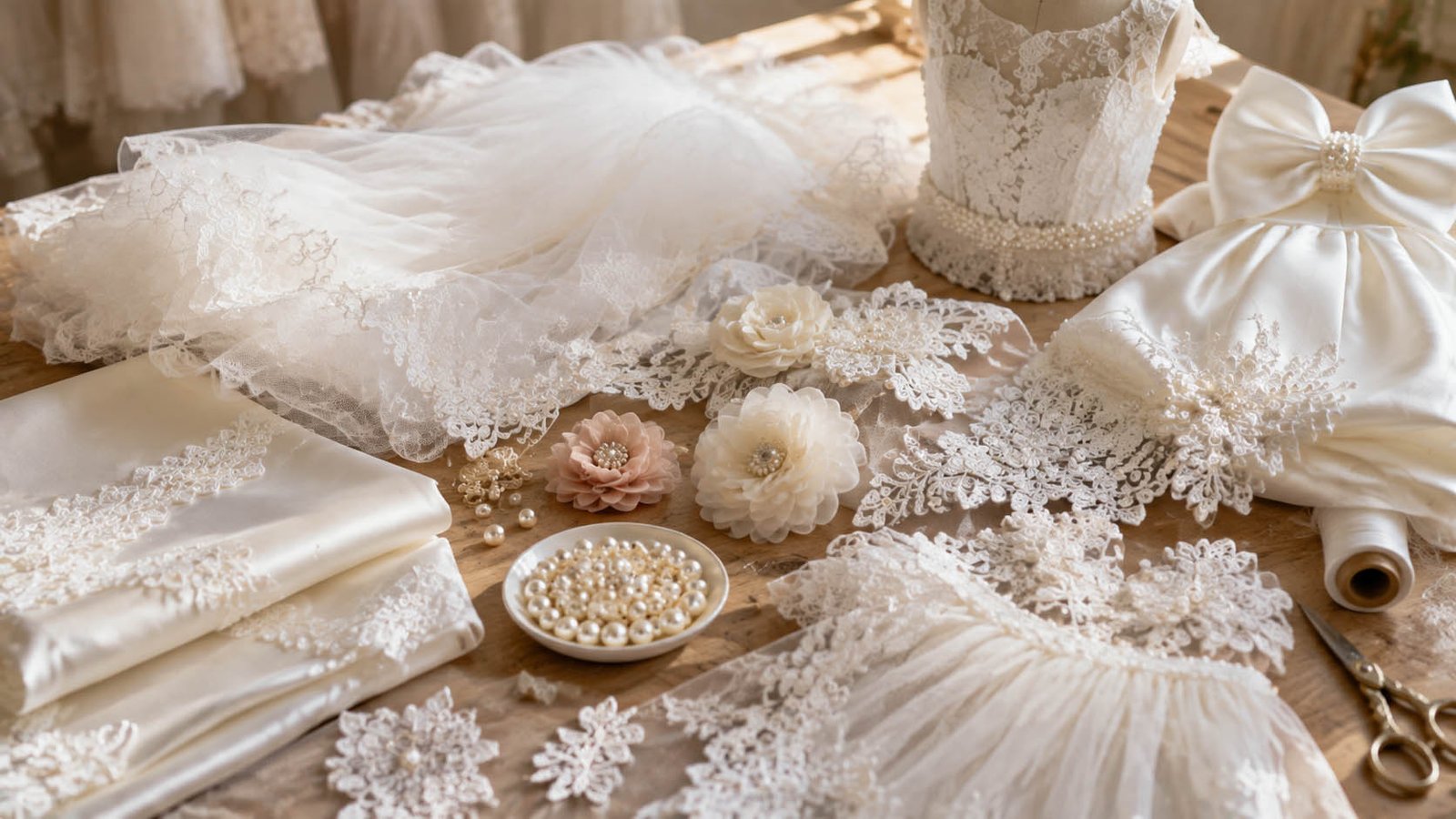
Satin, lace and tulle are the workhorses — but the lining is where comfort and perceived quality are won.
- Satin — the classic choice; smooth, formal, photographs well. Body fabric for most dresses.
- Lace — used for the bodice and overlays; the visible detail that signals “special occasion.”
- Tulle — used for the skirt layers to add fullness without weight.
- Cotton or soft lining — the inner layer against a child’s skin; this is where comfort is decided.
4. Sizing and Fit
First Communion dresses are a formalwear fit, not an everyday fit, which means sizing deserves extra care. These dresses are typically sized by age or by standard numeric sizes, and they run slightly roomier through the skirt and more fitted through the bodice than casual dresses.
- Carry the full size run — demand spans roughly ages 7–12, and families shop well in advance, so a missing middle size loses the sale.
- Mind the bodice — the fitted bodice is the fit-critical area; a dress that fits the bodice usually fits everywhere else.
- Allow for growth — because families buy early, a small margin in the bodice helps the dress still fit on the day.
If you offer custom or made-to-measure options, this is the category where they pay off most — an exact fit is exactly what a family buying six months early wants.
5. Timing: Order Ahead of the Season
First Communion season in most Western markets runs through the spring, so the buying cycle starts months earlier. Boutiques that order in late summer and autumn are stocked and ready when families begin shopping in early spring; those that order late miss the peak.
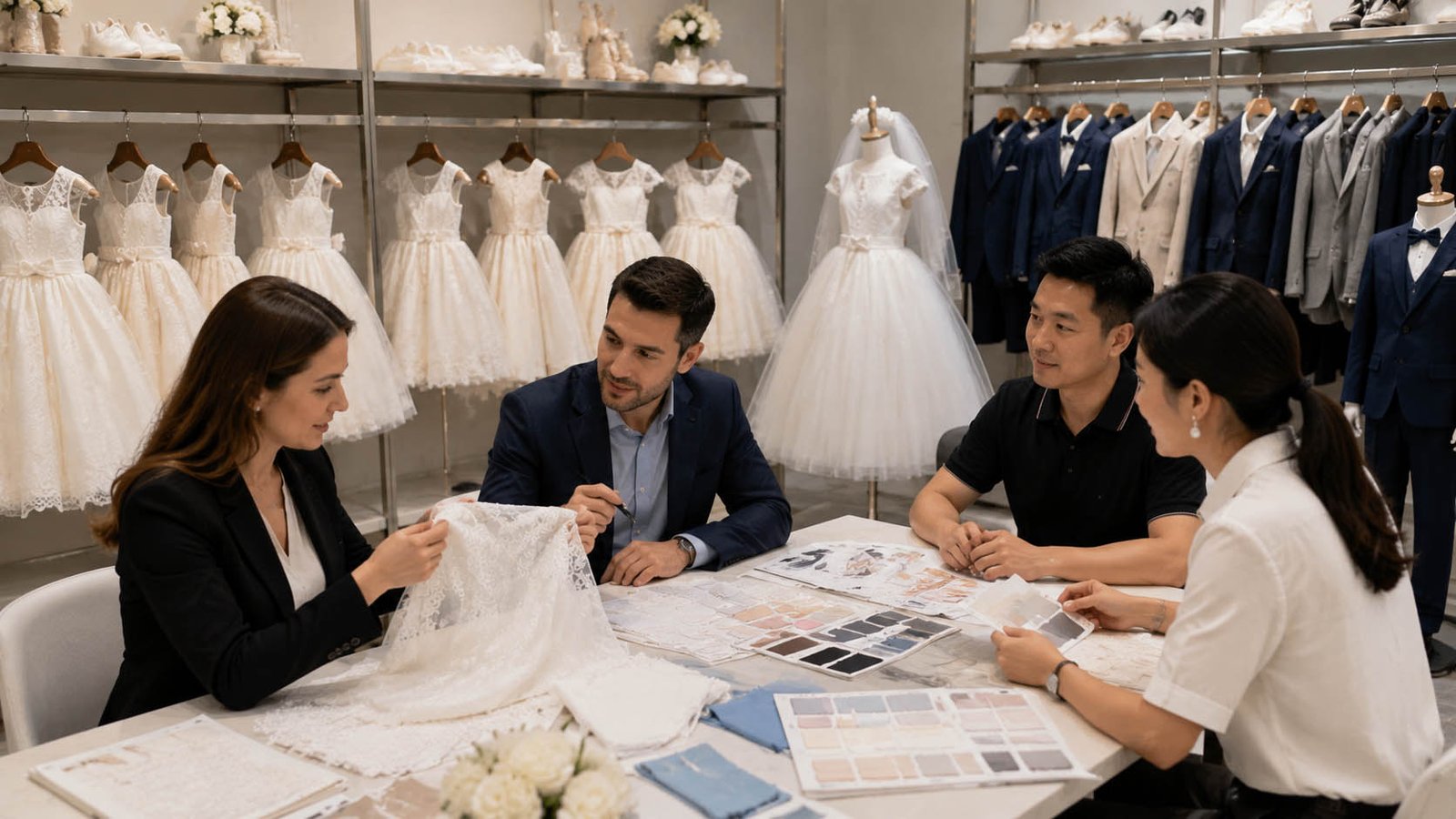
Ordering ahead of the spring season is the difference between a stocked showroom and a missed peak.
The buying calendar runs ahead of the ceremony, and First Communion season in most Western markets peaks from March through May. Here is the timeline that keeps you stocked in time:
| Window | What to do |
|---|---|
| November – January | Confirm styles, approve samples and place your bulk order |
| January – February | Production runs; arrange shipping and clear customs |
| March | Receive and merchandise — stocked before the peak |
| March – May | Peak selling season (ceremonies, photos, receptions) |
Lead times for formalwear are longer than for everyday dresses because of the embellishment and finishing, so build that into your schedule and order before you feel the pressure.
6. A First Communion Stocking Checklist
- Cover the core styles — lace-bodice A-line as the anchor, plus a ball gown and a tea-length option.
- Weight toward tea length, with knee and floor options to span the age range.
- Prioritize the lining — a soft, comfortable inner layer is the quality signal families remember.
- Carry the full size run — a missing middle size loses the sale.
- Order in autumn for spring — build in the longer formalwear lead time.
For the broader range, our wholesale girls’ dresses collection includes communion, flower girl and party styles together, so you can fill a seasonal order in one place.
Frequently Asked Questions
What is the most popular First Communion dress style?
The lace-bodice A-line is the single most popular and versatile style — modest, flattering and photographically consistent. It is the safest anchor for a core range, supplemented by a ball gown and a tea-length option.
What length should I stock most heavily?
Tea length (mid-calf) spans the widest age range and customer preference, so weight inventory toward it. Add knee length for younger children and floor length for the most formal ceremonies.
What fabrics are used in First Communion dresses?
Satin is the main body fabric, lace is used for bodices and overlays, and tulle adds skirt fullness. The inner lining — ideally soft cotton or a soft lining — is the detail that determines comfort and perceived quality.
When should I order First Communion dresses?
Order in late summer or autumn to be stocked for the spring season. Formalwear lead times are longer than everyday dresses because of embellishment and finishing, so order well ahead of the peak. To lock in spring stock, browse our communion collection early.
What sizes should I carry?
Carry the full size run across roughly ages 7–12. Families shop early and a missing middle size loses the sale. The bodice is the fit-critical area.
Is custom sizing worth offering in this category?
Yes — families buying months in advance value an exact fit, and made-to-measure is where custom options pay off most in formalwear.
Stock the spring season
Tell us the styles, lengths and sizes your boutique needs — we’ll quote MOQ and lead time so you’re stocked before the peak.
Leave a Reply