
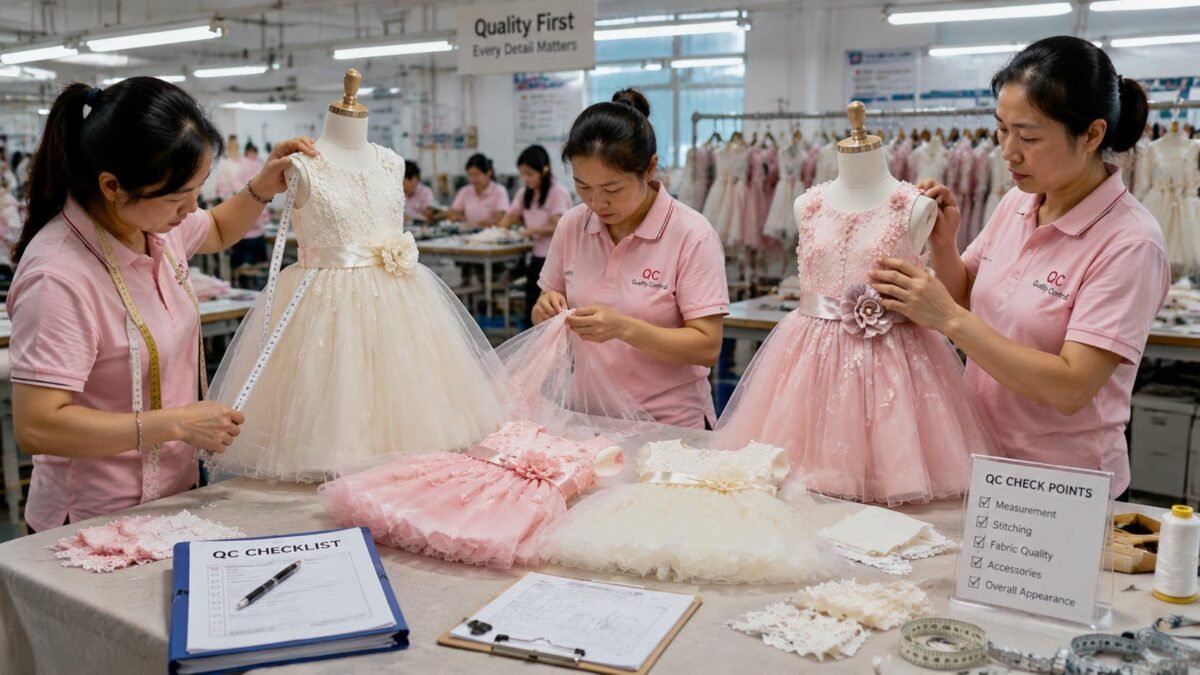
The short answer: the way you handle a kids’ dress — wash it, steam it, store it, ship it — directly determines what it is worth when it reaches the customer. Tulle, satin and chiffon are delicate fabrics that wrinkle, crush and snag easily, but they are also easy to restore if you know the right techniques. A dress that arrives wrinkled looks discounted; the same dress, steamed and presented properly, reads as premium. The care step is where retail margin is protected or lost.
Browse the Collection
See how these fabrics, silhouettes and size ranges look on finished styles — filter by occasion, season and size range.
For anyone selling wholesale girls’ dresses, fabric care is not a nice-to-have — it is part of the product. A boutique customer who opens a package and finds a crushed, creased dress will remember it, and the return or the bad review follows. This guide covers the fabrics, the washing rules, the de-wrinkling techniques, and the shipping prep that delivers a dress that looks new every time.
The techniques below apply across our dress collection, from flower-girl and party styles to the more structured formal pieces.
1. Why Fabric Care Is a Profit Decision
Fabric care looks like a back-room detail, but it shows up on the bottom line in three ways:
- Returns and reviews. A dress that arrives wrinkled, snagged or misshapen drives returns and one-star reviews — the most expensive outcome in online retail.
- Perceived value. The same garment, presented crumpled versus steamed, can command a very different price. Presentation is pricing in formalwear.
- Inventory longevity. Dresses stored badly — crushed in a bin, exposed to humidity — degrade before you even sell them, turning saleable stock into markdown fodder.
2. Know Your Fabrics: What Each One Needs
Girls’ formalwear is built from a small set of fabrics, each with its own care profile. Mis-handle one and the damage is often permanent:
| Fabric | Character | Care essentials |
|---|---|---|
| Tulle | Stiff, netted, holds volume | Steam only, never iron directly; hang to restore shape |
| Satin | Smooth, shiny, delicate | Cool wash or dry clean; avoid snags; steam to remove creases |
| Chiffon | Light, flowing, sheer | Gentle hand wash; steam lightly; protect from snags |
| Organza | Crisp, transparent, structured | Steam from a distance; store hanging to keep crispness |
Request Fabric Swatches
Feel the fabric before you order. Tell us which styles you are considering and we will send swatches with the weight and composition noted.
Always check the garment’s own care label first — these are general profiles, not a substitute for the label.
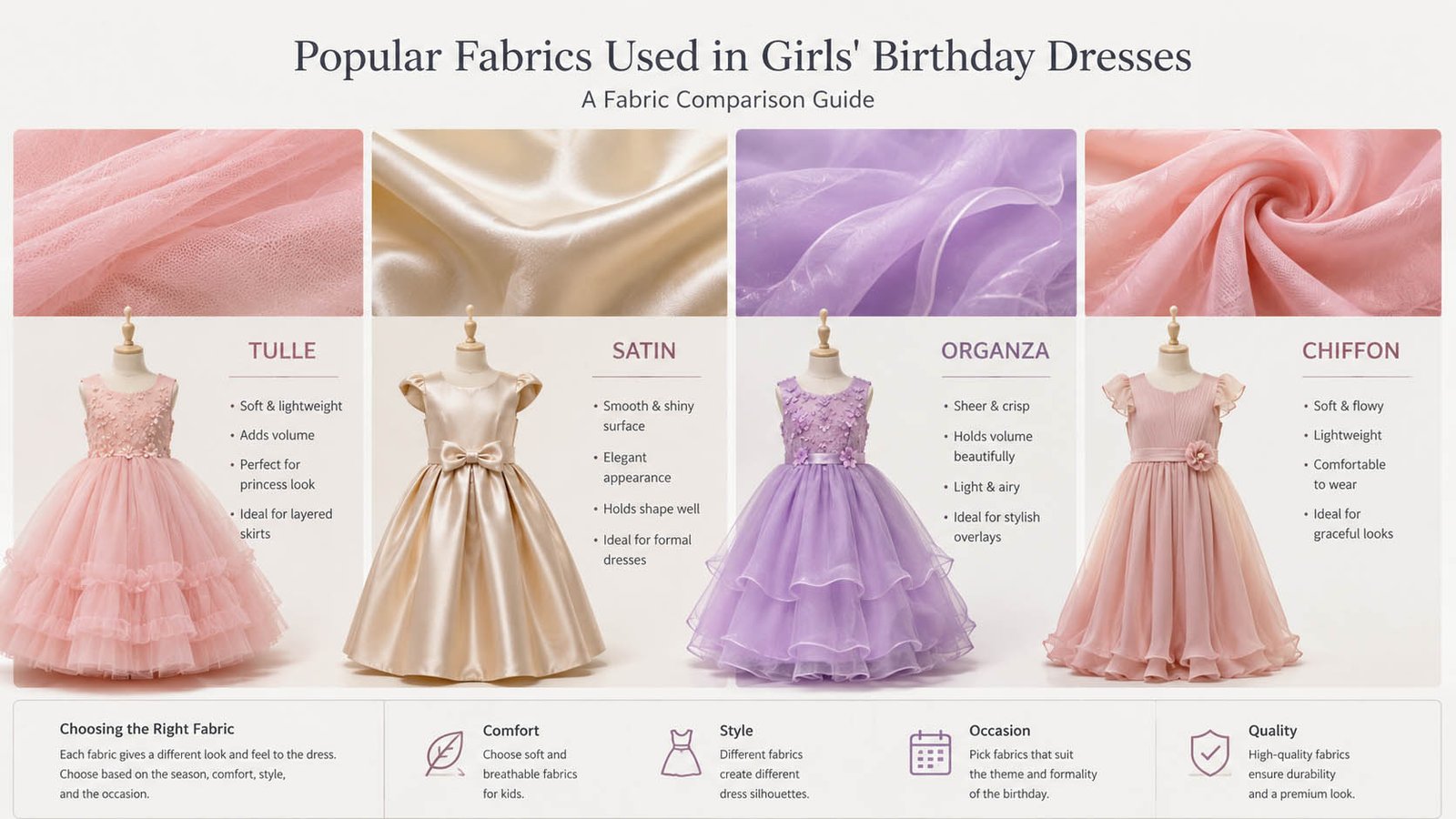
Know what you are handling — tulle, satin, chiffon and organza each need a different touch.
3. Washing: When, How, and When to Skip It
The first rule of formalwear care is to wash as little as possible. Many dress fabrics are better refreshed by steaming than by a full wash, which stresses the fibers and can loosen embellishments. When a wash is needed, do it gently:
- Cool water, mild detergent. Hot water sets wrinkles and can shrink or distort delicate fabric.
- Hand wash or the gentlest machine cycle in a mesh laundry bag to protect sequins and embroidery.
- Never wring or twist. Squeeze out water gently and roll in a towel to remove excess — wringing crushes tulle permanently.
- Air dry flat or hanging. Skip the dryer entirely; heat is the enemy of tulle, satin and chiffon.
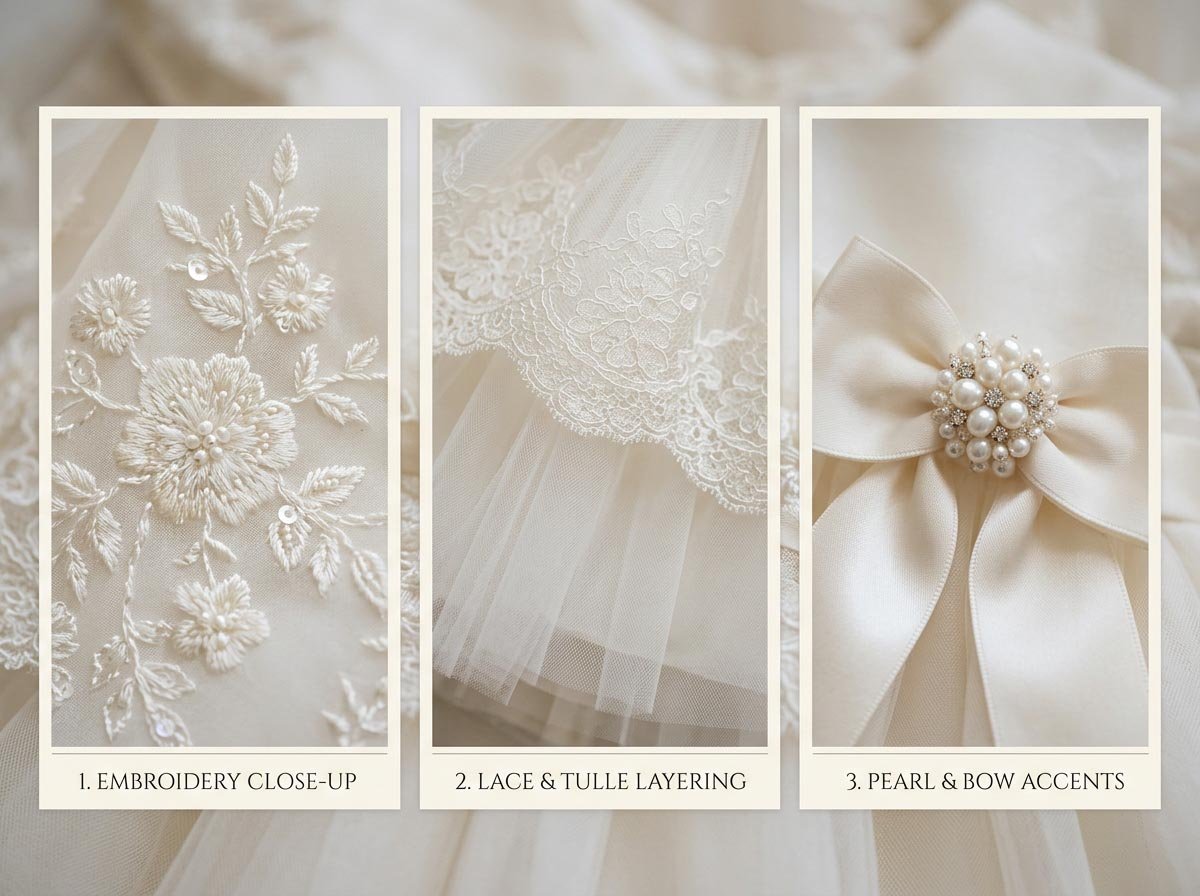
Embellished pieces — embroidery, sequins, beading — need the gentlest handling, or the detail you paid for is the first thing to go.
4. Steaming and De-Wrinkling Tulle
Tulle is the fabric everyone fears ironing, and for good reason — a hot iron melts and shrinks it on contact. The correct tool is steam, which relaxes wrinkles without direct heat:
- Hang the dress first. Let gravity help pull out the creases before you even apply steam.
- Steam from a distance. Hold the steamer a few inches away and work in short passes; let the steam do the work, not the nozzle.
- Shape as you go. Gently fluff the layers with your hands while steaming to restore the skirt’s volume.
- Never press an iron onto tulle. If you must iron, use the lowest setting with a pressing cloth between the iron and the fabric.
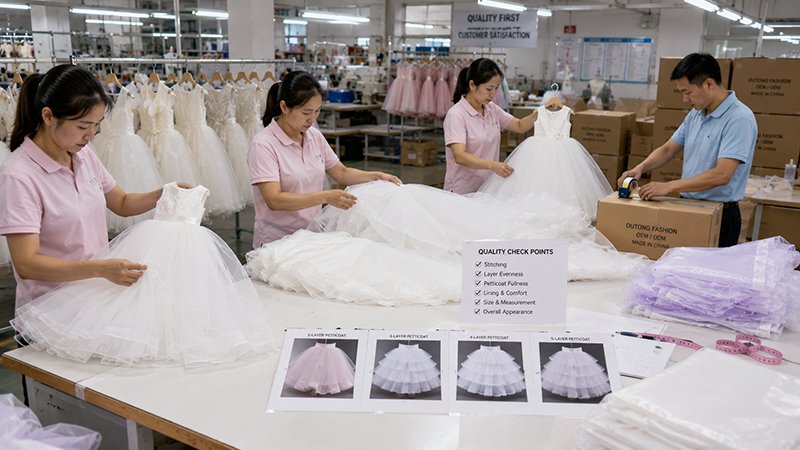
Layered tulle restores best by steaming and fluffing each layer — volume comes back, creases fall out.
5. Long-Term Storage Without Ruining the Dress
How you store dresses between seasons determines whether they come out saleable. The common mistakes are crushing and humidity:
- Hang structured dresses. Satin and organza keep their shape on a padded hanger; folding leaves creases that are hard to remove.
- Use breathable garment bags. Plastic traps moisture and can cause yellowing or mildew; a breathable cover protects without suffocating the fabric.
- Keep it dry and dark. Humidity causes mildew and odor; direct sunlight fades color. A cool, dry, dark space is ideal.
- Do not stack heavy items on top. Weight crushes tulle volume and creases everything beneath it.
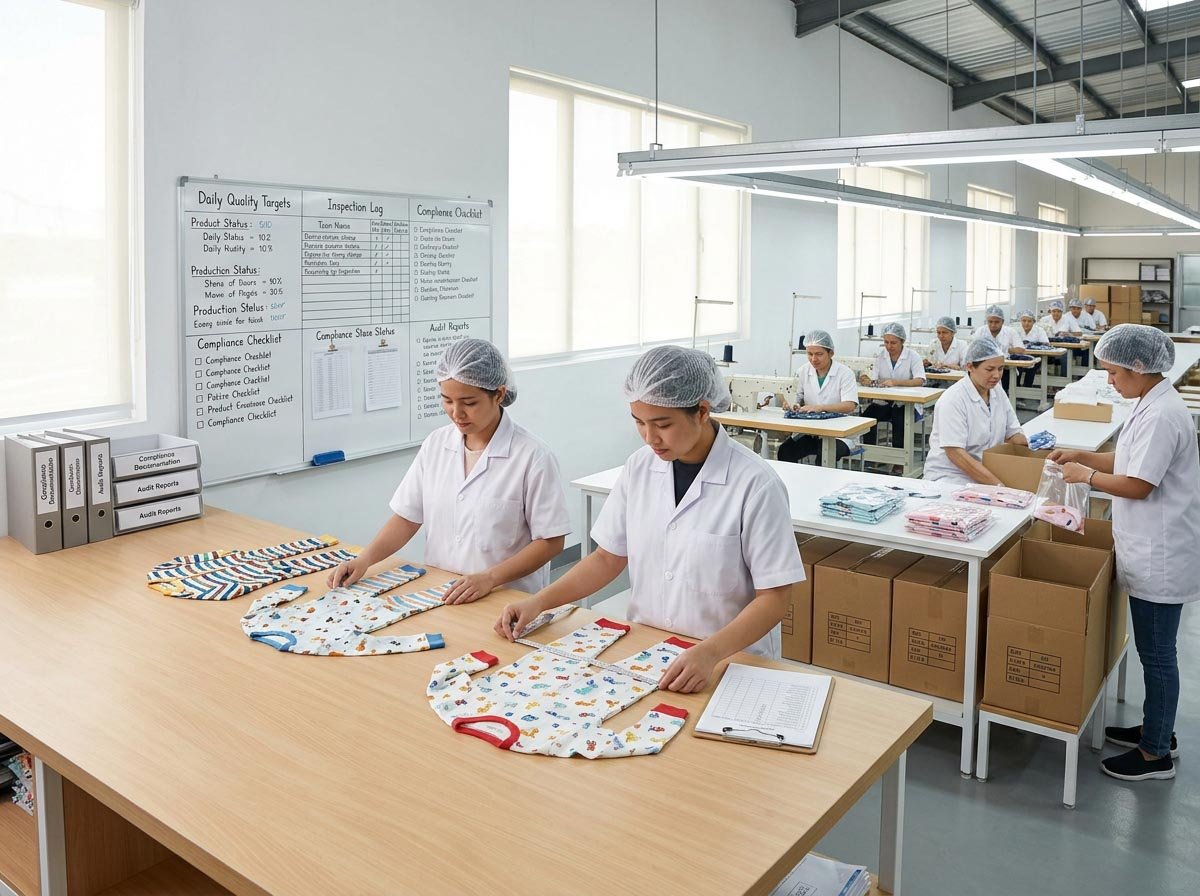
A quality-control pass before storage catches flaws while they are still cheap to fix — and confirms what is saleable.
6. Shipping Prep: Delivering a Dress That Looks New
The last mile is where all your care work either pays off or gets undone. A dress that leaves you perfect but arrives crushed has lost the sale anyway. Prep every order like it is going into a gift box:
- Steam before packing, not after — you cannot steam the customer’s unboxing.
- Fold around tissue to prevent hard creases, and use a lightweight bag to protect against scuffs and snags in transit.
- Do not over-stuff the box. A dress needs room to settle; tight packing creates permanent creases.
- Include a one-line care card. A short “steam on arrival” note helps the customer restore the dress and reduces unnecessary returns.
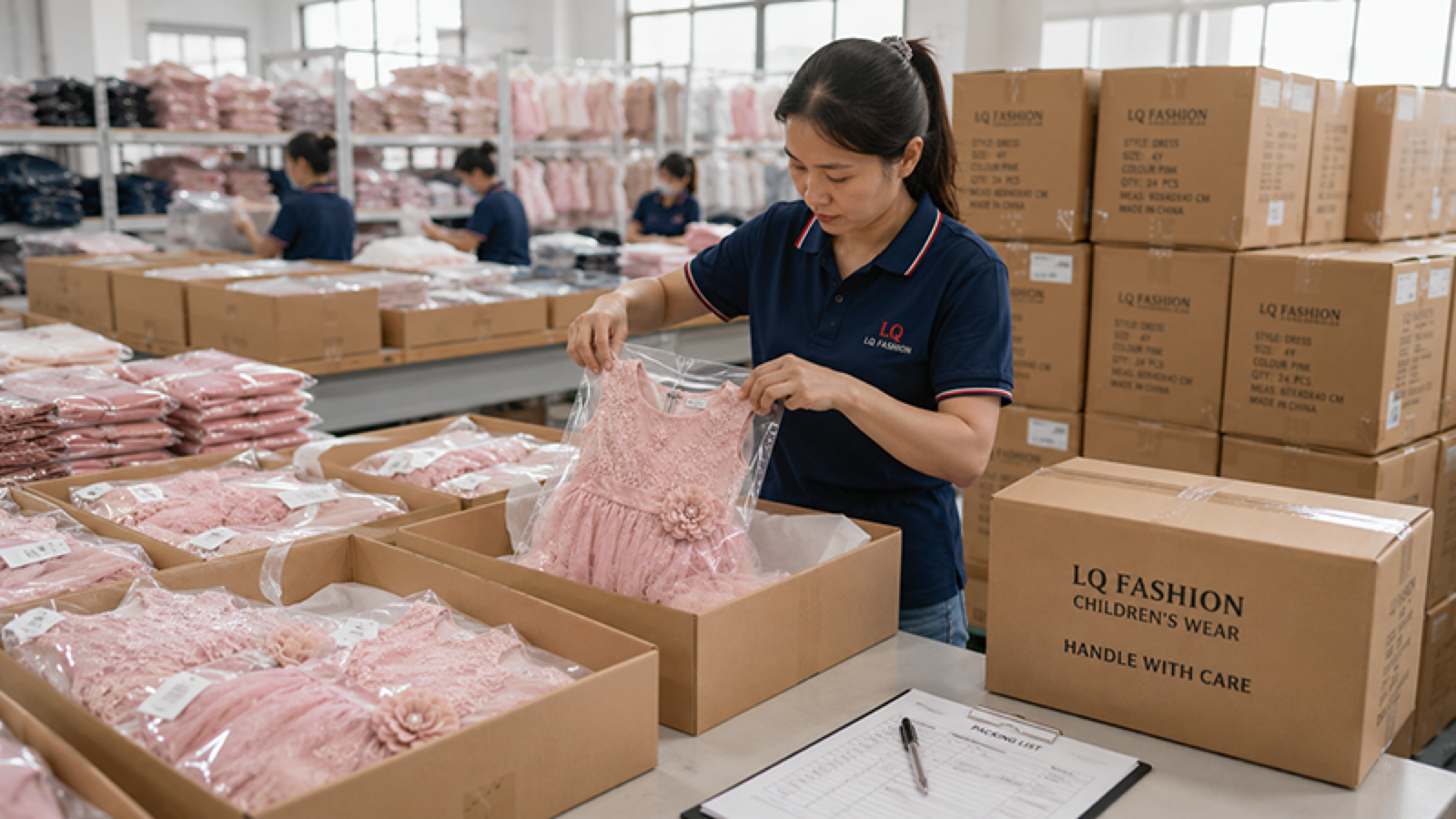
Fold around tissue, leave room in the box, and the dress arrives looking like it did on the rack.
If you are sourcing dresses to resell, the care story starts with the supplier. A quality control process that catches loose embellishments and weak seams before shipping means the dress you receive can survive the care it needs. And buying in ready-stock batches or custom runs — from our ready-to-ship collection — gives you dresses that arrive from the factory in a condition worth protecting.
Frequently Asked Questions
How do I get wrinkles out of a tulle dress?
Steam it, never iron it directly. Hang the dress, hold a steamer a few inches away, and work in short passes while gently fluffing the layers with your hands. Direct iron heat can melt and shrink tulle.
Can I wash kids’ dresses in the washing machine?
For most formalwear, hand wash or use the gentlest machine cycle in a mesh bag with cool water and mild detergent. Never wring the fabric, and air dry flat or hanging — avoid the dryer, which heat-stresses delicate fabrics.
How should I store dresses between seasons?
Hang structured dresses on padded hangers in breathable garment bags, keep them in a cool, dry, dark space, and never stack heavy items on top. Plastic bags can trap moisture and cause yellowing or mildew.
What is the best way to ship a dress so it arrives without creases?
Steam it before packing, fold around tissue to prevent hard creases, use a lightweight protective bag, and leave room in the box so it is not compressed. A short “steam on arrival” care card also helps the customer restore it.
Why does satin wrinkle so easily?
Satin’s smooth, shiny surface creases readily because the fibers are tightly woven and slide against each other. Steam removes the creases safely; pressing with direct heat risks scorching the sheen.
Get dresses that arrive ready to sell
Tell us what you’re stocking — we’ll help you choose fabrics and finishes that hold up through washing, storage and shipping.
Leave a Reply