
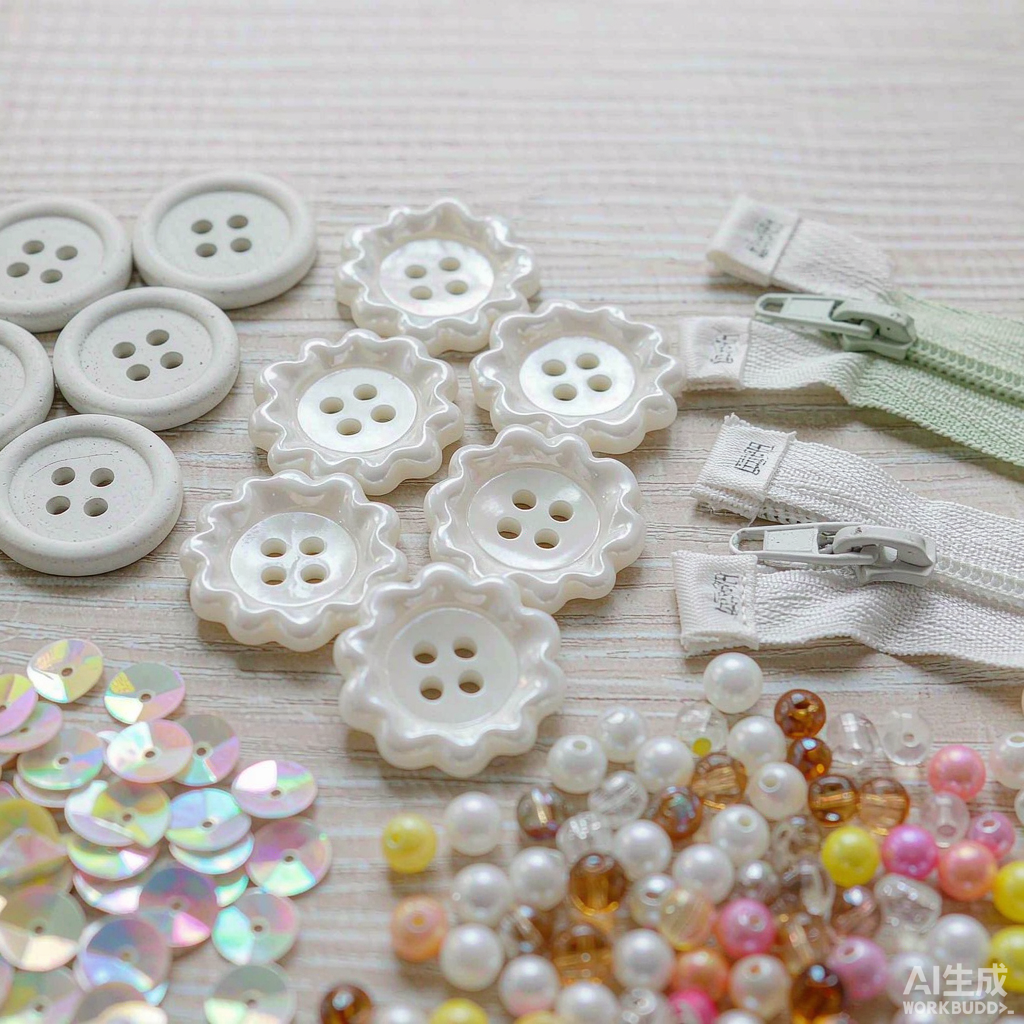
Sequins, beads, bows and buttons are what make a girls’ party dress sell — and they are also the parts most likely to turn a wholesale order into a recall conversation. Small parts rules were written with toys in mind, but retailers and marketplaces apply the same logic to children’s clothing sized for the youngest wearers. This guide explains where the line is, how the test works, which trims carry the most risk, and what to specify on your tech pack before production starts.
Quick Answer
In the United States, 16 CFR 1501 defines a small part as anything that fits entirely inside a cylinder 1.25 inches in diameter and 2.25 inches deep. The rule is written for toys and articles intended for use by children under three; ordinary apparel is not automatically in scope, but most large retailers and marketplaces apply the same test to trims on garments sized for children under three. The practical test is a use-and-abuse check: apply 10 lbf of tension and 4 in-lbf of torque to any applied trim and see whether it comes off in the same cylinder.
Not Sure Whether a Trim Will Pass?
Send us a photograph or a sample of the trim you have in mind and we will tell you how it is applied, whether it can be reinforced, and what the safer alternative looks like at the same price point.
What Buyers Need to Know
The first point is one of scope. The small parts rule is a toy regulation. It does not automatically convert every children’s garment into a regulated article. What converts it in practice is the buyer on the other side of the transaction: large retailers, and the marketplaces that host third-party sellers, apply toy-style small parts criteria to clothing sized for infants and toddlers because that is how they manage their own exposure. If you sell through one of them, their rule is the one that matters, whatever the regulation technically says.
The second point is that age grading drives everything. A trim that is perfectly acceptable on a size 10 dress is a risk on a size 2T. Before a factory can answer a question about small parts, someone has to answer the question of who the garment is for. On a wholesale order, that should be a written line on the tech pack: intended age range, and the size range the style covers.
The third point is that the test is not just about size — it is about attachment. A trim that is comfortably larger than the cylinder when it leaves the factory still fails if it comes off during the use-and-abuse testing and then fits. That is why the pull test matters as much as the dimension, and why the method of attachment is the specification that counts.
Which Trims Carry the Most Risk
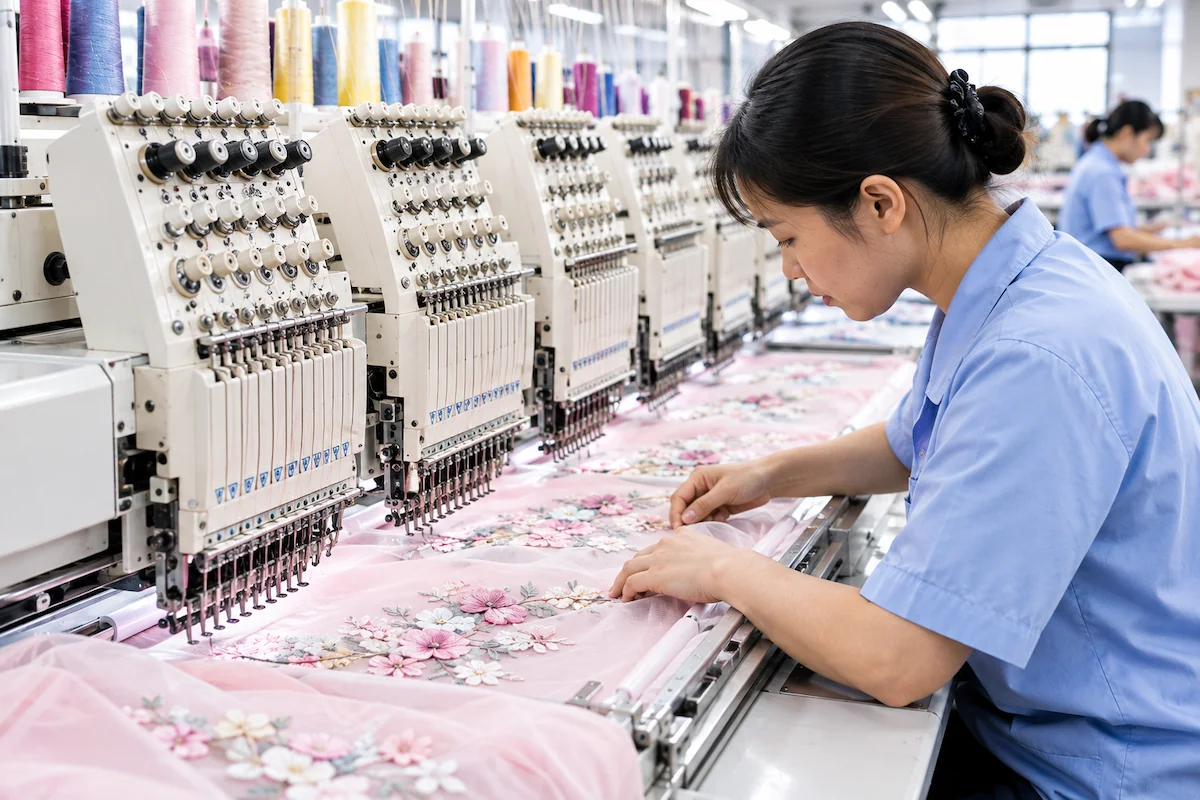
Sequin and embroidery trims carry more attachment risk than flat appliqué.
| Trim | Why it is a risk | Lower-risk alternative |
|---|---|---|
| Sewn-on buttons | Can be pulled off with thread and all; a loose button is a classic finding | Button with a reinforced shank and a lockstitch, or a stitched fabric rouleau loop |
| Heat-transfer rhinestones | Adhesion degrades with washing and heat; individual stones come away | Heat-transfer motif on a single film, or printed metallic detail |
| Sewn sequin trim | Continuous trim sheds individual sequins when a thread breaks | Sequin trim with an overlock edge, or an embroidered metallic thread |
| Detachable bows and flowers | Often pinned or lightly tacked, and the whole unit can be removed | Bow stitched through the knot at two points, or a fixed fabric flower |
| Beads and pearls | Small, hard, and often strung on a single thread | Embroidery, or beading fully enclosed under a lining layer |
| Metal zipper pulls and charms | Can detach and are hard enough to be a separate concern | Fabric-covered pull, or a covered zip with no separate charm |
| Elastic toggles and cord ends | Small, detachable, and also a choking and entanglement concern | Fully enclosed elasticated waistband with no external hardware |
Building a Range for Toddler Sizes?
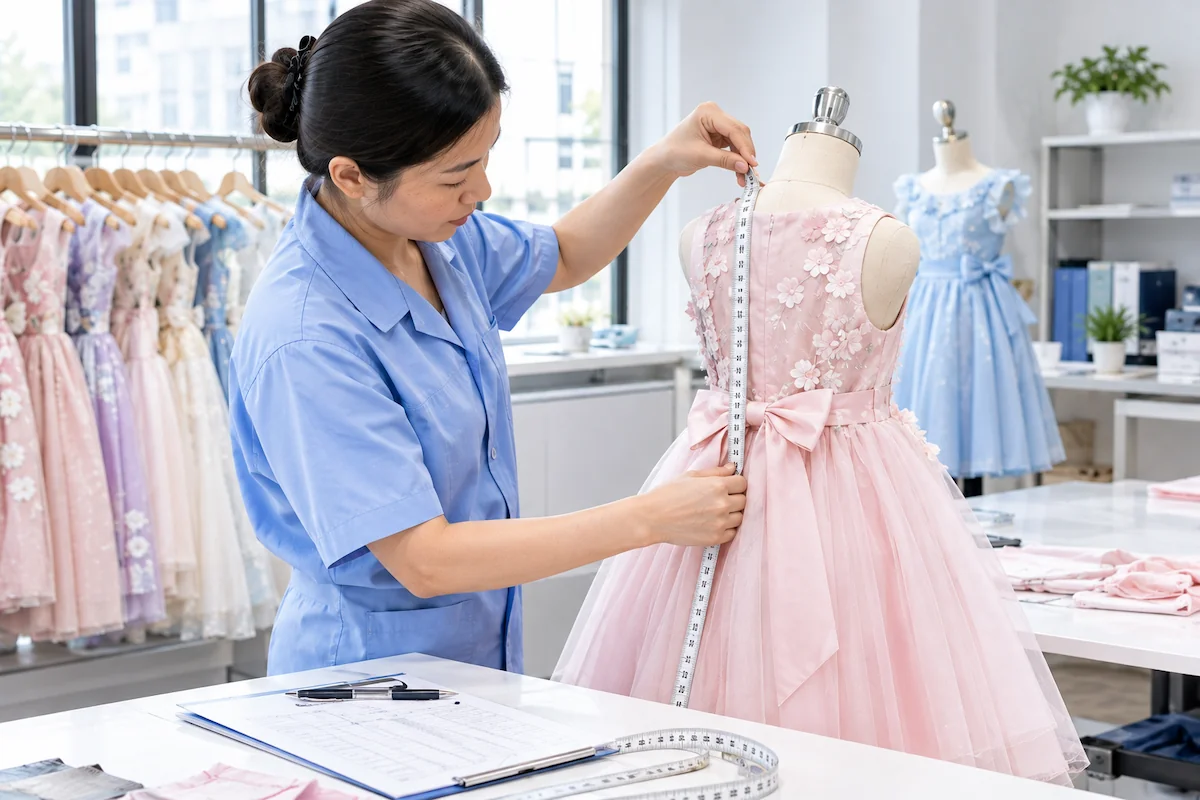
Measuring against the size chart confirms the trim sits where the range expects it.
If you are buying into sizes 2T and under, the trim conversation should happen at sampling, not at bulk. Tell us the age range you are buying for and we will propose trims that hold up to a pull test at your price point.
How the Test Actually Works
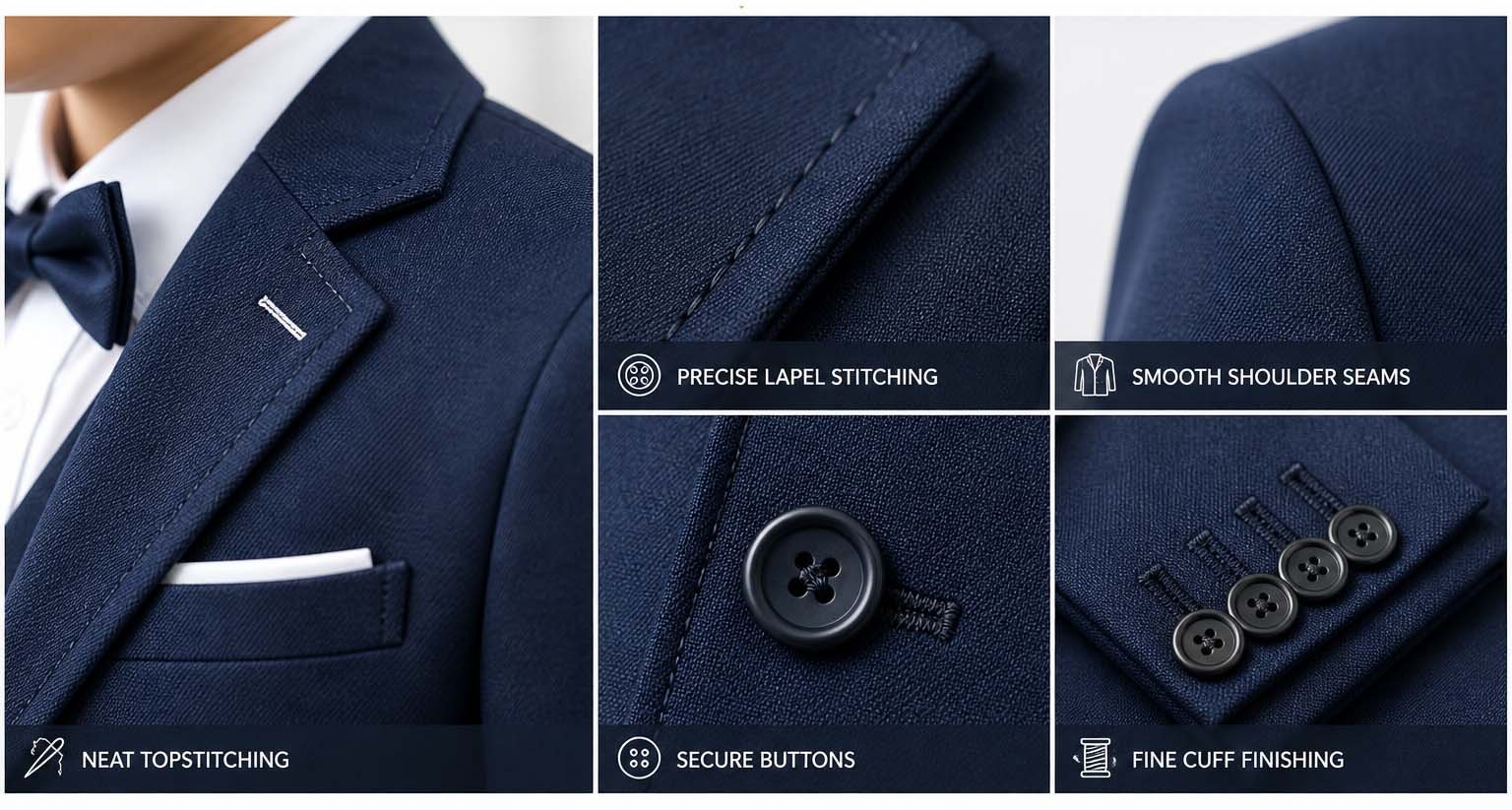
Attachment strength is decided by how the trim is sewn on, not by the trim itself.
The mechanics are simple, which is what makes them useful to specify.
Dimensional check. Without compressing, the part is placed in any orientation into a cylinder 1.25 inches in diameter and 2.25 inches deep. If it fits entirely, it is a small part.
Torque test. A torque of 4 in-lbf is applied gradually over about five seconds and held for ten seconds to any part a child could grip with the thumb and forefinger or with the teeth.
Tension test. A force of 10 lbf is applied gradually over about five seconds and held for ten seconds, in the most unfavourable direction, using a clamp appropriate to the part.
Re-check. Any part that comes off during torque or tension is then put through the dimensional check. If it fits, the product fails.
A factory with an internal laboratory can run all four steps on a sample. It is worth doing during sampling rather than after production, because the fix is a change of attachment method and that is a cheap change before cutting and an expensive one after.
How to Work It Out: A Worked Example
You are buying 300 dresses in sizes 2T to 8. The bodice has a satin bow at the waist and a scattered heat-transfer rhinestone motif.
Start by age grading. Sizes 2T and 3T are for children under three — that is where the risk sits. Sizes 4 and up are outside the age band the rule is written for.
Look at the bow. It is tacked at one point with a couple of stitches. Under a 10 lbf tension test it will almost certainly come away, and once away it will fit the cylinder comfortably. The fix is not to remove the bow, it is to stitch it through the knot at two points so the whole unit stays attached. Same look, different result.
Look at the rhinestones. Individual stones applied to the surface are the highest-risk item on the garment. Two options: keep the sparkle but move it to a single heat-transfer film, so there are no discrete parts to shed; or keep the stones and move them above the reach of a child’s mouth, which on a dress is not really achievable. The film is the better answer for the toddler sizes, and it is usually cheaper.
Write both decisions onto the tech pack with a note that the attachment method is a specification, not a suggestion. Then confirm on the pre-production sample with a pull test before bulk cutting.
Requirements differ by market and by retailer, and classification depends on how an individual product is age graded and marketed. Confirm your own position with your compliance adviser or the marketplace you sell through.
Buyer Checklist
- State the intended age range and size range on the tech pack in writing.
- List every applied trim as a line item, with its attachment method.
- Avoid discrete hard parts on garments sized for children under three.
- Use a single film motif rather than individual stones where sparkle is needed.
- Stitch bows and flowers through the knot at two or more points.
- Ask the factory for a pull test result on the pre-production sample.
- Re-check trims after washing, not just on a fresh garment.
- Confirm any retailer or marketplace rule that goes further than the regulation.
- Keep a retained sample with the test result for reorders.
- Re-test whenever a trim, supplier or attachment method changes.
Common Mistakes (and What They Cost)
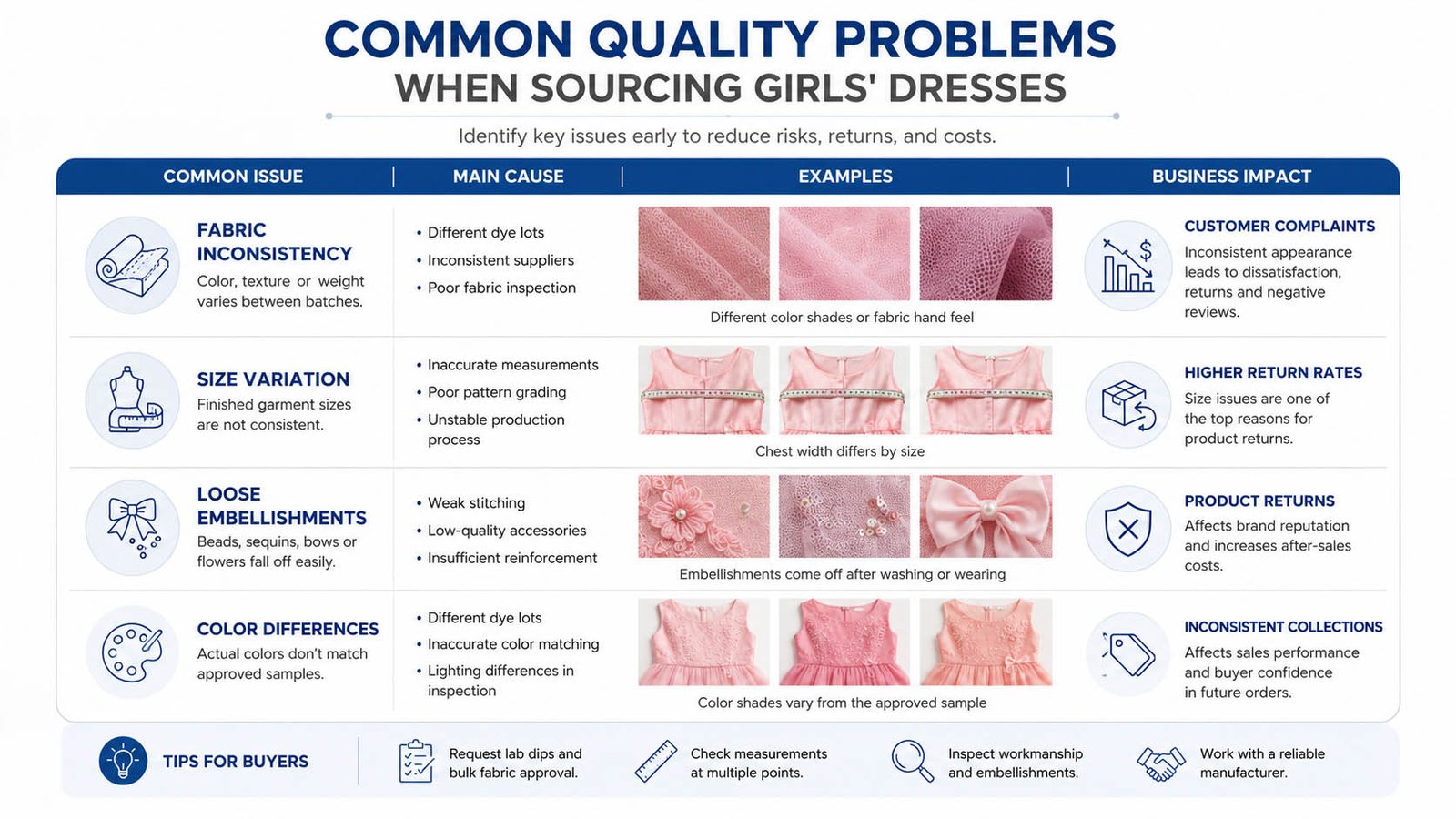
Most small parts failures trace back to a trim change made after approval.
Choosing the trim from a catalogue photograph
A photograph shows the trim, not the stitching. Two suppliers can attach the same bow in ways that pass and fail the same test. Specify the attachment, not just the trim.
Testing once and never again
Trims change. A factory substitutes a bead, a machine setting drifts, a new operator runs a lighter stitch. On a repeat programme, make the pull test part of the pre-production check every time.
Forgetting the wash cycle
Adhesion and stitching that survive the factory floor often do not survive a washing machine. Test after laundering, because that is when the garment reaches the child.
Assuming the rule does not apply because it is a toy rule
Technically it may not. Commercially, the retailer’s rule is the one that decides whether your listing stays live, and their rule usually applies the same criteria.
FAQ
Do small parts rules apply to children’s clothing?
The regulation is written for toys and articles intended for use by children under three, so ordinary apparel is not automatically covered. In commercial practice, most large retailers and marketplaces apply the same criteria to trims on garments sized for children under three, which is why buyers treat it as a requirement.
What size counts as a small part?
Anything that fits entirely inside a cylinder 1.25 inches in diameter and 2.25 inches deep, without compressing. The part is tested in any orientation.
How strong does the attachment have to be?
The standard use-and-abuse tests apply 10 lbf of tension and 4 in-lbf of torque, each held for around ten seconds. If the part comes off and then fits the cylinder, the product fails.
Are sequins allowed on children’s dresses?
Yes, on most size ranges. The risk is concentrated at the smallest sizes and in the attachment method. Sequin trim with an overlocked edge, or a printed or filmed alternative, is safer than loose individual sequins.
What about the EU and the UK?
Both apply equivalent small parts criteria through their own toy safety standards, and retailers apply their own rules in addition. Agree your destination market before sampling and specify trims once, for all of them.
Can the factory test this, or do I need a laboratory?
A well-equipped factory can run a dimensional check and a pull test on samples, and that is a good internal control. Formal third-party testing is a separate question, and for US children’s products it has to come from a CPSC-accepted laboratory.
Leave a Reply