
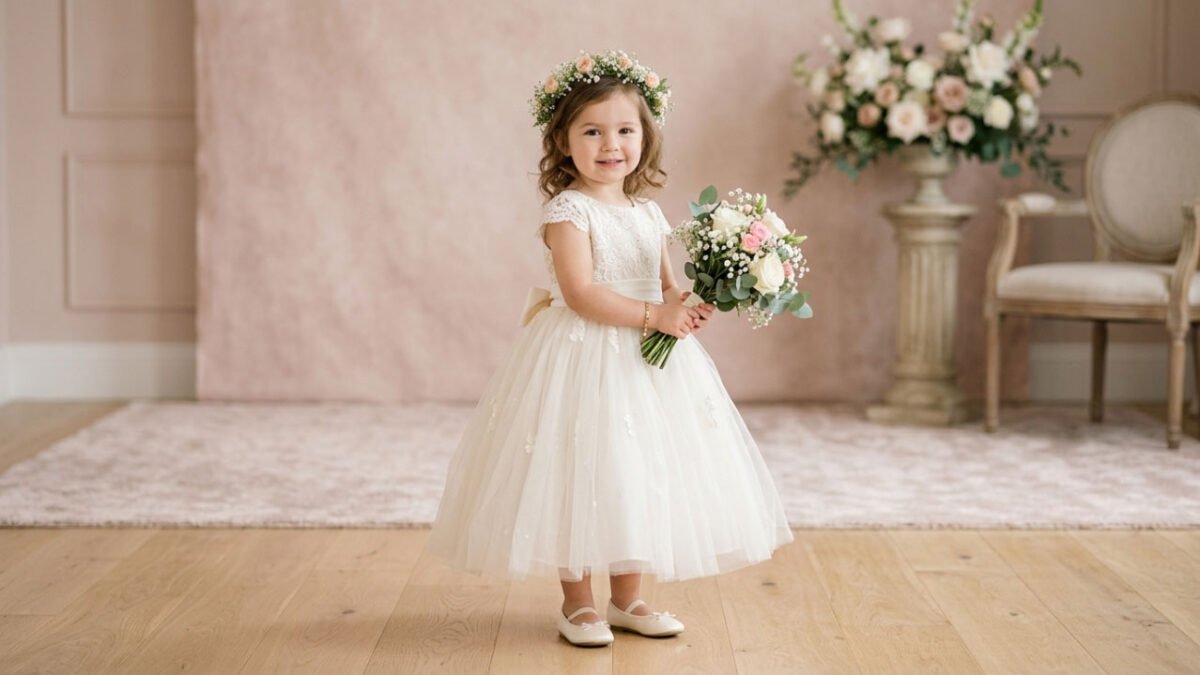
Starting a kids’ dress brand no longer requires a warehouse, a design team or a six-figure order — low-MOQ sourcing has made it possible to launch with a handful of styles, a few sizes and a budget that fits a first-year entrepreneur. But low MOQ is not a magic button: it changes how you choose a niche, how you test, how you price and how you scale. This guide walks through the full path from idea to first collection with low minimums — what to do at each step, what to avoid, and how to grow beyond the test phase.
Start With a Low-Minimum Test Order
Before you commit to a bulk run, test a supplier with ready-stock styles — mixed styles and colours from 6 pieces, so you can judge fabric, stitching and sizing firsthand.
The barrier to entry in children’s formalwear has fallen dramatically. Where custom production once demanded hundreds of pieces per style, ready-stock and flexible sourcing now let a new brand order from about 6 pieces per style, mix and match, and test a small collection across several styles. That changes the game for boutique founders: you can validate demand with a real product in hand, learn from real customers, and only scale what actually sells. Low MOQ lets you fail cheaply and scale what works — which is precisely the right strategy for a new brand.
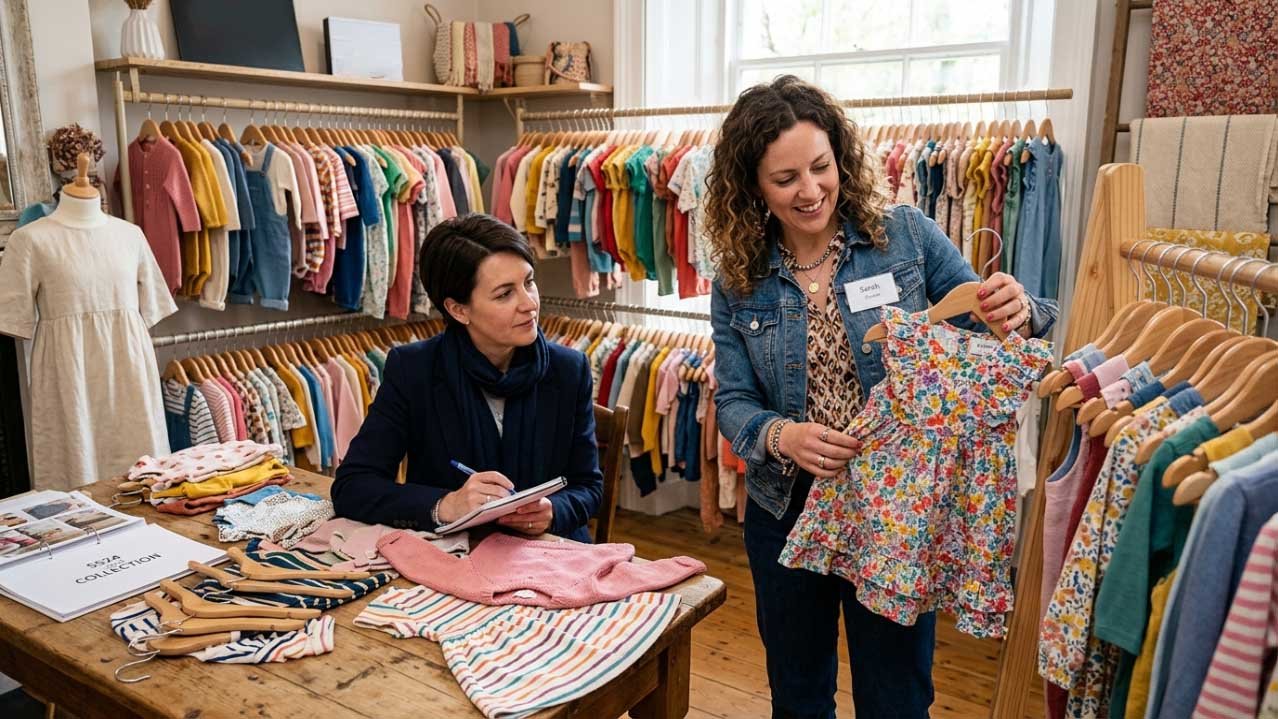
Focus beats breadth in a crowded market — pick the niche you can be known for.
Your niche is not just what you sell — it is what you will be known for. In a crowded market, the winning move for a small brand is focus, not breadth.
Choose a Category With Clear Demand
In girls’ dresses, the niches with predictable demand include flower girl (wedding-driven, seasonal peaks), party and birthday (year-round, occasion-driven), communion and ceremony (regional, clear timing), and summer or casual (volume, price-sensitive). Pick one to start — a brand that is “the flower girl dress brand” is easier to market than one that is “some girls’ dresses”.
Choose a Price Position
Decide where you sit: value (competitive pricing, broad appeal), mid (quality and design at a fair price), or premium (design-led, higher margin, smaller volume). Your price position shapes everything downstream — fabric choices, sourcing partners, packaging and photography. A new brand usually starts mid, with room to move up as the brand proves itself.
Define Your Customer, Not Just Your Product
Who buys, and why? A boutique owner stocking flower girl dresses for brides; a mum buying a birthday dress for a five-year-old; a wedding planner sourcing for clients. Each customer has different triggers, price sensitivity and buying habits. Write down your customer before you source a single style — it keeps every later decision consistent.
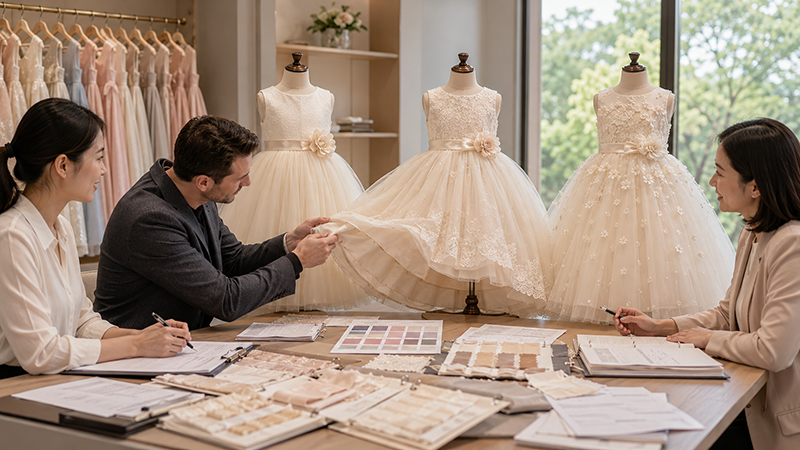
Low MOQ works only with the right supplier — category fit and communication matter more than the price.
Not all suppliers support low-MOQ starts equally. Match your sourcing to the low-minimum reality of a new brand:
| Option | MOQ reality | Best for |
|---|---|---|
| Ready stock | From about 6 pieces, mix and match styles and colours | Fastest test, lowest risk, no development cost |
| ODM with modifications | Moderate, based on existing patterns | Distinct look without full custom development |
| Custom OEM | Higher (often from about 200 pieces per style) | Proven styles, exclusivity, brand ownership |
Get a Sourcing Quote
Send us your target styles, size run and quantity. We reply with MOQ, unit pricing and sample lead time — no obligation.
How to Evaluate a Low-MOQ Supplier
- Category fit: do they specialise in girls’ dresses?
- Sample policy: can you order 1–2 samples before committing?
- Mix-and-match: can small minimums be split across styles and colours?
- Communication: do they reply clearly within a working day?
- Documentation: QC reports, compliance support, clear shipping terms.
A supplier who welcomes small orders today — with clean processes, not grudging tolerance — is the one who will grow with you.
3. Step 3: Sample, Test and Approve
With low MOQ, sampling is not a formality — it is your entire risk-reduction system. Do it properly:
- Order samples of 3–5 shortlisted styles across your planned sizes — not just one size, so you can judge grading.
- Wear-test or fit-test each sample — check comfort, fabric hand feel, construction, trims and sizing accuracy.
- Wash-test one piece — children’s dresses must survive laundering; shrinking or shedding decoration is a killer.
- Photograph the samples — you will need real product photos for your launch; shoot them from the approved samples.
- Approve in writing — confirm the exact fabric, measurements, trims and labelling before you bulk-order.
Keep one approved sample per style as your reference for every reorder.
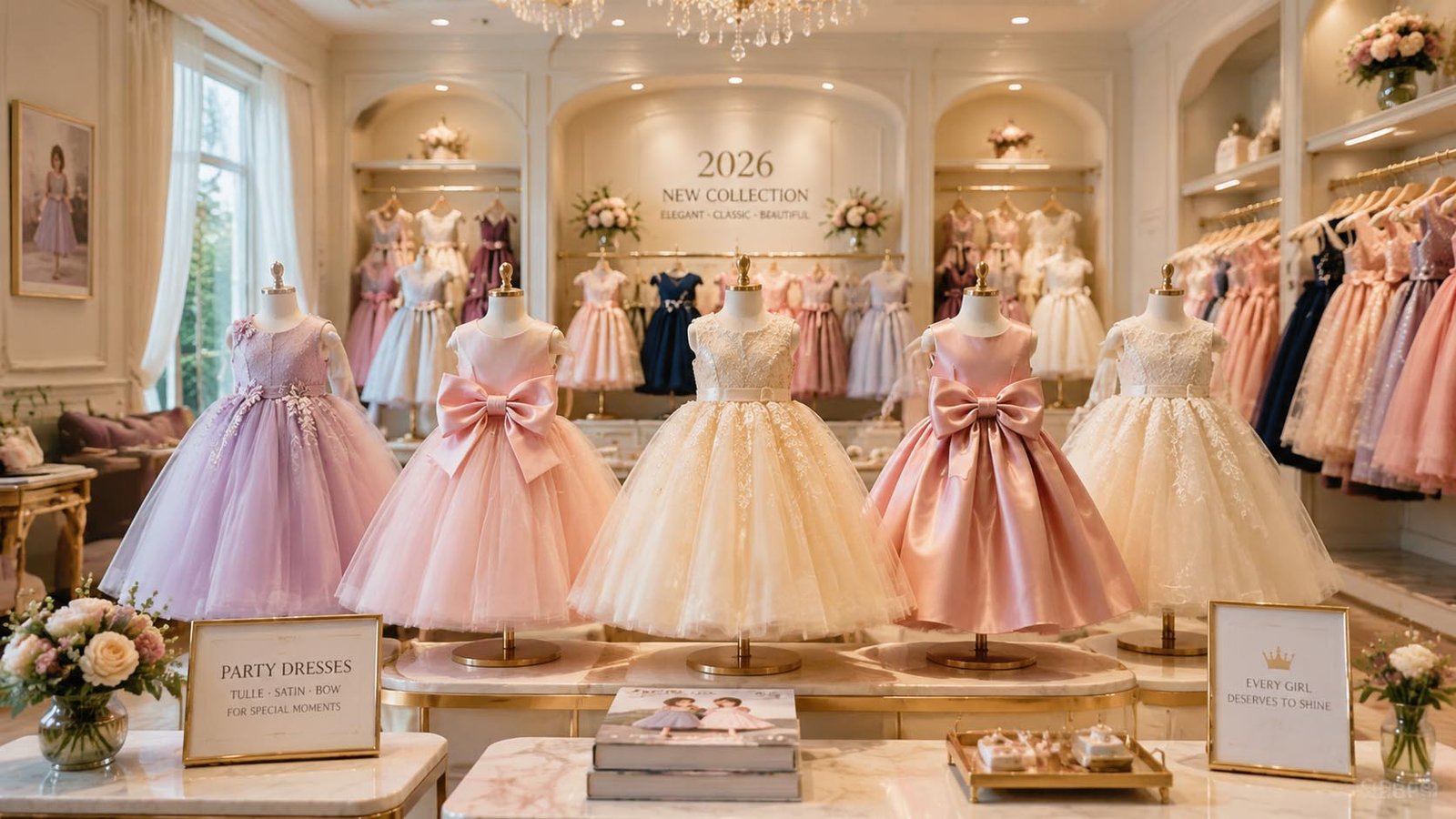
Price with the landed cost from day one — freight and duties are not optional.
Pricing is where new brands either build a sustainable business or train customers to wait for discounts. Price with intention:
The Landed-Cost Method
Work backwards from retail: total landed cost per piece (product + freight + duties + fees) must leave enough margin for your retail price to make sense. A common healthy structure for children’s formalwear leaves at least 50% retail margin. If your landed cost is $20, your retail should sit comfortably around $40–50, with wholesale pricing in between if you sell to other boutiques.
Price by Value, Not by Cost Alone
Customers pay for the look, the occasion and the brand story — not just fabric weight. A beautifully styled, well-photographed dress in a premium-looking package can command a price that a plain listing of the same garment cannot. Invest in the presentation; it is part of the product.
Keep a Price Ladder
Three price points per collection (entry, core, premium) give customers choice and give you room to trade up. The core is where most volume sits; the premium style lifts perceived brand value; the entry style captures price-sensitive shoppers without cheapening the brand.
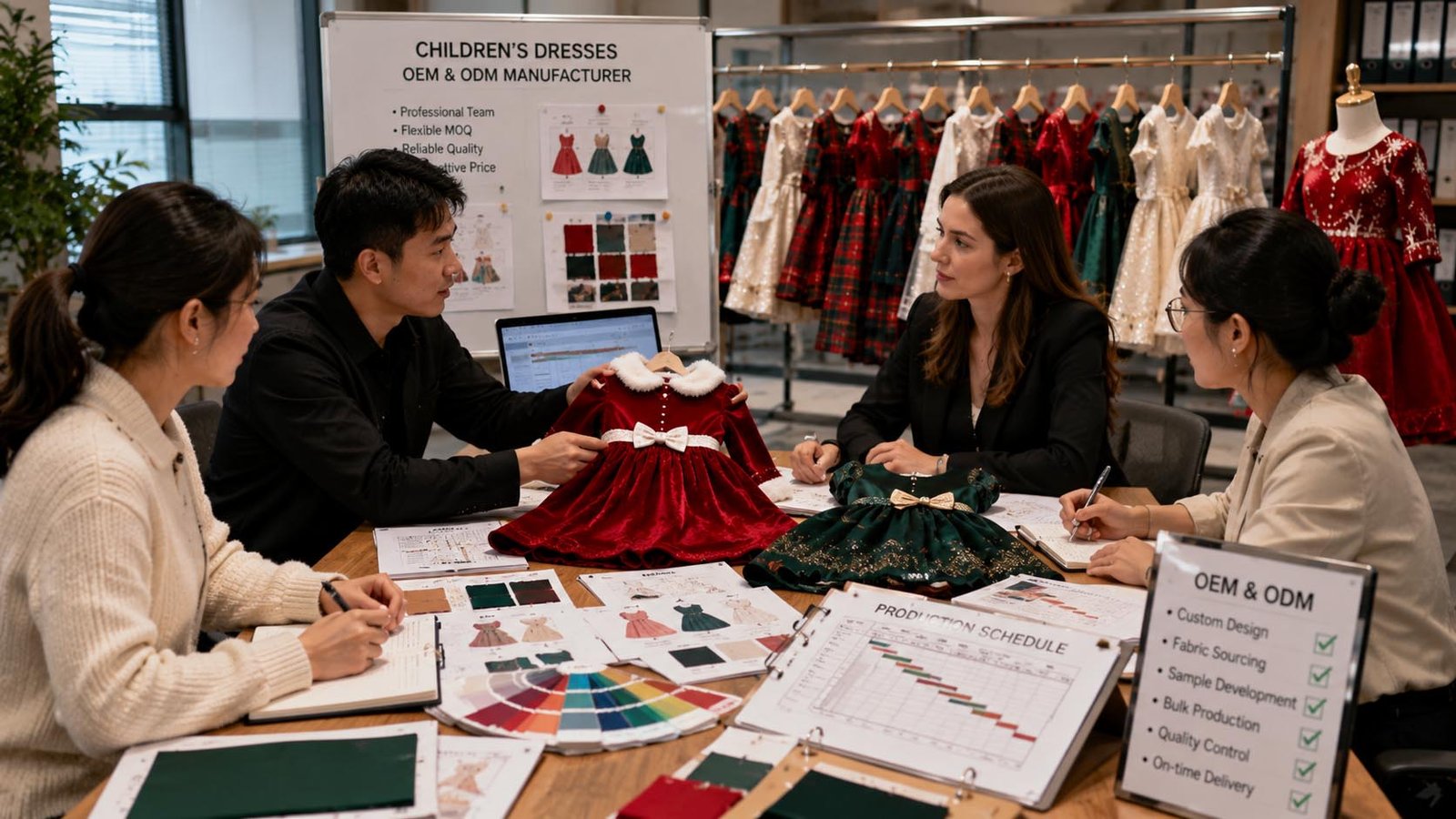
Track sell-through per style, per colour, per size — data beats enthusiasm.
Your first collection is a learning instrument, not a masterpiece. Launch it, measure it, and let the data drive the next round:
- Track sell-through per style, per colour, per size — this tells you what to reorder, what to drop, and what to try next.
- Listen to customer feedback — sizing comments, fabric comments and photo feedback are free product research.
- Run small tests — a new colour, a new size extension or a new detail costs little with low MOQ; test before you commit.
- Reinvest in winners — move proven styles to deeper reorders or custom development; let losers go without sentimentality.
6. Step 6: Scale What Works
Scaling is not “order more of everything” — it is “order more of what works”:
- Identify your hero styles — the top 20% of styles that drive 80% of revenue.
- Deepen the winners — reorder hero styles in full size runs; consider custom development to make them exclusive.
- Expand into adjacent niches — once flower girl sells, add party; once party sells, add occasion wear.
- Move to custom when it pays — when a style proves itself, OEM development (sampling often around USD 80–150 per style) turns it into your own, exclusive product.
Scaling with data beats scaling with enthusiasm every time.
7. Common Mistakes New Kids’ Dress Brands Make
| Mistake | Why it hurts | Fix |
|---|---|---|
| Too many styles at launch | Splits budget, inventory and attention | Start with 5–8 focused styles |
| Skipping samples | Bulk arrives different from photos | Always approve a physical sample |
| Ignoring freight | Margin disappears in shipping | Price with landed cost from day one |
| No sizing standard | Returns and fit complaints | Use height-based sizes with a clear chart |
| Chasing trends too deep | Stuck stock when the trend turns | Keep trend buys to a small share |
| No exit plan for slow movers | Cash tied up in dead stock | Mark down and clear promptly |
8. Frequently Asked Questions About Low-MOQ Brand Building
How Much Money Do I Need to Start?
Low-MOQ sourcing keeps the starting budget modest: a test collection of 5–8 styles at small minimums (from about 6 pieces per style, mix and match), plus sampling, photography, packaging and marketing. The exact figure depends on your market and freight, but the model is designed to let you start small and reinvest profits — no warehouse, no bulk gamble required.
Can I Build a Brand on Ready Stock?
Yes — many successful boutique brands start on ready stock, differentiate through styling, photography, packaging and service, and only move to custom when they have proven demand. “Ready stock” describes the sourcing model, not the brand’s quality or identity. Your brand is built in how you present and serve, not in where the dress was produced.
When Should I Switch to Custom OEM?
Switch when a style has proven sell-through and you want exclusivity or brand ownership. The trigger is data: a style that repeatedly sells out at a healthy margin justifies the development cost (sampling often around USD 80–150 per style, credited against bulk) and the higher minimums of custom production.
How Do I Compete With Big Brands?
You do not compete on scale — you compete on focus, speed and relationship. A small brand can move faster, serve customers personally, and own a niche that big brands treat as a line item. Your advantages are responsiveness, curation and story; use them where they count.
What’s the Single Most Important Early Decision?
Choosing your niche and customer. Every later decision — sourcing, pricing, photography, marketing — follows from who you serve and what you promise. Get that right and the mechanics are learnable; get it wrong and the mechanics just accelerate the wrong direction.
9. The 90-Day Launch Plan
A concrete timeline keeps a low-MOQ launch moving instead of stalling in planning. Here is a practical 90-day structure:
| Days | Focus | Key actions |
|---|---|---|
| 1–15 | Niche and offer | Pick category, price position, customer; sketch the collection plan (5–8 styles) |
| 16–30 | Sourcing | Shortlist 3–5 suppliers, request samples, compare fit and communication |
| 31–45 | Sampling and approval | Order samples, fit/wash test, photograph, approve in writing |
| 46–60 | First order | Place ready-stock test order (mix and match), confirm freight and landed cost |
| 61–75 | Brand assets | Finalise labels, packaging, photography, product pages, launch content |
| 76–90 | Launch and measure | Go live, track sell-through per style/size, capture feedback |
Adjust the calendar to your market and shipping reality, but keep the sequence: define before you source, sample before you bulk, measure before you scale.
10. Building on the Launch: Your Second Season
The first season tells you what the second season should do. Before you order again, answer five questions from real data:
- Which styles sold through at what speed?
- Which colours and sizes moved first — and which are still sitting?
- What did customers say about fit, fabric and value?
- Which marketing channel actually produced sales, not just traffic?
- Which styles are worth converting to custom (exclusive) production?
Second-season buying should look visibly different from first-season buying: deeper in proven winners, lighter in experiments, and with at least one custom-exclusive style if the data supports it. That evolution — from test to focus — is what turns a launched brand into a growing one.
11. Checklist Before You Place Your First Order
Before money moves, walk through this final gate:
- ✅ Niche, customer and price position written down
- ✅ 5–8 focused styles selected, not 20 random ones
- ✅ Supplier vetted: category fit, sampling, MOQ, communication
- ✅ Physical samples approved in writing for each style
- ✅ Landed cost per piece calculated (product + freight + duties)
- ✅ Retail pricing leaves at least 50% margin
- ✅ Size run decided and stated on the order
- ✅ Labels, care labels and packaging specified
- ✅ Sell-through tracking set up before the stock arrives
- ✅ Exit plan for slow movers defined (markdown trigger)
Ten minutes on this checklist saves months of regret. Low MOQ is a powerful tool — used with this discipline, it lets you build a real brand with real learning, one small order at a time.
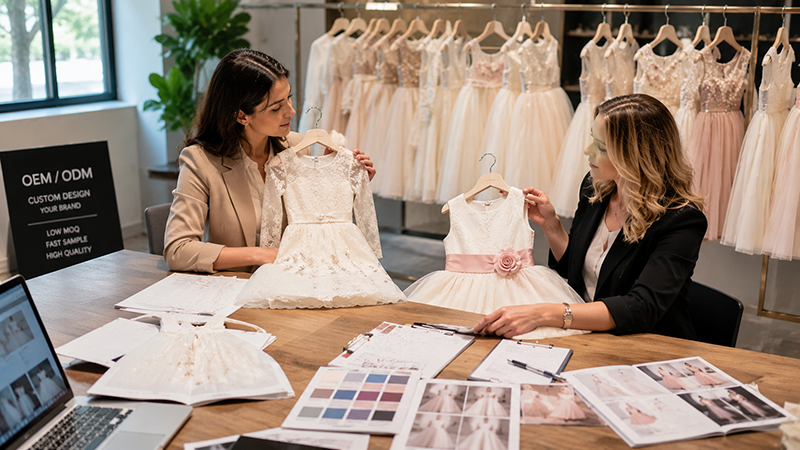
A new brand is a learning instrument, not a finished line. Plan accordingly.
Low MOQ is a door-opener, not a guarantee. Set honest expectations so the early months do not feel like failure:
- It can: get you to market with real product, real photos, real customers and real sell-through data at minimal risk.
- It can’t: manufacture demand, fix a weak niche, or make up for poor photography and pricing. If no one wants the dresses, low MOQ only means you lost less.
- It rewards iteration: the brands that succeed on low MOQ are the ones that test, learn and adjust quickly — treating the first order as research, not as the finished line.
- It builds a runway: with cash preserved, you can afford the marketing, packaging and service that turn a product into a brand.
Seen this way, low MOQ is not “small thinking” — it is the disciplined start of a business designed to survive its own learning curve.
Launch your kids’ dress brand
We support low-MOQ startups — ready stock from about 6 pieces, mix and match, with sample support and clear guidance to custom as you grow. WhatsApp us or email luxudress@gmail.com.
Leave a Reply